Millions Heard This Knock on Mister Rogers’ Neighborhood for Decades. It Wasn’t Coming From the Door
For generations of children, the sound was instantly familiar.
A knock at the door.
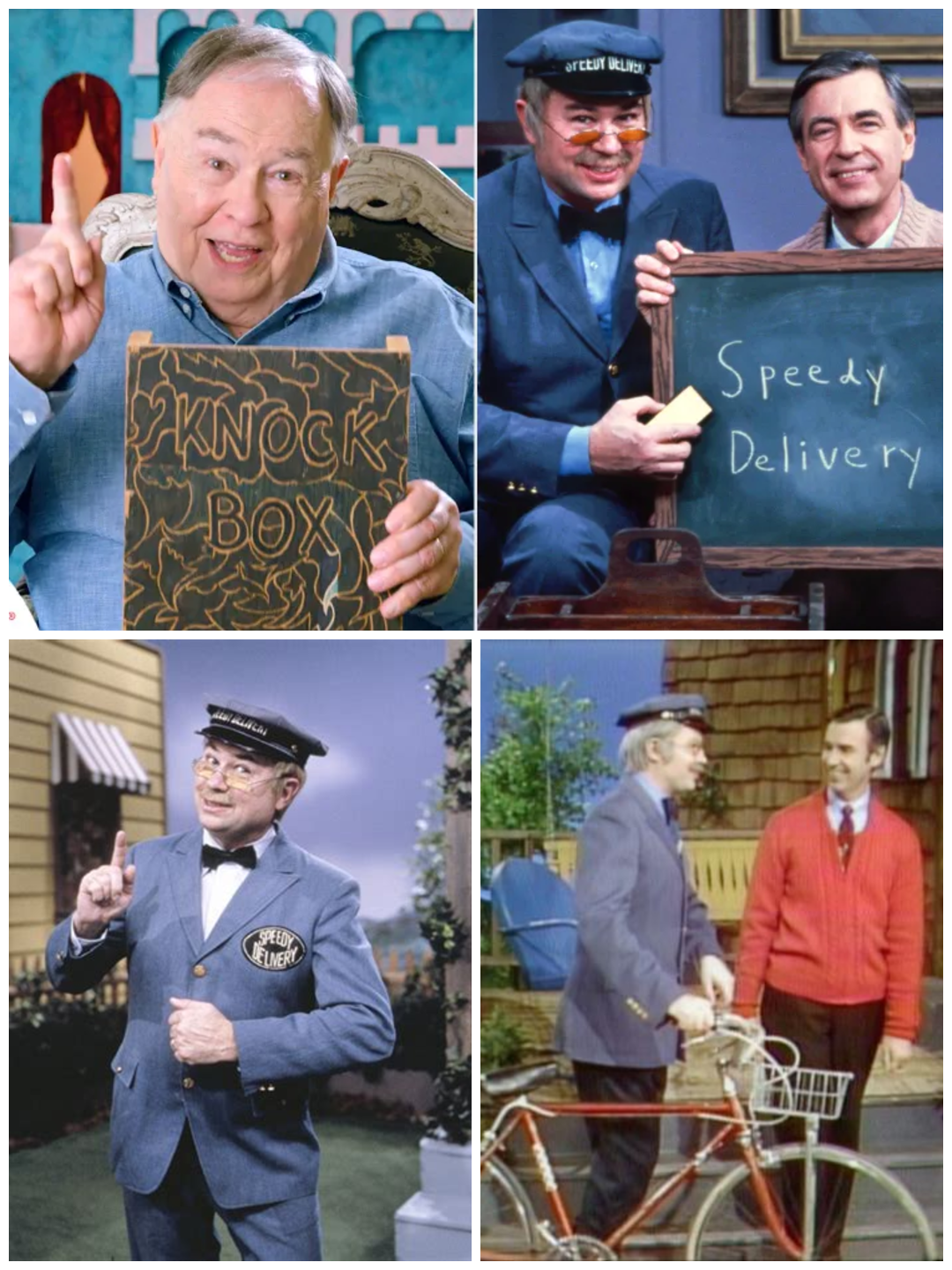
Fred Rogers would stop what he was doing, walk over and welcome one of the most recognizable visitors in Mister Rogers’ Neighborhood: Mr. McFeely, the cheerful “Speedy Delivery” man played by David Newell.
Viewers heard that knock countless times over the years.
It sounded completely ordinary — exactly what you would expect from someone standing outside Mister Rogers’ famous television home.
But the sound audiences heard was not actually coming from the door.
A newly highlighted artifact from the Fred Rogers Institute Archive reveals the surprisingly simple production trick that made those scenes work.
It was called the “Knock Box.”
And while Newell appeared on camera pretending to knock at the door, another crew member was secretly creating the sound somewhere else on the set.
The Real Knock Was Too Far Away
The explanation comes from Newell himself, who recently helped guide viewers through the Fred Rogers Institute Archive and some of the objects preserved from the beloved PBS series.
The archive contains more than 22,000 artifacts connected to Fred Rogers and the program, which aired from 1968 until 2001.
Among the familiar pieces are objects that longtime viewers would immediately recognize, including King Friday XIII’s castle, a Giant Crayon and the original manuscript for the show’s theme song.
But one of the smallest objects may have one of the best stories.
The Knock Box existed because of a basic television-production problem.
The front door on the Mister Rogers’ Neighborhood set was positioned far enough from the microphones that Newell’s actual knocking did not come through clearly enough for television.
The solution was not to move the door.
It was not to hide a microphone beside Newell.
Instead, the crew created a separate device that could produce the sound at exactly the right moment.

Someone Else Was Making the Sound
When Mr. McFeely arrived, Newell would perform the knock as viewers expected.
But off-camera, floor manager Nick Tallow was responsible for producing the sound audiences actually heard.
Tallow operated the Knock Box from behind the camera.
The illusion was simple but effective.
Newell’s hand hit the door.
Tallow hit the box.
The sound was synchronized with the action closely enough that viewers naturally assumed the noise came directly from the door.
There was no reason to think otherwise.
That is what makes the story such a perfect piece of television trivia.
The trick was not some elaborate special effect.
It was an ordinary solution to an ordinary technical problem — and it worked so well that millions of viewers could watch the show for decades without ever realizing what was happening.
Mr. McFeely’s Knock Became Part of the Show’s Rhythm
For children who grew up with Mister Rogers’ Neighborhood, Mr. McFeely’s visits were part of the comforting rhythm of the program.
Newell’s character usually arrived with a package, a film or something Fred Rogers could use to introduce a new subject.
“Speedy Delivery” became one of the show’s most memorable phrases.
The knock at the door signaled that something new was about to happen.
Because the program relied so heavily on repetition, routine and familiar sounds, even a tiny production detail could become deeply embedded in viewers’ memories.
The knock was not dramatic.
It did not need to be.
It simply belonged there.
That makes the revelation about the Knock Box especially charming: one of the sounds associated with the show’s warm, natural atmosphere was actually being carefully manufactured just outside the frame.
The Box Has Another Secret on the Back
The artifact is more than just evidence of an old production trick.
According to Newell’s archive tour, the reverse side of the Knock Box contains a personal message from Fred Rogers to Tallow.
Rogers wrote a thank-you note directly on the object.
That transforms the box from a piece of technical equipment into something more personal.
It is a reminder of the relationships behind the television show — the crew members whose work viewers rarely saw but whose contributions helped create the world audiences remember.
Fred Rogers became the face and voice of the program, but Mister Rogers’ Neighborhood depended on a team of people working behind cameras, moving scenery, controlling puppets, operating equipment and solving practical problems.
Tallow’s job with the Knock Box might have seemed minor.
Yet the sound he produced became part of scenes millions of children watched.
Rogers apparently thought that contribution was worth acknowledging.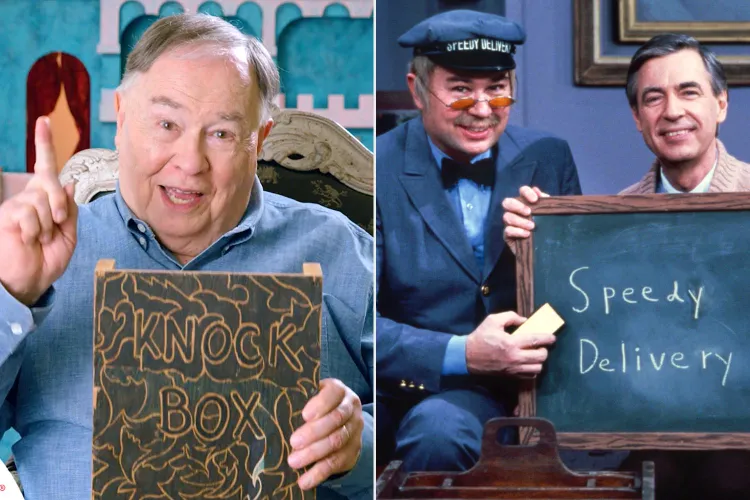
The Archive Preserves Thousands of Small Stories
The Fred Rogers Institute Archive now preserves more than 22,000 items related to Rogers’ work and legacy.
Some are obviously significant pieces of television history.
Others are ordinary objects whose importance becomes clear only when someone explains how they were used.
The Knock Box falls into the second category.
Without context, it might look like an unremarkable piece of production equipment.
With Newell’s explanation, it becomes a window into how the show was actually made.
The archive tour also includes objects such as King Friday XIII’s castle from the Neighborhood of Make-Believe, original written material connected to the program and props that helped define the show visually.
A new official behind-the-scenes playlist launched Aug. 20 gives fans another opportunity to explore those artifacts and hear the stories attached to them.
For viewers who grew up watching the show, these details can make familiar scenes feel new again.

Mister Rogers’ Neighborhood Made Television Feel Effortless
Part of Fred Rogers’ gift was making television feel less like television.
The show was slow, direct and deliberately simple.
Rogers spoke to the camera as though he were talking to one child.
He changed into his sweater and sneakers.
He fed the fish.
Visitors arrived.
The trolley traveled to the Neighborhood of Make-Believe.
Nothing about the program was supposed to feel flashy or manufactured.
That simplicity required careful production.
A sound as basic as a knock still had to be captured clearly.
If the microphone could not hear it, someone had to find another solution without disturbing the illusion.
The Knock Box was exactly that kind of solution.
It kept the moment natural for the viewer, even though the sound itself was coming from somewhere completely different.
Now Fans Have Something New to Listen For
The next time an old episode of Mister Rogers’ Neighborhood plays and Mr. McFeely arrives at the door, listen carefully.
David Newell may appear to be producing the sound himself.
But somewhere behind the camera, Nick Tallow was doing the real knocking.
The audience never needed to know.
For decades, the illusion worked perfectly.
Now the little wooden box that made it possible has survived as part of the Fred Rogers Institute Archive — complete with a handwritten message from Rogers himself.
It is a tiny artifact from a television show remembered for its enormous emotional impact.
And it reveals something fans could easily have missed:
The famous knock at Mister Rogers’ door was never really coming from the door at all.