LINDSAY CLANCY TRIAL TAKES DRAMATIC TURN AS PSYCHOLOGIST REVEALS HER FIRST WORDS TO HUSBAND — DEFENSE DEMANDS MISTRIAL
LINDSAY CLANCY TRIAL TAKES DRAMATIC TURN AS PSYCHOLOGIST REVEALS HER FIRST WORDS TO HUSBAND — DEFENSE DEMANDS MISTRIAL
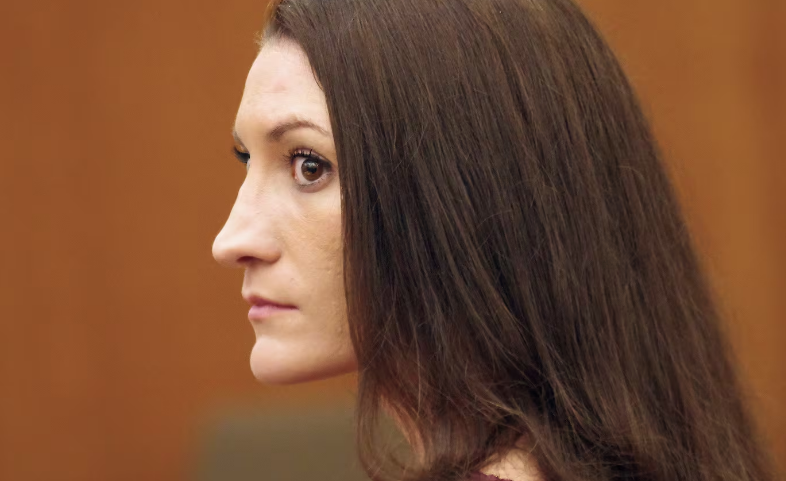
PLYMOUTH, MASS. — The murder trial of Lindsay Clancy took another dramatic turn Monday as a forensic psychologist testified about the first words she spoke to her husband after their three children were found dead — testimony the prosecution says sheds light on her state of mind, while the defense argues she was suffering from severe postpartum psychosis.
Clancy, 36, is charged with murdering her children — 5-year-old Cora, 3-year-old Dawson and 8-month-old Callan — at the family’s Duxbury home in January 2023. She has pleaded not guilty by reason of lack of criminal responsibility, with her defense arguing that she was experiencing postpartum psychosis at the time.
The prosecution’s second rebuttal witness, forensic psychologist Dr. Kirk Heilbrun, took the stand as the trial moved toward its final stages.
His testimony quickly focused on one of the most haunting moments in the case.
‘:max_bytes(150000):strip_icc():focal(745x298:747x300):format(webp)/Dr-Kirk-Heilbrun-and-Lindsay-Clancy-in-court--5f74f3d0c9a446188ef2da0b37afd462.jpg) I TRIED TO KILL MYSELF’
I TRIED TO KILL MYSELF’
Heilbrun told jurors about Clancy’s response when her husband, Patrick, returned home and discovered the devastating scene.
When Patrick asked her what she had done, Clancy reportedly responded:
“I tried to kill myself.”
According to Heilbrun, those words were significant because he believed they were inconsistent with someone experiencing an acute psychotic episode driven by hallucinations.
He said that a person experiencing the kind of hallucination Clancy described might instead have attributed the act directly to the voice or said she had done what she was commanded to do.
The defense, however, has argued that Clancy’s behavior and statements must be understood in the context of a severe psychiatric illness.
THE PSYCHOLOGIST’S DIAGNOSIS
Heilbrun testified that he personally evaluated Clancy over three days in April 2026.
He diagnosed her with Bipolar II disorder, without manic episodes, and described a history of depressive episodes.
But the psychologist rejected the defense theory that Clancy was experiencing acute psychosis when the children died.
Heilbrun said reaching a diagnosis was complicated, but he noted that Clancy had responded positively to treatment with medication.
The distinction is critical.
The defense is asking jurors to conclude that Clancy’s mental illness made her unable to understand or control what she was doing.
Prosecutors have presented a different picture, arguing that she was aware of her actions and should be held criminally responsible.
:max_bytes(150000):strip_icc():focal(812x430:814x432):format(webp)/patrick-clancy-court-072726-d9a967cc00a144f39fe641446cc4c43a.jpg) THE ‘VOICE’ CLANCY SAYS SHE HEARD
THE ‘VOICE’ CLANCY SAYS SHE HEARD
Another major issue in the trial has been Clancy’s claim that she heard a male voice during the killings.
Heilbrun testified that she reported hearing the voice for the first and only time during the roughly 18-minute period in which the children were killed.
According to his testimony, she said the voice told her that it was her “last chance” and that she needed to kill the children so she could kill herself.
Heilbrun called the timing unusual and said Clancy gave inconsistent accounts about what the voice instructed her to do. He suggested the claim could have been connected to an effort to reduce her criminal responsibility.
That assessment directly conflicts with defense experts who have testified that Clancy was experiencing genuine psychosis.
The competing psychiatric opinions have become the heart of the trial.
A DISTURBING THEORY ABOUT WHY SHE KILLED HER CHILDREN
Heilbrun offered jurors another possible explanation for the killings.
He described the alleged motive as “altruistic filicide” — the idea that a parent kills their children because they believe they are protecting them from future suffering.
According to his testimony, Clancy believed her children would suffer if she died and that killing them would allow them to remain “together in heaven.”
He also testified that she spoke to the children during the killings, telling them to “Go to God.”
The prosecution’s theory therefore does not depend on proving that Clancy felt hatred toward her children.
Instead, prosecutors have sought to establish that she could have been suffering emotionally while still understanding what she was doing and why.
DEFENSE ERUPTS OVER RELIGIOUS TESTIMONY
The courtroom atmosphere changed dramatically later in the day when Heilbrun referenced Clancy’s Catholic faith.
Defense attorney Kevin Reddington immediately moved for a mistrial, arguing that religion was irrelevant and that references to Clancy’s faith had appeared repeatedly during testimony.
The prosecution said the reference was not intentional.
Judge William Sullivan rejected the request for a mistrial, but he made clear that the religious reference should not be considered by jurors.
The judge subsequently instructed the jury that the defendant’s religious background was an inappropriate subject for consideration.
He emphasized that the information should be disregarded and treated as if it had not been presented.
The jury was then dismissed for the day.
A CASE BUILT AROUND TWO COMPLETELY DIFFERENT STORIES
The trial has increasingly become a battle between two competing explanations for what happened inside the Duxbury home.
The defense says Clancy was a desperately ill mother experiencing postpartum psychosis, intrusive thoughts, suicidal thinking and hallucinations after months of seeking psychiatric help.
The prosecution argues that mental illness does not automatically mean a person is incapable of understanding right from wrong.
Earlier testimony has included evidence about Clancy’s mental-health struggles before the killings, including reports that she had expressed disturbing thoughts and sought help.
But prosecutors have also presented evidence they say shows planning and awareness in the hours surrounding the deaths.
The jury must ultimately decide whether Clancy was criminally responsible for the deaths.
THE TRIAL IS NEARING ITS END
With Heilbrun expected to continue testifying Tuesday, prosecutors are nearing the end of their rebuttal case.
One additional rebuttal witness is expected before closing arguments later this week.
The stakes could hardly be higher.
If convicted, Clancy could face life in prison without parole.
If jurors find that she was not criminally responsible because of severe mental illness, she would instead be committed to a state psychiatric facility.
For the families involved, however, no verdict can change the central tragedy: three young children — Cora, Dawson and Callan — are dead.
And as the trial enters its final days, jurors are being asked to answer one of the most difficult questions in criminal law:
Was Lindsay Clancy a mother who deliberately killed her children, or a severely mentally ill woman whose illness destroyed her ability to understand what she was doing?
That question will soon be in the hands of the jury.
Source: PEOPLE — Psychologist Testifies About Lindsay Clancy’s First Words to Husband