A Venomous Snake Bit Her Alone on a Remote Trail. Then Her Emergency Call Ended After Less Than a Minute
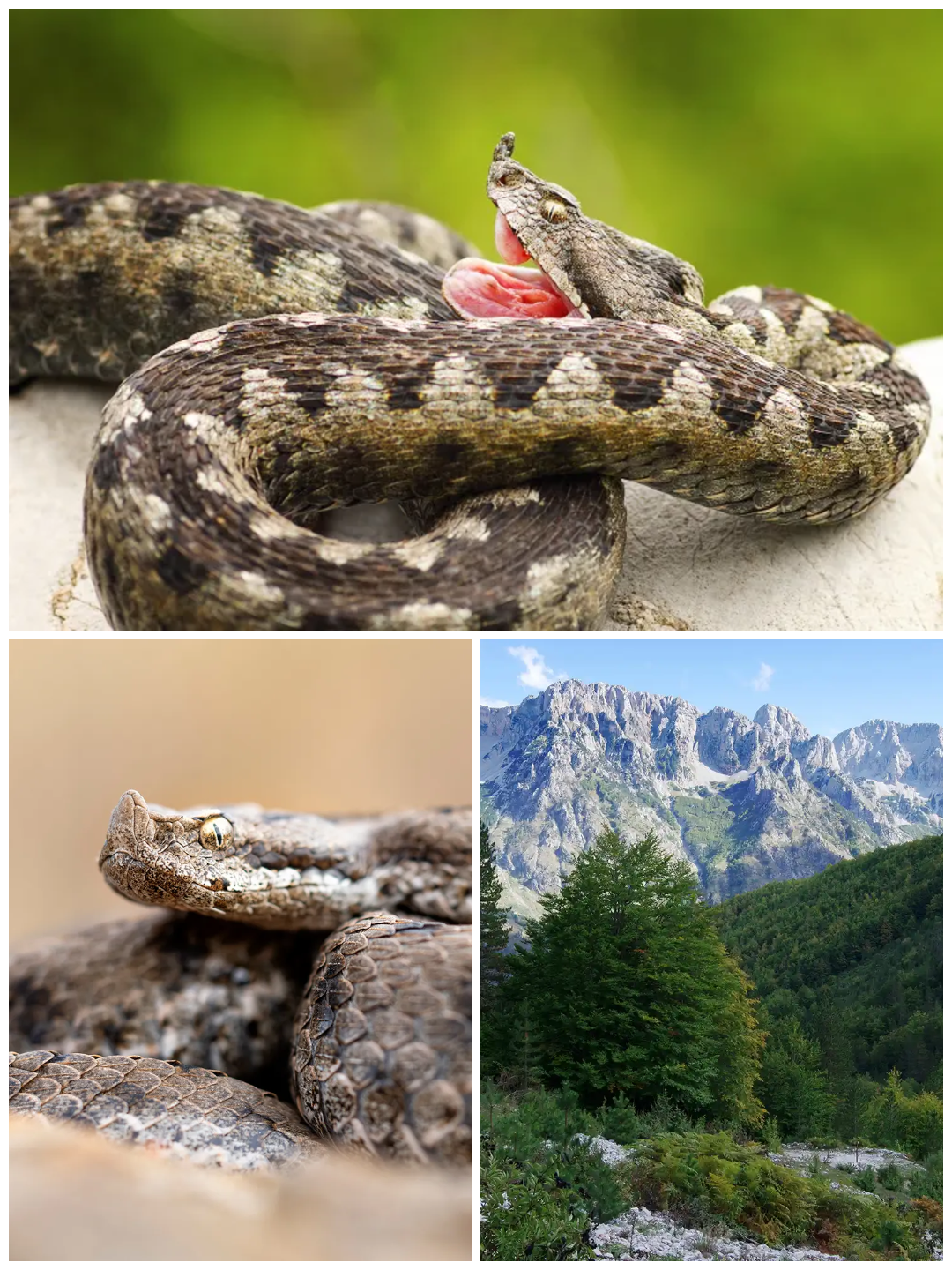
Amy Lecons was alone on a mountain trail in Albania when she realized she had a serious problem.
The Australian traveler, who lives in New Zealand, had been trail running near Valbonë on June 21 when a snake struck her leg.
It was later identified as a European nose-horned viper, a venomous species found across parts of southeastern Europe.
But the snakebite was only the beginning of the emergency.
Lecons was far from anyone she knew, surrounded by remote mountain terrain, and needed medical help quickly.
She did what most travelers would do.
She called emergency services.
Then another problem appeared almost immediately.
According to Lecons, the person on the other end could not understand her English. The call ended in less than a minute without her knowing whether help was actually coming.
So, stranded on a mountain with venom in her body and no successful emergency call, she began building her own rescue network — using WhatsApp, a location app, a hostel she had stayed at and her doctor father thousands of miles away in Australia.
The Bite Happened While She Was Running Alone
Lecons was exploring the mountainous region around Valbonë when she encountered the snake.
She later described the animal as a European nose-horned viper.
The bite immediately changed the situation from a solo adventure into a medical emergency.
Snakebites can be unpredictable because symptoms depend on factors including the species, the amount of venom delivered and where the person is bitten.
Lecons knew she could not simply keep moving down the mountain and hope for the best.
She needed professional help.
But she was in an unfamiliar country, alone, and far from a major medical center.
That made communication almost as important as the injury itself.:max_bytes(150000):strip_icc():focal(749x0:751x2):format(webp)/horned-viper-snake-3-082126-b925ef0f65654498b1ffa8dc49567804.jpg)
Her Emergency Call Did Not Solve the Problem
Lecons attempted to contact local emergency services.
Instead of producing immediate reassurance, the call left her more uncertain.
She said the conversation ended quickly because of the language barrier.
She spoke English.
The person answering apparently could not communicate with her well enough to understand the emergency.
Within less than a minute, the call was over.
At that point, Lecons still had no confidence that an ambulance knew where she was or even that emergency services understood she had been bitten by a venomous snake.
For someone traveling alone, that failure could have become the most dangerous part of the entire situation.
She needed another way to communicate.
And she needed it fast.
Her Next Call Went to Her Father in Australia
Lecons turned to WhatsApp and contacted her father, Robert Lecons, in Australia.
His location was thousands of miles away.
His profession, however, suddenly became extremely useful.
Robert is a doctor.
From across the world, he began giving his daughter instructions about what to do while medical help was being organized.
One of the key priorities was keeping the bitten leg as still as possible.
Rather than trying to walk a long distance out of the mountains, Lecons needed to reduce unnecessary movement while they figured out how to bring rescuers to her.
Her father could not physically reach her.
But he could begin coordinating help from outside Albania.
That effectively turned a family WhatsApp conversation into part of an international emergency response.:max_bytes(150000):strip_icc():focal(749x0:751x2):format(webp)/horned-viper-snake-2-082126-fb821a70a8b84cb1afee13e217a71036.jpg)
What3Words Helped Pinpoint Her Location
There was still one major question:
Where exactly was she?
Being somewhere “near Valbonë” would not be precise enough for rescuers trying to find one injured traveler across mountainous terrain.
Lecons used What3Words, a location service that divides the world into small geographic squares and assigns each one a unique three-word address.
She sent her exact location.
That gave the people helping her something far more useful than a vague trail description.
Now they had a specific point they could relay to local responders.
The technology did not cure the snakebite.
But in a rescue involving unfamiliar trails, different languages and people coordinating from different countries, accurate location information became one of the most important tools she had.
A Hostel Became Another Link in the Rescue Chain
Lecons also contacted a hostel where she had previously stayed.
That turned out to be another crucial decision.
Unlike her father in Australia, hostel staff were inside Albania and had local knowledge.
They could help bridge the gap between the injured traveler and local medical services.
Meanwhile, Robert continued trying to reach the appropriate authorities from abroad.
The rescue was no longer one emergency call.
It had become a chain of people passing information between one another:
Lecons on the mountain.
Her father in Australia.
Hostel staff in Albania.
Local emergency responders.
Each connection helped compensate for the failure of that first call.
The Terrain Made Everything Slower
Even after responders knew Lecons needed help, reaching her was not immediate.
She was in a remote mountain area where ambulance access and travel times were very different from an emergency in a city.
The distance and terrain meant that dispatching medical help required time.
That waiting period was especially stressful because Lecons did not know how severe the effects of the venom might become.
She remained where she was and followed the medical guidance she had received.
Eventually, local responders reached her.
She was transported for treatment and received antivenom.
She survived.:max_bytes(150000):strip_icc():focal(749x0:751x2):format(webp)/Valbone-Albania-082126-22f7bf78bf7b465eaa6b64e9d7f601b3.jpg)
The Rescue Worked Because Several Small Things Worked Together
Lecons’ story spread widely online after she described what happened, with PEOPLE reporting that video about the ordeal accumulated more than 21 million views.
Part of the fascination is obvious.
Being bitten by a venomous snake while alone in a remote country is frightening enough.
But the more unusual part of her story came after the bite.
Her survival did not depend on one dramatic rescue mechanism.
It depended on several ordinary tools and people suddenly being used in an extraordinary way.
WhatsApp allowed her to reach her father.
Her father’s medical background helped her know what to do.
What3Words provided precise location data.
A hostel gave her a local contact.
And emergency services eventually turned that information into a physical rescue.
None of those pieces would sound remarkable by themselves.
Together, they created a route out of a potentially life-threatening situation.
Solo Travel Suddenly Became an International Operation
The ordeal also shows how quickly the risks of solo travel can change when something goes wrong.
Lecons had a phone.
She had signal.
She was able to make calls and send messages.
Even so, simply dialing emergency services did not immediately solve the problem.
Language became an obstacle.
Geography became an obstacle.
Distance became an obstacle.
The people who ultimately helped her were spread across multiple countries and connected mostly through a smartphone.
Her father could not see the trail.
Hostel staff were not standing beside her.
Rescuers initially did not know precisely where she was.
Lecons had to connect them.
The Snakebite Was Only Chapter One
It would be easy to tell Lecons’ story as simply another dramatic wildlife encounter.
A traveler gets bitten.
She receives antivenom.
She survives.
But that leaves out the part that made her ordeal so unusual.
After a venomous snake struck her on an Albanian mountain, Lecons tried the obvious solution: calling emergency services.
The call failed.
So she had to improvise.
From a remote trail, she contacted her doctor father on the other side of the world, transmitted her location through What3Words, reached people at a hostel she already knew and waited while those connections were converted into a real rescue.
Eventually, medical responders found her.
The antivenom treated the bite.
But before doctors could help her, Lecons first had to solve another problem entirely:
She had to figure out how to make sure anyone knew where to find her.