At 77, Doctors Gave Him Two Frightening Options. He Asked ChatGPT One Different Question
At 77, Paul Kimelman found himself facing the kind of medical decision almost nobody wants to make.
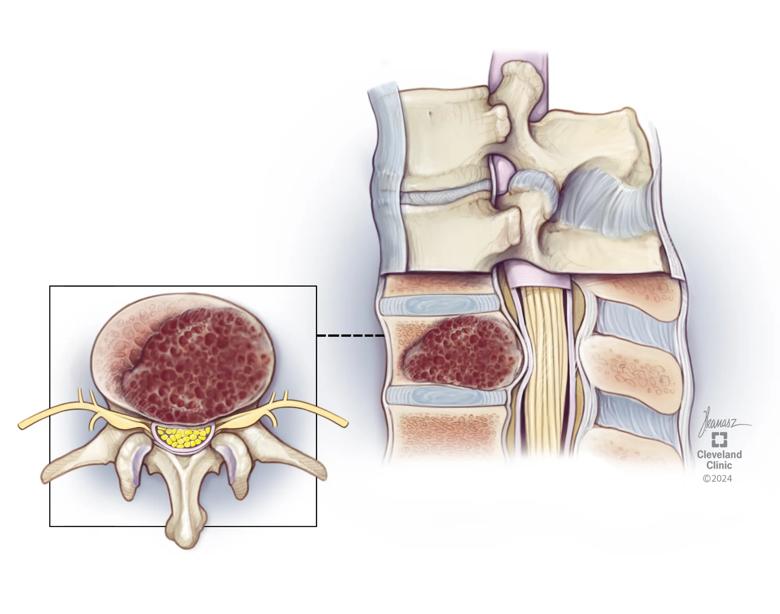
Doctors had discovered an aggressive hemangioma near his spinal cord, around the T12-L1 area of his spine. The abnormal growth had been found incidentally after imaging in September 2025, but once specialists examined it, the possible consequences suddenly felt very real.
One option involved major surgery.
According to Kimelman, doctors he consulted in Florida explained that a traditional operation could require two neurosurgeons, metal rods and screws, a difficult recovery and the possibility of nerve damage.
The alternative did not sound much better.
Leaving the lesion untreated, he was told, could eventually threaten the spinal cord and potentially lead to consequences including paralysis or loss of bladder and bowel control.
Kimelman was not comfortable with either path.
So he opened ChatGPT.
But instead of asking the AI to diagnose him or tell him which treatment to choose, he asked a different question:
Who specializes in treating exactly this condition?
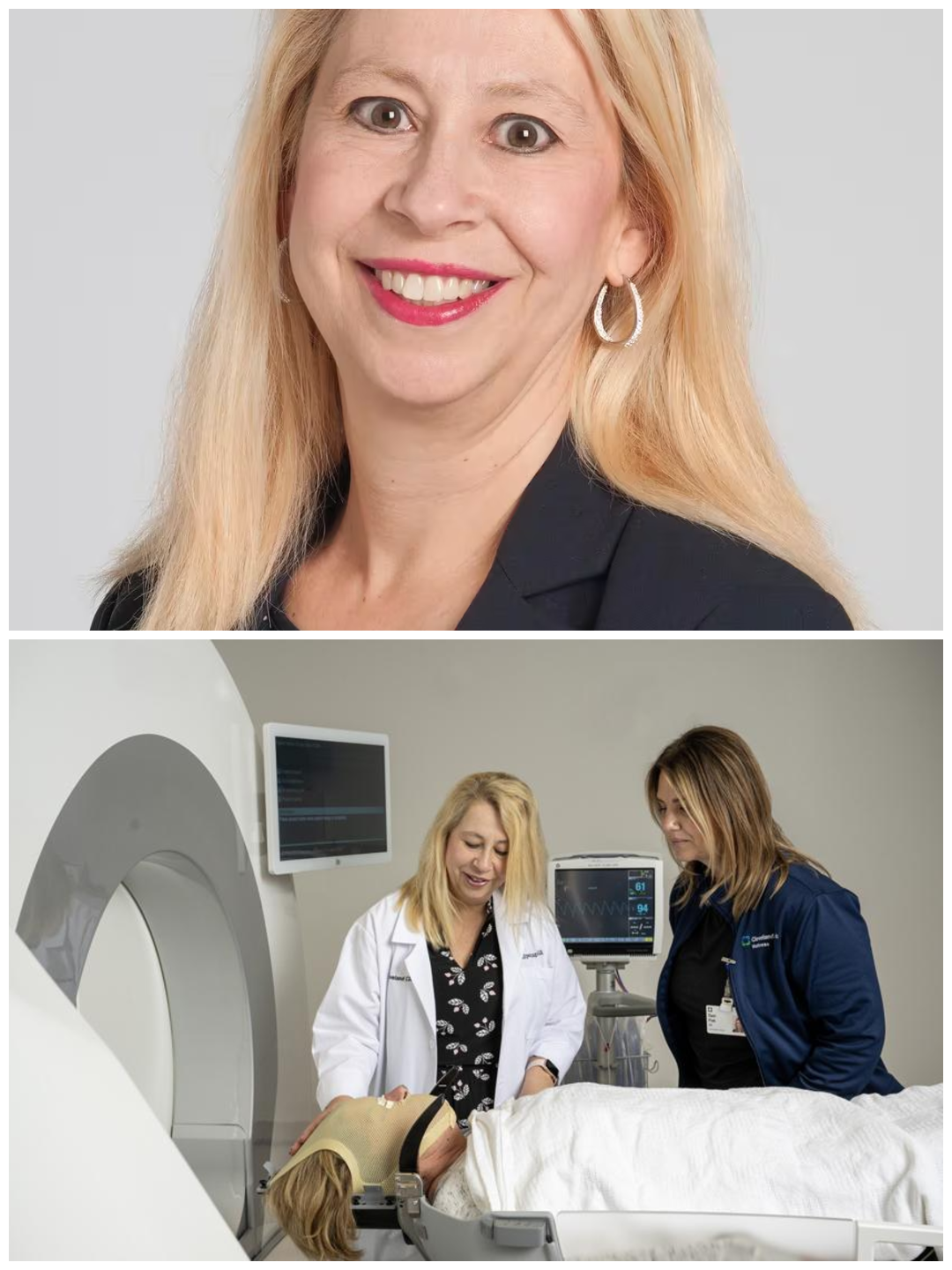
That search eventually led him to Cleveland Clinic, neurosurgeon Dr. Lilyana Angelov and a third option he says had not been presented to him before — stereotactic spine radiosurgery.
The Problem Was Discovered Almost by Accident
Kimelman did not originally undergo imaging because doctors suspected a dangerous spinal lesion.
The abnormality was discovered incidentally in September 2025.
Further evaluation revealed an aggressive hemangioma positioned close to the spinal cord.
Hemangiomas are abnormal collections of blood vessels and can occur in the spine. Many vertebral hemangiomas never cause serious problems, but aggressive examples can behave very differently, particularly when they threaten nearby neurological structures.
Kimelman began seeking medical opinions.
What he heard frightened him.
Traditional surgery, as it was described to him, would be extensive.
He recalled being told that the procedure could involve substantial reconstruction of his spine and carry significant risks.
Yet doing nothing also seemed dangerous.
He felt trapped between an aggressive intervention and the possibility of waiting for the condition to create irreversible neurological damage.
He Did Not Ask AI to Diagnose Him
That distinction became the most important part of what Kimelman did next.
He did not treat ChatGPT as a replacement for a physician.
He already had a diagnosis and medical information from his doctors.
Instead, he uploaded information about his case and used the tool as a way to search for expertise.
He essentially wanted to know:
Who in the country treats this specific problem?
ChatGPT returned a list of approximately 10 doctors and medical institutions.
Kimelman then did something much more traditional.
He researched them.
He narrowed the list to three possibilities and began contacting actual medical centers.
One of those options was Cleveland Clinic.
That search led him to Angelov, who heads Cleveland Clinic’s Section of Spinal Tumors and has extensive experience with complex tumors affecting the spine.
The important medical decisions came after that connection — through evaluation by physicians, not through the chatbot.
Cleveland Clinic Offered a Different Approach
When Kimelman reached Cleveland Clinic, specialists reviewed his case independently.
There, he learned about stereotactic spine radiosurgery.
The treatment is very different from conventional open spinal surgery.
Rather than making a large incision and physically removing the lesion, stereotactic radiosurgery uses highly focused radiation delivered with extreme precision to a targeted area.
Despite the word “surgery,” there is no traditional surgical opening.
Angelov has been closely involved with Cleveland Clinic’s spine radiosurgery program since it was developed there beginning in 2006.
For selected patients, the technique can allow doctors to target certain spinal lesions while minimizing radiation exposure to surrounding structures, including the spinal cord.
That did not mean every patient with a similar condition should receive the same treatment.
Kimelman still had to be evaluated to determine whether he was an appropriate candidate.
In his case, the medical team concluded that he was.

The Procedure Took About 10 Minutes
Kimelman underwent the treatment in December 2025.
After preparing for the possibility of a complicated open operation and long recovery, the contrast was dramatic.
The radiosurgery procedure itself took approximately 10 minutes, according to his account.
There were no rods or screws.
There was no major open spinal operation.
The option that eventually made sense for him had not been among the choices he initially believed he faced.
That is why Kimelman’s story is less about artificial intelligence making a medical decision and more about information changing the path of a medical search.
ChatGPT did not perform the procedure.
It did not decide that radiosurgery was safe for him.
It did not replace the Cleveland Clinic specialists who reviewed his imaging and treatment options.
What it did was surface the names of specialists and institutions he might not otherwise have found.
His Doctor Says AI Can Help — With Important Limits
Angelov told Parade that tools such as ChatGPT may have a useful role for patients who are trying to navigate complicated medical systems.
A patient facing an uncommon diagnosis may not know which specialty handles it, which centers have particular expertise or what treatment approaches exist beyond the first option presented locally.
AI can potentially help organize that search.
But Angelov also stressed the limitation that matters most:
AI should not replace a doctor.
Medical decisions require individual evaluation, imaging, examination, knowledge of a patient’s complete medical history and discussion of risks and benefits.
A chatbot cannot safely determine whether a particular procedure is appropriate simply because it has worked for someone else.
Kimelman’s experience worked differently.
He used AI to locate expertise.
Then he went to the experts.
Why a Second or Third Opinion Can Matter
Complex medical problems rarely fit neatly into one universal treatment plan.
Different hospitals may have different technology.
Different specialists may have experience with different procedures.
A surgeon may naturally see a problem through the tools of surgery, while a radiosurgery specialist may be able to evaluate whether a less invasive approach is technically possible.
That does not mean the first doctors were wrong.
Traditional surgery may still be necessary for many patients with spinal tumors or vascular lesions.
Kimelman’s case simply illustrates why another opinion can sometimes reveal an option that was not initially discussed.
For an older patient confronting a high-risk procedure, knowing that another approach exists can dramatically change the decision-making process.
His Story Was Not Finished After Treatment
The December procedure did not mean Kimelman could simply forget about the condition.
Follow-up remained essential.
When Parade interviewed him in 2026, additional imaging was scheduled for the fall so doctors could assess how the treated area was responding.
That continued monitoring is another reason his experience should not be reduced to a simple “AI found the cure” story.
There was no instant cure generated by a chatbot.
There was a diagnosis.
There were frightening treatment choices.
There was a broader search for specialists.
Then there was an independent medical evaluation that produced another possibility.
The Most Important Question Was Not “What Do I Have?”
Kimelman’s story stands out because of the way he used the technology.
He did not ask a chatbot to overrule his doctors.
He did not ask it to choose his treatment.
Instead, at 77, facing two options he found frightening, he asked who else might understand the problem.
That question led him from Florida to Cleveland Clinic.
It led him to Angelov.
And after specialists reviewed his case, it led to a roughly 10-minute radiosurgery procedure instead of the major open operation he had feared.
The lesson is not that ChatGPT replaced medicine.
It did something much narrower — and, in Kimelman’s case, potentially very useful.
It helped him find another door to knock on.