NANCY GUTHRIE CASE: EXPERT SAYS A SUSPECT’S “DIGITAL BLACKOUT” COULD HOLD A CRUCIAL CLUE

NANCY GUTHRIE CASE: EXPERT SAYS A SUSPECT’S “DIGITAL BLACKOUT” COULD HOLD A CRUCIAL CLUE
 TUCSON, Ariz. — The investigation into the disappearance of Nancy Guthrie, the 84-year-old mother of TODAY host Savannah Guthrie, is increasingly turning toward the digital evidence surrounding the morning she vanished.
A digital-forensics expert who previously worked on evidence involving Bryan Kohberger says investigators could potentially learn a great deal by examining whether a suspect deliberately created a “digital blackout” around the time Guthrie disappeared.
The theory comes as investigators continue trying to reconstruct what happened at Guthrie’s Tucson home and identify the person seen on surveillance footage near the property.
THE DIGITAL TRAIL MAY BE AS IMPORTANT AS THE PHYSICAL EVIDENCE
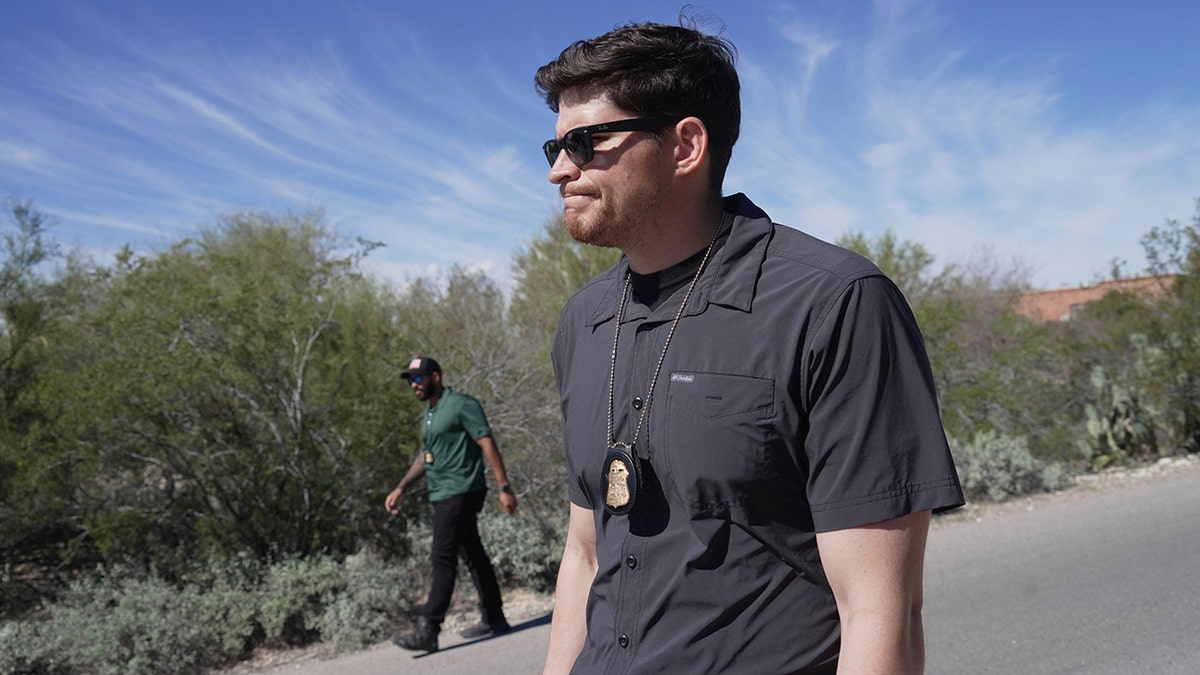
Heather Barnhart, a Cellebrite digital-forensics expert who helped analyze Kohberger’s phone evidence, told Fox News that smartphones can leave behind extensive traces even when someone believes they have successfully erased or hidden their activity.
Those traces can include location information, connections to nearby networks, application activity and other metadata.
In Guthrie’s case, investigators are examining a complicated collection of digital evidence from the home and surrounding neighborhood.
The question is whether the person responsible attempted to deliberately disrupt that trail.
 A STRANGE GAP IN SURVEILLANCE
One of the most intriguing elements is the apparent loss of connectivity around the time Guthrie disappeared.
Authorities have investigated reports from neighbors who experienced internet or security-camera problems during the early-morning hours.
One neighbor reportedly described it as unusual that portions of security-camera footage were unavailable around the critical timeframe.
That has raised the possibility of deliberate interference.
Experts have discussed whether a Wi-Fi or radio-frequency jammer could have disrupted cameras or other connected devices.
However, investigators have not publicly confirmed that a jammer was used.
That distinction is important: the outage is an investigative lead, not proof that someone intentionally disabled the cameras.
THE FBI HAS RECOVERED PREVIOUSLY INACCESSIBLE IMAGES
The investigation has already demonstrated why digital evidence could become so important.
The FBI previously announced that investigators recovered additional images from Guthrie’s home after working with private-sector technology partners.
The bureau said the footage had been located in residual data within backend systems, despite previously being inaccessible. The recovered images showed what authorities described as an armed individual apparently tampering with a camera at Guthrie’s front door.
That discovery gave investigators another piece of evidence showing activity at the property during the suspected abduction.
Now, experts believe investigators could potentially use similar forensic techniques to reconstruct other missing pieces of the digital timeline.
WHAT HAPPENED TO NANCY’S PHONE?
Guthrie’s own devices may also provide important clues.
According to the sheriff’s previously released timeline, her doorbell camera stopped functioning during the early morning of Feb. 1, while her pacemaker-related phone connection was later disrupted.
A neighbor’s security footage also captured vehicles traveling near the area around the same period.
For digital investigators, those seemingly unrelated events can potentially be connected through precise timestamps.
A phone doesn’t necessarily need to contain an obvious message or photograph to become useful evidence.
Sometimes, what a device stops doing can be just as revealing as what it does.
THE KOHBERGER CASE SHOWED HOW MUCH A PHONE CAN REVEAL
Barnhart’s experience with the Kohberger investigation is particularly relevant because his cellphone became an important part of the prosecution’s evidence.
Forensic investigators were able to reconstruct activity from the device and identify patterns that helped investigators understand Kohberger’s movements and behavior.
Barnhart now believes investigators working the Guthrie case could potentially apply similar digital-forensics techniques — although every case is different and there is no guarantee the same approach will produce a breakthrough.
THE BIG QUESTION: WAS THE BLACKOUT INTENTIONAL?
If investigators ultimately determine that someone deliberately disrupted cameras, internet connections or other electronic systems, it could become a significant part of the timeline.
But there are several possibilities.
The disruption could have resulted from an equipment failure.
It could have been caused by a local network problem.
Or it could have been deliberate interference by someone attempting to avoid leaving a digital record.
Determining which explanation is correct is the key.
Investigators have not publicly concluded that a digital blackout was intentionally created by the person who took Guthrie.
THE CASE REMAINS WITHOUT A PUBLICLY IDENTIFIED SUSPECT
Guthrie was last seen at her Tucson home on Jan. 31, 2026, and authorities have treated the disappearance as a suspected abduction.
The FBI released images of a masked individual believed to be connected to the case, while investigators have continued gathering surveillance footage and other evidence.
A substantial reward has also been offered for information leading to Guthrie’s recovery and the identification of those responsible.
Despite months of investigation, the public still does not have a definitive answer about where Guthrie was taken or what happened to her after she disappeared.
ONE SMALL DIGITAL CLUE COULD CHANGE EVERYTHING
The most important evidence in a complex investigation is not always dramatic.
It can be a timestamp.
A disconnected device.
A missing video segment.
A vehicle captured by a neighborhood camera.
Or a phone that suddenly behaves differently from everything around it.
That is why digital-forensics experts believe the electronic trail surrounding Nancy Guthrie’s disappearance could eventually help investigators connect the missing pieces.
Someone may have tried to disappear without leaving a trace.
But in the modern world, disappearing digitally is far harder than it appears.
And investigators are now looking closely at the possibility that the very moment the digital trail went dark could become one of the most important clues in the entire Nancy Guthrie investigation