STEPHEN SCHNEIDER’S DEFENSE LOOKS BEYOND ALCOHOL AS KEY QUESTION EMERGES IN FATAL BOAT CRASH
STEPHEN SCHNEIDER’S DEFENSE LOOKS BEYOND ALCOHOL AS KEY QUESTION EMERGES IN FATAL BOAT CRASH
BERKELEY TOWNSHIP, N.J. — The legal battle surrounding the fatal Barnegat Bay boat crash that claimed the lives of two young siblings could center on more than Stephen Schneider’s alleged alcohol impairment.
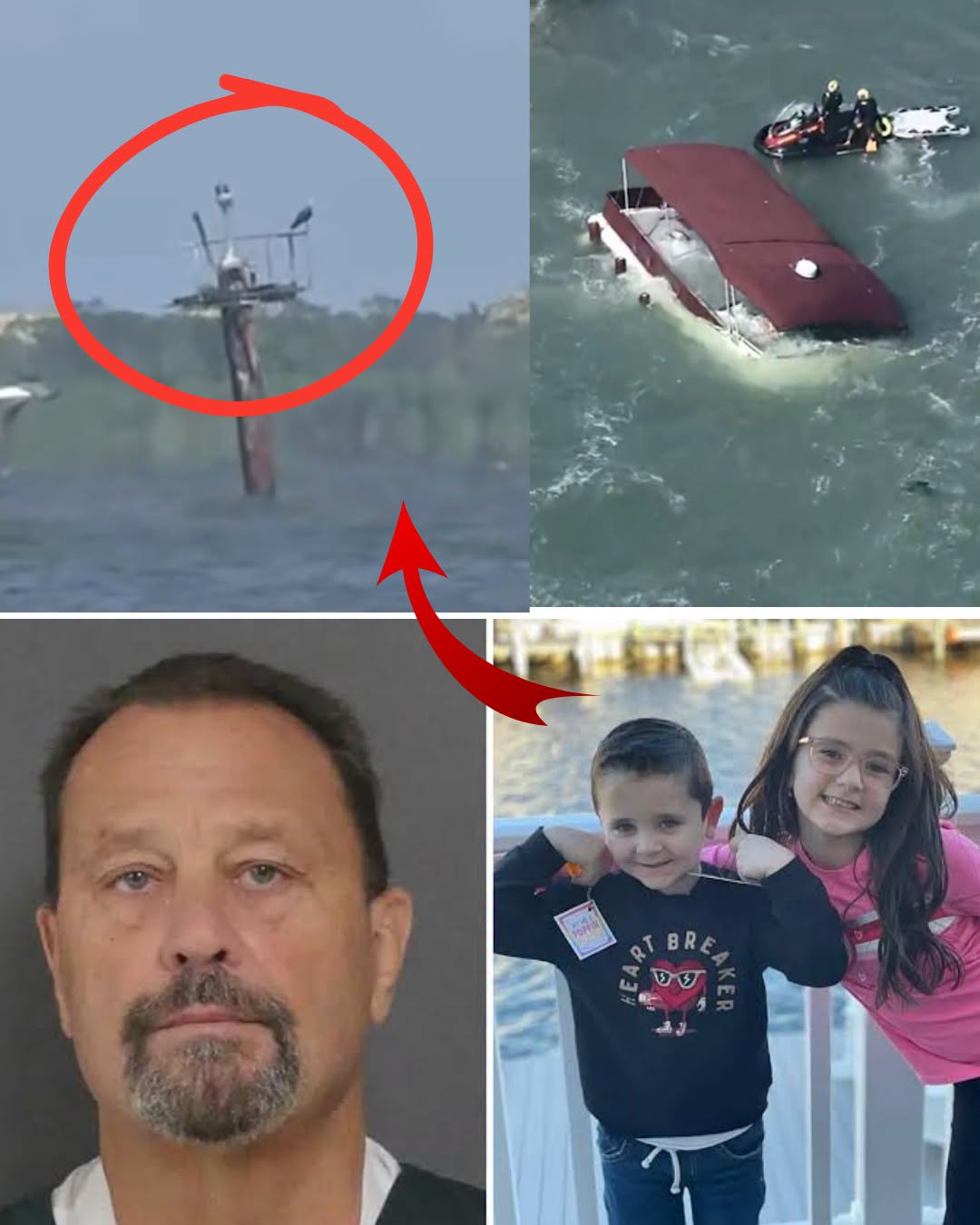
Schneider, 64, faces two counts of reckless vessel homicide after authorities allege that his boat struck a channel marker on July 19, throwing his grandchildren, Mya Bella Golabek, 9, and Sigmund “Siggy” Golabek, 7, into the water. Both children later died.
ALCOHOL IS A MAJOR PART OF THE PROSECUTION’S CASE
Investigators allege Schneider was impaired when he was operating the boat.
Later reporting has stated that his blood-alcohol concentration was approximately 0.16%, a figure that prosecutors are expected to rely on heavily as the case moves forward.
But Schneider’s defense appears to be examining another critical issue: what the boat operator could actually see on the water that night.
 THE CHANNEL MARKER MAY BECOME A KEY ISSUE
The crash occurred after Schneider’s boat struck a channel marker in Barnegat Bay.
Defense arguments reportedly include questions about the marker’s visibility and the physical conditions surrounding it at the time of the collision.
That could become significant because the case is not simply about whether Schneider had consumed alcohol. Prosecutors must ultimately prove the elements of the charges against him, while the defense can challenge whether the circumstances of the crash support criminal responsibility.
Local officials have previously emphasized that the channel markers themselves indicate the location of deeper water in the notoriously shallow Barnegat Bay.
WHAT HAPPENED THAT NIGHT?
According to charging documents, the crash occurred shortly after 9 p.m. on July 19.
Schneider was operating a Tidewater boat when it struck the wooden marker. The impact sent Mya and Sigmund into the bay.
Schneider and his wife pulled the children from the water and attempted to get them to shore. Both children were later taken to a hospital, where they died.
The tragedy has left their parents facing an unbearable loss while the children’s grandfather now prepares to defend himself against serious criminal charges.
 THE DEFENSE MAY CHALLENGE THE FULL PICTURE
A blood-alcohol reading can provide important evidence, but the defense may argue that investigators must also examine the environment in which the collision occurred.
Questions surrounding the marker’s lighting, visibility, location, weather and nighttime boating conditions could therefore become part of the courtroom battle.
That does not mean those factors have been established as the cause of the crash. Nor does the existence of a defense argument establish that Schneider was unable to see the marker.
Those issues will have to be tested against the available evidence.
SCHNEIDER REMAINS PRESUMED INNOCENT
Schneider was charged with two counts of reckless vessel homicide, along with boating-under-the-influence and reckless-operation charges.
The allegations have not been proven in court, and Schneider remains presumed innocent unless and until he is convicted.
For the families involved, however, the legal questions are deeply personal.
Mya and Sigmund were siblings whose lives ended during what was supposed to be a family outing.
THE QUESTION NOW
The prosecution is expected to focus heavily on Schneider’s alleged impairment.
The defense, meanwhile, appears poised to ask a different question:
What exactly was visible from the helm in the seconds before the boat struck the channel marker?
As the case moves forward, the answer could become an important part of determining what happened on Barnegat Bay that night.
The alcohol evidence may be powerful — but the courtroom battle could ultimately come down to the complete picture of the crash, from Schneider’s condition to what he could see ahead of the boat.