LINDSAY CLANCY’S LAWYER CALLS HER A “DARN GOOD MOTHER” AS JURY WEIGHS HER FATE
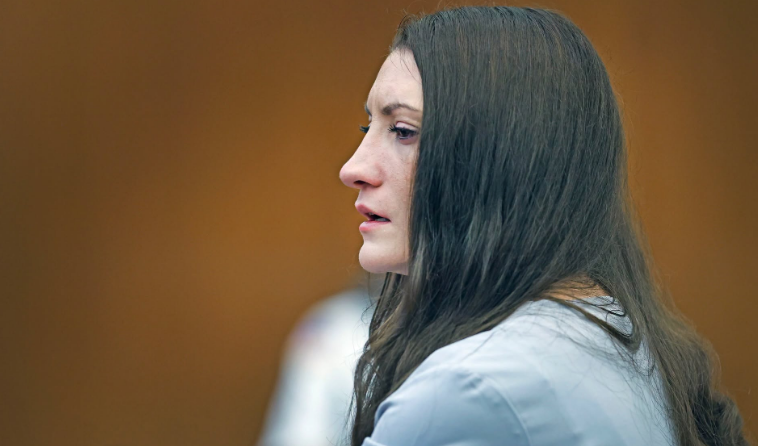
LINDSAY CLANCY’S LAWYER CALLS HER A “DARN GOOD MOTHER” AS JURY WEIGHS HER FATE
PLYMOUTH, Mass. — The fate of Lindsay Clancy is now in the hands of a Massachusetts jury after emotional closing arguments in the case involving the deaths of her three young children.
Defense attorney Kevin Reddington urged jurors Thursday to remember Clancy as the devoted mother she had been before her mental health deteriorated, calling her a “darn good mother” and arguing that severe postpartum psychosis left her unable to understand the wrongfulness of her actions.
Clancy, 36, is accused of causing the deaths of her children — 5-year-old Cora, 3-year-old Dawson and 8-month-old Callan — at the family’s Duxbury home in January 2023. Her defense is asking jurors to find her not criminally responsible because of mental illness.
 DEFENSE BLAMES MENTAL HEALTH TREATMENT
Reddington opened his closing argument by showing jurors photographs representing two dramatically different moments in Clancy’s life: one showing her with her family and another showing her severely injured after her own suicide attempt.
He argued that Clancy repeatedly sought medical and psychiatric help in the months before the tragedy but that her condition continued to deteriorate.
The defense has maintained that Clancy was experiencing severe postpartum psychosis and that problems with her psychiatric treatment contributed to her worsening condition. Reddington also criticized the medical professionals who treated her, arguing that inadequate care played a significant role in what happened.
PROSECUTORS OFFER A VERY DIFFERENT ACCOUNT
Assistant District Attorney Jennifer Sprague acknowledged that Clancy was struggling with mental health problems but argued that being mentally ill did not make her incapable of understanding right from wrong.
Prosecutors portrayed Clancy as deliberate and calculated, arguing that she arranged for her husband to leave the home before the children were harmed.
Sprague also pointed to Clancy’s communications with family members and medical providers, arguing that her decision not to disclose certain thoughts to her doctors showed that she understood those thoughts were wrong.
“This was a choice,” prosecutors argued, saying the defense’s focus on the medical system was a distraction from the central question of criminal responsibility.
 JURY BEGINS DELIBERATIONS
After more than five weeks of testimony, the jury began deliberating Thursday afternoon.
The panel can consider several possible outcomes, including not guilty, not guilty by lack of criminal responsibility, first-degree murder, second-degree murder or manslaughter.
Jurors deliberated for several hours but did not reach a verdict before being dismissed for the evening. They are scheduled to return Friday morning to continue considering the evidence.
If Clancy is found guilty of first-degree murder, she faces life in prison without parole. If she is found not criminally responsible because of mental illness, she could instead be committed indefinitely to a secure psychiatric facility.
ONE QUESTION NOW RESTS WITH THE JURY
The case has ultimately centered on a difficult legal question: Was Lindsay Clancy capable of understanding that her actions were wrong and controlling her behavior at the time of the children’s deaths?
The defense says severe mental illness overwhelmed that ability.
The prosecution argues that Clancy was struggling but remained capable of making decisions and understanding the consequences of her actions.
For now, the courtroom waits.
The jury has heard both sides. The final decision will determine whether Lindsay Clancy is held criminally responsible for the deaths of her three children — or whether mental illness legally prevented her from being responsible for what happened.