LINDSAY CLANCY “SCARED AND NERVOUS” AS JURY WEIGHS HER FATE — NO VERDICT AFTER FIRST DAY
LINDSAY CLANCY “SCARED AND NERVOUS” AS JURY WEIGHS HER FATE — NO VERDICT AFTER FIRST DAY
Lindsay Clancy is facing an agonizing wait as a Massachusetts jury considers whether she should be held criminally responsible for the deaths of her three young children.
After more than five weeks of testimony and more than 80 witnesses, the case is now in the hands of 12 jurors.
But after nearly four hours of deliberations Thursday, the jury left the courthouse without reaching a verdict.
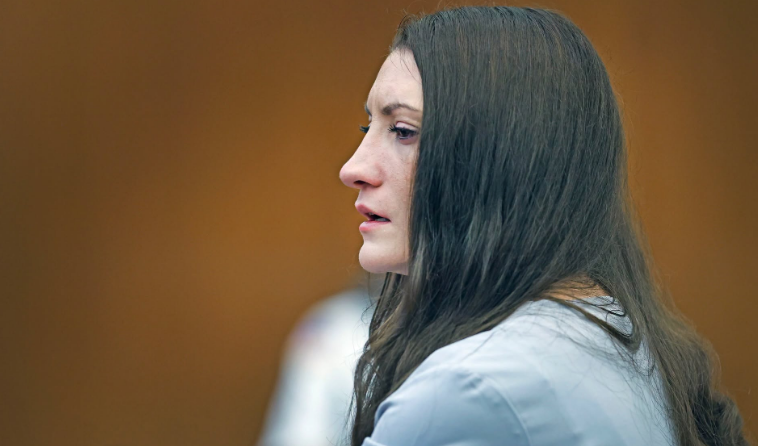
Clancy’s attorney, Kevin Reddington, said his client is “scared” and “nervous” as she waits to learn the outcome.
The jury is scheduled to resume deliberations Friday morning.
:max_bytes(150000):strip_icc():focal(749x0:751x2):format(webp)/lindsay-marie-clancy-013023-1-176600bdc3614f6ca230e63734b87361.jpg) THE CASE NOW COMES DOWN TO ONE CRITICAL QUESTION
THE CASE NOW COMES DOWN TO ONE CRITICAL QUESTION
There is little dispute over the central physical events of the case.
Clancy has acknowledged responsibility for the deaths of her three children — Cora, 5, Dawson, 3, and Callan, 8 months — in January 2023.
But the defense argues that she should not be held criminally responsible because she was experiencing severe postpartum psychosis at the time.
That means the jury’s most important task is determining whether Clancy understood that what she was doing was wrong.
:max_bytes(150000):strip_icc():focal(749x0:751x2):format(webp)/lindsay-clancy-court-080426-1-0d554916be174019b004a84bdf0e8019.jpg) DEFENSE: SHE HAD LOST TOUCH WITH REALITY
DEFENSE: SHE HAD LOST TOUCH WITH REALITY
Clancy’s defense has spent weeks presenting evidence about her deteriorating mental health.
Her attorneys argue that she was suffering from postpartum psychosis, along with other serious psychiatric problems, and that medication and inadequate treatment contributed to her condition.
Defense attorney Kevin Reddington portrayed Clancy as a mother overwhelmed by a psychiatric crisis rather than someone acting with a rational understanding of reality.
He urged jurors to consider her behavior in the context of the mental illness the defense says had taken control of her life.
The defense has also pointed to Clancy’s apparent suicide attempt immediately afterward as evidence of the severity of her psychiatric state.
PROSECUTORS OFFER A VERY DIFFERENT VERSION
Prosecutors acknowledge that Clancy suffered from mental-health problems.
But they argue that mental illness did not prevent her from understanding what she was doing.
Assistant District Attorney Jennifer Sprague argued during closing arguments that Clancy’s actions demonstrated planning and awareness.
Prosecutors pointed to evidence that she arranged circumstances that left her husband away from the home and concealed troubling thoughts from people who might have intervened.
Their argument is straightforward:
Clancy may have been mentally ill, but she still knew right from wrong.
That distinction could determine whether she spends the rest of her life in prison or is found not criminally responsible.
FIVE WEEKS OF EMOTIONAL TESTIMONY
The jury heard from medical experts, family members, friends, medical providers and others who encountered Clancy before and after the tragedy.
Her former husband, Patrick Clancy, also testified.
Psychiatrists called by both sides offered sharply different assessments of her mental state.
Some defense experts described symptoms consistent with postpartum psychosis.
Prosecution experts disputed the defense’s interpretation and argued that Clancy retained awareness and control.
The jury was therefore left with two competing explanations for the same devastating events.
CLANCY DID NOT TESTIFY
Clancy did not take the witness stand during the trial.
Instead, jurors heard testimony about her statements, diary entries, medical history and conversations with people around her.
A hospital chaplain who met with Clancy more than 200 times after the tragedy also testified about conversations they had while Clancy was hospitalized.
The prosecution and defense have interpreted those statements very differently.
For prosecutors, some of them suggest awareness.
For the defense, they reflect the severity of Clancy’s psychiatric condition.
WHAT COULD HAPPEN NEXT?
The jury has several possible verdicts available.
Clancy could be found guilty of first-degree murder, second-degree murder or manslaughter.
Jurors could also find her not guilty or determine that she was not criminally responsible because of mental illness.
A murder conviction could result in life imprisonment.
A finding of not criminally responsible would have a very different outcome and could result in commitment to a secure psychiatric facility rather than a traditional prison sentence.
NO VERDICT DOES NOT REVEAL THE JURY’S THINKING
The fact that jurors did not reach a decision after the first day does not indicate which side they favor.
They must weigh weeks of testimony, conflicting expert opinions and a complicated legal standard.
The panel consists of nine women and three men.
They will return Friday to continue deliberations.
A CASE THAT HAS CAPTURED NATIONAL ATTENTION
The Clancy trial has become a national conversation about postpartum psychosis, maternal mental health and the limits of criminal responsibility.
At the center of that debate, however, are three children whose lives ended in January 2023.
For Clancy, the legal question is whether severe mental illness made her incapable of understanding that her actions were wrong.
For prosecutors, the evidence tells a different story — one in which Clancy suffered from mental-health problems but nevertheless understood her actions and deliberately carried them out.
Now, after five weeks of testimony, the arguments are over.
The evidence has been presented.
And the decision belongs to 12 jurors.
THE WAIT CONTINUES
There is still no verdict.
Clancy remains “scared” and “nervous,” according to her attorney, as the jury prepares to return for another day of deliberations.
Whatever the final decision, the case is likely to continue generating discussion about mental illness, postpartum psychosis and the difficult boundary between psychiatric crisis and criminal responsibility.
For now, one question hangs over the courtroom:
Will the jury find Lindsay Clancy criminally responsible — or conclude that her mental state made her legally incapable of understanding what she was doing?