Danny DeVito Agreed to Produce ‘Pulp Fiction’ Before Quentin Tarantino Even Told Him the Story
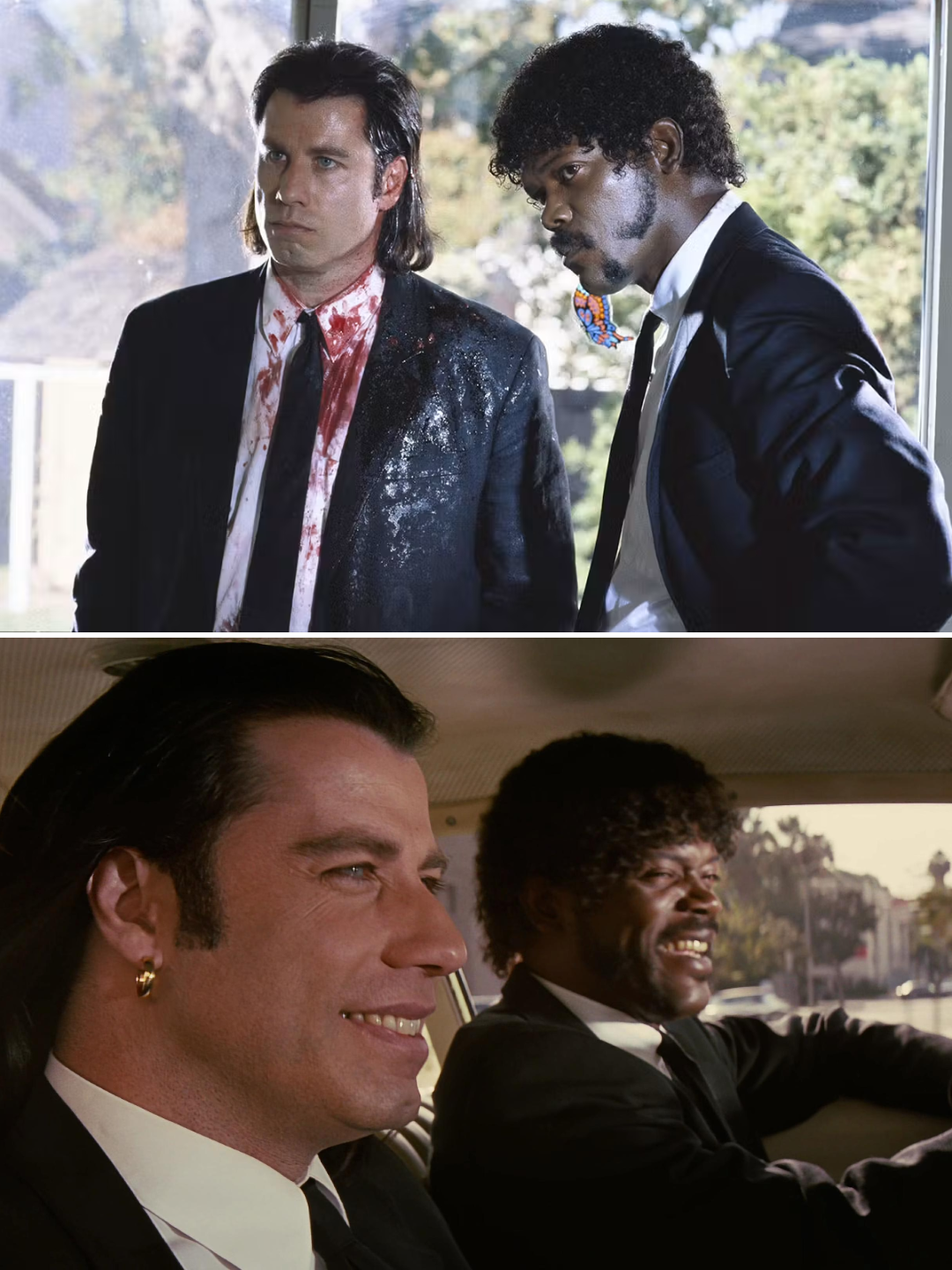
Danny DeVito did not need Quentin Tarantino to finish his pitch.
He barely needed Tarantino to start it.
By the time the young filmmaker began describing a strange new movie built around several stories and characters whose lives would eventually cross, DeVito had already made up his mind.
He wanted in.
The unusual decision would help put DeVito behind one of the most influential movies of the 1990s: Pulp Fiction.
For audiences who know DeVito primarily from movies such as Twins, Batman Returns and Matilda, or from decades of acting and comedy, his connection to Tarantino’s breakthrough can be easy to miss.
But DeVito was not simply a famous actor whose name happened to appear somewhere in the production history.
His Jersey Films company became one of the forces behind Pulp Fiction.
And according to DeVito, the deal began because he had already made one mistake with Tarantino.
He had arrived too late for Reservoir Dogs.
He was determined not to let that happen twice.
DeVito Had Already Read ‘Reservoir Dogs’
Before Pulp Fiction, Tarantino had made his feature directing debut with Reservoir Dogs.
The 1992 crime film introduced many of the elements audiences would later associate with him: criminals talking at length about seemingly ordinary subjects, fractured storytelling, sudden violence and dialogue that could make even a room full of men in black suits feel unpredictable.
DeVito encountered the script before Tarantino became a household name.
He liked what he read enough that he wanted to produce it.
There was a problem.
By the time DeVito tried to become involved, Reservoir Dogs was already moving forward.
He had missed his opportunity.
That experience stayed with him.
So when DeVito later arranged to meet Tarantino, he approached the conversation differently.
This time, he was not going to wait until every detail had been explained before deciding whether the filmmaker was worth backing.
He already believed in Tarantino’s voice.

Tarantino Started Explaining His Next Idea
During their meeting, Tarantino began describing the project he wanted to make next.
The concept involved interconnected characters and separate storylines that would gradually intersect.
Today, that description instantly sounds like Pulp Fiction.
At the time, however, DeVito did not yet know what the finished movie would become.
He had not seen John Travolta dancing with Uma Thurman.
He had not heard Samuel L. Jackson deliver Jules Winnfield’s speeches.
There was no Royale with Cheese, no mysterious briefcase glowing when it opened and no audience debating the movie’s chronology.
Tarantino was simply beginning to explain his idea.
DeVito stopped him.
He did not need to hear the rest yet.
According to DeVito’s recollection in a 2026 AARP interview, his priority was making the deal before somebody else did.
The lesson from Reservoir Dogs was still fresh.
Rather than hear an elaborate pitch and risk discovering afterward that the project had slipped away, DeVito wanted to secure the relationship first.
That still-undefined project became Pulp Fiction.
It Was an Extraordinary Bet on a Filmmaker
The story says something important about producing.
DeVito was not simply betting on a plot.
He was betting on Tarantino.
That distinction explains why he could commit before hearing every detail.
He had already seen enough in Reservoir Dogs to believe Tarantino was somebody worth backing.
The decision proved remarkably well timed.
Released in 1994, Pulp Fiction became a cultural phenomenon.
The film starred John Travolta as Vincent Vega, Samuel L. Jackson as Jules Winnfield, Uma Thurman as Mia Wallace and Bruce Willis as Butch Coolidge, with a large ensemble that also included Harvey Keitel, Tim Roth, Amanda Plummer, Ving Rhames and Christopher Walken.
Its nonlinear structure turned chronology into part of the entertainment.
Its soundtrack became iconic.
Its dialogue was quoted endlessly.
And its success transformed Tarantino from an admired young filmmaker into one of the most recognizable directors of his generation.
DeVito had committed before all of that existed.
DeVito Was More Than an Actor Behind the Scenes
The Pulp Fiction story is also a reminder that DeVito’s career has long contained another side that casual audiences may overlook.
Through Jersey Films, which he founded with Michael Shamberg and Stacey Sher, DeVito became involved with a remarkably varied list of projects.
The company produced films including Reality Bites, Get Shorty and Erin Brockovich.
Those projects did not fit neatly into one genre.
That was part of the point.
DeVito’s producing work gave him opportunities to support filmmakers and stories beyond the comic acting persona audiences associated with him.
With Tarantino, that instinct meant recognizing a filmmaker’s potential early and making sure he was not left on the outside a second time.
But DeVito’s contribution to Pulp Fiction did not end with saying yes to Tarantino.
He also became involved in one of the movie’s most consequential casting battles.
The Studio Wasn’t Convinced About John Travolta
It can be difficult now to imagine Pulp Fiction without John Travolta.
Vincent Vega became one of the defining roles of his career.
The movie helped revive Travolta’s status as a major star after a period in which his career had lost some of the momentum created by Saturday Night Fever and Grease.
But his casting was not an automatic studio choice.
According to DeVito’s recollection, the studio preferred Daniel Day-Lewis.
On paper, the alternative was understandable.
Day-Lewis had already established himself as one of the most respected actors of his generation.
Travolta, meanwhile, was not the obvious commercial choice he would have been during his late-1970s peak.
Tarantino wanted Travolta.
DeVito helped defend that choice.
That support mattered because casting Vincent differently could have changed the entire texture of the movie.
Travolta brought something unusual to the role: traces of his old movie-star charisma mixed with a strangely relaxed, almost ordinary quality.
Vincent can discuss fast food one minute, participate in horrifying violence the next and later become involved in one of the most famous dance sequences in modern film history.
The role worked partly because audiences already carried memories of Travolta from an entirely different era of Hollywood.
Tarantino understood the value of that history.
DeVito helped make sure he got the actor he wanted.
‘Pulp Fiction’ Changed Travolta’s Career
The decision became one of the most famous comeback stories in Hollywood.
Travolta received an Academy Award nomination for Best Actor for his performance.
More importantly, the movie reopened doors that had seemed to be closing.
A new generation discovered him.
Suddenly the star of Grease and Saturday Night Fever was also the cool, unpredictable face of one of the defining independent films of the 1990s.
And once again, DeVito had been involved in a decision that required trusting the filmmaker rather than choosing the safest option on paper.
First he trusted Tarantino before hearing the full pitch.
Then he supported Tarantino’s choice of Travolta when others wanted someone else.
Both bets became part of Pulp Fiction history.
DeVito Didn’t Want to Miss Twice
There is something almost comically simple about the origin of DeVito’s involvement.
He had wanted one Quentin Tarantino movie.
He was too late.
So when the next opportunity came, he refused to repeat the mistake.
Tarantino started telling him about a complicated story with characters whose paths would cross.
DeVito essentially told him they could discuss the details afterward.
First, he wanted the deal.
The result was Pulp Fiction.
More than 30 years later, audiences remember Travolta and Jackson in black suits, Uma Thurman dancing at Jack Rabbit Slim’s and Tarantino’s fractured timeline.
Far fewer think of Danny DeVito.
But behind one of the most famous movies of the decade was an actor-producer who had already learned one valuable lesson about Quentin Tarantino:
When the next script came along, he was not going to be late again.