LINDSAY CLANCY’S FATE NOW IN JURY’S HANDS AS PROSECUTION AND DEFENSE CLASH OVER HER MENTAL STATE
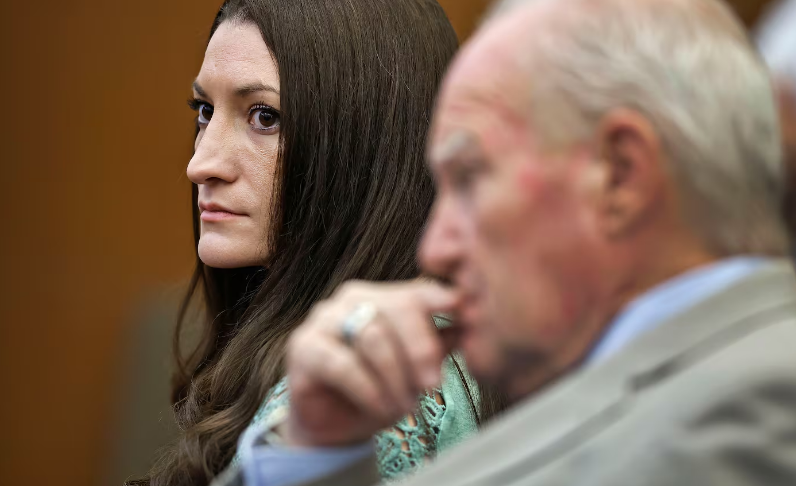
LINDSAY CLANCY’S FATE NOW IN JURY’S HANDS AS PROSECUTION AND DEFENSE CLASH OVER HER MENTAL STATE
PLYMOUTH, MASS. — After weeks of emotionally charged testimony and dramatic closing arguments, the fate of Massachusetts mother Lindsay Clancy is now in the hands of a jury.
Jurors began deliberating at 12:34 p.m. EDT, facing a case that has centered on a deeply contested question:
Was Clancy legally responsible for her actions when her three children were harmed, or was she experiencing a severe psychiatric crisis that left her unable to understand or control what she was doing?
The answer could determine the outcome of the case.
 TWO COMPLETELY DIFFERENT PORTRAITS
The defense and prosecution presented sharply different explanations for what happened.
Defense attorney Kevin Reddington argued that Clancy was suffering from severe mental illness and psychosis at the time of the incident.
He urged jurors to consider testimony from defense experts who concluded that Clancy was experiencing psychosis and argued that her mental condition fundamentally affected her ability to reason and control her behavior.
Reddington also pointed to Clancy’s history as a devoted mother, asking jurors to consider the person she had been before the tragedy.
The defense further criticized the medical care Clancy received before the incident, arguing that her deteriorating psychiatric condition was not adequately recognized or treated.
 THE DEFENSE POINTS TO HER OWN SUICIDE ATTEMPT
One of the most significant arguments from the defense focused on what happened afterward.
Clancy attempted to take her own life by cutting herself and going through a second-story window.
She survived but suffered devastating injuries that left her paralyzed.
Reddington argued that the seriousness of the attempt undermined the prosecution’s suggestion that Clancy had carefully staged or calculated what happened.
The defense’s position is that the attempt provides critical insight into the depth of her psychiatric crisis.
PROSECUTORS SAY SHE STILL KNEW RIGHT FROM WRONG
The Commonwealth offered a very different interpretation.
Prosecutors acknowledged that Clancy was depressed and struggling with mental-health problems.
But they argued that being mentally ill did not mean she was legally incapable of understanding her actions.
According to prosecutors, Clancy knew what she was doing and retained the ability to control her behavior.
They urged jurors to focus on the evidence surrounding the hours before the children were harmed.
THE PROSECUTION’S THEORY OF PLANNING
During closing arguments, prosecutors argued that Clancy deliberately created an opportunity to be alone with her children.
They pointed to her husband, Patrick, being sent out on errands.
The Commonwealth also highlighted calls, text messages and internet searches made before the incident.
Prosecutors argued those actions demonstrate preparation and conscious decision-making.
Their theory is that the evidence is inconsistent with the defense’s claim that Clancy was completely unable to understand or control her actions.
PROSECUTORS PUT THE CHILDREN AT THE CENTER
In the final moments of their closing argument, prosecutors focused heavily on the three children.
They reminded jurors of the futures the children would never have.
According to the prosecution, Cora dreamed of becoming a doctor, while Dawson wanted to become a firefighter.
Callan, prosecutors said, “never got a chance to dream.”
The Commonwealth argued that Clancy continued harming the children long enough to ensure they would not survive.
Prosecutors then asked jurors to return guilty verdicts.
THE JURY’S DECISION IS ABOUT MORE THAN WHAT HAPPENED
The judge’s instructions made clear that the jury’s task involves more than determining whether Clancy committed the acts charged.
The Commonwealth must also prove beyond a reasonable doubt that she was criminally responsible at the time.
Under Massachusetts law, a defendant may be found not guilty by reason of insanity if a mental disease or defect made the person unable to appreciate the wrongfulness of the conduct or unable to conform their behavior to the requirements of the law.
That distinction is at the heart of the trial.
The defense says Clancy’s psychiatric condition reached that legal threshold.
The prosecution says it did not.
A BATTLE OVER THE MEANING OF THE EVIDENCE
For jurors, seemingly small details from the hours before and after the incident could carry enormous weight.
The defense wants them to see evidence of a woman in the grip of psychosis.
The prosecution wants them to see evidence of someone who was suffering but remained capable of making deliberate decisions.
The two sides are therefore asking the jury to interpret the same devastating sequence of events through entirely different lenses.
NOW COMES THE WAIT
At 12:34 p.m., jurors began the difficult task of weighing the evidence.
There is no guaranteed timetable for deliberations.
They may review testimony, examine evidence and revisit the judge’s legal instructions before reaching a decision.
The courtroom now enters a tense waiting period.
For the prosecution, the goal is a finding that Clancy was legally responsible.
For the defense, the goal is to convince jurors that her psychiatric condition prevented her from meeting the legal standard of criminal responsibility.
And for the families involved, the stakes could not be higher.
NO VERDICT YET
For now, there is no verdict.
The jury is still deliberating.
Whatever decision eventually comes, the case has forced jurors to confront two competing questions at once:
Was this the result of deliberate action?
Or was it the devastating consequence of a severe psychiatric crisis?
That distinction — more than any other issue in the courtroom — could determine Lindsay Clancy’s fate.