LUCY LETBY CASE TAKES ANOTHER DRAMATIC TURN AS NEW QUESTIONS SURROUND THE INSULIN EVIDENCE
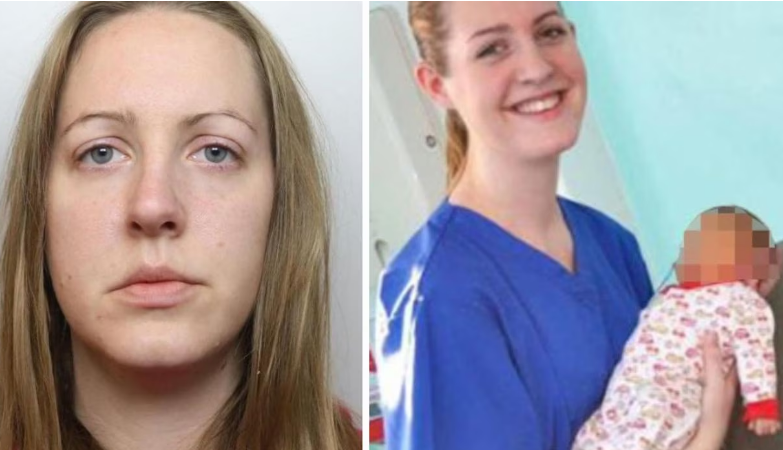
LUCY LETBY CASE TAKES ANOTHER DRAMATIC TURN AS NEW QUESTIONS SURROUND THE INSULIN EVIDENCE
LONDON — One of Britain’s most controversial criminal cases is once again under intense scrutiny as new expert analysis raises fresh questions about the medical evidence used to convict former neonatal nurse Lucy Letby.
Letby is currently serving whole-life sentences after being convicted of murdering seven babies and attempting to murder seven others at the Countess of Chester Hospital between 2015 and 2016.
But her legal battle is far from over.
A 100-page analysis submitted to the Criminal Cases Review Commission in July reportedly challenges aspects of the insulin evidence presented during her trial, including the interpretation of evidence given by prosecution expert Professor Peter Hindmarsh. The report was prepared by consultant neonatologist Neil Aiton and statistician Hilde Wilkinson-Herbots.
 THE INSULIN EVIDENCE UNDER THE MICROSCOPE
Insulin was among the most important elements of the prosecution’s case involving two babies.
At trial, prosecutors argued that laboratory results indicated the infants had been deliberately exposed to insulin.
But experts supporting Letby’s legal challenge now argue that the evidence was more complicated than the jury was told.
The July report reportedly alleges errors and omissions in the presentation of the insulin evidence and raises questions about alternative explanations for the babies’ insulin levels. It also reportedly questions aspects of the timeline surrounding the alleged poisonings.
That does not mean a court has determined that the original evidence was wrong.
But it does mean that an important part of the prosecution case is being subjected to renewed expert scrutiny.
THIS IS NOT THE FIRST CHALLENGE
The latest report follows a much larger body of expert criticism.
In April 2025, Letby’s legal team submitted an 86-page report from seven experts challenging the reliability of the immunoassay testing used in the insulin cases.
A separate report involving 14 experts was also submitted, with Letby’s lawyers arguing that it found no evidence of deliberate harm.
The significance of those reports is now being considered as part of the CCRC process.
 THE CCRC HAS NOT CLEARED LETBY
Despite the growing debate, there is an important legal reality:
Lucy Letby’s convictions have not been overturned.
The CCRC is investigating whether there is a real possibility that the convictions would not be upheld if referred back to an appellate court.
The commission itself has stressed that it does not decide whether someone is innocent or guilty. That decision belongs to the courts.
So far, there has been no ruling that Letby was wrongly convicted.
QUESTIONS ARE NOW GOING BEYOND INSULIN
The renewed scrutiny is not limited to laboratory evidence.
Experts and commentators have also questioned the statistical analysis used at trial, particularly the presentation of Letby’s work shifts in relation to the babies’ collapses.
Other disputed issues include alternative medical explanations, hospital conditions and whether investigators sufficiently considered competing explanations before focusing on Letby.
One recent review of the public record says the debate now involves multiple separate areas of evidence rather than one isolated scientific dispute.
A SECOND MAJOR DEVELOPMENT IS APPROACHING
Meanwhile, the Thirlwall Inquiry is moving toward publication of its final report.
The inquiry was established to examine events at the Countess of Chester Hospital and their implications following Letby’s trial and convictions. Its website says the final report will be published at the earliest practical date after Parliament’s summer recess.
The inquiry cannot overturn Letby’s convictions.
But its findings could provide important context about hospital management, clinical concerns and the circumstances surrounding the neonatal unit.
THE CASE IS NOW A BATTLE OVER THE EVIDENCE
Years after the original investigation, the central question is becoming increasingly complicated.
Was the medical evidence presented to the jury as certain actually as conclusive as prosecutors argued?
Were alternative explanations adequately considered?
Were statistical patterns presented in a way that could have influenced the jury?
And did investigators fully investigate the hospital environment before focusing on Letby?
Those questions remain disputed.
For Letby’s supporters, the new expert material represents a potentially significant challenge to the original convictions.
For those who support the verdicts, the new reports are arguments that must still survive legal and judicial scrutiny.
WHAT HAPPENS NEXT?
The CCRC now faces the difficult task of reviewing an enormous amount of evidence from two lengthy trials, alongside new expert material submitted after Letby’s convictions.
If the commission believes there is a real possibility that the convictions would not be upheld, it can refer the case back to the Court of Appeal.
If it does not, the convictions remain in place.
For now, no court has overturned Letby’s convictions and no authority has declared her innocent.
But the case continues to evolve.
And with new scientific criticism, statistical questions and the forthcoming Thirlwall Inquiry report, one of Britain’s most closely watched criminal cases is entering another potentially pivotal chapter.
The verdict has not changed.
But the debate over the evidence is far from over.