Nikki Reed Turned Her Own Teenage Turmoil Into Thirteen — Then She and Evan Rachel Wood Stopped Speaking for Years
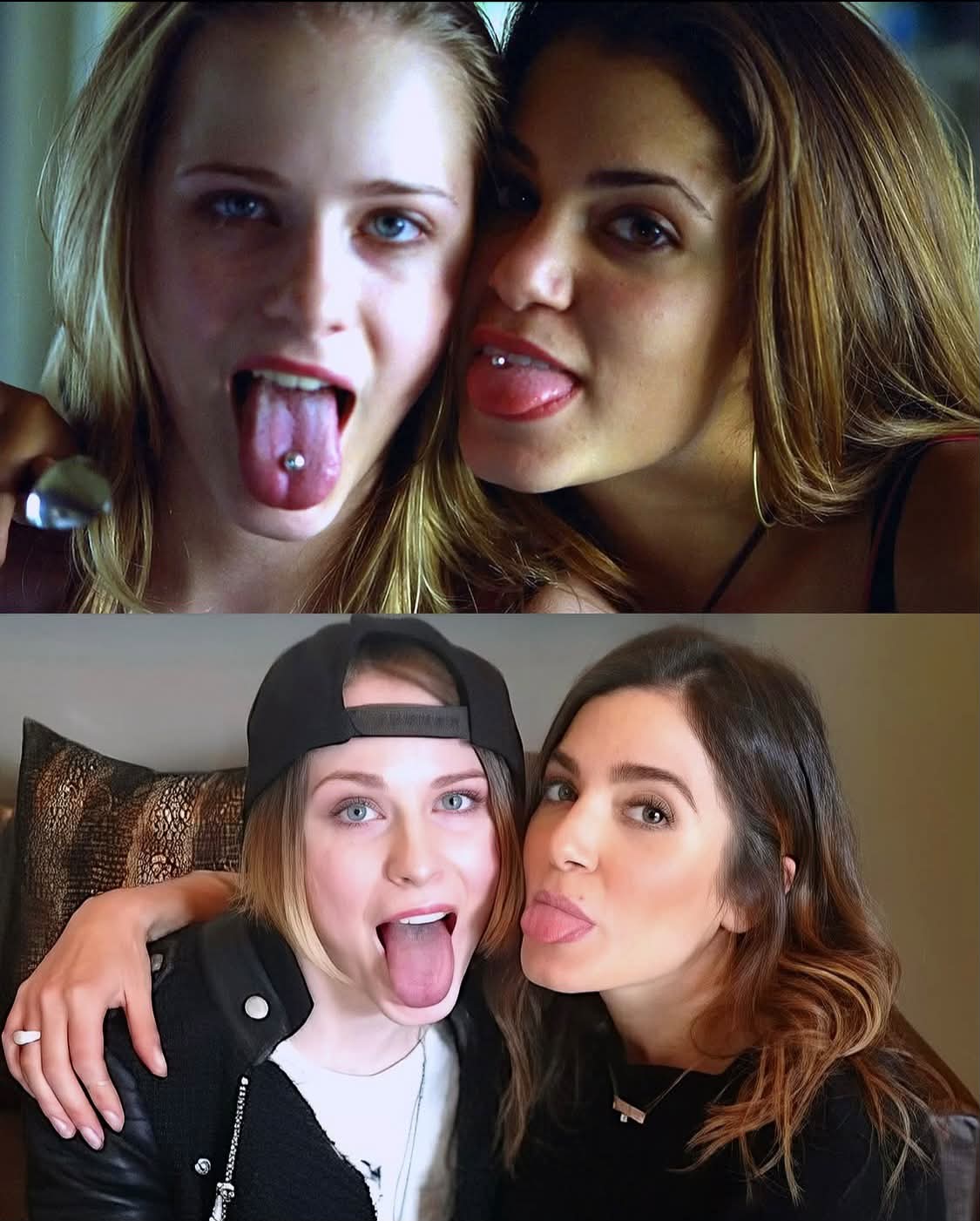
Long before Nikki Reed became known to millions as Rosalie Hale in the Twilight films, she helped create one of the most unsettling teenage dramas of the early 2000s.
She was only 13.
Working with filmmaker Catherine Hardwicke, Reed poured pieces of her own adolescence into the screenplay for Thirteen, a movie about a formerly high-achieving girl who becomes consumed by popularity, rebellion and an increasingly dangerous friendship.
But there was an unusual twist when the movie reached the screen.
Reed did not play Tracy, the character whose journey was most closely connected to her experiences. Evan Rachel Wood did. Reed instead became Evie, the magnetic, rebellious girl who helps pull Tracy into a new world.
The two teenagers grew intensely close while making the film.
Then, after Thirteen became a sensation, they drifted apart — and would not truly reconnect until years later.
A Screenplay That Began With Nikki Reed’s Real Life
Hardwicke had known Reed since she was about five years old after previously being in a relationship with Reed’s father. Even after that relationship ended, she remained close to the family and regarded Reed almost like a surrogate daughter.
As Reed moved into adolescence, Hardwicke noticed a dramatic change.
The creative, high-performing child she remembered was suddenly struggling with anger, insecurity, appearance and the intense pressure to fit in. Hardwicke tried spending more time with her, taking her to activities and acting classes and giving her another adult relationship outside the immediate tensions of home.
Eventually, the pair began writing.
What was initially imagined as a lighter teenage project rapidly turned into something far more personal. During Reed’s winter break in January 2002, she and Hardwicke wrote the first draft of Thirteen in roughly six days.
Reed supplied language, emotions and situations drawn from what she had seen and experienced around her. Hardwicke helped shape those memories into a dramatic story.
The finished film was never meant to be a literal record of every event in Reed’s life. Reed herself described it as loosely based on her experiences, and some elements were heightened or fictionalized. But its emotional foundation came directly from the upheaval she had recently lived through.
That connection would give Thirteen its greatest strength — and later create complications Reed could not possibly have anticipated at 13.
Evan Rachel Wood Ended Up Living Nikki’s Story Onscreen
In the movie, Tracy Freeland begins as an intelligent, relatively innocent student.
Then she becomes fascinated by Evie Zamora, one of the most confident and fashionable girls at school.
Winning Evie’s approval seems to unlock a completely different identity. Tracy changes her clothes, distances herself from her family and begins experimenting with theft, drugs, sexuality and piercings while her relationship with her mother, Melanie, rapidly deteriorates.
Wood played Tracy.
Reed played Evie.
That meant Reed spent the production watching another young actress perform scenes carrying echoes of Reed’s own private adolescence.
She later remembered how personal the experience could feel. At the same time, Reed’s portrayal of Evie was so convincing that audiences sometimes blurred the distinction between the actress and the character — even though Reed stressed that Evie was a performance rather than a straightforward version of herself.
The young performers were close to the ages of the girls they portrayed. Reed had been 13 while writing the screenplay and was 14 during production.
That proximity gave the movie an unnerving authenticity.
Instead of adults trying to remember how teenagers talked, dressed and tested boundaries, Thirteen had a teenager helping determine what appeared on the page.
The Tiny Movie Became Far Bigger Than Anyone Expected
Making the film was hardly a conventional Hollywood production.
Hardwicke was directing a feature for the first time. The movie centered on girls, dealt with uncomfortable material and carried an R rating. Its modest budget forced the production to rely on practical locations, personal belongings and a fast shooting schedule.
Then Thirteen reached the 2003 Sundance Film Festival.
Hardwicke won the festival’s Dramatic Directing Award, giving the movie enormous credibility before its theatrical release.
The performances also attracted major awards attention.
Wood received a Golden Globe nomination for Best Actress in a Motion Picture — Drama, while Holly Hunter, playing Tracy’s exhausted but fiercely devoted mother, earned an Academy Award nomination for Best Supporting Actress.
For Reed, however, success came with something she had never fully understood she was signing up for.
Her family story was now public material.
Reporters wanted to know which parts were true. People analyzed her parents. Reed found herself expected to explain teenage rebellion even though she was still a teenager herself.
And the attention affected another relationship too.
Her friendship with Wood.
The Girls Were Turned Into Competitors
Wood and Reed had developed a genuine connection during filming.
Their closeness helped make Tracy and Evie’s relationship feel unusually intense. The film understood something often missed in stories about teenage girls: a friendship at that age can contain admiration, jealousy, possessiveness, dependence and affection all at once.
But once publicity began, Reed later said that forces around them encouraged competition.
The young actresses were compared with each other — their appearances, personalities, careers and futures.
They were too young at the time, Reed explained years later, to understand what was happening.
As adults, she said, they were finally able to recognize that people had been pitting them against each other and creating a competitive atmosphere around two teenage girls.
Eventually, the real friendship began to resemble the instability audiences had watched between Tracy and Evie.
They stopped communicating.
In a later reunion discussion, Reed recalled that she was around 25 when she went to Hardwicke and admitted how much she missed Wood. She had not spoken to her former co-star in a long time and was unsure whether Wood would even want to hear from her.
Hardwicke encouraged her to call.
Reed did.
Wood’s response was essentially immediate: they should see each other.
One Conversation Finally Explained What Happened
Years of distance were ultimately undone by a remarkably simple act.
They talked.
Reed later described sitting down with Wood for roughly two hours and unloading the emotions they had carried about the experience.
For the first time as adults, they could examine what had happened without the machinery of promotion, teenage insecurity and professional competition surrounding them.
Reed said they “connected the dots” during that meeting and moved beyond the estrangement.
By 2021, the situation had almost completely reversed.
Reed said she and Wood were extremely close again, speaking weekly and sometimes daily and regularly using FaceTime.
Their shared history had also changed meaning with age.
Both became mothers. Both had lived through adulthood in the entertainment industry. And both could look back at Thirteen with perspectives their teenage selves simply did not possess.
Reed has become especially reflective about what making the movie cost her family. She has said that, at 13, she could only tell the story from a 13-year-old’s viewpoint. As an adult, she recognized that her parents were far more complicated than the versions a frightened or angry teenager could understand.
She has also acknowledged feeling regret over how publicly her family’s imperfections were exposed once the film succeeded.
That hindsight gives Thirteen an unusual second story.
The first is on the screen: two girls becoming inseparable before their friendship collapses under pressure.
The second happened after the cameras stopped.
Reed and Wood were teenagers entrusted with emotionally demanding material, then suddenly placed under the attention of an industry eager to compare them. They lost touch before they were old enough to understand why.
Years later, they finally got to rewrite that ending themselves.