LINDSAY CLANCY TRIAL HITS A CRITICAL MOMENT — JURY DEADLOCKED AGAIN AS MISTRIAL LOOMS
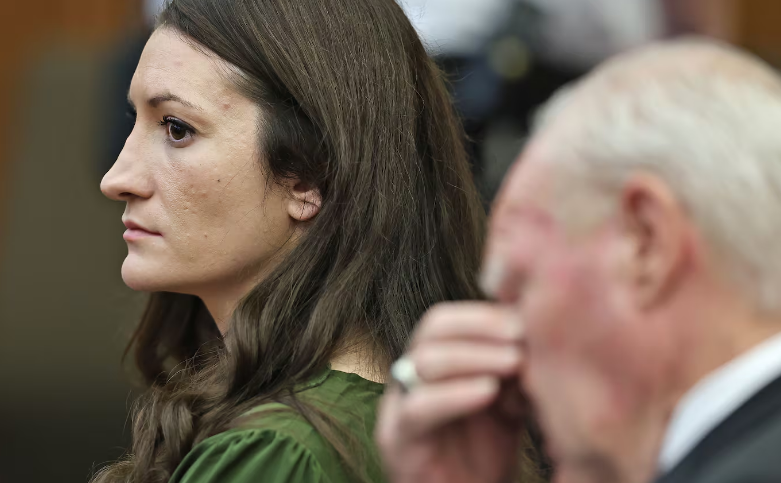
LINDSAY CLANCY TRIAL HITS A CRITICAL MOMENT — JURY DEADLOCKED AGAIN AS MISTRIAL LOOMS
The fate of Lindsay Clancy is now hanging by a thread.
After more than four days of deliberations, the jury deciding the Massachusetts mother’s fate has twice told the judge that it cannot reach a unanimous verdict — pushing the closely watched case toward the possibility of a mistrial.
On Wednesday, Sept. 2, Judge William Sullivan made what could be his final effort to break the impasse.
He gave the 12 jurors a special Tuey-Rodriguez instruction, sometimes called a “dynamite charge,” asking them to return to deliberations, carefully reconsider their positions and listen to the views of their fellow jurors while still maintaining their individual judgment.
The jury is made up of nine women and three men and has already spent roughly 29½ hours deliberating.
Now, all eyes are on what happens next.
:max_bytes(150000):strip_icc():focal(749x337:751x339):format(webp)/lindsay-clancy-plymouth-court-9226-4c8c25c65bbc47b0beecbbbfa4794265.jpg) A CASE DIVIDED DOWN THE MIDDLE
A CASE DIVIDED DOWN THE MIDDLE
Clancy, 36, is facing first-degree murder charges in connection with the January 2023 deaths of her three children — Cora, 5, Dawson, 3, and Callan, 8 months — at the family’s home in Duxbury, Massachusetts.
Clancy does not dispute that she was responsible for the children’s deaths.
Instead, the central question at trial has been whether she was criminally responsible for her actions.
Her defense has argued that she was experiencing severe postpartum psychosis and was mentally incapable of understanding or controlling what she was doing.
Prosecutors have presented a very different picture, arguing that Clancy deliberately carried out the acts and understood what she was doing.
That clash over her mental state is now at the heart of the jury’s apparent divide.
FIVE POSSIBLE OUTCOMES
The jurors are not simply deciding between “guilty” and “not guilty.”
They have several possible verdicts available, including different degrees of criminal responsibility as well as a finding that Clancy was not criminally responsible because of mental illness.
If the jury reaches that last conclusion, Clancy would not simply walk out of court. She would be committed to a secure mental-health facility under Massachusetts law.
But if the jurors cannot agree, the situation changes dramatically.
 WHAT HAPPENS IF THEY REMAIN DEADLOCKED?
A deadlocked jury does not mean Clancy has been acquitted.
If the judge ultimately determines that the jury is hopelessly deadlocked, he could declare a mistrial.
At that point, prosecutors would have to decide whether to pursue another trial, potentially placing the case before an entirely new jury. A dismissal would also theoretically be possible, although legal analysts have described that as unlikely given the seriousness of the charges.
Legal analyst and former federal prosecutor Neama Rahmani has warned that the chances of the special instruction suddenly resolving a deeply divided jury may be limited.
He told PEOPLE that the instruction can sometimes help when only a small number of jurors are holding out, but becomes much less effective if the jury is divided into two firmly opposed groups.
THE NEXT HOURS COULD DECIDE EVERYTHING
For the Clancy family, the jury’s struggle comes after more than five weeks of emotionally charged testimony, expert evidence and intense arguments over one of the most difficult questions imaginable: Can a person be held criminally responsible when severe mental illness is alleged to have overwhelmed their ability to understand reality?
The jury has already told the court twice that it cannot agree.
The judge has now given them another chance.
If they return with a unanimous verdict, the long trial will finally reach its conclusion.
If they return saying they remain hopelessly divided, the case could enter an entirely new chapter — with a mistrial potentially becoming the next major development.
For now, there is no verdict.
And after years of waiting for an answer, the final decision may come down to whether 12 jurors can find common ground.