BABY DOLPHIN DIES AFTER BEING PULLED FROM THE SEA IN CEUTA AS ENVIRONMENTAL GROUP FILES POLICE COMPLAINT
BABY DOLPHIN DIES AFTER BEING PULLED FROM THE SEA IN CEUTA AS ENVIRONMENTAL GROUP FILES POLICE COMPLAINT
GRAPHIC VIDEO OF THE INCIDENT SPARKS OUTRAGE AS AUTHORITIES ARE ASKED TO IDENTIFY THOSE INVOLVED
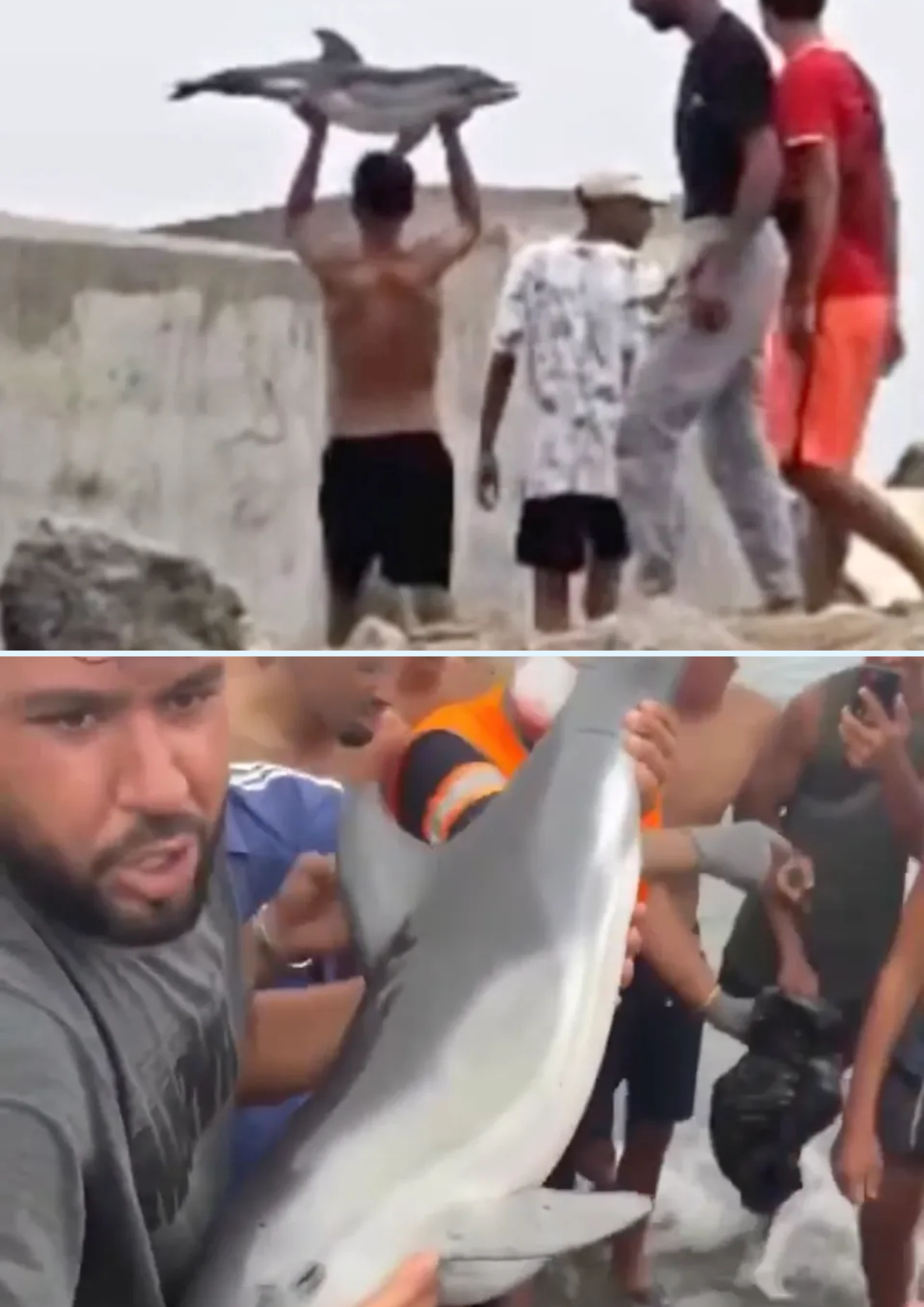
CEUTA, Spain — A disturbing incident involving a baby dolphin at a beach in Spain’s North African enclave of Ceuta has sparked widespread outrage after video appeared to show a group of migrants removing the young animal from the water and handling it on shore.
The incident reportedly occurred Wednesday, Sept. 2, at Trampolín Beach, where hundreds of migrants have been staying amid an ongoing migration crisis in the city.
According to local newspaper El Faro de Ceuta, the group noticed the young bottlenose dolphin swimming very close to shore. The animal was then reportedly pulled from the water.
One person allegedly struck the dolphin on the head with a stick.
The animal was later seen appearing lifeless.
An environmental organization has now formally asked Spanish authorities to investigate the circumstances surrounding the dolphin’s death.
 A DISTURBING SCENE ON THE BEACH
Video recorded at the scene shows several people carrying the young dolphin toward the breakwater at Trampolín Beach.
The footage was verified by El Faro de Ceuta, which reported that the images were recorded in Ceuta on Wednesday afternoon.
A worker from Ecoservicios, a company involved in cleaning the beach, reportedly witnessed part of the incident and intervened after seeing what was happening.
The worker warned the group that they should not handle or harm the animal and told them that the appropriate response would be to contact emergency or wildlife-recovery services.
According to the local report, the individuals then attempted to return the dolphin to the sea.
By that point, however, the animal appeared to have already lost its life.
The people who initially filmed the scene lost sight of the group after they moved behind the large concrete and stone blocks along the breakwater, leaving uncertainty about what happened to the animal afterward.
ENVIRONMENTAL GROUP FILES FORMAL COMPLAINT
The case took a new turn Thursday when DAUBMA, an environmental organization focused on urban trees, biodiversity and environmental protection, filed a formal complaint with Spain’s Guardia Civil.
The group submitted photographs, video footage and screenshots from social media that it says could help investigators identify the people involved.
DAUBMA alleges that the dolphin was alive and disoriented when it reached the shoreline and was subsequently removed from the water and assaulted.
The organization also reported that images appear to show an injury beneath one of the dolphin’s eyes.
DAUBMA has asked authorities to identify the individuals shown in the footage, open a formal investigation and involve Spain’s Environmental Prosecutor’s Office.
THE DOLPHIN IS A PROTECTED SPECIES
The animal was identified as a bottlenose dolphin, or Tursiops truncatus.
DAUBMA says the species is protected and argues that the circumstances could potentially involve offenses related to animal mistreatment and protected wildlife.
The organization is calling for technical reports and further examination of the available evidence before responsibility is determined.
No suspects have been publicly identified or charged in connection with the incident as of Friday.
That distinction is important because the footage alone does not establish every detail of what happened before or after the recording.
CEUTA IS ALREADY UNDER INTENSE PRESSURE
The dolphin incident comes as Ceuta is dealing with one of the most serious migration crises in its recent history.
Tens of thousands of migrants crossed from Morocco into the Spanish enclave in late July. Although many were returned or moved into temporary accommodation, thousands have remained in Ceuta, including people living in makeshift camps.
Trampolín Beach has become one of the most visible locations associated with the crisis.
Authorities have repeatedly cleared migrant encampments from the beach, while migrants have returned after being moved to temporary facilities.
The situation has also produced growing tension between migrants and local residents.
Reuters reported that thousands of Ceuta residents took part in protests this week over the government’s handling of the migration crisis.
Against that already tense backdrop, images of the dolphin incident quickly spread across social media, triggering another wave of anger.
QUESTIONS REMAIN ABOUT WHAT HAPPENED
One of the biggest unanswered questions is whether the blow seen in reports directly caused the dolphin’s death.
Local reporting describes the animal as apparently lifeless after the incident, while DAUBMA has characterized the case as a violent death.
However, a full official determination would require authorities to examine the evidence and establish exactly what happened.
The location of the dolphin’s remains has also been unclear.
For that reason, investigators will likely need to rely on video footage, photographs, witness accounts and any available forensic or veterinary evidence to reconstruct the animal’s final moments.
A CALL TO LEAVE WILDLIFE ALONE
Environmental officials and conservation groups have stressed that members of the public should not attempt to move or handle stranded marine animals.
If a dolphin or other protected wildlife is found injured, disoriented or apparently lifeless, the recommended response is to contact emergency or specialized wildlife authorities rather than approaching or transporting the animal.
The case has now moved beyond social media outrage.
With DAUBMA’s complaint formally submitted to the Guardia Civil, authorities have been asked to determine who was involved, what happened to the dolphin and whether any laws were broken.
For now, the investigation remains open — and the disturbing footage continues to raise questions about the final moments of a young dolphin that had wandered dangerously close to shore.