MIDDLESBROUGH SCHOOLS SHUT EARLY FOR FUNERAL — HEADTEACHERS ACCUSED OF ‘GIVING IN TO THUGS’
MIDDLESBROUGH SCHOOLS SHUT EARLY FOR FUNERAL — HEADTEACHERS ACCUSED OF ‘GIVING IN TO THUGS’
Middlesbrough was braced for another day of tension as schools shut early ahead of a funeral linked to the deadly A66 crash — sparking a furious political row over whether authorities had gone too far.
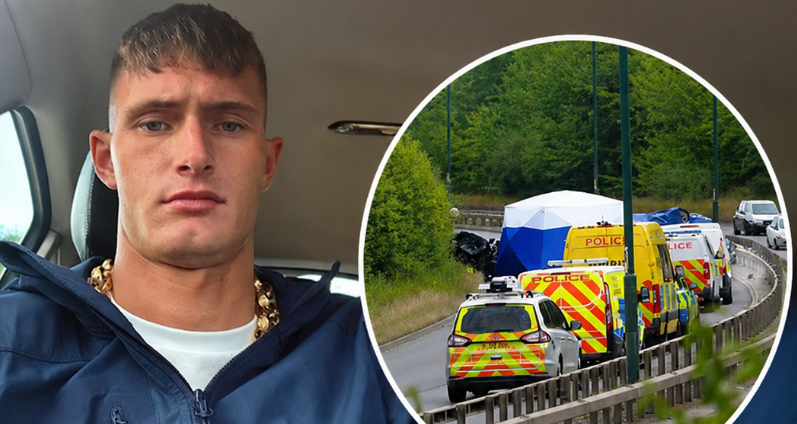
Four schools in the area announced plans to close at lunchtime on Friday as hundreds of mourners were expected to gather for the funeral of Jakub Matusiak, 23, one of five young men who died in the A66 collision.
The decision was made amid concerns over large crowds, traffic congestion and possible disruption around Normanby Road and St John the Evangelist Church in South Bank.
But what was described by school leaders as a safety measure quickly became a national political argument.
Critics accused authorities of allowing the threat of disorder to dictate whether children could remain in school.
The Conservative shadow education secretary, Laura Trott, condemned the decision and argued that children should not lose classroom time because of the behaviour of people causing disruption in the community.
 THE FUNERAL THAT BROUGHT THE AREA TO A STANDSTILL
Jakub Matusiak’s funeral took place on Friday at St John the Evangelist Church in South Bank.
Large crowds gathered to pay their respects, with mourners wearing black and orange — reportedly reflecting Matusiak’s favourite colour.
Motorbikes, quad bikes and large groups of mourners were expected in the area, prompting authorities to prepare for significant congestion.
The funeral was the first of those connected to the August 22 crash, which claimed seven lives.
Five young men travelling in a Volkswagen Passat — Matusiak, Cole Worthy, 17; Theo Rae, 17; Makai Saddington, 18; and Michael Cahill, 23 — died when the vehicle collided head-on with a marked police car while travelling the wrong way along the A66.
The two police officers in the other vehicle, PC Matthew Blades, 37, and PC Tom Clough, 38, also died.
WHY DID SCHOOLS CLOSE?
The decision did not come from police ordering schools to shut.
Instead, local headteachers and the council discussed the potential impact of the funeral on pupils, staff and families.
South Bank Primary School said it would close at midday to protect the safety and wellbeing of pupils.
Headteacher Tammy Cooper explained that large numbers of people were expected in the area and that this would inevitably create congestion and transport disruption.
Another school, Outwood Academy Normanby, also announced a midday closure following discussions involving local headteachers and the council.
Schools also said they were conscious that some pupils could feel upset or anxious because of the funeral taking place nearby.
The closures were therefore presented as a precaution — not as an admission that a riot was inevitable.
 THEN THE POLITICAL BACKLASH BEGAN
The decision immediately triggered a heated debate.
Critics argued that schools should remain open and that authorities should instead ensure that public order was maintained around the funeral.
Laura Trott said children should not be kept away from education because of concerns about disorder or criminality.
The argument was blunt:
If people were threatening public order, why should children be the ones whose routines were disrupted?
The criticism placed headteachers in an uncomfortable position.
They were effectively being asked to balance two competing responsibilities — keeping schools open and ensuring pupils could safely leave the premises in an area expecting unusually large crowds.
THE FEARS DID NOT COME FROM NOWHERE
The concerns were also shaped by what had happened during previous memorial gatherings following the A66 tragedy.
A vigil for another crash victim, Michael Cahill, was followed by serious disorder, including vehicles being set on fire.
Earlier gatherings had also featured fireworks, large crowds and groups riding motorcycles and quad bikes.
Those scenes had already generated anger among local politicians and residents.
Cleveland Police subsequently brought in additional officers from neighbouring forces as tensions escalated across the region.
That background helps explain why school leaders were unwilling to simply assume that Friday’s funeral would pass without disruption.
But it also explains why critics saw the school closures as a dangerous precedent.
‘GIVING IN TO THUGS’?
The phrase quickly became one of the most explosive parts of the debate.
If schools close because officials fear disorder, critics argued, does that effectively reward those who create disorder?
Or is closing schools temporarily a responsible decision when authorities know that unusually large crowds and traffic problems are expected?
That question has divided opinion.
Education Secretary Lucy Powell defended the headteachers’ decision, saying the safety and wellbeing of children and the wider community had to be taken seriously.
The schools, meanwhile, insisted that the decision was made after considering practical problems such as pupil departures, staff travel and congestion.
A FUNERAL THAT REMAINED LARGELY PEACEFUL
Despite the fears surrounding the event, the funeral itself passed without the large-scale disorder that some had feared.
Hundreds of people gathered to say goodbye to Matusiak.
The procession included luxury vehicles and a horse-drawn hearse, while mourners filled the streets around the church.
Police maintained a visible presence in the area.
The atmosphere was tense because of everything that had happened since the A66 crash, but reports from the funeral described a largely peaceful gathering.
That outcome has added another layer to the debate.
For supporters of the school closures, the absence of major disorder does not necessarily mean the precautions were unnecessary.
For critics, however, it raises the question of whether the disruption imposed on schools was justified.
THE A66 CRASH HAS LEFT A COMMUNITY IN SHOCK
The funeral comes just days after one of the most traumatic incidents the area has experienced in years.
The A66 crash killed seven people in total.
Police have been investigating the circumstances surrounding the collision, including the movements of the Volkswagen Passat before it entered the wrong side of the carriageway.
Authorities have also been examining whether some of the young men in the vehicle had links to serious organised criminal activity.
That does not mean that every person attending their funerals is connected to criminality.
For many families, these remain deeply personal moments of grief.
But the public disorder surrounding some previous memorials has made the situation far more complicated.
NOW THE QUESTION IS WHAT HAPPENS NEXT
The funeral of Jakub Matusiak has passed.
The schools have reopened.
But the argument over what happened — and what should have happened — is unlikely to disappear.
Should schools remain open regardless of large gatherings?
Should police simply deploy enough officers to guarantee access?
Or was sending children home early the safest and most responsible choice?
For headteachers, the decision was ultimately about protecting pupils.
For critics, it was about something bigger:
whether a community should ever have to change its normal life because it fears what a crowd might do.
And after weeks of grief, arrests, public disorder and political arguments surrounding the A66 tragedy, Middlesbrough is now facing a difficult question of its own:
Where is the line between respecting grief — and allowing disorder to control everyday life?