LINDSAY CLANCY JURY DISPUTE ERUPTS IN COURT — ONE JUROR’S DOUBTS HELPED PUSH THE TRIAL INTO MISTRIAL
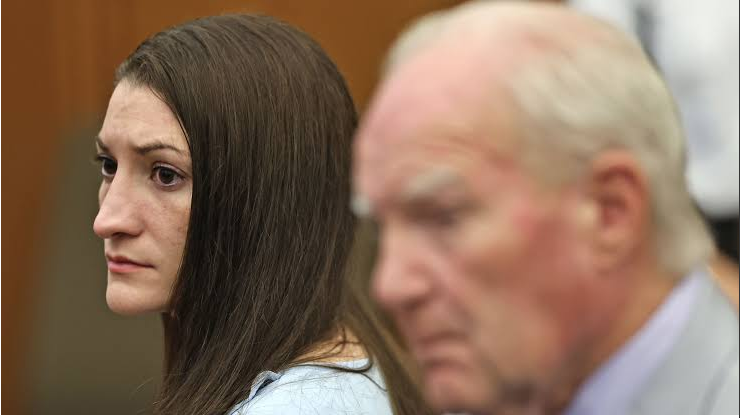
LINDSAY CLANCY JURY DISPUTE ERUPTS IN COURT — ONE JUROR’S DOUBTS HELPED PUSH THE TRIAL INTO MISTRIAL
For days, the fate of Lindsay Clancy appeared to be hanging on a single juror.
Then the courtroom erupted over what the defense described as a refusal to follow the judge’s instructions.
Clancy’s attorney, Kevin Reddington, demanded that the juror be removed after the jury foreperson reportedly raised concerns about his approach to deliberations.
But Judge William Sullivan refused.
And what followed became one of the most dramatic chapters of the closely watched Massachusetts murder trial.
The dispute ultimately ended without the verdict Clancy’s family, prosecutors or defense team had been waiting for.
On September 4, 2026, the judge declared a mistrial after the jury failed to reach a unanimous decision.
:max_bytes(150000):strip_icc():focal(702x512:704x514):format(webp)/lindsay-clancy-trial2-9326-a7de4e1d7cd84cf5aba0ee885aaec694.jpg) THE JUROR AT THE CENTER OF THE STORM
THE JUROR AT THE CENTER OF THE STORM
The controversy began after the jury had spent days deliberating over whether Clancy was legally responsible for the deaths of her three children.
According to a note from the jury foreperson, one male juror had acknowledged having doubts about the case but was allegedly refusing to apply those doubts in the way the law required.
That distinction became critical.
Defense attorney Kevin Reddington argued that the juror was refusing to listen to the court’s instructions and asked Judge Sullivan to replace him.
The judge, however, determined that there was not enough evidence to conclude that the juror was refusing to follow the law.
The juror remained seated.
And the deliberations continued.
 THE 11-1 SPLIT
As the deliberations dragged on, Reddington repeatedly suggested that the jury appeared to be split 11-1.
The defense attorney claimed that 11 jurors were leaning toward a verdict favorable to Clancy, while one juror remained opposed.
But because criminal verdicts in Massachusetts require unanimity, one unresolved juror was enough to prevent a final decision.
The defense strongly opposed a mistrial.
Reddington argued that the apparent split showed the strength of his client’s case and wanted the court to continue pushing the jury toward a verdict rather than starting the entire process over again.
The judge instead allowed the deliberations to continue while attempting to determine whether the jury could resolve its disagreement.
FIVE POSSIBLE OUTCOMES
The jury was not simply deciding whether Clancy was guilty or not guilty.
Jurors were instructed that they could reach several different outcomes.
They could find Clancy guilty of first-degree murder, second-degree murder or manslaughter.
They could also find her not criminally responsible because of her mental condition.
Or they could find her not guilty.
The defense had argued that Clancy was suffering from severe postpartum psychosis and the effects of extensive medication when her children died.
Prosecutors presented a dramatically different interpretation.
They argued that Clancy was suffering from depression and suicidal thinking but was not psychotic or incapable of understanding what she was doing.
The competing interpretations of Clancy’s mental state became the heart of the trial.
WHAT HAPPENED TO THE CHILDREN?
The case began with a tragedy that shocked the nation.
In January 2023, Clancy’s three children — Cora, 5, Dawson, 3, and Callan, 8 months — were found at the family’s home in Duxbury, Massachusetts.
The children had been strangled.
Clancy then attempted suicide by jumping from a second-story window and suffered catastrophic injuries, leaving her paralyzed from the waist down.
Clancy has acknowledged that she caused her children’s deaths.
But she pleaded not guilty by reason of lack of criminal responsibility, arguing that she was experiencing a severe psychiatric episode at the time.
That distinction was fundamental to the trial.
The defense was not simply asking jurors to decide whether Clancy had caused the deaths.
It was asking them to determine whether she was legally responsible for what she did.
PROSECUTORS SAW A DIFFERENT PICTURE
The prosecution rejected the defense’s explanation.
Prosecutors argued that Clancy was depressed and suicidal, but that she understood what she was doing.
They portrayed the children’s deaths as part of a deliberate plan connected to her desire to end her own life.
The prosecution also pointed to evidence and testimony that it said showed Clancy was capable of making decisions before and during the events.
The defense countered that those actions had to be viewed through the lens of postpartum psychosis and the medications Clancy had been prescribed.
The jury therefore faced a deeply complicated question: Was Clancy making a rational decision, or was she experiencing a psychiatric break that left her unable to understand the wrongfulness of her actions?
THE JUDGE TRIED TO BREAK THE DEADLOCK
As the days passed without a verdict, Judge Sullivan issued a special instruction designed to encourage jurors to reconsider their positions and attempt to reach an agreement.
The jury continued deliberating.
At one point, the jurors formally told the judge that they were deadlocked.
Still, they were sent back to deliberate.
The court gave them additional opportunities to reach a unanimous verdict.
But the fundamental disagreement remained.
THEN CAME THE MISTRIAL
After more than a week of deliberations, the jury still could not reach unanimity.
On September 4, Judge Sullivan declared a mistrial.
There was no final guilty verdict.
There was no final acquittal.
And there was no definitive answer to the central legal question that had consumed the courtroom for weeks.
The trial had ended without a verdict.
THE JUROR DISPUTE NOW LOOKS EVEN MORE SIGNIFICANT
The disagreement over the male juror became one of the defining moments of the deliberations.
Reddington believed the juror was improperly refusing to apply the law and argued that his continued presence was preventing the other jurors from reaching a decision.
Judge Sullivan disagreed that the legal standard for removing a juror had been met.
The juror stayed.
And the jury ultimately remained unable to reach the unanimous decision required to end the trial.
Importantly, the judge did not rule that the juror had acted improperly. The defense’s characterization of his conduct was disputed, and the court found insufficient grounds to remove him.
WHAT HAPPENS TO LINDSAY CLANCY NOW?
The mistrial does not mean the case is over.
Clancy remains charged in connection with the deaths of her three children.
The Plymouth County District Attorney’s Office has said prosecutors have not yet made a final decision about whether to retry the case.
A new court date has been scheduled for September 29.
If prosecutors pursue another trial, the case could return to court later this year or in 2027.
For Clancy’s family, the mistrial means months — potentially years — of uncertainty still lie ahead.
For prosecutors, it means reconsidering a case that already lasted five weeks and included testimony from more than 80 witnesses.
And for the defense, the 11-1 split could become a significant part of its argument if the case is tried again.
NO VERDICT — AND NO EASY ANSWERS
The Lindsay Clancy case has never been only about what happened inside the Duxbury home.
It has also forced difficult questions about postpartum mental illness, psychiatric treatment, medication, criminal responsibility and the limits of the law when someone is experiencing a severe mental-health crisis.
The jury was ultimately unable to agree on where that line should be drawn.
One juror’s position became the focus of an extraordinary courtroom dispute.
The judge refused to remove him.
The deliberations continued.
And eventually, the jury broke down without reaching a unanimous verdict.
After years of investigation and five weeks of testimony, Lindsay Clancy’s fate remains unresolved.
The next question is no longer whether this jury can reach a verdict.
It is whether prosecutors will ask an entirely new jury to decide the case.