BABY DOLPHIN DRAGGED FROM THE SEA AND PARaded AROUND BEACH — SHOCKING CEUTA FOOTAGE SPARKS OUTRAGE
BABY DOLPHIN DRAGGED FROM THE SEA AND PARaded AROUND BEACH — SHOCKING CEUTA FOOTAGE SPARKS OUTRAGE
 A disturbing video from Ceuta has sparked outrage after a group of people were filmed handling a young dolphin on a beach — with an environmental organization now asking Spanish authorities to investigate how the animal died.
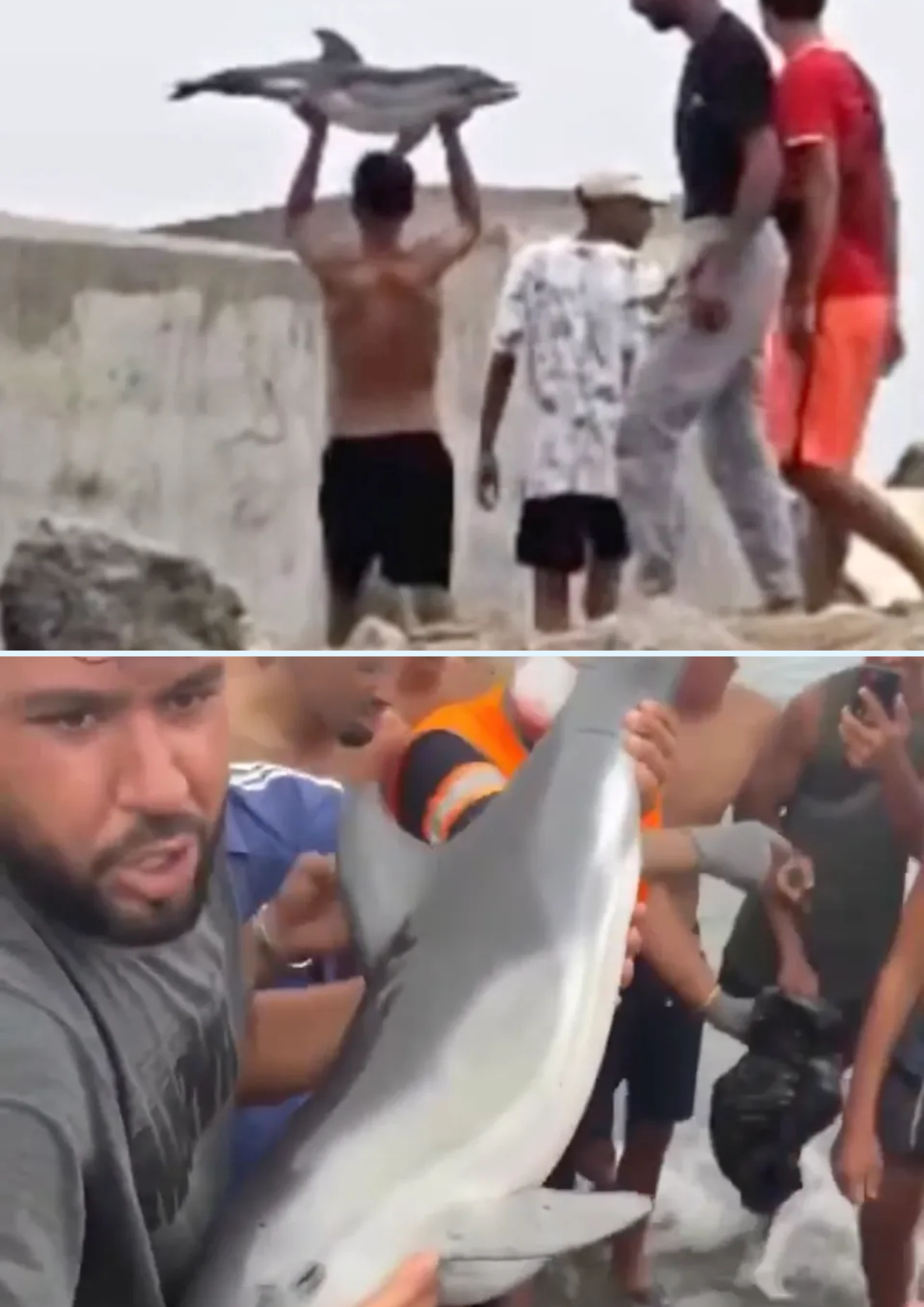
The footage, filmed at Trampolín Beach in Ceuta on Wednesday, September 2, shows several people gathered around a young bottlenose dolphin before it is moved out of the water and carried along the shoreline.
The images quickly spread online, triggering furious reactions and claims that the animal had been mistreated.
But there is a crucial question investigators still have to answer:
Was the dolphin already dead when the group found it — or did what happened on the beach contribute to its death?
The answer has not yet been established.
THE SHOCKING BEACH FOOTAGE
The video shows the small dolphin close to the shoreline as several people surround it.
The animal is then taken out of the water and carried toward the rocks.
At various points, people appear to touch and handle the dolphin while others watch.
The footage was independently located at Trampolín Beach and is understood to have been recorded during the recent incident.
The scenes immediately prompted outrage online, with some viewers accusing those involved of deliberately harming the animal.
But fact-checking of the footage has highlighted an important limitation.
The video itself does not establish when the dolphin died or what caused its death.
In the recording, when the person filming asks who killed the dolphin, people in the group reportedly respond in French that the animal was already dead.
That claim has not resolved the controversy.
 THE ALLEGATION OF A STICK
A far more serious version of events has been put forward by DAUBMA, an environmental organization in Ceuta.
The group says it has collected additional photographs, videos and screenshots from social media that it believes show the dolphin arriving alive and disoriented near the shore.
According to the organization’s complaint, the animal was then removed from the water and allegedly struck on the head with a stick.
DAUBMA has formally submitted the material to Spain’s Guardia Civil and asked authorities to investigate the circumstances surrounding the dolphin’s death.
The allegation is now at the heart of the investigation.
However, it remains an allegation.
Authorities have not publicly established that the people shown in the viral footage caused the dolphin’s death.
AN OFFICIAL INVESTIGATION
DAUBMA’s complaint asks investigators to identify the people involved and determine whether environmental laws were violated.
The organization has also requested that the evidence be forwarded to the appropriate environmental prosecutors if investigators find grounds for further action.
Spanish authorities are now faced with a series of questions.
Was the animal alive when it was removed from the water?
Was it struck?
If so, how badly was it injured?
And did those actions cause or contribute to its death?
The available video alone cannot answer all of those questions.
WHY THE STORY HAS GONE VIRAL
The footage is particularly disturbing because the dolphin appears extremely vulnerable.
Instead of remaining in the water, the young animal is seen being handled on land while several people gather around.
For animal lovers watching the footage, the images have been difficult to understand.
The video has also generated calls for those responsible to be identified and prosecuted if investigators determine that the dolphin was deliberately harmed.
But the rapid spread of the footage has created another problem: unverified claims are being presented online as established facts.
That distinction matters in an active investigation.
What can be established from the footage is that people handled and carried the dolphin.
What remains to be established is exactly what happened before and after those images were recorded.
CEUTA IS ALREADY UNDER INTENSE PRESSURE
The incident comes during a period of extraordinary tension in Ceuta.
The Spanish enclave has been dealing with a major migration crisis after tens of thousands of migrants crossed into the territory in July.
Thousands of residents recently took part in protests over the government’s handling of the crisis, while tensions surrounding migration have become a major political issue in Spain.
That wider political backdrop has inevitably influenced the reaction to the dolphin footage.
However, the conduct of individuals in one incident should not automatically be attributed to an entire migrant population.
The investigation concerns the specific people shown in the footage and the circumstances surrounding the animal’s death.
WHAT HAPPENS NEXT?
The case has now moved beyond social media.
DAUBMA’s formal complaint gives the Guardia Civil an opportunity to examine the original footage and the additional material submitted by the organization.
Investigators will ultimately need to establish the sequence of events and determine whether anyone committed an environmental offence.
Until then, some of the most dramatic claims circulating online remain unproven.
The heartbreaking images have certainly captured public attention.
But the central question remains unanswered:
Was this young dolphin already dead when it was taken from the water — or did the alleged treatment on the beach play a role in its final moments?
That is what investigators now have to determine.