Céline Dion Breaks Down Moments Into Her First Full Concert in Six Years — Then Finishes the Promise She Made to Fans
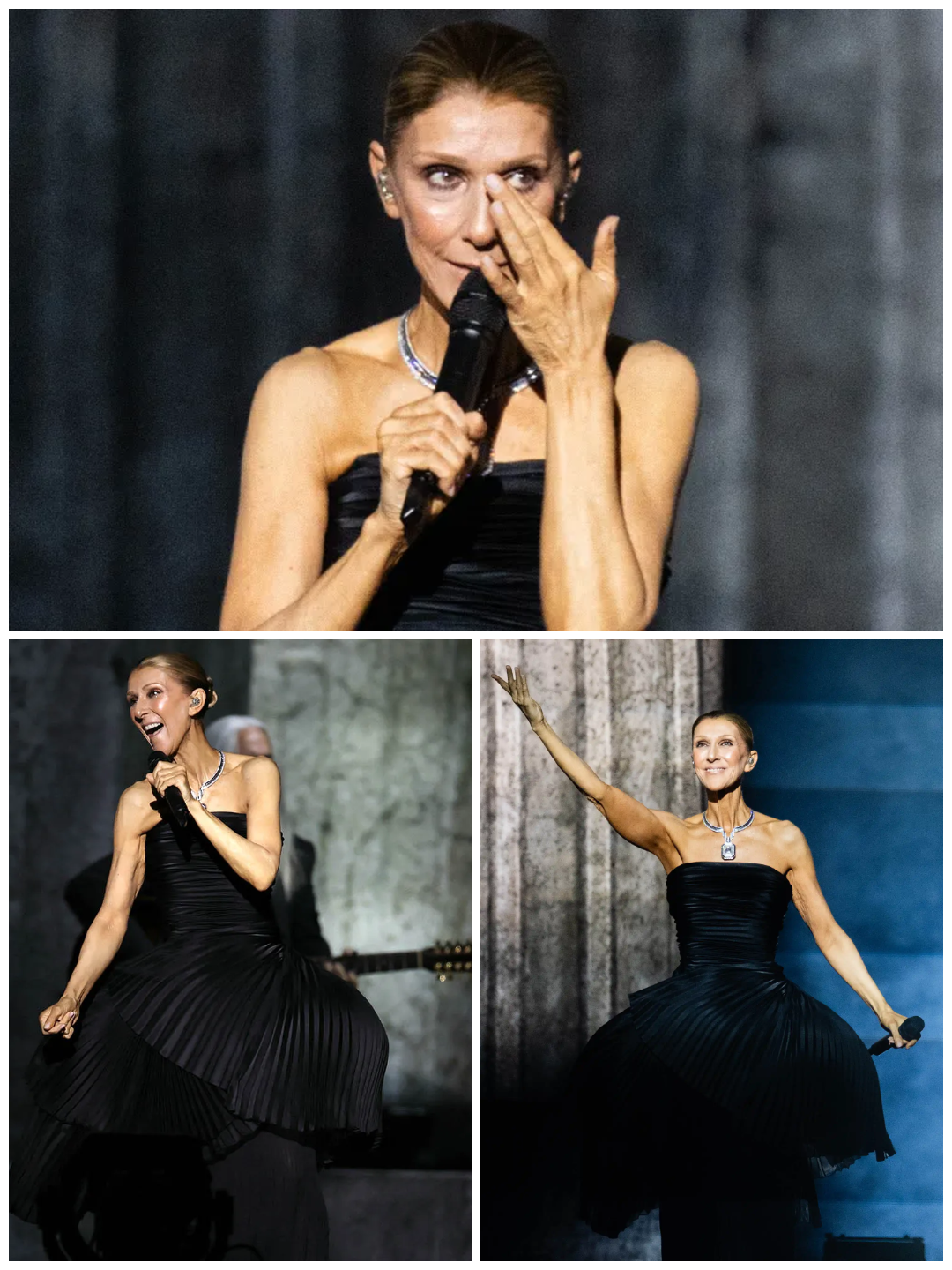
Céline Dion had barely begun singing when six years of waiting seemed to catch up with her all at once.
Seconds into the opening song of her long-awaited Paris concert on Sept. 12, the 58-year-old superstar became visibly emotional. She paused, wiped tears from her eyes and placed a hand over her chest as thousands of fans watched the moment unfold inside Plenitude Arena in Nanterre, France.
Then she gathered herself and continued.
It was the beginning of Dion’s first complete concert since March 2020 — and the opening night of a 26-show Paris residency that represents one of the most significant milestones of her return to live performance after years of health challenges.
Six Years Came Down to One Opening Song
Dion chose “On Ne Change Pas,” her 1998 song, to begin the night.
She did not get far before emotion interrupted the performance.
After stopping momentarily, Dion appeared to wipe away tears. She touched her chest and brought her hands together toward the audience in a gesture of gratitude.
The crowd was witnessing something much larger than another opening night.
Dion had not performed a full concert in more than six years.
Her previous complete show took place in March 2020 at the Prudential Center in New Jersey. Soon afterward, the COVID-19 pandemic brought the tour to a halt.
The postponed concerts never became the comeback fans expected.
Health problems eventually forced Dion to cancel the rescheduled dates, beginning an uncertain period in which one of music’s most famous live voices was no longer able to maintain the performance schedule that had defined so much of her career.
In Paris, that absence finally ended.
Dion finished the opening song and moved into “Destin,” another track from the 1990s.
Then she stopped to talk to the people who had waited for her.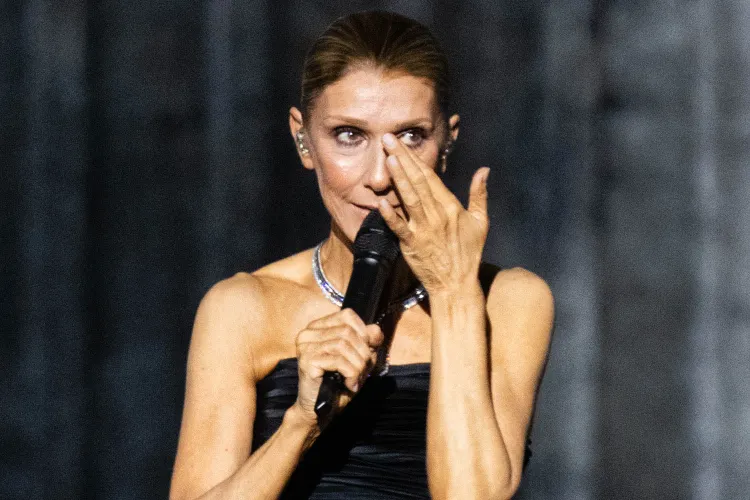
‘I Made a Promise’
Addressing the arena first in French and then in English, Dion welcomed fans who had traveled from around the world.
She spoke about Paris, about finally being together again and, most importantly, about a commitment she had made during the years when returning to a full concert stage was far from guaranteed.
“I made a promise to come back,” she told the audience.
Now, she said, she was there to sing not only for them, but for herself and for life.
The message quickly became one of the defining moments of the night.
Dion then thanked fans for their patience and support, weaving the title of her 1996 hit “Because You Loved Me” into her remarks before transitioning into the song itself.
The symbolism was difficult to miss.
For decades, Dion’s voice had carried songs about love, loss and resilience to enormous audiences. This time, her own journey had become part of the emotional weight behind the music.
Her Diagnosis Changed Everything
In 2022, Dion revealed that she had been diagnosed with stiff-person syndrome, a rare progressive autoimmune and neurological condition.
The disorder can cause muscle stiffness, problems with movement, painful spasms and difficulty breathing.
For a performer whose career depended on extraordinary vocal control and the physical demands of live shows, the diagnosis fundamentally changed what was possible.
Concerts were canceled.
Her future onstage became uncertain.
And fans who had spent decades seeing Dion command arenas were left wondering whether full-length performances might ever return.
Dion did eventually begin appearing onstage again, but in carefully chosen moments.
In 2024, she made a dramatic return at the opening ceremony of the Paris Olympics, performing from the Eiffel Tower.
Later that year, she sang at the 1001 Seasons of Elie Saab fashion event in Saudi Arabia.
Those performances demonstrated that her voice had not disappeared.
But they were individual appearances.
Saturday night in Paris was different.
This was an entire concert — the kind of sustained performance that had been missing from her career for more than six years.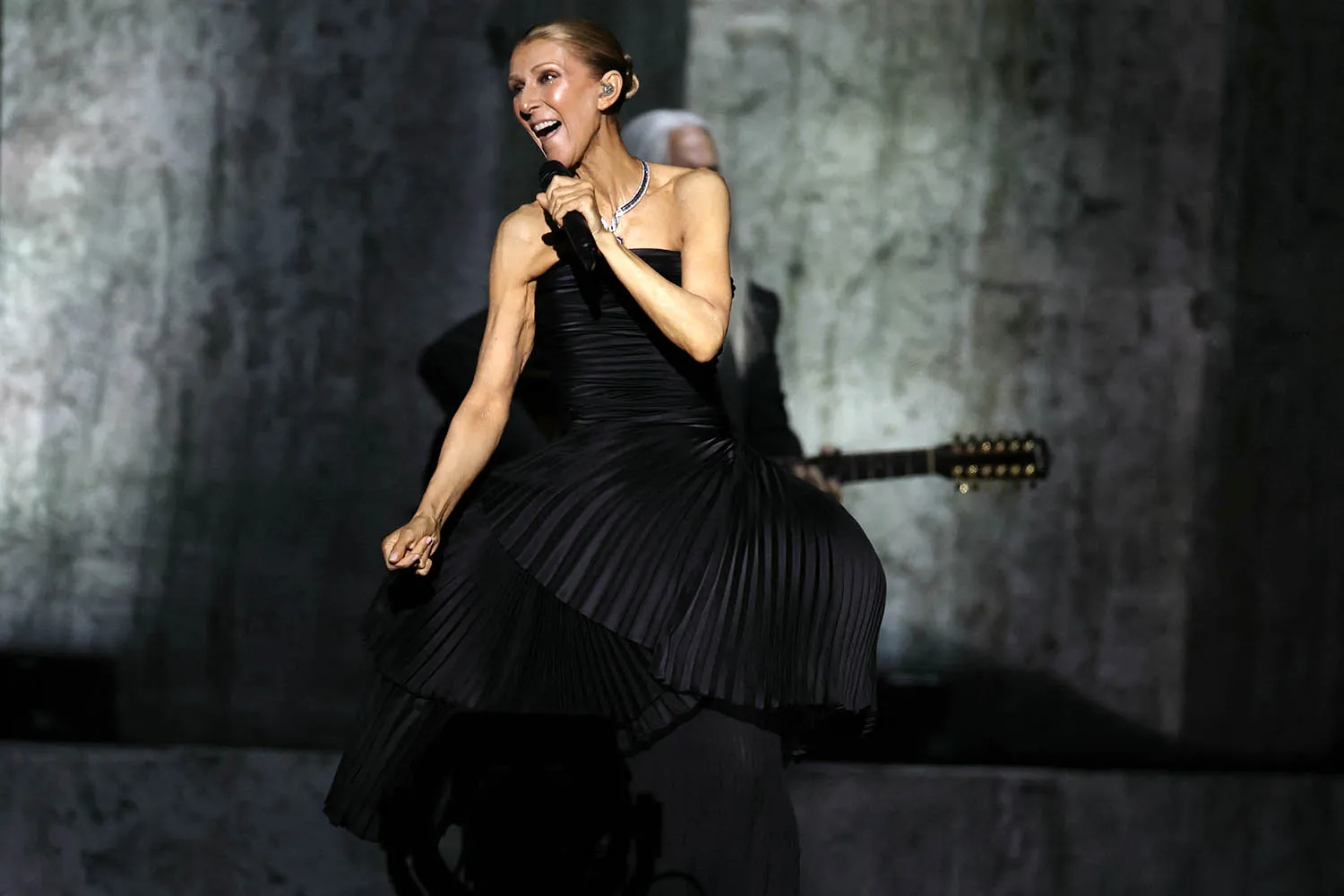
The Comeback Required Far More Than Rehearsal
Dion’s preparation for the Paris residency involved more than simply relearning songs and rehearsing with musicians.
Ahead of the shows, she described an intensive routine aimed at helping her body and voice meet the demands of performing again.
Her preparations included new medication, physical therapy, vocal therapy and immunotherapy.
She also incorporated Pilates three times a week and ballet classes into her routine.
The regimen illustrated how different this return was from an ordinary concert cycle.
For most performers, a residency requires rehearsals, staging and vocal preparation.
For Dion, reaching opening night also meant managing a neurological condition that had already forced her away from full concerts for years.
Every element of the comeback carried that context.
That is why the tears arriving seconds into the first song felt almost inevitable.
Paris Was Chosen for More Than a Performance
Dion had previously explained that the residency was also meant as an expression of gratitude.
After such a long absence, she wanted to offer something meaningful to the people who had continued supporting her.
She had missed them.
The Paris shows became her way of showing that.
That idea was reflected in how she spoke to the crowd on opening night.
Rather than pretending the years away had never happened, Dion directly acknowledged the waiting.
She thanked fans for their patience.
She recognized the people who had traveled from across the world.
And she openly connected her return to the promise she had made to get back onto a concert stage.
The result was a performance in which the emotional story surrounding the music became nearly as important as the songs themselves.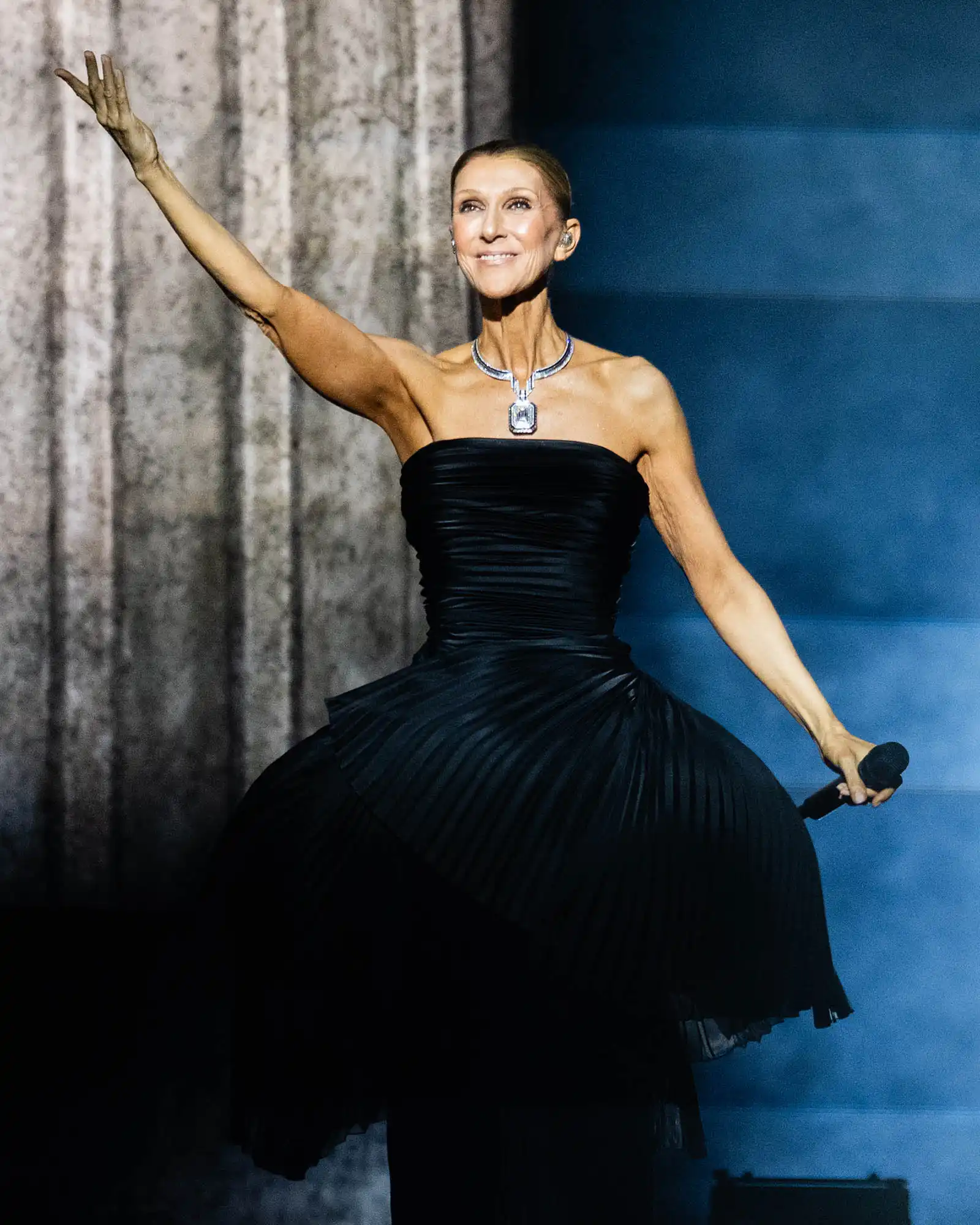
This Was Not Simply Another Céline Dion Concert
Dion has spent much of her life performing at a scale few singers ever reach.
A full concert once represented something routine in the machinery of her career: another city, another arena, another night of enormous songs delivered to thousands of people.
After 2020, nothing about performing could be taken for granted.
The pandemic first stopped her tour.
Then stiff-person syndrome created a much more personal obstacle, one that affected the body and voice she had relied upon throughout her career.
That history transformed the meaning of Sept. 12.
The woman standing inside Plenitude Arena was not simply returning from a long break between tours.
She was testing the possibility of a life onstage that had once seemed uncertain.
And almost immediately, the magnitude of that moment became visible.
She cried.
She stopped.
The audience waited.
Then Céline Dion started singing again.
Opening night was only the beginning of a planned 26-show residency, meaning the larger comeback is still unfolding.
But the first few minutes already delivered the image likely to define it: Dion standing before a Paris audience after more than six years away from full concerts, overwhelmed by the moment yet refusing to let it end there.
She had promised she would return.
On Sept. 12, she finally did.