A Stranger Asked to Borrow Her Phone—Then Placed a One-Month-Old Baby in Her Arms

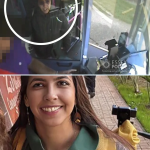
Jennifer Benavides was only moments away from boarding a bus in downtown San Antonio when an ordinary request from a stranger turned into something she could never have expected.
A young woman approached her at the bus stop and asked to borrow her phone.
Then, according to authorities and Benavides’ account of the encounter, the woman placed her one-month-old baby boy into Benavides’ arms.
What initially seemed like a temporary request quickly became far more serious.
The teenage mother allegedly told Benavides that she no longer wanted the baby and began handing over the infant’s important documents — including his birth certificate, Medicaid information and Social Security card.
Before the night was over, the mother would leave in an Uber without her child, two strangers would suddenly find themselves responsible for a one-month-old baby, police would be called and an 18-year-old mother would end up under arrest.
The unusual case has also raised a difficult question because Texas has a law specifically designed for parents who feel unable to care for a newborn.
Why, then, did this baby apparently end up in the arms of a stranger at a bus stop?
A Request to Use a Phone
The encounter happened at approximately 10:45 p.m. on Sunday, September 13, in downtown San Antonio.
Benavides was waiting for her bus when she was approached by 18-year-old Karla Ibarra.
At first, nothing about the interaction suggested what was about to happen.
Ibarra reportedly asked if she could use Benavides’ phone.
But the conversation soon took a surprising turn.
According to Benavides, Ibarra asked whether she wanted the infant and indicated that she planned to give the baby to someone.
The child was only about a month old.
Benavides later described him as a beautiful, healthy-looking little boy.
Then came an even more startling detail.
Ibarra allegedly began giving Benavides the documents connected to her son.
There was the baby’s birth certificate. His Medicaid information. His Social Security card.
The collection of documents made Benavides realize this was apparently not a casual request to hold the baby for a few minutes.
The young mother appeared serious about leaving him behind.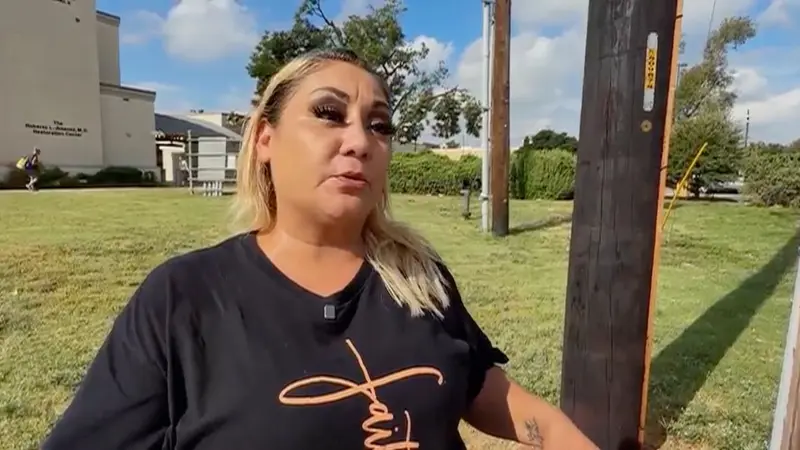
A Stranger Suddenly Responsible for a Newborn
Benavides had not arrived at the bus stop expecting to become responsible for an infant.
She did not know Ibarra.
Yet within minutes, she was faced with a decision involving a baby too young to speak, explain what was happening or protect himself.
Rather than simply walk away from the situation, Benavides decided to seek help.
She contacted a friend who lived nearby, and the group went to the friend’s home.
There, according to Benavides, the situation became even more concerning.
Ibarra called an Uber.
She then allegedly left the residence without taking her son with her.
Benavides and her friend were left caring for the baby.
At that point, they contacted police.
For Benavides, what began as helping someone use a phone had transformed into an unexpected responsibility for a newborn whose mother had apparently just departed.
She later expressed sadness over what happened but also relief that she had been at the bus stop at that particular moment.
The alternative — the baby being handed to someone unwilling or unable to protect him — could have produced a very different outcome.
Mother Returns and Is Arrested
The story did not end when Ibarra left in the rideshare vehicle.
Authorities said she later returned to the area.
Police arrested her, and she was subsequently charged with abandoning and endangering a child with intent to return.
Court information reported after the arrest indicated that her bail was set at $7,000.
The charge remains an allegation, and Ibarra is presumed innocent unless proven guilty in court.
Meanwhile, the immediate concern was the baby.
Child Protective Services became involved following the incident. Officials later confirmed that the infant was placed with relatives.
No injuries to the child were reported in accounts of the incident.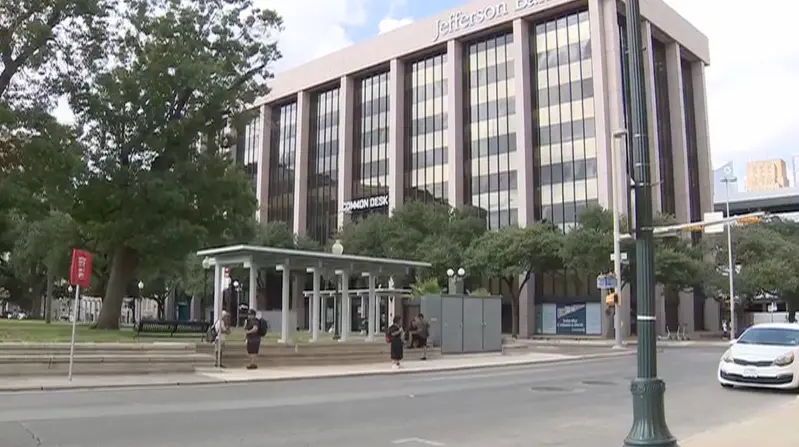
Texas Has Another Option for Parents in Crisis
The case attracted additional attention because Texas has had a Safe Haven law for decades.
Known as the Baby Moses Law, it creates a legal way for certain parents to surrender very young infants rather than abandon them somewhere unsafe.
Under current Texas law, a parent can voluntarily deliver a child who appears to be 60 days old or younger to a designated emergency infant care provider.
The baby can be handed directly to an employee at an approved location. State law also allows the use of an authorized newborn safety device at facilities that provide one.
Texas child welfare guidance identifies locations including hospitals, fire stations, freestanding emergency centers and emergency medical services stations as places where qualifying infants can be safely surrendered.
A parent using the law does not have to provide identifying information and may remain anonymous, assuming the requirements of the law are satisfied and there are no indications that the child has been abused or neglected.
Texas law also provides an exception from certain abandonment or endangerment prosecutions when a child is properly surrendered under the Safe Haven procedure.
That matters significantly in this case because Ibarra’s son was reportedly only about one month old.
Based on his reported age, he was within the 60-day age range covered by the law.
The Question No One Has Answered
That leaves an obvious question.
Why was a stranger at a downtown bus stop allegedly chosen instead?
Publicly available information has not established an answer.
There is no verified evidence at this stage explaining whether Ibarra knew about the Baby Moses Law, whether she had previously sought assistance, whether she understood which locations could legally accept the baby, or what circumstances led to her actions that night.
It would therefore be inappropriate to assume a motive.
The case does, however, illustrate why awareness of Safe Haven programs matters.
Texas officials describe the Baby Moses system as a way to give a parent in crisis an alternative that protects both the infant and the parent from the dangers and potential criminal consequences associated with unsafe abandonment.
Texas’ child welfare agency has even made expansion of Baby Moses outreach and hotline awareness part of its 2026 planning, describing public education as a way to connect struggling families with safe surrender options.
The Woman Who Happened to Be There
Yet beyond the arrest and the legal questions, there is another side to the story.
A woman waiting for a bus suddenly found herself holding someone else’s one-month-old child.
She could have panicked.
Instead, Benavides sought help, stayed with the baby and contacted authorities once the situation became clear.
The infant was eventually placed with relatives rather than being left alone or passed from one unknown person to another.
Benavides later reflected on how upsetting it was that something like this could happen despite resources being available to parents in crisis.
But she was also grateful for one thing.
She happened to be there.
On an ordinary night in downtown San Antonio, a stranger asked to borrow her phone.
Minutes later, Benavides was holding a one-month-old baby, his personal documents in her hands, and facing a responsibility she had never expected.
For that little boy, the stranger standing at the bus stop became the person who made sure he was not left behind.