Rare Twin Condition Discovered at Birth Turns Ordinary Delivery Into Extraordinary Moment

Doctors and family members were preparing to welcome identical twins when an unexpected discovery in the delivery room changed everything. What initially appeared to be a routine twin birth quickly became a rare medical case that highlighted both the complexity of pregnancy and the resilience of newborn life.
The twins, later named Lucas and Eli, were born after a pregnancy that had shown no obvious warning signs. Two heartbeats had been monitored, and two infants were expected. At first, everything seemed normal. Both babies were delivered safely, and the room filled with cautious relief.
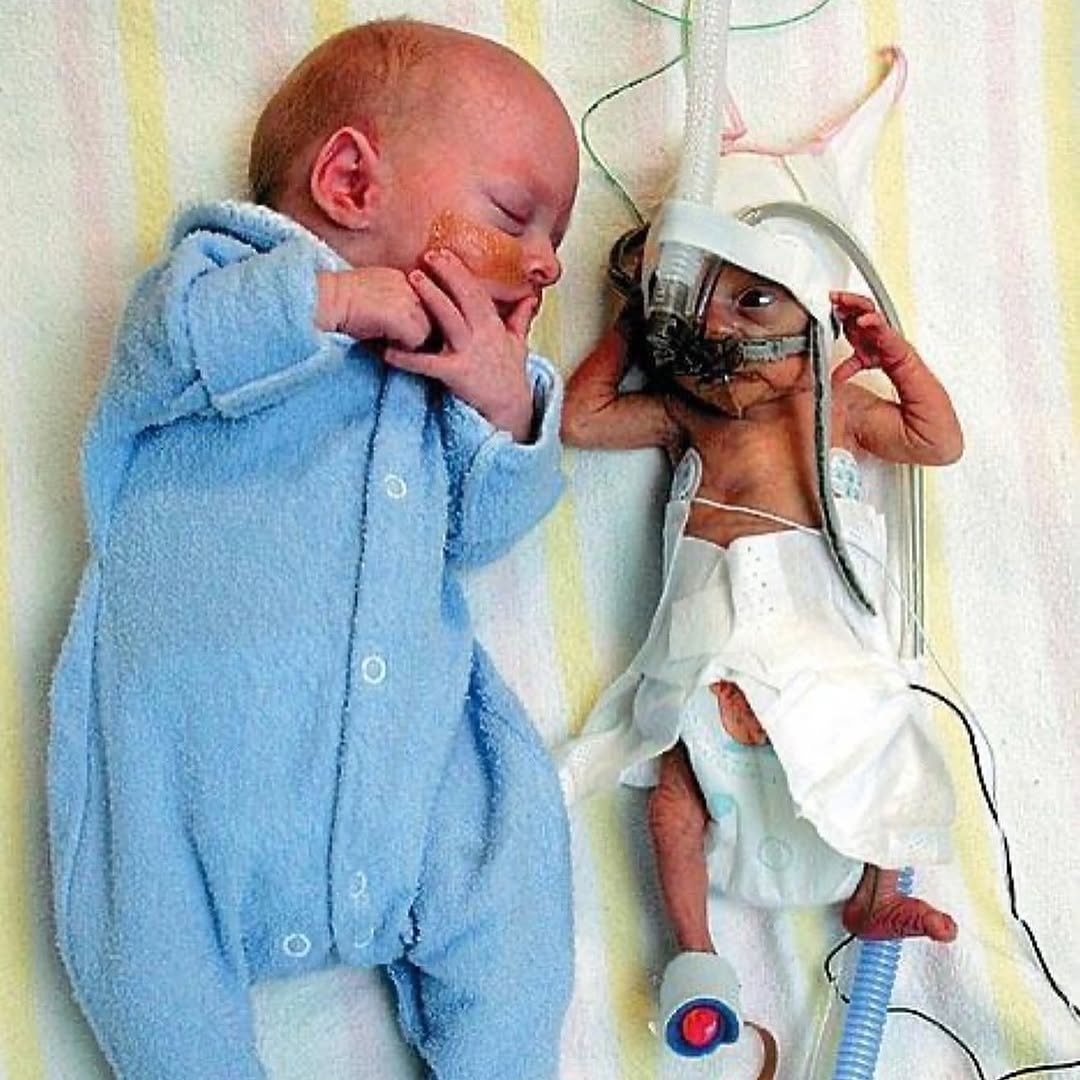
But moments later, the medical team noticed something unusual. The twins differed significantly in size, color, and overall condition. Further evaluation confirmed that the babies had been affected by Twin-to-Twin Transfusion Syndrome (TTTS), a rare condition that occurs only in identical twins who share a placenta.
TTTS develops when blood flow between the twins becomes unbalanced. One baby, known as the donor twin, transfers blood to the other, known as the recipient twin. As a result, the donor twin may be smaller, pale, and low on blood volume, while the recipient twin may be larger and experience strain on the heart due to increased blood flow.
In this case, Lucas, the donor twin, was born smaller and weaker, requiring close monitoring. Eli, the recipient twin, arrived noticeably larger, with signs of increased blood volume that required immediate medical attention.
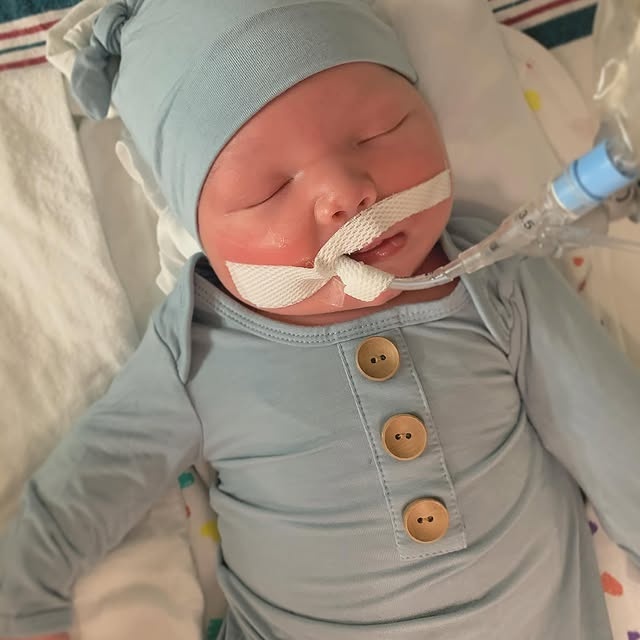
The twins’ mother, Sarah, recalled the moment doctors paused. “At first, I thought something was wrong in the worst way,” she said. “But then they explained what they were seeing. It wasn’t danger—it was something rare. Two babies who had shared more than we ever imagined.”
Their father, Michael, said the experience reshaped how they understood the pregnancy. “We thought we knew the whole story before they were born. In just a few minutes, everything changed. Seeing them side by side made us realize how connected they truly were.”
Neonatal specialists acted quickly to stabilize both infants. While TTTS can lead to serious complications if untreated, early recognition and specialized care can significantly improve outcomes. Doctors explained that the size difference between Lucas and Eli is known as discordant growth, a common feature in TTTS cases.

Over the following days, both babies showed signs of progress. Lucas began responding to supportive care, while Eli’s condition stabilized as his heart adjusted to the changes.
Sarah shared that watching her sons fight in different ways was overwhelming but inspiring. “One was fighting to grow stronger. The other was learning to slow down. But they were both fighting,” she said.
The family has chosen to share their story to raise awareness about TTTS and the importance of careful monitoring in twin pregnancies. “We want other parents to know that rare doesn’t mean hopeless,” Michael added. “Sometimes it means extraordinary.”
What began as an ordinary delivery became a powerful reminder of how unpredictable life can be—and how even before birth, strength can appear in the smallest, quietest forms.