THE A66 TR@GEDY: SEVEN LIVES LOST, A COMMUNITY DIVIDED AND AN INVESTIGATION STILL UNFOLDING
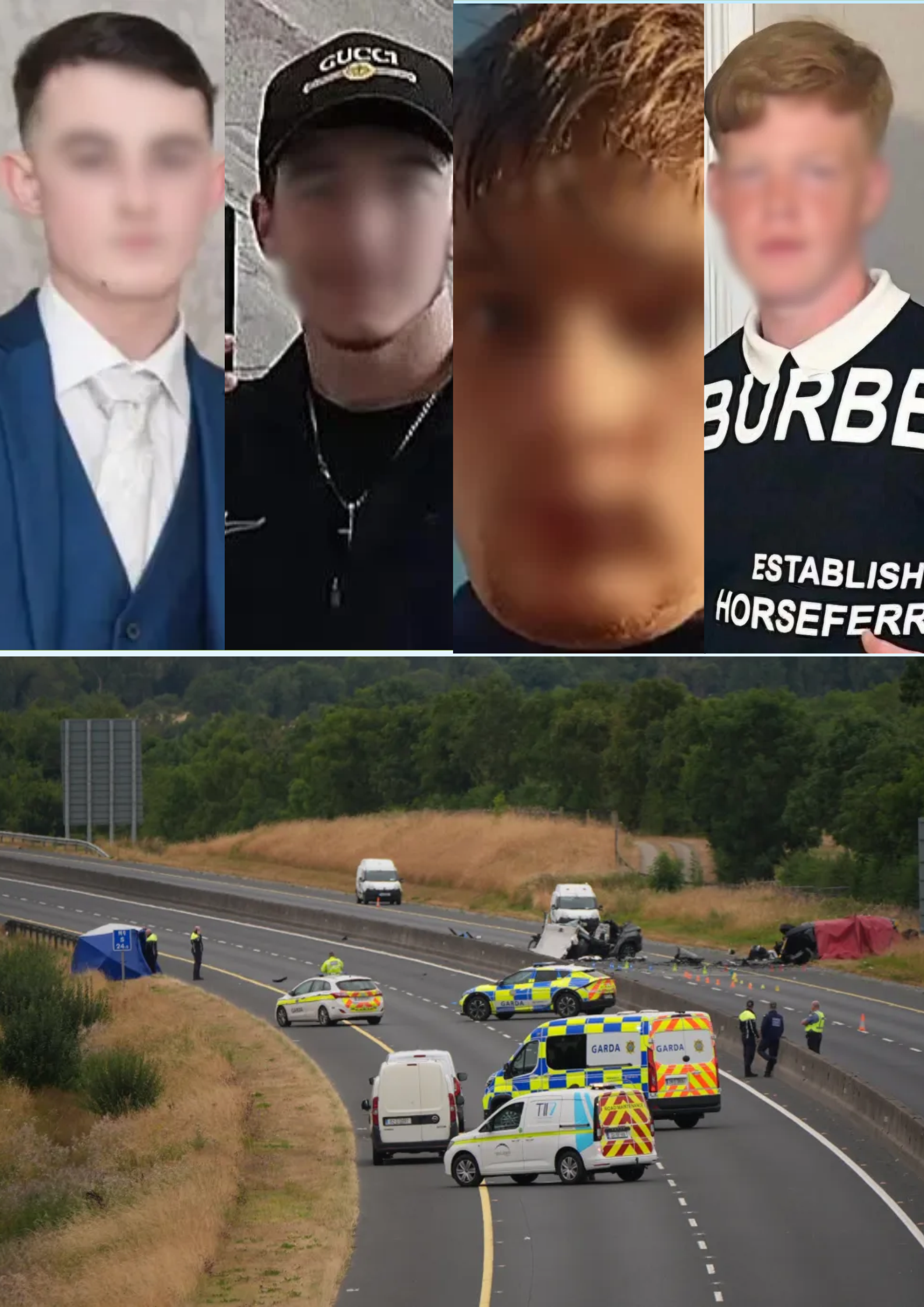
THE A66 TRAGEDY: SEVEN LIVES LOST, A COMMUNITY DIVIDED AND AN INVESTIGATION STILL UNFOLDING
Seven people died on the A66. What followed was a police investigation, a wave of arrests and a painful debate over how the victims should be remembered.
For most people, the A66 is simply a major road cutting through the North East of England.
But in the early hours of August 22, 2026, one stretch of the road near South Bank, Middlesbrough, became the scene of a devastating collision that claimed seven lives.
Five young men were travelling in a Volkswagen Passat.
Two Cleveland Police officers were inside a marked police vehicle.
Within seconds, all seven were dead.
The tragedy has since grown into a much wider investigation involving alleged serious and organised crime, multiple arrests and a separate investigation by the police watchdog into the circumstances surrounding the pursuit.
But alongside the criminal investigation, another story has unfolded — one about grief, loyalty and the very different ways a community has responded to seven deaths.
 THE SEVEN PEOPLE WHO NEVER CAME HOME
The two police officers were PC Matthew Blades, 37, and PC Tom Clough, 38.
They had been working in the early hours when their marked vehicle was involved in the fatal collision.
The five people inside the Volkswagen Passat were Jakub Matusiak, 23, Michael Robert Cahill, 23, Makai Saddington, 18, Theo Rae, 17, and Cole Robert Worthy, 17.
All seven were pronounced dead at the scene.
Cleveland Police confirmed that the Passat had been travelling against the flow of traffic on the A66 when it collided head-on with the police vehicle.
The force referred the incident to the Independent Office for Police Conduct (IOPC), as is required following a death connected with police contact.
For the families, however, the official investigation could not change the simplest fact of all: seven people had left home that night and would never return.
 WHAT HAPPENED BEFORE THE CRASH?
The IOPC has been investigating the events immediately before the collision.
Its initial enquiries found that Cleveland Police had received intelligence concerning several incidents linked to a Volkswagen Passat.
The Passat was subsequently located and an armed response vehicle began pursuing it.
According to the IOPC, analysis of police vehicle footage showed that the pursuit lasted just under seven minutes.
The Passat then entered the A66 in South Bank travelling against the direction of traffic.
At that point, police officers aborted the pursuit and continued travelling on the correct side of the carriageway.
The collision happened shortly afterwards.
Cleveland Police said the Passat and another vehicle, a Volvo XC60, had been operating with cloned registration plates and had been detected through automatic number plate recognition systems.
The Volvo was later traced and recovered in Middlesbrough.
The precise sequence of events and the decisions made before the crash remain part of the investigation.
A WIDER CRIMINAL INVESTIGATION
The fatal crash quickly became connected to a much wider investigation into alleged criminal activity in the area.
On August 24, Cleveland Police announced that 12 people had been arrested as part of an investigation into criminality that occurred before the collision.
The alleged offences included organised crime activity, weapons and drug offences and other suspected criminality.
Police said the investigation was examining events surrounding the two vehicles and the circumstances leading up to the fatal crash.
The investigation continued to expand.
On August 28, police announced that seven more men had been arrested, bringing the total number of arrests connected to the wider operation to 24 at that point.
Then came another major operation.
OPERATION ARTEMIS
On September 21, more than 130 police officers took part in the latest phase of Operation Artemis across South Bank, Grangetown and Eston.
Cleveland Police said the operation involved officers from forces around the country, the North East Regional Organised Crime Unit and the National Crime Agency.
By the end of the day, 20 people — 17 men and three women — had been arrested.
Police said the arrests related to offences including alleged organised crime activity, possession of firearms, supplying Class A drugs, violence, rape and dangerous driving.
Six of those arrested were described by police as being connected to events that occurred before the A66 tragedy.
Seven people were subsequently charged and remanded to appear before magistrates.
Police also said suspected drugs, cash and weapons were seized during the operation.
The force described it as its biggest Operation Artemis operation to date.
Importantly, not every offence investigated in Operation Artemis is necessarily an allegation directly connected to the fatal collision. Police have described the operation as a wider response to serious and organised criminal activity in the communities affected.
JAKUB MATUSIAK REMEMBERED
Among the five young men killed was Jakub Matusiak, aged 23.
In the days following the crash, around 200 people gathered at South Bank field for a tribute to him.
Orange balloons were released and orange flares filled the sky.
Orange had a personal association with Jakub, and friends and relatives wanted to remember him as a person rather than simply as one of the occupants of the Passat.
One mourner described Jakub as a “lovely, caring lad”, saying that he was somebody’s son and somebody’s brother.
She argued that he should not simply be written off because of the circumstances surrounding the crash.
For those gathered, the memorial was about grief.
But the scene also generated strong reactions.
Reports described young people arriving on scooters, off-road bikes and quad bikes, while flares were set off and balloons were released.
Some local residents questioned whether such a gathering was appropriate so close to the location where two police officers had also died.
One person described the event as disrespectful to the families of the officers.
The contrasting reactions revealed one of the most difficult aspects of the tragedy: the same seven deaths were being mourned through very different lenses.
THE OFFICERS’ FAMILIES WERE GRIEVING TOO
PC Matthew Blades and PC Tom Clough were remembered by Cleveland Police as dedicated officers who had been serving their community.
Their deaths prompted tributes from colleagues, friends and fellow officers.
A separate silent prayer vigil was held at St John the Evangelist Church in South Bank, where members of the community gathered to remember the two officers.
For their colleagues, the tragedy was particularly painful because the officers had been carrying out their duties when they were killed.
Cleveland Police Chief Constable Victoria Fuller said the force’s thoughts were with all of the families affected and urged people not to speculate while the investigation continued.
The two officers left behind families and colleagues who were suddenly forced to confront a loss that had begun with a police incident on an ordinary road.
A FUNERAL FOR JAKUB
The debate did not end with the first memorial.
In early September, hundreds of mourners attended Jakub Matusiak’s funeral at St John the Evangelist Church in South Bank.
People wore black and orange, with orange being associated with Jakub.
The funeral brought the focus back to the individual behind the headlines: a 23-year-old man whose family and friends were mourning his death.
The gathering also demonstrated how complicated the aftermath of the crash had become.
The tragedy could not be separated from the circumstances that investigators were examining.
But for those closest to the five young men, mourning them was also deeply personal.
THE IOPC INVESTIGATION
While Cleveland Police investigate the wider criminality surrounding the crash, the IOPC is examining the police-related circumstances.
The watchdog’s investigation is independent of Cleveland Police.
Its work includes examining what happened during the pursuit and the decisions made before the Passat entered the A66 travelling in the wrong direction.
The IOPC has already confirmed that officers had pursued the Passat for just under seven minutes before the pursuit was aborted.
The existence of the IOPC investigation does not itself establish wrongdoing by police officers.
Its purpose is to establish the facts and assess whether police actions and decisions complied with the relevant standards.
That process remains ongoing.
SEVEN DEATHS, SEVEN FAMILIES
The A66 tragedy has produced a painful contrast.
There are the families of Matthew Blades and Tom Clough, mourning two officers who died while serving the public.
There are also the families of Jakub Matusiak, Michael Cahill, Makai Saddington, Theo Rae and Cole Worthy, mourning five young men who died inside the Passat.
The circumstances surrounding the deaths are the subject of serious investigations.
But grief does not always follow the same path.
Some people have focused on the officers and their duty.
Others have focused on the five young men and the families who lost them.
The controversy surrounding the memorials showed how difficult it has become for a community to hold both realities at once.
QUESTIONS THAT MAY TAKE YEARS TO ANSWER
More than a month after the crash, the investigations are still developing.
Police are examining alleged organised criminal activity and events leading up to the collision.
Operation Artemis has resulted in further arrests and charges.
The IOPC continues to investigate the police pursuit.
And families on both sides are still mourning.
The central questions remain difficult:
Why was the Passat being driven the wrong way along the A66?
What happened during the minutes before the collision?
What led police to pursue the vehicle, and what decisions were made when it entered the wrong side of the road?
What role, if any, did the wider alleged criminal activity play in the events of that morning?
And could anything have changed the chain of events before seven people lost their lives?
Those questions cannot be answered by the memorials, the arrests or the headlines alone.
They will have to be answered through evidence.
For now, the A66 remains more than a road to the people who live around South Bank.
It is the place where seven lives ended on one August morning — and where seven families were left to begin a life without someone they loved.