LUCY LETBY CASE ROCKED BY FRESH DOUBTS AS DOCTOR WHO HELPED RAISE THE ALARM CALLS FOR RETRIAL
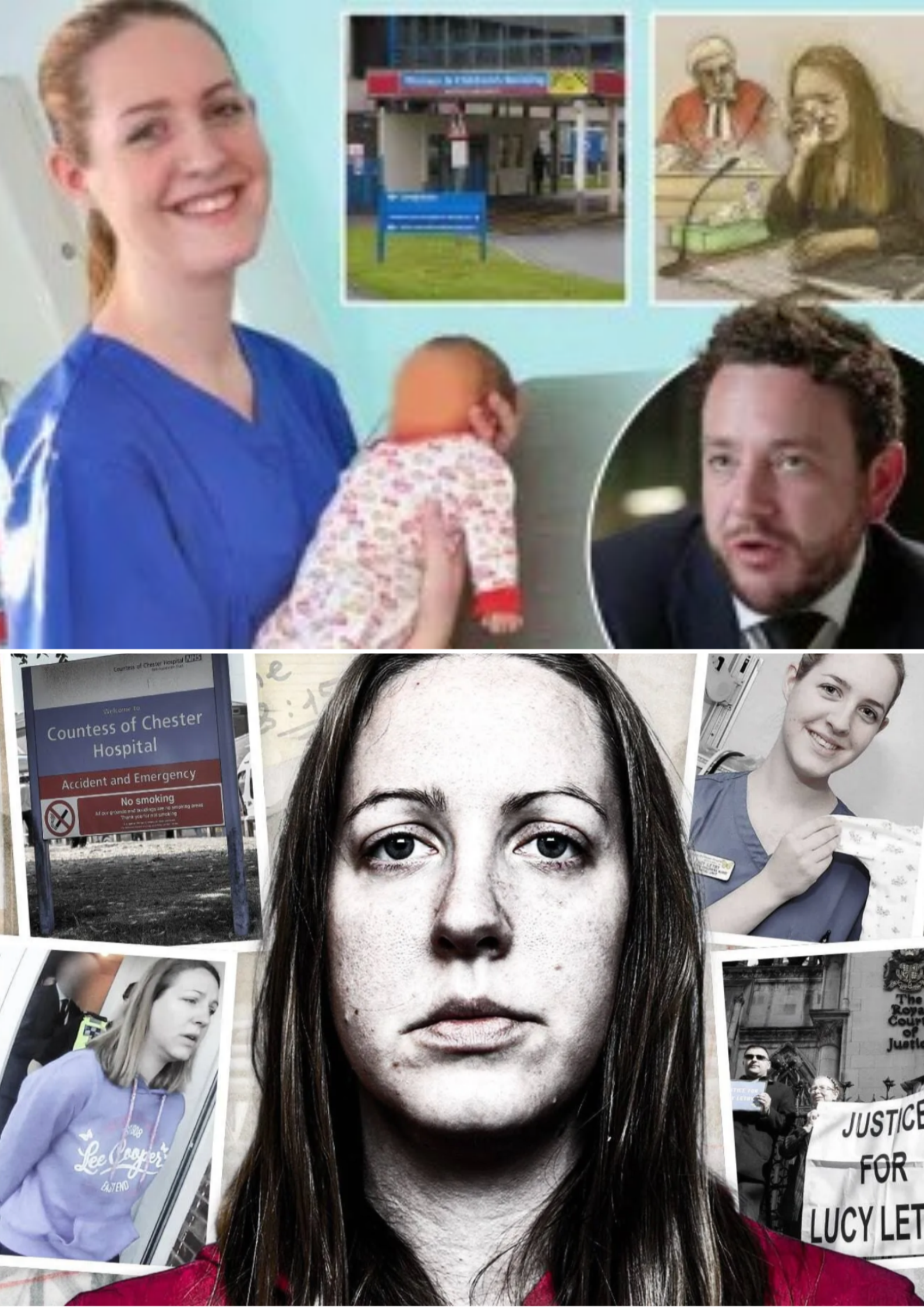
LUCY LETBY CASE ROCKED BY FRESH DOUBTS AS DOCTOR WHO HELPED RAISE THE ALARM CALLS FOR RETRIAL
A retired paediatrician whose evidence helped bring the Lucy Letby case to investigators has publicly expressed doubts about whether the former neonatal nurse was responsible for the deaths and collapses at the Countess of Chester Hospital.
Dr John Gibbs, one of three consultants whose evidence contributed to the case against Letby, has said he is now “no” longer certain that she murdered the babies.
He has also suggested that a retrial could be “the most appropriate thing for everyone,” while acknowledging the profound impact that renewed scrutiny could have on the families involved.
His comments have added another layer of controversy to a case that has already faced intense scrutiny over medical evidence, hospital management and safeguarding failures.
 “I AM NO LONGER CERTAIN”
Speaking to The Sun, Dr Gibbs said he had developed what he described as a “very small concern” that there may not have been deliberate harm involved in the incidents that led to Letby’s convictions.
When asked whether he remained certain that Letby had killed the babies, he answered: “No.”
He also said that if Letby were in prison for crimes she had not committed, that would be “clearly appalling.”
At the same time, Gibbs did not claim that Letby had been proven innocent. He acknowledged that he disagreed with aspects of some of the arguments advanced by experts challenging the convictions.
He said the central question for him was what actually caused so many babies to collapse or die in the neonatal unit during 2015 and 2016.
WHY HAS HE CHANGED HIS VIEW?
There is no verified evidence that an undisclosed person or organisation pressured Dr Gibbs into changing his position.
Instead, his comments come amid a growing public debate about the medical evidence used in the case and the findings of the independent Thirlwall Inquiry into what happened at the hospital.
The inquiry’s final report, published on September 15, 2026, found serious failures in management, governance and safeguarding at the Countess of Chester Hospital.
Lady Justice Kathryn Thirlwall described “dysfunctional management and governance,” a gulf between hospital leadership and clinicians, and a failure to understand fundamental safeguarding procedures.
The inquiry also concluded that once there was suspicion that Letby might be deliberately harming babies, safeguarding procedures should have been activated.
However, the inquiry chair made an important distinction: the inquiry was not an investigation into Letby’s criminal convictions or guilt.
Lady Justice Thirlwall explicitly said that her report did not seek to second-guess the criminal courts or the ongoing review by the Criminal Cases Review Commission.
 LETBY’S CONVICTIONS REMAIN IN PLACE
Letby, 36, remains imprisoned after being convicted at two trials of murdering seven babies and attempting to murder seven others at the Countess of Chester Hospital’s neonatal unit between 2015 and 2016.
She is serving 15 whole-life orders.
Her legal team has been seeking to challenge the convictions through the Criminal Cases Review Commission, which has been examining evidence submitted on her behalf.
Her previous attempts to obtain permission to appeal were rejected by the Court of Appeal.
The CCRC has not determined that Letby is innocent. Its role is to consider whether new evidence or legal arguments create a real possibility that a conviction would not be upheld if referred back to the courts.
MEDICAL EVIDENCE REMAINS AT THE CENTRE OF THE DISPUTE
The latest development involving Dr Gibbs comes after months of disagreement among medical and scientific experts over evidence presented during Letby’s trials.
In September, two experts who had previously produced reports challenging aspects of the prosecution’s insulin evidence withdrew from Letby’s defence team.
Helen Shannon and Professor Geoff Chase said they continued to believe it was very unlikely that two babies had been poisoned with insulin, but said they could not support some other arguments being advanced by the defence because they considered them inconsistent with available evidence and established physiology.
Letby’s barrister, Mark McDonald, has rejected the suggestion that the defence case depends on any single expert.
He has argued that evidence from experts in several fields raises fundamental questions about the scientific basis of some prosecution evidence.
These disagreements remain matters for the courts and scientific review rather than proof that Letby was wrongly convicted.
THE THIRLWALL INQUIRY DID NOT OVERTURN THE VERDICTS
The publication of the Thirlwall Inquiry report has intensified public interest in the case, but it did not overturn Letby’s convictions.
The inquiry examined how the hospital responded to the deaths and collapses, what doctors and managers knew, and whether opportunities existed to intervene.
Its findings included serious criticism of hospital leadership and safeguarding.
But Lady Justice Thirlwall expressly stated that her inquiry was not tasked with determining whether Letby was guilty or innocent.
That distinction is important because evidence of hospital failures does not, by itself, establish that the criminal convictions were wrong.
DR GIBBS WAS ONE OF THE DOCTORS WHO RAISED CONCERNS
Gibbs was among the consultants working at the neonatal unit when an unusual pattern of deaths and serious collapses emerged.
His concerns formed part of the chain of events that eventually led to a police investigation.
The case against Letby was subsequently built around a combination of medical evidence, clinical records, witness testimony and other evidence presented to juries.
Letby has consistently denied deliberately harming babies.
The legal dispute now centres on whether the new evidence being presented by her defence is sufficient to justify further examination of the convictions.
A CASE STILL WITHOUT A FINAL ANSWER
Dr Gibbs’s change in certainty does not automatically trigger a retrial.
Any decision about whether the convictions should be reconsidered ultimately rests with the appropriate legal authorities and courts.
His comments nevertheless represent a significant development because he was involved in the medical concerns that helped bring the case to wider attention.
For the families of the babies involved, the renewed debate is inevitably painful.
For Letby’s defence team, the comments provide another example of a medical professional questioning aspects of the original case.
And for the legal system, the central question remains unchanged: whether the new evidence and arguments now being examined are sufficient to justify reopening convictions that remain legally valid.
For now, Lucy Letby’s convictions remain in force, while the Criminal Cases Review Commission continues considering her case.