CHRISTA PIKE REMAINS UNCONSCIOUS ON A VENTILATOR AFTER FAILED EXECUTION
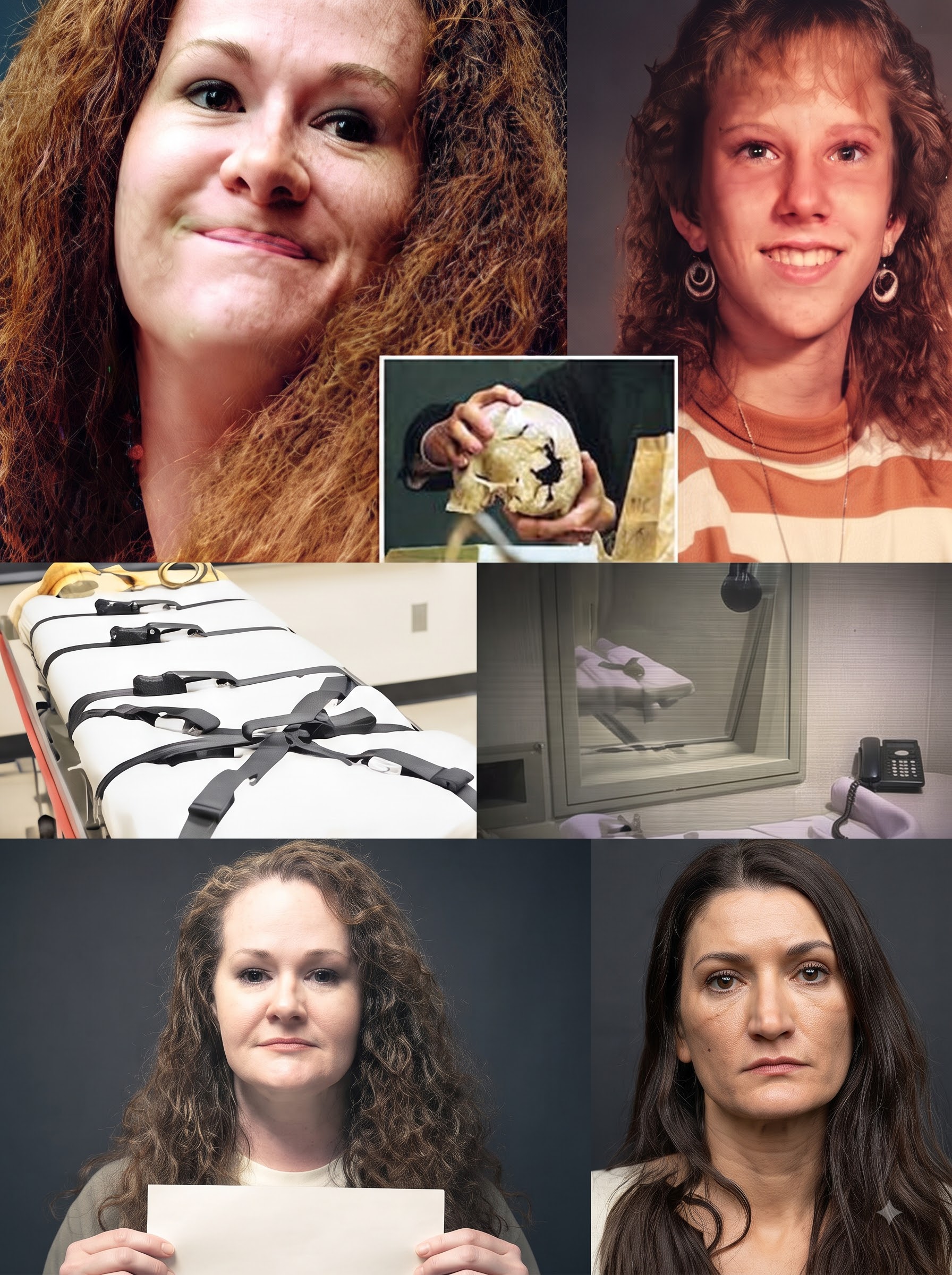
CHRISTA PIKE REMAINS UNCONSCIOUS ON A VENTILATOR AFTER FAILED EXECUTION
Christa Pike remains critically ill and unconscious in a Tennessee hospital days after the state’s attempt to carry out her execution ended without her death.
The 50-year-old Tennessee death-row prisoner was taken to hospital after officials halted the lethal-injection procedure on September 30, following the administration of two doses of pentobarbital.
Her attorneys now say Pike has been intubated and placed on a mechanical ventilator while doctors work to save her life and clear the drug from her system.
 THE EXECUTION THAT DID NOT GO AS PLANNED
Pike was scheduled to be executed at Riverbend Maximum Security Institution in Nashville.
The procedure lasted roughly an hour as members of the execution team attempted to establish intravenous access.
Her attorney Randy Spivey said at least seven needles were used in her left arm during the effort.
After two doses of pentobarbital were administered, Pike continued breathing and did not die as expected. The execution was eventually stopped and she was transported by ambulance for emergency medical treatment.
The incident has become one of the most closely watched execution failures in Tennessee in recent years.
 PIKE IS NOW ON A VENTILATOR
In a court filing on October 2, Pike’s attorneys provided the first detailed account of her condition following the failed execution.
They said she remains critically ill, unconscious and on a ventilator.
Her lawyers said hospital staff are treating the effects of pentobarbital and attempting to clear the drug from her system.
The filing also said Pike arrived at the hospital with serious injuries to both arms, which were described as swollen, burned and blistered.
Her legal team has asked the public and media to respect her privacy while she receives treatment.
LAWYERS QUESTION WHAT HAPPENED WITH THE IV LINES
Pike’s attorneys argue that the problems began when the execution team struggled to establish the IV lines needed to administer the drugs.
They allege that the lines were improperly positioned or that veins had failed, allowing at least some of the pentobarbital to enter surrounding tissue rather than the bloodstream.
The attorneys further allege that, instead of resolving the IV problem, a second dose was administered.
These are claims made by Pike’s legal team and have not been independently established by a court. Tennessee officials have said the Department of Correction followed the state’s established execution protocol.
HER ATTORNEYS HAD WARNED ABOUT MEDICAL DIFFICULTIES
Pike’s lawyers say the state had been warned before the execution that establishing IV access could be difficult.
Court filings cited her medical history, including thrombocytosis and a history of difficulties with finding veins.
Her attorneys had previously raised concerns about the possibility of complications during a lethal injection.
Those concerns have now become a central part of the legal team’s effort to determine exactly what happened inside the execution chamber.
TENNESSEE ORDERS AN INDEPENDENT REVIEW
Following the failed execution, Tennessee Gov. Bill Lee ordered an independent review of what happened.
Lee also halted the remaining scheduled executions in Tennessee for the rest of 2026.
The governor said the state needed to understand why the procedure did not produce the expected result, while maintaining that officials followed the established protocol.
Pike’s attorneys have separately asked a state court to require Tennessee’s Department of Correction to preserve evidence from the execution, including records and other material that could help establish what occurred.
THE CASE THAT LED TO DEATH ROW
Pike was convicted of the 1995 killing of 19-year-old Colleen Slemmer, a fellow Job Corps student in Tennessee.
Pike was 18 at the time.
She was sentenced to death and ultimately spent more than three decades on Tennessee’s death row.
Her case received renewed national attention because she was scheduled to become the first woman executed by Tennessee in more than two centuries.
Slemmer’s mother, May Martinez, witnessed the failed execution and expressed frustration afterward, saying she did not feel she had received the justice she had expected for her daughter.
WHAT HAPPENS NEXT?
For now, Pike’s immediate condition remains the most urgent concern.
Her attorneys say she continues to receive intensive medical treatment, while doctors work to address the effects of the drugs administered during the failed execution.
At the same time, the legal team is seeking preservation of evidence that could become important in future court proceedings.
Tennessee’s independent review is also expected to examine how the execution was carried out and why the procedure failed.
There is currently no new execution date for Pike.
The state’s remaining 2026 executions have been halted pending the review.
A SHOCKING TURN IN A DEATH-ROW CASE
What was supposed to be the final chapter of Christa Pike’s decades-long death-row case has instead become an extraordinary medical and legal crisis.
She survived the execution attempt but remains unconscious and dependent on a ventilator.
Her attorneys are now fighting to preserve evidence and protect her legal rights while doctors continue trying to save her life.
For now, the questions surrounding what happened inside Tennessee’s execution chamber remain unanswered.
Christa Pike is still alive — but she remains critically ill in hospital after the failed execution.