After Christa Pike’s Failed Execution, Colleen Slemmer’s Family Says Her Memory Must Not Be Forgotten
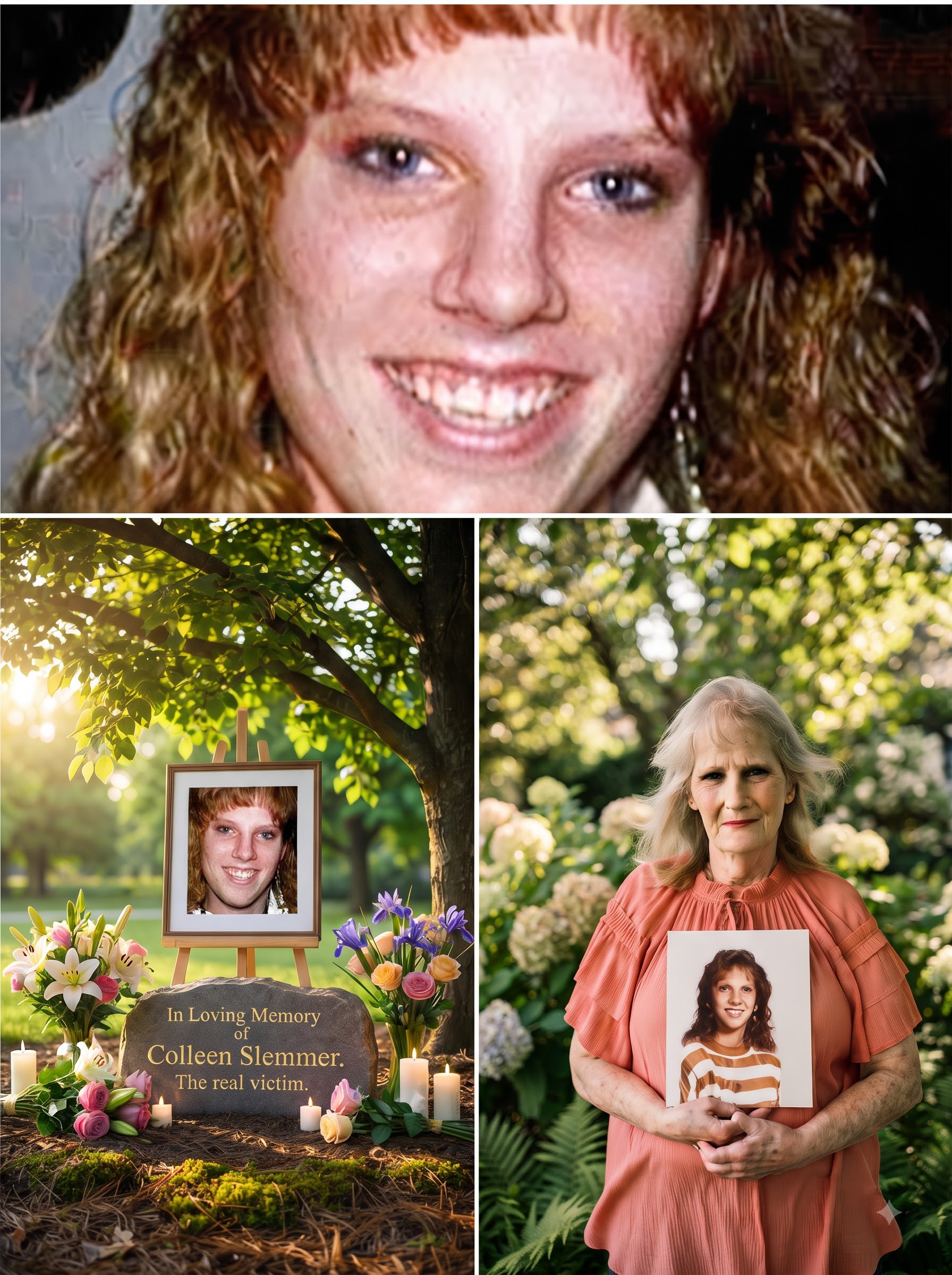
After Christa Pike’s Failed Execution, Colleen Slemmer’s Family Says Her Memory Must Not Be Forgotten
As Christa Pike remains critically ill following Tennessee’s failed attempt to execute her, the family of the woman Pike was convicted of killing is asking the public not to lose sight of the victim at the center of the case.
Pike, 50, survived two doses of pentobarbital during the September 30 execution attempt at Riverbend Maximum Security Institution in Nashville. Her attorneys said Friday that she is unconscious, on a ventilator and receiving treatment for serious effects from the drugs, including significant injuries to both arms.
Her legal team is now asking Tennessee Gov. Bill Lee to commute her death sentence, arguing that Pike endured a prolonged and traumatic execution attempt. That request remains pending and has not been granted.
But for Colleen Slemmer’s family, the failed execution has brought a different kind of pain.
Colleen Slemmer Was 19
Slemmer was 19 when she was killed in Knoxville in January 1995.
Pike, who was 18 at the time, was convicted of first-degree murder and sentenced to death for her role in Slemmer’s killing. Prosecutors said Slemmer was beaten and cut during the attack before Pike struck her with a piece of asphalt. A pentagram was also carved into Slemmer’s body.
The brutality of the killing has remained central to the case for more than three decades.
But Slemmer’s family has also tried to ensure that she is remembered as more than the victim in a death-penalty case.
Her mother, May Martinez, has described Colleen as a young woman who loved computers, roller skating and volunteering with the Special Olympics. She has repeatedly emphasized that her daughter never had the opportunity to grow older or build the life she had imagined.
“I Didn’t Get Justice for My Daughter”
Martinez traveled from Florida to Tennessee with her husband to witness Pike’s execution.
Instead of seeing the sentence carried out, she watched as Pike remained alive after the lethal-injection process began.
Witnesses reported that Pike was conscious during portions of the procedure, moved her head and feet, complained about pain in her arm and continued breathing after two doses of pentobarbital had been administered. She was ultimately taken from the prison by ambulance to a hospital.
Martinez later told ABC News that she broke down in tears after watching what happened.
“I didn’t get justice for my daughter,” she said. She also said she believed the state owed her an apology.
People magazine reported that Martinez remained focused on Colleen and said she did not believe the failed execution had provided the closure she had waited decades for.
Pike’s Attorneys Describe a Different Kind of Trauma
Pike’s attorneys have focused on what their client experienced inside the execution chamber.
Attorney Stephen Ferrell said Pike had made peace with dying but feared a prolonged and painful death. He also said her history of childhood sexual violence made being restrained and repeatedly subjected to needle attempts particularly frightening for her.
Attorney Randy Spivey said he counted multiple needle attempts in Pike’s arm as officials struggled to establish intravenous access.
The lawyers have characterized the execution attempt as cruel and traumatic and are asking that Pike’s sentence be commuted.
Those arguments have placed Pike’s suffering at the center of the latest legal battle.
But the case has two stories that cannot be separated: the extraordinary circumstances of Pike’s failed execution and the life and death of the 19-year-old woman whose killing resulted in Pike’s death sentence.
Tennessee Has Ordered an Investigation
The Tennessee Department of Correction has said officials followed the state’s established execution protocol but has not publicly explained why the procedure failed.
Gov. Bill Lee has ordered a third-party review and suspended the state’s remaining scheduled executions for 2026 while officials investigate what happened.
The review could help answer questions about the intravenous access problems, the administration of pentobarbital and what occurred during the period when witnesses could no longer see inside the execution chamber.
For now, Pike remains hospitalized in critical condition, while her attorneys pursue a commutation of her sentence.
Remembering Colleen
Whatever happens next in Pike’s legal and medical story, Colleen Slemmer remains at the center of the case.
She was 19.
She had a family who loved her, interests she wanted to pursue and a future she never got to experience.
More than 30 years later, her mother is still carrying that loss.
And after an execution that failed to bring the closure Slemmer’s family had expected, the question of what happens to Pike may continue to dominate headlines.
For Colleen’s family, however, another message remains just as important:
Her name was Colleen Slemmer.
She should not be forgotten.