My Family Disowned Me for Becoming an Army Doctor — Ten Years Later, a Pentagon Official Saluted Me at My Grandfather’s Funeral
PART 1 — THE SALUTE
Ten years after my family disowned me for becoming an Army doctor, I returned for my grandfather’s funeral expecting cold stares, judgment, and maybe a few cruel remarks.
Instead, my father publicly mocked my career in front of some of Washington’s most influential military figures.
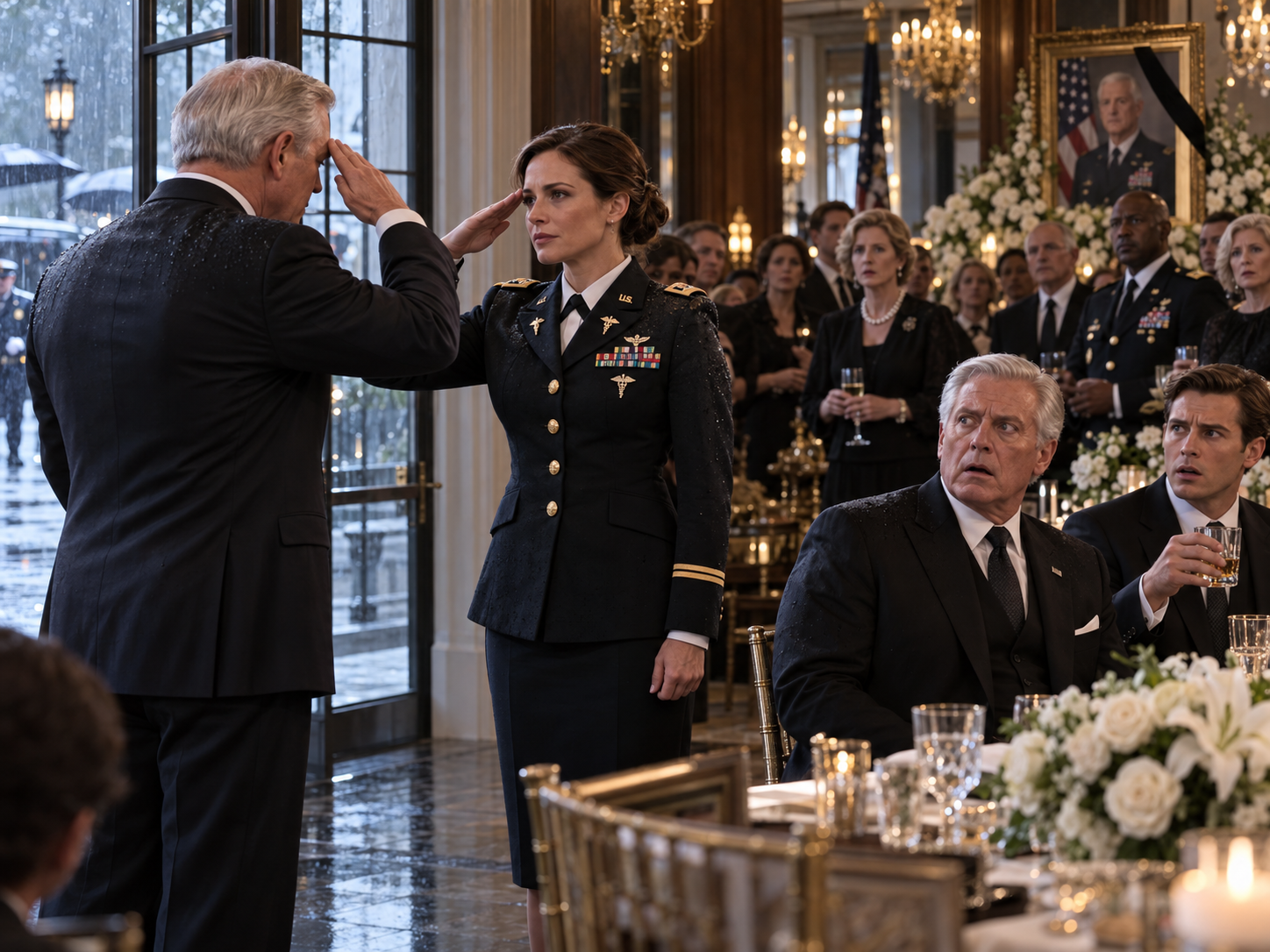
Then a senior Pentagon official crossed the room, stopped directly in front of me, saluted, and said:
“Colonel Carter, it’s an honor to see you again.”
My father’s expression changed before I had even lowered my hand.
My name is Evelyn Carter.
And the first thing my father said when he saw me was:
“Still pretending the Army needs another doctor?”
He made sure everyone around us could hear.
Richard Carter had never believed in keeping humiliation private when there was an audience available.
We were inside the Army Navy Country Club.
My grandfather, General Raymond Carter, had been buried less than an hour earlier.
The room was filled with retired generals.
Defense contractors.
Lobbyists.
Political advisers.
People who somehow managed to turn even a funeral reception into an opportunity to exchange business cards.
I stood near the entrance in my dress uniform.
Rain still darkened the shoulders.
“Hello, Dad.”
His eyes traveled slowly over my uniform.
My ribbons.
The Medical Corps insignia.
Then he smiled.
“Well, look who finally came home.”
I said nothing.
“The family doctor.”
His smile widened.
“Should we form a line for aspirin?”
Someone nearby laughed.
Then Daniel joined in.
My younger brother always laughed louder when Dad was performing.
“Evee.”
I hated that nickname.
“I didn’t know Army doctors were allowed off base for family functions.”
“They make exceptions for funerals.”
His grin weakened.
Only slightly.
Ten years earlier, my father had already planned my future.
Law school.
Politics.
Washington connections.
The Carter family had spent generations accumulating influence, and he expected me to help expand it.
Instead, I joined the Army.
Then became a physician.
To Dad, that wasn’t service.
It was rebellion.
He told me I was throwing away the Carter name.
Eventually, he stopped calling.
That afternoon, I hadn’t returned for him.
Or Daniel.
Or the family network that treated power almost like religion.
I came for Grandpa.
General Raymond Carter.
The one reason I had walked back into a room full of people who had already decided who I was.
I was considering leaving early when something shifted.
The conversations around the room softened.
A few men straightened their jackets.
A senator standing near the bar turned toward the entrance.
Then I saw him.
Thomas Whitaker.
Deputy Assistant Secretary of Defense.
Three federal security agents entered behind him.
Dad saw him too.
And for the first time all afternoon, his smile disappeared.
Whitaker paused near the doorway.
His eyes moved across the room.
Past my father.
Past Daniel.
Past several defense executives who were already preparing themselves to shake his hand.
Then his gaze landed on me.
He started walking.
Straight toward me.
With every step, the room became quieter.
Dad watched him approach.
So did Daniel.
Whitaker stopped directly in front of me.
Then raised his hand.
A salute.
Training took over before thought did.
I returned it immediately.
“Colonel Carter,” he said.
His voice carried clearly enough for everyone nearby to hear.
“It’s an honor to see you again.”
Behind me, Daniel’s whiskey glass stopped halfway to his mouth.
Dad stared at my uniform again.
Except this time, he was actually looking.
Actually reading.
Actually understanding that there were details he had spent ten years refusing to see.
Whitaker lowered his hand.
Then his voice.
“The men from Kandahar still ask about you.”
Silence.
Complete silence.
My father had spent years treating my Army career like an embarrassing phase I refused to outgrow.
My family had no idea what Kandahar meant.
No idea what I had done there.
No idea why someone from the Pentagon had just saluted me in front of them.
Whitaker shook my hand.
“I came to pay my respects to your grandfather.”
I nodded.
“Thank you.”
Then he hesitated.
“He spoke about you near the end.”
That hurt.
More than Dad’s jokes.
More than Daniel laughing.
More than ten years of being treated like the daughter who chose wrong.
Grandpa and I had barely spoken in years.
I looked at Whitaker.
“What did he say?”
His expression changed.
Not dramatically.
But enough.
And behind me, I heard my father take one slow step closer.
Because whatever General Raymond Carter had said before he died—
my family clearly had never been meant to hear it.
PART 2 — WHAT HAPPENED IN KANDAHAR
Whitaker glanced past me.
At my father.
At Daniel.
Then back at me.
“Raymond told me I owed you the truth.”
My pulse changed.
“What truth?”
Before Whitaker could answer, Dad stepped forward.
“Thomas.”
It was the first time I had heard my father address Whitaker without the polished warmth he normally reserved for people whose influence mattered.
“We’re all grieving. Perhaps this isn’t the place.”
Whitaker turned.
His expression became almost pleasant.
“Richard.”
My father extended his hand.
Whitaker looked at it for half a second before shaking it.
Dad recovered quickly.
He always did.
“I didn’t realize you and Evelyn knew each other.”
Whitaker released his hand.
“That seems to be a recurring theme today.”
Daniel lowered his glass.
“What does that mean?”
Whitaker looked at me instead of answering him.
“Do they know about Forward Surgical Team Seven?”
I felt the room disappear.
For an instant, I was no longer standing beneath chandeliers in Arlington.
I was back beneath canvas and steel.
Sand against my teeth.
Generators screaming.
Rotor blades beating the night apart.
Blood drying on my gloves.
A young medic shouting that we were out of O-negative.
And nineteen casualties arriving in less than eleven minutes.
“No,” I said.
Whitaker nodded slowly.
“I assumed not.”
Dad gave a small laugh.
It sounded wrong.
“Evelyn has always been private.”
“No,” Whitaker said.
“She was under orders.”
My father stopped smiling.
Several people standing near us pretended not to listen.
They were terrible at it.
Whitaker looked at me.
“You can tell them now.”
I studied him.
“Why?”
“Because the operation was declassified eighteen months ago.”
I had known that.
I simply hadn’t cared.
People sometimes imagine that secrecy creates pressure.
That you spend years desperately wanting to tell everyone what you did.
For me, it had been the opposite.
After enough time, the silence becomes part of the memory.
You stop needing anyone else to understand.
Dad folded his arms.
“What operation?”
I looked at him.
For ten years, he had never once asked me where I had served.
Not seriously.
He knew Afghanistan.
He knew Germany.
He knew Walter Reed.
But only because those details occasionally appeared in Christmas cards from relatives or public Army announcements someone forwarded him.
He had never called and asked:
Were you safe?
Were you scared?
Did you lose anyone?
Did you save anyone?
Now, surrounded by people he wanted to impress, he suddenly wanted answers.
I almost walked away.
Whitaker spoke first.
“September 14th. Kandahar Province.”
My throat tightened.
He continued.
“A convoy carrying a joint assessment team was hit outside the secured corridor. Twelve immediate casualties. Seven more within the hour. Communications were disrupted. Evacuation was delayed.”
Daniel frowned.
“And Evelyn was there?”
Whitaker stared at him.
“Your sister was the senior trauma physician on duty.”
That shut him up.
Dad looked at me.
“You were in charge?”
“No.”
It was technically true.
Major Patrick Hale had commanded the unit.
Until the second blast shattered his left femur and drove metal through his abdomen.
After that, command became a less formal concept.
Whitaker continued.
“Dr. Carter had been awake for twenty-one hours when the first casualties arrived.”
“Twenty-three,” I corrected quietly.
His mouth twitched.
“Twenty-three.”
The senator near the bar had stopped pretending not to listen.
So had everyone else.
Whitaker spoke without dramatizing anything.
That made it worse.
“She established triage after the treatment tent lost power. When the backup generator failed, she moved surgery into the hardened maintenance bay. When the blood refrigerator was damaged, she organized a walking blood bank.”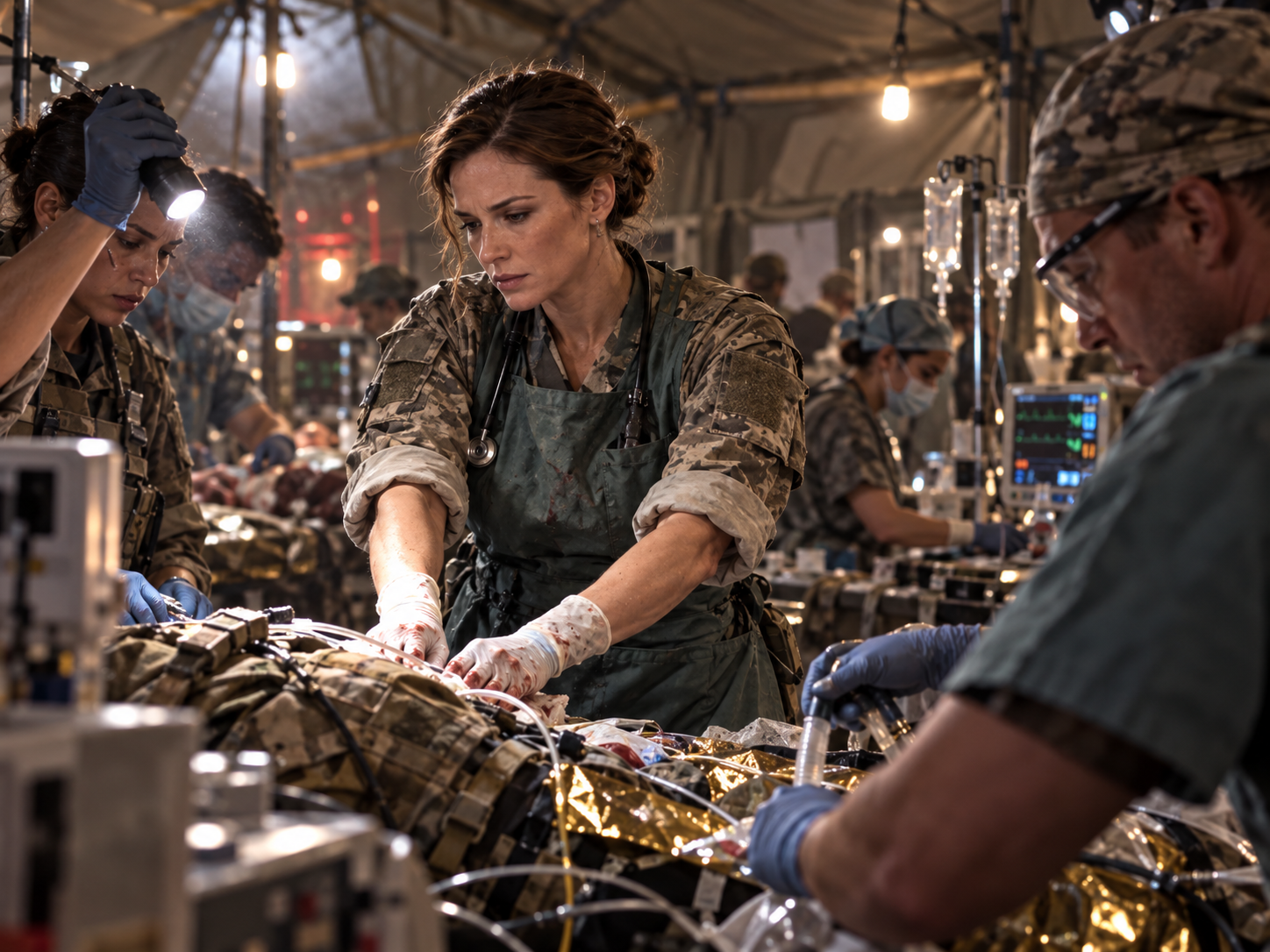
Dad’s eyes were fixed on me.
I hated that it took someone important for him to see me.
Whitaker continued.
“Then the second attack started.”
I closed my eyes for half a second.
Not because I couldn’t handle the memory.
Because I could handle it too well.
I still remembered Specialist Aaron Finch pressing both hands against Sergeant Morales’s chest wound.
Captain Ruiz screaming for plasma.
The smell of burned insulation.
A nurse named Hannah Price holding a flashlight between her teeth because the surgical lights had died.
And a nineteen-year-old soldier asking me whether his mother would be angry because he had lost the watch she gave him.
He died six minutes later.
Some memories don’t fade.
They simply stop asking permission before returning.
Whitaker lowered his voice.
“Evelyn could have evacuated with the first medical flight.”
Dad looked at me.
“You didn’t?”
“No.”
“Why?”
The question almost made me laugh.
“Because I had patients.”
Three words.
That was all.
Whitaker looked toward my ribbons.
“Thirty-two people came through that station before sunrise.”
Daniel swallowed.
“How many…”
He couldn’t finish.
“How many survived?” I asked.
He nodded.
“Twenty-seven.”
Silence again.
Whitaker looked at Daniel.
“One of them was my son.”
Dad turned sharply toward him.
I had known Thomas Whitaker before Washington turned his hair silver and put federal protection outside his office.
Back then he had been Lieutenant General Thomas Whitaker.
His son, Captain James Whitaker, had been attached to the convoy.
James arrived unconscious with a collapsed lung, internal bleeding, and shrapnel lodged less than a centimeter from his aorta.
We lost his pulse twice.
I operated on him for nearly four hours.
He later spent seven months learning to walk normally again.
I hadn’t seen James in years.
Whitaker reached into his jacket.
He removed a small photograph.
A man stood beside a woman and two young children.
The man leaned slightly on one leg.
But he was smiling.
Whitaker handed it to me.
“James sent this.”
I stared at the photograph.
“He has children?”
“Two.”
Something inside me cracked.
Not painfully.
Just enough to let light through.
“He wanted to come today,” Whitaker said. “His youngest has pneumonia.”
I smiled despite myself.
“Tell him to stop letting them lick shopping cart handles.”
Whitaker laughed.
“He said you’d say something like that.”
Dad’s face had gone pale.
Daniel looked at me as if I had become someone else while he wasn’t watching.
But the strangest expression belonged to my mother.
She had been standing fifteen feet away.
I hadn’t seen her approach.
Margaret Carter held a folded funeral program against her chest.
Her eyes were wet.
Not from the funeral.
Not anymore.
“You never told us.”
I looked at her.
“You never asked.”
She flinched.
Dad’s jaw tightened.
“That’s unfair.”
For the first time that afternoon, anger touched me.
I turned toward him.
“Is it?”
“Evelyn—”
“You told me not to come home until I was ready to apologize for humiliating this family.”
Several heads turned.
Mother closed her eyes.
Daniel stared at Dad.
He had been twenty-two when it happened.
Old enough to remember.
Young enough, apparently, to have rewritten it.
Dad lowered his voice.
“This is neither the time nor the place.”
“You chose the place when you mocked me in front of the room.”
His face hardened.
And suddenly there he was again.
The father I remembered.
The man who could turn love into leverage faster than anyone I knew.
Whitaker stepped between us without appearing to.
“There’s another matter.”
He reached inside his coat again.
This time he removed an envelope.
Cream paper.
My name written across the front.
EVELYN.
I recognized the handwriting immediately.
Grandpa.
My fingers went cold.
Whitaker held it out.
“Raymond asked me to give this to you after the burial.”
Dad stared at the envelope.
“What is that?”
Whitaker didn’t look at him.
“Something Raymond wanted Evelyn to have.”
Dad stepped closer.
“My father was heavily medicated during his final weeks.”
Whitaker’s gaze sharpened.
“He gave it to me eleven months ago.”
That stopped him.
I took the envelope.
The paper trembled slightly between my fingers.
Inside was a single sheet.
Evelyn,
If you are reading this, then I failed to say these words while I still had the courage to look you in the eye.
I believed your father when he told me you abandoned this family.
I allowed pride to make me lazy.
I should have called you myself.
I know now where you were.
I know what happened in Kandahar.
And I know what you did afterward.
There is something else you need to know.
Your father believes the Carter Foundation belongs to him.
It does not.
It never did.
Do not sign anything Daniel gives you.
Speak to Eleanor Voss before midnight.
Trust Whitaker.
And Evelyn—
I was wrong about you.
You did not disgrace our name.
You became the best of it.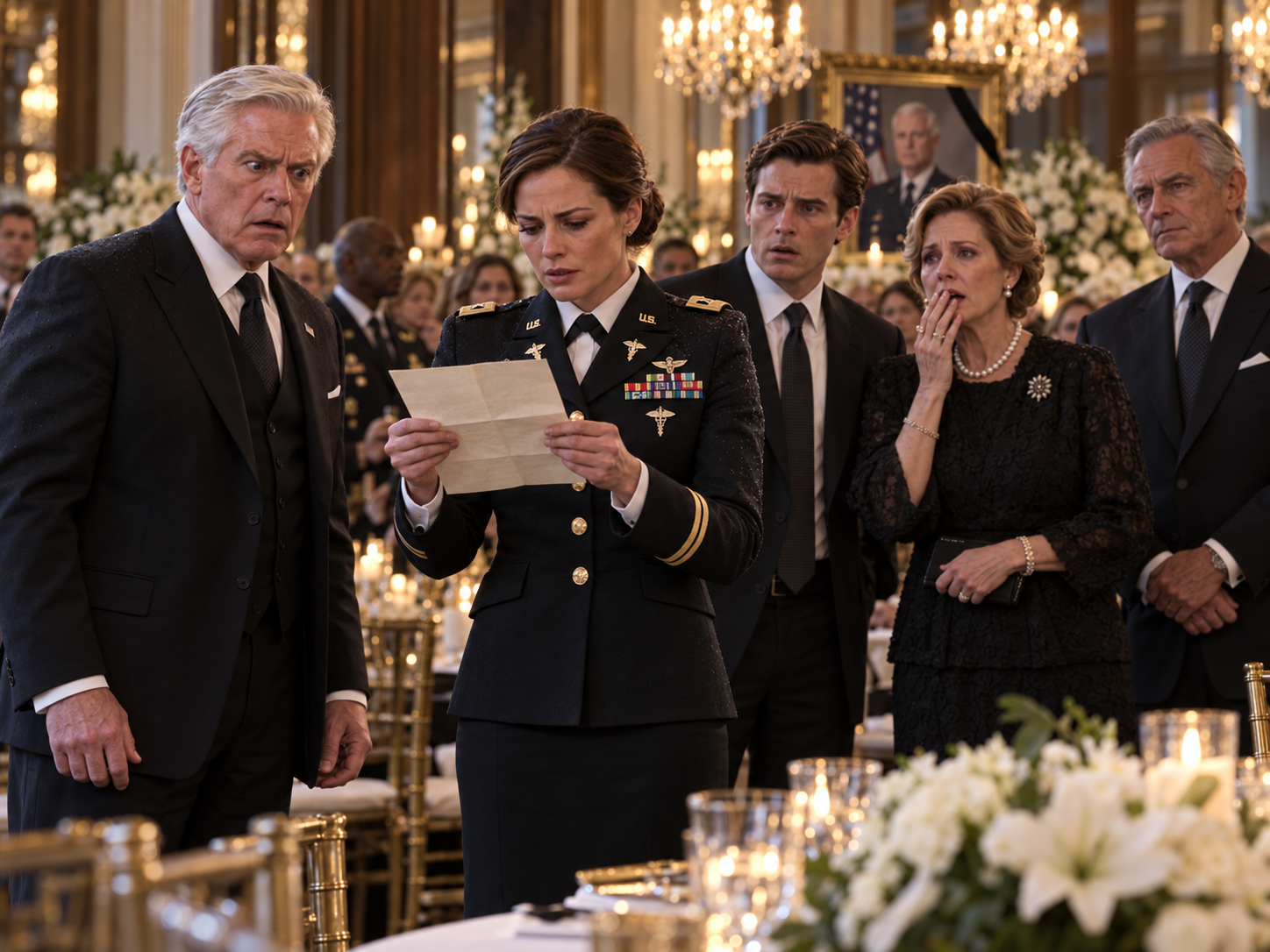
Grandpa
I read it twice.
Then I looked up.
My father was staring at me.
“What did he write?”
I folded the letter.
“Who is Eleanor Voss?”
Every trace of color vanished from Daniel’s face.
That was when I knew the funeral wasn’t the end of something.
It was the beginning.
PART 3 — THE FOUNDATION
Daniel recovered first.
“I don’t know.”
Too fast.
My brother had always been terrible at lying.
Not because he lacked intelligence.
Because he had spent his entire life surrounded by people who rarely challenged him.
I looked at him.
“You know exactly who she is.”
Dad stepped in.
“Enough.”
Whitaker watched him carefully.
“What is the Carter Foundation?” I asked.
My father exhaled.
“A family charitable trust.”
“I know what it is.”
The Raymond Carter Foundation had existed since before I was born.
Officially, its mission was veteran rehabilitation, scholarship funding, military family housing, and medical research.
Unofficially, Dad treated it like a diplomatic passport.
He hosted dinners with it.
Sponsored conferences through it.
Sat on panels with its name beside his.
Politicians attended its galas.
Defense executives wrote checks.
My grandfather provided the reputation.
My father provided the networking.
Daniel provided expensive photographs of himself handing oversized checks to veterans.
I had never been involved.
Which was why Grandpa’s warning made no sense.
“Why would Daniel ask me to sign anything?”
Mother looked at my brother.
Daniel stared into his drink.
Dad answered.
“Your grandfather reorganized several family holdings before his death.”
“What holdings?”
“This can wait.”
“No.”
“Evelyn.”
I folded Grandpa’s letter into my pocket.
“Who is Eleanor Voss?”
Nobody answered.
Whitaker did.
“Raymond’s attorney.”
Daniel muttered something under his breath.
I turned toward him.
“What?”
“Nothing.”
Whitaker checked his watch.
“Her office is fifteen minutes from here.”
Dad laughed once.
“You’re seriously encouraging this?”
“I’m honoring Raymond’s request.”
“My father was eighty-seven.”
“And still capable of choosing his own counsel.”
The two men stared at each other.
There was history there.
Old history.
The kind powerful men usually disguise behind polite titles.
I looked toward my mother.
“Did you know?”
She hesitated.
That was enough.
“What did Grandpa change?”
Mother looked at Dad.
He answered for her.
“Margaret.”
One word.
A warning.
Something in me hardened.
“Mom.”
Her eyes came back to mine.
“Your grandfather changed the trust structure last year.”
“How?”
“Evelyn, please.”
“Mom.”
Her lips trembled.
“He removed your father as successor chairman.”
Dad’s voice cracked through the room.
“That is not what happened.”
Mother ignored him.
For once.
“He appointed an independent board.”
Daniel set down his glass.
Hard.
“And he gave Evelyn the deciding seat.”
Everything went still.
I stared at my mother.
“What?”
Dad moved closer.
“You weren’t supposed to find out like this.”
I almost smiled.
“Apparently I wasn’t supposed to find out at all.”
“You don’t understand the legal structure.”
“Then explain it.”
“It’s complicated.”
“I spent four years learning medicine, five years in surgical residency, completed a trauma fellowship, managed battlefield mass casualties, and somehow survived the Army bureaucracy. Try me.”
Whitaker coughed into his hand to hide a smile.
Dad didn’t.
“The foundation’s charter requires a Carter family representative.”
“So?”
“So Raymond named you.”
“Why?”
Dad’s jaw worked.
“Because he was angry with me.”
That answer felt wrong immediately.
Grandpa could be vindictive.
But he wasn’t careless.
I took his letter out again.
Do not sign anything Daniel gives you.
My attention shifted to my brother.
“What were you going to ask me to sign?”
Daniel looked at Dad.
Dad looked furious.
Not at me.
At him.
Interesting.
“Daniel.”
He shoved both hands into his pockets.
“It was administrative.”
“What was?”
“A consent document.”
“For what?”
“A temporary transfer of voting authority.”
There it was.
I almost admired the simplicity.
“From me to whom?”
Daniel didn’t answer.
I did.
“To Dad.”
Dad stepped forward.
“Only until the estate process was complete.”
“And when were you planning to tell me Grandpa had appointed me?”
“We were trying to spare you from unnecessary family bureaucracy.”
I stared at him.
“You disowned me for ten years, and now you’re worried about wasting my time?”
His face reddened.
“We did not disown you.”
I laughed.
This time openly.
Mother whispered, “Richard.”
“No,” he said. “I’m tired of this rewriting of history. Evelyn made a choice. She walked away.”
I could feel people listening again.
Let them.
“You told me if I took the commission, I was choosing the Army over the family.”
“You did.”
“You canceled the account Grandpa had established for medical school.”
“You had scholarships.”
“You removed me from Grandma’s memorial service program.”
“That was Daniel’s mistake.”
Daniel looked up sharply.
Dad continued.
“You stopped attending holidays.”
“After you told Aunt Rebecca I was not welcome in your house wearing a uniform.”
“That is not what I said.”
Mother whispered:
“It is.”
Dad turned.
She looked frightened.
But she didn’t look away.
“I was there, Richard.”
For the first time in my life, my father seemed to run out of words.
Mother looked at me.
“I should have called you.”
Ten years of silence sat between us.
I didn’t forgive her.
Not then.
But I heard her.
Whitaker stepped closer.
“Colonel, I think we should see Voss.”
Dad pointed at him.
“This is a family matter.”
Whitaker’s face became flat.
“No, Richard. According to Raymond, it became something else months ago.”
“What does that mean?”
Whitaker didn’t answer.
He looked at me.
“Your grandfather found discrepancies.”
Dad’s expression changed.
Tiny.
Almost invisible.
But I saw it.
So did Whitaker.
“What kind of discrepancies?” I asked.
“In the foundation.”
Daniel went completely still.
My stomach tightened.
Whitaker continued.
“Grant distributions. Consulting contracts. Administrative expenses. Raymond asked for a private review.”
Dad spoke immediately.
“That review found nothing illegal.”
“I didn’t say illegal.”
“You were implying it.”
“No,” Whitaker said calmly. “You heard it.”
I looked from one man to the other.
“How much money?”
Whitaker shook his head.
“I don’t know.”
Dad scoffed.
“Of course you don’t.”
“But Eleanor Voss does.”
That ended the discussion.
I turned toward the exit.
Dad grabbed my arm.
Not hard.
But he hadn’t touched me in ten years.
I stopped.
His hand dropped immediately.
“Evelyn.”
His voice was quieter now.
Less performance.
More father.
“For once, don’t make a decision while you’re angry.”
I looked at him.
“Dad, I learned not to do that a long time ago.”
Then I walked out.
Whitaker followed.
Behind us, heels struck marble.
Mother.
Then Daniel called out.
“Evelyn!”
I stopped near the doors.
He hurried toward me.
My brother looked genuinely afraid.
Not embarrassed.
Not angry.
Afraid.
“There’s something you need to know before you meet Voss.”
Dad shouted his name.
Daniel ignored him.
He came close enough that only I could hear.
“Grandpa didn’t start investigating the foundation because of money.”
“What did he find?”
Daniel looked over his shoulder.
Then back at me.
“Your deployment records.”
My skin went cold.
“What about them?”
His voice dropped to a whisper.
“Someone in this family had been requesting them for years.”
PART 4 — THE LETTERS THAT NEVER REACHED ME
Eleanor Voss kept an office three blocks from Lafayette Square.
No brass plaque.
No oversized reception area.
No framed photographs of senators.
Just dark bookshelves, two tired leather chairs, and a sixty-something attorney with silver hair who looked at me as though she had been expecting me for years.
“You have Raymond’s eyes,” she said.
“I’ve been told I have his temper.”
“That too.”
Whitaker remained near the door.
Mother sat beside me.
Daniel had come as well.
Dad had not.
That worried me more than if he had.
Eleanor placed a thick file on the table.
“Before we begin, Colonel Carter, I need to ask whether you want your mother and brother present.”
I looked at them.
Mother’s hands were clasped so tightly her knuckles were white.
Daniel looked sick.
“They stay.”
Eleanor nodded.
“Your grandfather revised the Raymond Carter Foundation charter eleven months ago.”
She slid a document toward me.
“Upon his death, governance transfers to a seven-member independent board. Six members were selected by Raymond. You are the seventh.”
“Why me?”
“Because the charter gives the Carter family representative veto authority over any sale, merger, dissolution, or transfer exceeding twenty percent of foundation assets.”
Daniel closed his eyes.
I understood.
“The consent document.”
“Yes.”
Mother turned toward him.
“You knew?”
Daniel stared at the floor.
“Dad said it was procedural.”
Eleanor’s expression hardened.
“It would have transferred Colonel Carter’s voting authority to Richard for five years.”
Mother inhaled sharply.
I looked at my brother.
“You were going to hand me that at Grandpa’s funeral?”
Daniel looked miserable.
“I thought you’d sign it because you didn’t care about the foundation.”
“You mean because I didn’t know I was part of it.”
He said nothing.
Eleanor opened another folder.
“The foundation currently controls assets valued at approximately one hundred eighty-six million dollars.”
I stared at her.
Mother covered her mouth.
Even Daniel seemed startled by the number.
“Most of that is restricted,” Eleanor said. “Medical endowments. Veteran housing. Rehabilitation programs. Scholarship trusts.”
“Then why does Dad need control?”
Eleanor pushed another document across the table.
“Because Richard negotiated a proposed restructuring.”
The name on the top page was Helix Strategic Holdings.
I recognized it.
A defense consulting consortium.
Dad had sat on its advisory board for six years.
Daniel leaned forward.
“I thought that deal was dead.”
“It was,” Eleanor said. “Raymond killed it.”
I skimmed the proposal.
Property transfers.
Management fees.
Long-term leases.
Consultancy agreements.
Individually they looked ordinary.
Together they were something else.
The foundation would retain its name.
But nearly a third of its unrestricted assets would eventually move into organizations controlled by people in my father’s network.
“Was this illegal?”
Eleanor paused.
“Not necessarily.”
That answer mattered.
She continued.
“But Raymond believed it violated everything the foundation existed to do.”
Whitaker crossed his arms.
“What made him look?”
Eleanor opened the thickest folder.
“Evelyn did.”
I stared at her.
“I hadn’t spoken to him.”
“Not directly.”
She removed a bundle of envelopes tied with a faded blue ribbon.
Every envelope had my handwriting on it.
Grandpa’s address.
My return addresses from Germany.
Texas.
Maryland.
Afghanistan.
I stopped breathing.
“What are those?”
“Letters you sent Raymond.”
“No.”
“Yes.”
“I sent letters.”
My voice sounded distant.
“He never answered.”
Eleanor slid them toward me.
“Because he never received most of them.”
I picked up the first envelope.
The seal had been opened.
Inside was a letter dated nine years earlier.
Grandpa,
I know Dad is angry. I know you probably are too. I’m not asking you to agree with what I did. I just hope someday you’ll understand that I didn’t join to embarrass anyone.
I wanted to serve.
I wanted to become useful somewhere that nobody cared who my father knew.
I stopped reading.
My hands had begun to shake.
“Where did you get these?”
“Raymond found them.”
“Where?”
Eleanor looked toward Mother.
Mother’s face had gone white.
“In Richard’s study.”
The room changed.
Mother whispered, “No.”
Eleanor nodded.
“Raymond found a locked archival drawer while looking for foundation records.”
I turned toward Daniel.
He looked horrified.
“You knew about this?”
“No.”
For once, I believed him immediately.
Eleanor continued.
“There were thirty-seven letters.”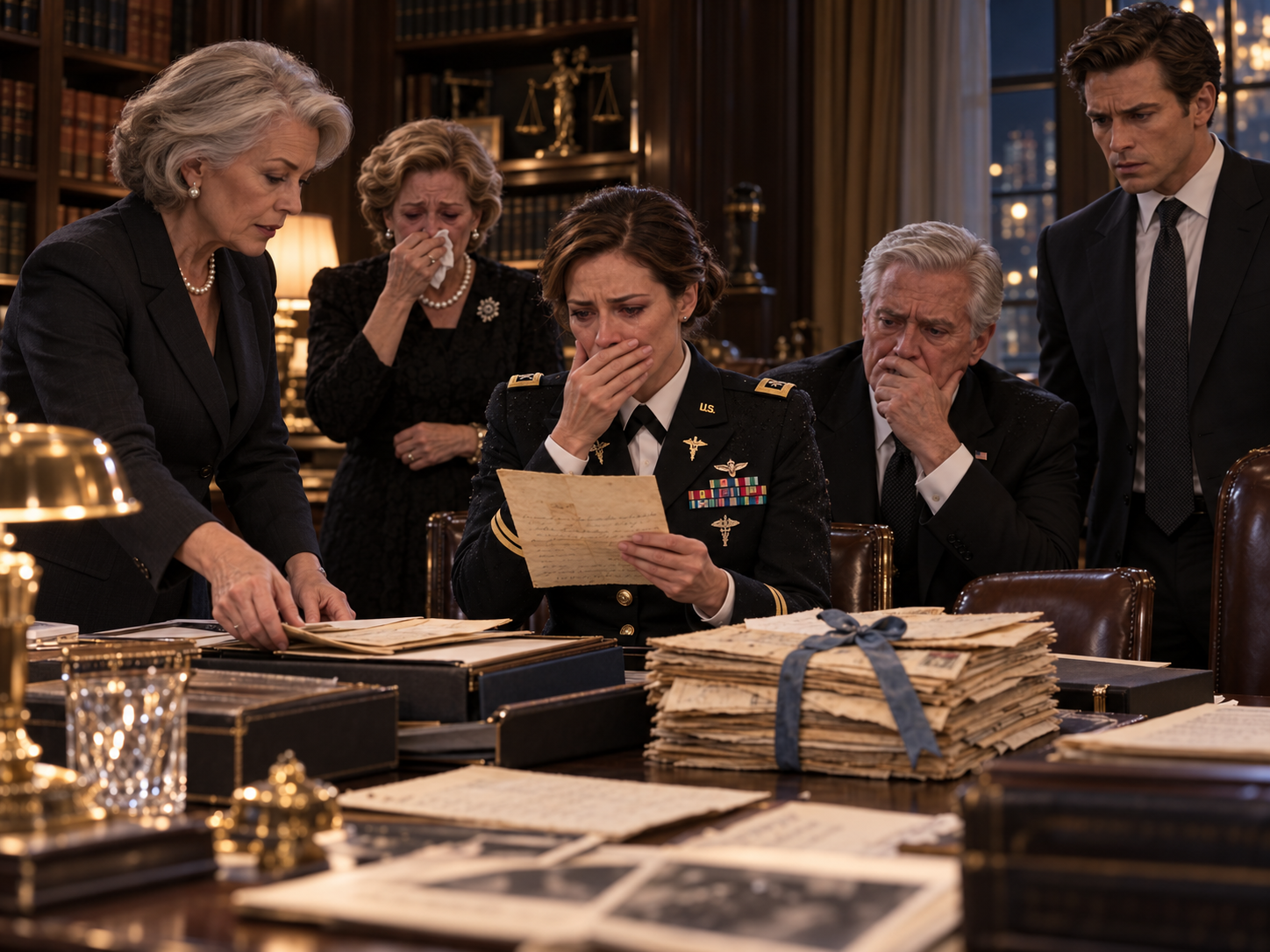
Thirty-seven.
Birthday cards.
Photographs.
Christmas notes.
One letter after my first deployment.
Another after I made lieutenant colonel.
One I wrote after Kandahar because I had spent thirty-six hours surrounded by death and suddenly needed my grandfather.
All of them.
Hidden.
I looked at Mother.
“Did you know?”
Tears filled her eyes.
“No.”
“Did Dad intercept them?”
Eleanor spoke carefully.
“Raymond believed so.”
“Believed?”
“There was no written confession.”
Whitaker moved from the wall.
“But there was something else.”
Eleanor nodded.
She removed a printed email.
It was from my father to his longtime executive assistant.
The date was eight years earlier.
Any correspondence from Evelyn is to be forwarded to my office. Father’s health does not need additional agitation.
My vision blurred.
Daniel whispered:
“Jesus.”
Mother stood so quickly her chair scraped the floor.
“He told me you stopped writing.”
I couldn’t answer.
“He told me you wanted nothing to do with us.”
Still nothing.
“He said you returned my Christmas cards.”
“I never received them.”
Mother put a hand against her mouth.
Then she began to cry.
Quietly.
I wanted to comfort her.
I also wanted to scream.
Both feelings existed at once.
Eleanor gave us several seconds.
Then she continued.
“Raymond confronted Richard last year.”
“What happened?”
“They had a severe argument.”
“About the letters?”
“About everything.”
She opened another document.
“By then, Raymond had learned about Kandahar.”
I looked toward Whitaker.
He nodded.
“I told him.”
“When?”
“Fourteen months ago.”
“Why?”
“Because he asked me whether you had disgraced the Carter name.”
The sentence hit harder than I expected.
Whitaker’s jaw tightened.
“I told him the truth.”
“What did he say?”
For the first time that evening, Whitaker smiled.
“He sat quietly for about a minute.”
Then his smile faded.
“And then he cried.”
I looked down.
Grandpa had cried exactly twice that I knew of.
When Grandma died.
And when his old command sergeant major was buried at Arlington.
Whitaker continued.
“He asked me how many soldiers you had treated.”
“I told him.”
“He asked whether the Bronze Star on your record was related.”
“I told him what I could.”
“He asked why nobody in his family knew.”
I laughed bitterly.
“I suppose he figured that one out.”
“He did.”
Eleanor pushed another envelope toward me.
“This one Raymond wrote three weeks later.”
My name was on it.
I opened it.
Evelyn,
There is no dignified way for an old man to admit he has been a coward.
I mistook silence for evidence.
I believed the version of you that was easiest for me to believe because it required nothing from me.
I should have driven to your hospital.
I should have called your commanding officer.
I should have written.
I should have done a hundred things besides protect my pride.
I cannot recover ten years.
But I can refuse to let another generation inherit my mistake.
You became a doctor because you wanted to save lives.
I spent too much of mine thinking power meant being the person others had to listen to.
You learned earlier than I did that power means being the person others can depend on.
I hope one day you forgive me.
But if you never do, I will understand.
There was one final paragraph.
Your father will tell you this is about inheritance.
It is not.
The most important thing I am leaving you is the truth.
Use it better than we did.
I lowered the letter.
Nobody spoke.
Then Eleanor pulled one final file from the stack.
“Unfortunately, Raymond discovered something else before he died.”
I looked up.
“What?”
“Someone used Foundation money to investigate you.”
Daniel whispered:
“What?”
Eleanor opened the file.
Private intelligence invoices.
Background research.
Travel monitoring.
Records requests.
Amounts small enough to hide among consulting expenses.
But there were dozens.
Germany.
Fort Sam Houston.
Walter Reed.
Kandahar.
My assignments.
My promotions.
My relationships with senior officers.
Even the address of my apartment outside Bethesda.
I felt a colder kind of anger.
“Who authorized these?”
Eleanor turned the final page around.
At the bottom was an approval signature.
Not my father’s.
Daniel Carter.
My brother stared at it.
Then stood.
“I never signed that.”
Nobody moved.
Daniel pointed at the page.
“I’m serious. I never signed this.”
Mother whispered his name.
He shook his head violently.
“That’s not my signature.”
Eleanor watched him.
“We had the same thought.”
She reached for another document.
“A forensic examiner agrees.”
Daniel collapsed back into the chair.
I stared at the forged signature.
And suddenly Grandpa’s warning made sense.
Do not sign anything Daniel gives you.
Not because Grandpa thought Daniel was the enemy.
Because someone had been using Daniel as cover.
I looked at Eleanor.
“Who had access to his signature?”
Daniel answered before she could.
His voice barely audible.
“Dad.”
PART 5 — THE CARTER NAME
My father called me at 11:43 that night.
I watched his name glow on my phone.
Ten years without a personal call.
Then one funeral.
One salute.
One envelope.
And suddenly Richard Carter remembered my number.
I answered.
“Evelyn.”
His voice was calm.
That frightened me more than anger.
“We need to talk privately.”
“We’re talking.”
“Not over the phone.”
“Then come to Voss’s office.”
Silence.
“So she showed you everything.”
“Yes.”
Another pause.
“I can explain.”
“Good.”
I looked across Eleanor’s conference table.
Mother was still there.
So was Daniel.
Whitaker had left twenty minutes earlier after arranging for the relevant foundation records to be preserved.
“Come explain.”
Dad arrived twenty-six minutes later.
No driver.
No assistant.
No polished funeral guests.
Just my father in a black suit damp from the rain.
He looked older.
I wondered whether he had always looked that old and I had simply spent the afternoon seeing him through childhood eyes.
Eleanor opened the door.
Dad walked inside and stopped when he saw Mother and Daniel.
“I asked for Evelyn.”
I stood.
“They stay.”
His eyes moved to the documents.
Then to the letters.
Something in his face broke.
Not guilt.
Recognition.
“You found those.”
“Yes.”
Mother stood.
“Richard, tell me you did not hide my daughter’s letters.”
He looked at her.
“Margaret—”
“Tell me.”
His shoulders fell slightly.
“I intercepted some correspondence.”
Mother slapped him.
The sound was sharp.
Nobody moved.
Even Dad seemed stunned.
She had been married to him for thirty-eight years.
I had never seen her raise her voice at him.
Now she was trembling.
“You let me believe she hated us.”
“I was trying to hold this family together.”
“You tore it apart.”
“She chose the Army.”
“She was twenty-seven.”
“She knew what she was doing.”
“So did you.”
Dad turned away.
His gaze found me.
“You don’t understand what was happening then.”
“Explain it.”
He looked at Eleanor.
“This is privileged family business.”
“No,” she said. “It is not.”
He laughed without humor.
“Everyone has become very brave tonight.”
Daniel stood.
“Did you forge my signature?”
Dad froze.
There it was.
The question nobody could dress up.
He sat slowly.
“Not personally.”
Daniel stared.
“That’s your defense?”
“The approvals were processed electronically.”
“Under my authorization?”
“You were executive vice president of the foundation.”
“I was twenty-six when some of these started!”
“And you enjoyed the title.”
Daniel recoiled.
I almost felt sorry for him.
Almost.
For years, Daniel had accepted every benefit Dad gave him.
Offices.
Introductions.
Board seats.
Cars.
Invitations.
He had never asked what any of it cost.
Now the invoice was arriving.
Dad looked at me.
“The reviews were never intended to hurt you.”
“You tracked me.”
“I monitored risk.”
“I was an Army physician.”
“You were a Carter serving in politically sensitive environments.”
“I was your daughter.”
He looked away.
That was the first moment I understood something important.
Dad had an explanation for everything except that.
I stepped closer.
“Why?”
He rubbed his forehead.
“When you joined, several of my associates warned me it could become a vulnerability.”
“A vulnerability to what?”
“Political opposition. Press scrutiny. Conflicts. Classified deployments.”
I stared at him.
“You investigated me because you thought my career might affect yours?”
“I made sure there were no surprises.”
Mother looked sick.
Daniel whispered:
“You’re unbelievable.”
Dad snapped toward him.
“Do not pretend you objected to the life I built for you.”
Daniel went silent.
Dad stood again.
“Everything I did was for this family.”
I shook my head.
“No.”
His face hardened.
“You wouldn’t understand.”
“That sentence has protected you for thirty years.”
He stared at me.
I continued.
“You didn’t protect the family. You protected your control of it.”
His mouth opened.
I didn’t let him interrupt.
“You chose my career.”
“You chose Daniel’s career.”
“You controlled Mom’s access to me.”
“You controlled Grandpa’s access to me.”
“You controlled what information everyone received until each person was living inside a different version of reality.”
His voice rose.
“I gave all of you everything.”
“Except the right to choose who we became.”
That landed.
Dad looked toward Mother.
Then Daniel.
Neither defended him.
He seemed smaller suddenly.
Not defeated.
Just alone.
Eleanor slid the Helix proposal across the table.
“We also need to discuss this.”
Dad looked at it.
His expression changed.
“This was legitimate.”
“Raymond disagreed.”
“My father was sentimental.”
“He believed transferring veteran medical assets into management structures controlled by your business associates violated the foundation’s mission.”
“It would have increased returns.”
“And management fees.”
His jaw tightened.
Eleanor continued.
“Your consulting firm would have received approximately 3.6 million dollars over the first five years.”
Mother stared at him.
“You never told me.”
“It was disclosed.”
“To whom?”
“The relevant committees.”
Eleanor shook her head.
“Committees whose members included three people with business relationships to you.”
Dad’s hand flattened against the table.
“I have not stolen anything.”
And this was important.
He hadn’t.
Not according to the records.
He had manipulated.
Concealed.
Controlled.
Blurred boundaries.
But there was no suitcase of cash.
No secret offshore account.
No convenient crime that allowed me to turn him into a cartoon villain.
Reality was more difficult.
My father had convinced himself that what benefited him benefited the family.
What benefited the family benefited the foundation.
And what benefited the foundation therefore justified everything else.
He had repeated that logic until he could no longer see where one ended and another began.
I said quietly:
“Grandpa removed you because he stopped trusting your judgment.”
Dad looked at me.
“No.”
“He told Eleanor.”
“He was angry.”
“He left me the authority.”
“To punish me.”
I shook my head.
“No.”
“Then why you?”
That question came from somewhere deep.
Not the strategist.
Not the Washington operator.
My father.
Why her?
Why not me?
I thought of Grandpa’s letter.
You learned earlier than I did that power means being the person others can depend on.
“Because he trusted me to walk away from power if keeping it hurt people.”
Dad stared at me.
I saw him understand.
And hate that he understood.
The next morning, the foundation board convened.
Dad arrived with two attorneys.
Daniel arrived alone.
Mother didn’t attend.
I wore my uniform.
Not for effect.
Because immediately afterward I had to return to Walter Reed.
Patients did not care that my family was imploding.
The meeting lasted four hours.
Lawyers argued.
Accountants presented records.
Board members asked questions.
Dad defended the Helix restructuring.
He had numbers.
Charts.
Returns.
Forecasts.
For an hour, he almost convinced everyone.
Then Eleanor presented the surveillance invoices.
The forged approvals.
The hidden family correspondence.
And finally, Raymond’s recorded statement.
Grandpa appeared on a screen.
Thin.
Pale.
Older than the man I remembered.
But still unmistakably General Raymond Carter.
“I created this foundation because soldiers came home from wars carrying costs their country preferred not to see.”
He took a breath.
“If this organization ever becomes another machine for making well-connected people richer, shut it down before you let my name excuse it.”
Dad stared at the screen.
Grandpa continued.
“I made mistakes with my own family.”
His voice weakened.
“I mistook obedience for loyalty.”
Nobody moved.
“I did that to my son.”
Dad lowered his eyes.
“And Richard did it to his children.”
My throat tightened.
Grandpa looked directly into the camera.
“If Evelyn is watching this, she may hate me for placing this burden on her.”
A faint smile.
“She always hated committee meetings.”
Despite everything, I laughed.
So did Eleanor.
Grandpa continued.
“But she understands something the rest of us took too long to learn.”
He paused.
“A title is not proof of service.”
Then the recording ended.
There was no dramatic applause.
No shouting.
Just silence.
The board voted forty minutes later.
Six to one.
The Helix restructuring was canceled.
Richard Carter was removed from all operational foundation positions pending a full independent audit.
The surveillance contracts were terminated.
Daniel resigned voluntarily.
Then everyone looked at me.
Eleanor spoke.
“Colonel Carter, the charter names you interim family representative and acting chair until the annual election.”
I stared at her.
“No.”
Dad looked up.
For the first time all morning, genuinely surprised.
Eleanor blinked.
“No?”
“I’ll serve as family representative.”
I glanced around the room.
“But I’m not becoming chair.”
One board member frowned.
“Your grandfather clearly intended—”
“My grandfather intended this organization to serve veterans.”
I looked at the foundation’s medical director, Dr. Lena Ortiz.
She had spent eighteen years building rehabilitation programs while the Carter family posed for gala photographs.
“Dr. Ortiz should chair it.”
Ortiz stared at me.
Dad stared harder.
I continued.
“She knows the programs. She knows the patients. And she’s been doing the work while the rest of this family argued about whose name belonged on the building.”
The room went quiet.
Then one board member seconded the nomination.
Another followed.
The vote was unanimous.
Even the seat Dad had temporarily retained for procedural reasons voted yes.
Afterward, I found him alone in the hallway.
He looked at me strangely.
“You could have taken it.”
“Yes.”
“You could have controlled the entire foundation.”
“Yes.”
“Then why didn’t you?”
I looked at him.
“Because I don’t want to become you.”
He flinched.
I regretted the cruelty instantly.
But not the truth.
I walked away.
Then Dad said:
“Evelyn.”
I stopped.
When I turned back, he looked less like Richard Carter and more like the man who once taught me to ride a bicycle by running beside me down our driveway.
“I read the Kandahar report last night.”
I said nothing.
“All of it.”
His voice broke slightly.
“I didn’t know.”
I looked at him.
“That was the problem.”
He nodded.
And for once, he didn’t defend himself.
PART 6 — THE PEOPLE WHO CAME HOME
Three weeks after Grandpa’s funeral, I received a package at Walter Reed.
No return address.
Inside was a photograph.
Twenty-seven people standing outside a rehabilitation center.
Soldiers.
Veterans.
Former medics.
Two nurses.
One man holding a toddler.
Another with a prosthetic leg.
Captain James Whitaker stood in the center.
Across the bottom someone had written:
THE KANDAHAR TWENTY-SEVEN.
Underneath:
YOU TOLD US TO COME HOME.
WE DID.
I sat alone in my office and cried for ten minutes.
Then I wiped my face because I had rounds.
Life is rude that way.
It continues.
The independent audit of the Carter Foundation took four months.
The findings were ugly but less cinematic than Washington gossip wanted them to be.
No vast theft.
No criminal empire.
No secret fortune.
Instead there were years of inflated consulting costs, conflicts of interest, inappropriate private investigations, weak oversight, and decisions made to strengthen relationships rather than fulfill the foundation’s mission.
Several contracts were terminated.
Money was recovered.
Policies were rewritten.
Three board advisers resigned.
Dad lost most of his influence inside the organization.
For the first time in decades, Richard Carter had no title there.
No office.
No vote.
Nothing to command.
I expected him to fight.
He didn’t.
That surprised everyone.
Including me.
Daniel disappeared for a while.
Not literally.
He resigned from two boards and took a leave from the consulting company where Dad had placed him years earlier.
Six weeks later he appeared outside my hospital carrying two coffees.
“You still drink it black?”
I looked at the cup.
“You remember?”
He shrugged.
“I remember more than you think.”
We sat outside.
For several minutes neither of us spoke.
Then Daniel said:
“I’m sorry.”
I looked at him.
He stared at the ground.
“I know that’s not enough.”
“No.”
“I laughed at you.”
“Yes.”
“I believed Dad because believing Dad was easy.”
I said nothing.
He continued.
“You were gone. He said you chose to be gone. And every year it became easier to make you the villain because then I didn’t have to wonder whether we had done anything wrong.”
That was the first sincere thing my brother had said to me in years.
“I hated you sometimes,” he admitted.
“Why?”
He laughed bitterly.
“Because even when everyone said you were the family disappointment, Grandpa kept your academy photograph in his desk.”
I stared at him.
“I didn’t know that.”
“I found it after he died.”
Daniel swallowed.
“And because you did the one thing I never could.”
“What?”
“You told Dad no.”
For the first time, I understood my brother differently.
Daniel had been the golden child.
But gold can become a cage if everyone keeps polishing it.
“What are you going to do now?” I asked.
“I don’t know.”
“Good.”
He frowned.
I smiled.
“You’ve spent your whole life knowing because Dad told you.”
Daniel looked at me.
Then he smiled too.
It was small.
But real.
“Yeah.”
Three months later, he started working for a veterans’ housing nonprofit in Richmond.
Not as vice president.
Not as director.
As a development officer.
His first office had no window.
I sent him a plant.
He texted me:
This thing dies, I’m blaming you.
I replied:
Keep it away from you and Dad. Apparently Carters suffocate anything they’re trying to control.
He sent back:
Fair.
Mother was harder.
She called every Sunday.
At first, I answered once every three weeks.
Then every other week.
Then most Sundays.
We never pretended nothing happened.
That mattered.
She apologized without asking me to erase consequences.
One afternoon she drove to Walter Reed.
We walked through the rehabilitation wing.
She watched a twenty-four-year-old soldier practice standing on a prosthetic leg while his wife clapped beside him.
Mother began crying.
Quietly.
She looked at me.
“This is why you did it.”
I nodded.
She squeezed my hand.
“I wish I had understood sooner.”
“So do I.”
That was all.
Forgiveness did not arrive like lightning.
It came like physical therapy.
Repetition.
Pain.
Small improvements.
Some days regression.
But eventually movement.
Dad was different.
For five months, we barely spoke.
Then on a cold Thursday in February, my assistant knocked on my office door.
“There’s a Richard Carter downstairs asking to see you.”
I looked at the clock.
“No appointment?”
“No.”
Of course.
Some habits survived collapse.
I found him in the lobby.
No driver.
No tailored entourage.
He held a cardboard box.
“What’s that?”
“Your letters.”
I stopped.
“All of them?”
He nodded.
I took the box.
He didn’t release it immediately.
“I read some.”
Anger flashed through me.
“They weren’t yours.”
“I know.”
His hands fell away.
“I know that now.”
We stood beneath fluorescent hospital lights.
Nobody cared who Richard Carter was.
A nurse pushed a wheelchair behind him.
A child cried somewhere near the elevators.
Dad looked strangely exposed.
“I’ve spent five months trying to write you an apology.”
I said nothing.
“I kept making it sound like an argument.”
That almost made me smile.
“Sounds like you.”
“I deleted twenty-three versions.”
“Only twenty-three?”
He nodded.
Then his eyes filled.
My father did not cry.
Not at Grandma’s funeral.
Not when Grandpa died.
Not when business partners betrayed him.
But he cried there.
In the lobby.
“I was proud of you.”
I felt something inside me tighten.
He continued.
“I think that was part of why I was so angry.”
“That makes no sense.”
“I know.”
He wiped at his face impatiently.
“When you were little, you followed me everywhere. You wanted to sit in my office. You asked about Congress. You read newspapers before most children could sit still long enough to finish cereal.”
I remembered.
“I thought you would become what I was.”
“You mean what you wanted.”
“Yes.”
He breathed out.
“And when you didn’t, I treated it as rejection.”
I looked at him.
“It wasn’t.”
“I know.”
“You made me choose.”
“I know.”
“You kept Grandpa’s letters from me.”
“I know.”
“You lied to Mom.”
His eyes dropped.
“I know.”
“And you investigated me.”
“Yes.”
There was no defense.
No qualification.
No but.
Just yes.
That was new.
“What do you want from me?”
“Nothing.”
I studied him.
He meant it.
“I came to return the letters.”
He started toward the exit.
Then he stopped.
“And to tell you I’m sorry.”
I didn’t forgive him that day.
He didn’t ask me to.
That may have been the first decent thing he had done for me in years.
PART 7 — GRANDPA’S LAST CEREMONY
One year after General Raymond Carter’s death, the foundation opened the Carter Center for Combat Trauma and Family Recovery outside Washington.
Dr. Lena Ortiz refused to put Raymond’s name on the surgical wing.
Instead, she named rooms after medics, nurses, therapists, and service members who had helped create the program.
The largest rehabilitation room was named after Staff Sergeant Luis Morales.
The man whose chest wound Aaron Finch had tried to close with both hands in Kandahar.
Luis survived.
Aaron did not.
The memorial garden carried Aaron’s name.
That mattered to me more than any building carrying mine.
On opening morning, hundreds of people gathered outside.
Veterans.
Families.
Doctors.
Donors.
Members of Congress.
Senior military officers.
And, inevitably, several people who had never attended a veteran event without a photographer nearby.
I stood behind the stage.
Daniel approached in a cheap navy suit.
“You know Dad is here.”
“I know.”
“You invited him?”
“Yes.”
Daniel raised his eyebrows.
“You feeling okay?”
“I’m a doctor. I can check.”
He laughed.
Mother arrived a minute later and kissed my cheek.
Then Whitaker appeared.
Beside him stood James.
For a moment, I couldn’t move.
James Whitaker was older.
Of course he was.
So was I.
But I still saw the unconscious captain beneath surgical lights.
Then he smiled.
“Doc.”
I hugged him.
Hard.
“You have two kids now?”
“Three.”
I pulled back.
“What?”
“New one came six weeks ago.”
“You’re irresponsible.”
“That’s what my wife says.”
A small boy hiding behind his leg looked up at me.
James touched his shoulder.
“Ethan, this is Dr. Carter.”
The boy stared.
“The one from the story?”
My throat tightened.
James nodded.
“The one from the story.”
Ethan held out a folded drawing.
It showed a stick figure in a white coat standing beside another stick figure wearing camouflage.
Above them, in uneven blue letters:
THANK YOU FOR SAVING MY DAD.
I crouched so quickly my knees complained.
“That’s me?”
He nodded.
“You made my hair very large.”
He looked worried.
“Is it wrong?”
“No.”
I smiled.
“It’s excellent tactical hair.”
James laughed.
Then Whitaker touched my shoulder.
“You have another visitor.”
I stood.
A group of men and women waited behind him.
Faces I knew.
Some immediately.
Some only after several seconds.
The Kandahar Twenty-Seven.
Not all twenty-seven could come.
Nineteen did.
Luis Morales hugged me first.
He was heavier.
His beard was gray.
“Ma’am.”
“Don’t call me ma’am.”
“Yes, ma’am.”
“You were always difficult.”
“You kept me alive long enough to become difficult.”
Behind him stood Hannah Price.
The nurse who had held the flashlight between her teeth.
She hugged me so hard I nearly lost my balance.
For twenty minutes, there was no Washington.
No Carter family.
No foundation.
No politics.
Just people who had once lived through the same terrible night.
People who came home.
Eventually, the ceremony began.
Dr. Ortiz spoke first.
Then Whitaker.
Then a Gold Star mother whose son’s scholarship had helped her younger daughter finish nursing school.
I was supposed to speak last.
When I stepped toward the stage, I saw Dad in the third row.
Not the front.
He could have arranged the front.
Once.
He sat beside Mother.
His hands rested in his lap.
Daniel sat on the other side.
For the first time I could remember, my entire family was in one place and nobody was performing.
I approached the microphone.
A year earlier, I would have imagined this moment differently.
I might have wanted everyone to know Dad had been wrong.
I might have wanted him humiliated the way he had humiliated me.
But public victory is a poor substitute for healing.
So I talked about Grandpa.
Not General Carter.
Grandpa.
I told them he hated microwaves.
That he believed ketchup ruined steak.
That he secretly watched terrible detective shows and always identified the murderer incorrectly.
People laughed.
Then I told them something harder.
“My grandfather spent most of his life around rank.”
The crowd quieted.
“He understood command better than almost anyone I knew.”
I looked toward Dad.
“But near the end, he told me he had confused authority with wisdom.”
Dad lowered his eyes.
“I think many families do the same thing.”
I paused.
“We inherit expectations.”
“Names.”
“Traditions.”
“Definitions of success.”
“And sometimes we become so determined to preserve them that we forget the people they were supposed to serve.”
The wind shifted.
Flags moved behind me.
“This center exists because soldiers should not have to earn care by pretending they are unhurt.”
I looked toward the veterans.
“And families should not have to pretend they are unbroken before they are allowed to heal.”
Mother reached for Dad’s hand.
He let her take it.
“We cannot change what happened.”
I thought of Aaron Finch.
Of Grandpa.
Of thirty-seven hidden letters.
Of ten missing years.
“But we can decide what happens next.”
When I finished, everyone stood.
I hated standing ovations.
They always felt too much like funerals.
But that day, I accepted it.
Afterward, Dad found me in the memorial garden.
He stood beside Aaron’s plaque.
“I liked your speech.”
“Thank you.”
He looked around.
“Raymond would have loved this.”
“Yes.”
A long silence.
Then Dad reached into his pocket.
He removed a small wooden box.
“I found this in Grandpa’s desk.”
Inside was an old brass Army Medical Corps insignia.
Beneath it was a note.
FOR EVELYN WHEN SHE COMES HOME.
I stared at it.
“He bought it before he died?”
Dad shook his head.
“It belonged to his brother.”
I remembered Uncle James only from photographs.
Army physician.
Vietnam.
Killed before Grandpa became a general.
“He kept that for sixty years,” Dad said.
I ran my thumb across the metal.
Dad looked at the memorial wall.
“I understand something now.”
“What?”
“When you joined the Army, I thought you were leaving the family.”
He looked at me.
“But you were following the oldest part of it.”
I swallowed.
“Maybe.”
“No.”
He smiled faintly.
“You were.”
We stood there quietly.
Eventually he said:
“Can I ask you something?”
“Yes.”
“Not as Richard Carter.”
“That narrows things down considerably.”
He almost laughed.
“As your father.”
I waited.
“Is there any chance we start again?”
The question hung between us.
Ten years earlier, I would have said yes immediately.
Five years earlier, I might have said no forever.
Now I understood that both answers were too simple.
“We don’t start again.”
His face fell.
I continued.
“We start from here.”
He looked at me.
“That’s different.”
“Yes.”
“Is it enough?”
“For today.”
He nodded.
“For today.”
Then something happened I had not planned.
I hugged him.
He froze.
Just for a second.
Then his arms closed around me.
My father cried against my shoulder.
I did too.
Behind us, someone cleared his throat.
Daniel.
“Just checking whether this is a private emotional breakthrough or if siblings are allowed.”
I laughed through tears.
“Get over here.”
He joined us.
Then Mom appeared.
And somehow, beneath a bare winter tree beside a memorial garden built for people who had survived wars nobody else could fully understand, the Carter family managed one awkward, imperfect four-person hug.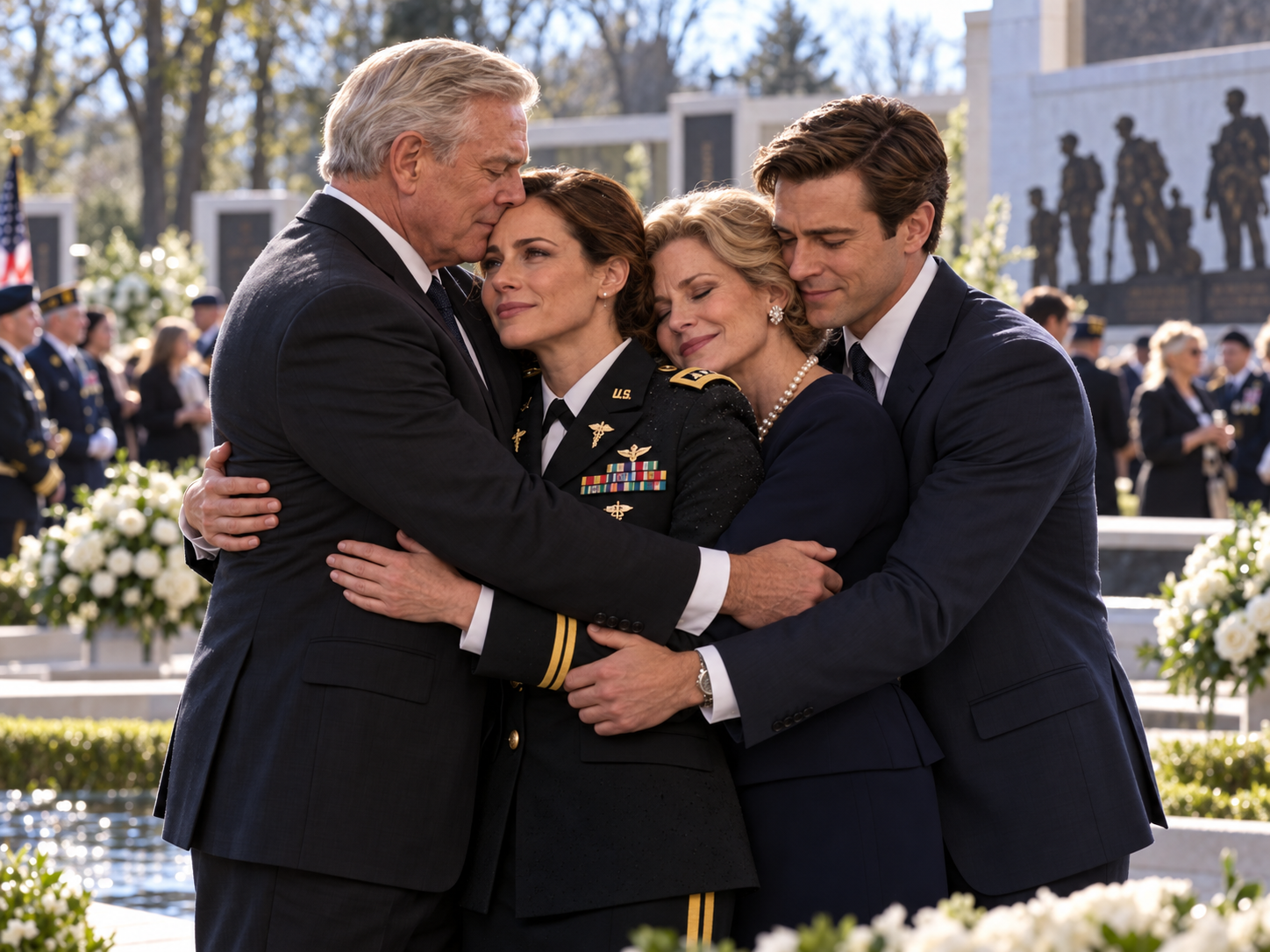
No photographers.
No senators.
No generals.
No audience that mattered.
Just us.
EPILOGUE — TWO YEARS LATER
I stayed in the Army.
That surprised Dad.
He had assumed the foundation would finally pull me into Washington permanently.
It didn’t.
I remained a physician.
Eventually I was promoted to brigadier general.
The ceremony took place on a bright October morning.
I invited my family.
All of them.
Mother arrived forty-five minutes early.
Daniel brought his wife and their baby daughter.
He named her Evelyn Margaret.
I told him that was excessive.
He told me to get over myself.
Dad arrived last.
Not late.
Just last.
He wore a dark suit and carried a small box.
After the promotion ceremony, I found him standing near the back.
For once, he hadn’t introduced himself to anyone important.
He hadn’t handed out a single business card.
He simply watched.
I walked over.
“So?”
He looked at the star on my shoulder.
“You know what your grandfather would say.”
“That the uniform makes me look short?”
Dad smiled.
“Probably.”
Then he handed me the box.
Inside was Grandpa’s old brass Medical Corps insignia.
Mounted beneath it was a small silver plate.
It read:
SERVICE IS WHAT REMAINS WHEN NO ONE IS WATCHING.
I looked at Dad.
“Did Grandpa say that?”
“No.”
“Then who did?”
Dad looked embarrassed.
“I did.”
I stared at him.
“That’s actually good.”
“I have moments.”
We laughed.
Then the ceremony photographer approached.
“General Carter?”
For the first time in my life, three people turned.
Me.
Dad.
And an elderly retired general standing twenty feet away.
The photographer looked confused.
Daniel burst out laughing.
I did too.
Dad shook his head.
Then he stepped beside me.
The photographer lifted the camera.
Dad started to put his hand on my shoulder.
He stopped.
Almost imperceptibly.
Then looked at me.
Asking.
That small hesitation meant more than the apology.
More than the foundation.
More than any speech.
I nodded.
He placed his hand gently on my shoulder.
The camera clicked.
Later, when I saw the photograph, I noticed something.
Dad wasn’t looking at the lens.
He was looking at me.
And he was smiling.
Not the Washington smile.
Not the one he used when senators entered rooms.
Not the one he wore while donors shook his hand.
It was the smile I remembered from childhood.
The one from before our family had learned to confuse love with expectation.
I framed that photograph.
Beside it, I placed the picture of the Kandahar Twenty-Seven.
And beside that, Grandpa’s final letter.
Three reminders.
One of who I had saved.
One of who I had lost.
And one of what we had managed, somehow, to repair.
Ten years after my family told me I had thrown away the Carter name, I finally understood something Grandpa had learned too late.
A family name is not an inheritance you protect by forcing everyone to live the same life.
It is a story.
Every generation gets to add something to it.
My grandfather added service.
My father added ambition.
For a while, ambition nearly swallowed everything else.
Daniel learned to add humility.
Mother learned courage.
Dad, eventually, learned how to let go.
And me?
I became a doctor.
A soldier.
A daughter again.
Not the daughter my father had planned.
Not the granddaughter my grandfather once expected.
Something better.
Myself.
And in the end, that was the only Carter legacy worth keeping.
Because sometimes coming home doesn’t mean returning to the family you left.
Sometimes it means building a family capable of welcoming back the person you became.
And this time, when I came home, nobody asked me to apologize for the uniform.
Dad simply opened the door.
And said,
“Welcome home, Evelyn.”
THE END.