Former U.S. Attorney Ed Stanton Tapped to Lead Independent Review of Christa Pike’s Failed Execution
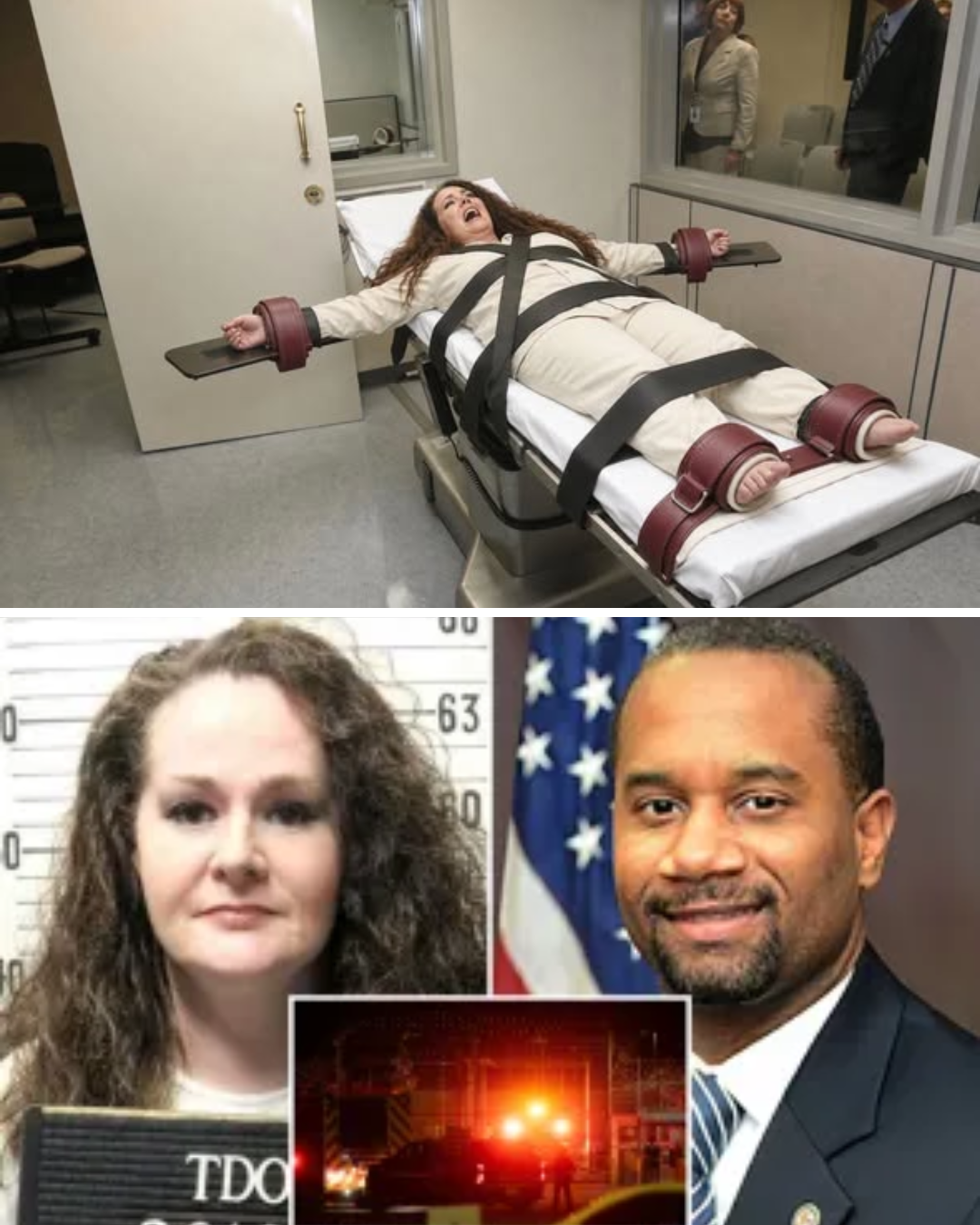
Former U.S. Attorney Ed Stanton Tapped to Lead Independent Review of Christa Pike’s Failed Execution
Tennessee has turned to a former federal prosecutor who previously examined the state’s lethal-injection system to investigate what went wrong during Christa Pike’s failed execution.
The appointment comes just days after Pike survived an execution attempt that was supposed to end her life.
On Saturday, Tennessee Gov. Bill Lee’s office announced that former U.S. Attorney Ed Stanton will lead an independent review of the Tennessee Department of Correction’s actions during the attempted execution.
The review will examine whether prison officials followed the state’s established execution protocol and whether additional recommendations are needed to ensure the procedure remains lawful and effective.
The announcement adds another major development to a case that has already triggered a leadership change, a halt to scheduled executions in Tennessee and growing questions about how the state carries out lethal injections.
The man chosen to investigate already knows the system
Stanton is not entering the investigation without prior experience.
He previously served as U.S. Attorney for the Western District of Tennessee from 2010 to 2017. In 2022, he was selected to conduct an independent review of Tennessee’s lethal-injection protocol after state officials discovered problems involving the testing of drugs intended for executions.
That earlier investigation had significant consequences.
Tennessee halted executions in 2022 after the drug-testing problems came to light. Stanton’s review subsequently contributed to substantial changes in the state’s execution protocol before executions resumed in February 2025.
Now, four years later, Stanton has been asked to examine another failure — this time involving the implementation of that revised system.
That connection makes his appointment particularly significant.
What happened during Pike’s execution attempt?
Christa Pike was scheduled to be executed at Riverbend Maximum Security Institution in Nashville on Wednesday.
The state administered two doses of pentobarbital, the drug used under Tennessee’s revised single-drug lethal-injection protocol.
But Pike survived.
Her attorneys later said she remained alive after the two doses and was eventually hospitalized in critical condition. They reported that she was unconscious and receiving mechanical ventilation as doctors worked to address the effects of the drug.
By Sunday, one of Pike’s attorneys said she had still not regained consciousness, according to the Associated Press.
Her lawyer, Assistant Federal Defender Stephen Ferrell, said he was not aware of Pike regaining consciousness since the failed execution attempt. Pike remained on a ventilator while doctors continued treating her, and her long-term prognosis was still uncertain.
The situation has raised immediate questions about what happened inside the execution chamber.
Pike’s lawyers have raised serious allegations
Pike’s legal team has alleged that the execution team failed to properly follow Tennessee’s written protocol.
In court filings, her attorneys said the IV lines were not properly placed and that the execution team failed to recognize the problem. They also alleged that Pike had previously been known to have difficult-to-access veins and that officials had been warned about her medical history.
Her lawyers described the event as extremely painful and argued that the state had failed in its obligation to carry out the execution according to its own procedures.
Those allegations have not been established by the independent review.
That is precisely why the investigation announced by Gov. Lee could become so important.
The state says the protocol was followed
Tennessee officials have maintained a different position.
Frank Strada, the commissioner of the Tennessee Department of Correction, said after the failed execution that he believed department personnel had carried out their responsibilities in accordance with the established protocol.
But Strada also said an independent review was appropriate and necessary.
Shortly afterward, he announced his resignation. He is expected to leave his position this month.
His departure represents the first major leadership consequence following the failed execution.
The timing is notable: Tennessee is now investigating the execution process while the official who oversaw the state’s correctional system is preparing to step down.
Why the investigation matters beyond Pike
The review is not only about what happened to one prisoner.
It could determine whether Tennessee’s revised execution procedure functioned as intended.
The state changed its lethal-injection system after Stanton’s 2022 review.
The newer protocol relies on a single drug — pentobarbital — rather than the previous three-drug combination.
That change was itself controversial.
Death-row prisoners challenged the single-drug protocol in court, arguing that it could expose prisoners to unconstitutional pain and suffering. Anti-death-penalty advocates also raised concerns about whether the method could cause unnecessary suffering.
Now, after Pike survived two doses of the drug, those questions are once again at the center of public attention.
The independent review could therefore have consequences well beyond this particular case.
Tennessee has already paused executions
Gov. Lee has halted executions in Tennessee for the remainder of 2026 while the review proceeds.
That means the scheduled execution of Gary Wayne Sutton, which had been set for December 3, will not go forward as planned.
The pause follows another failed execution attempt earlier this year.
In May, Tennessee postponed the execution of convicted murderer Tony Carruthers after officials were unable to establish a backup IV in accordance with the state’s protocol. Carruthers received a one-year reprieve.
Pike’s case is therefore not an isolated procedural question.
It is the second failed execution attempt in Tennessee in 2026.
That fact is likely to be an important part of the broader review of the state’s capital-punishment procedures.
What Ed Stanton will be looking for
According to the governor’s office, Stanton’s review will focus on whether Tennessee Department of Correction officials followed the established protocol during Pike’s execution attempt.
The review will also consider whether additional recommendations are necessary to ensure that the state’s protocol remains lawful and effective.
That leaves several major questions for investigators.
Were all required steps followed?
Were the IV lines properly placed and verified?
Were officials able to recognize a problem quickly enough?
Were Pike’s known medical circumstances adequately considered?
And if something went wrong, was the problem caused by the protocol itself, the way it was implemented, or both?
Those questions cannot be answered simply by looking at the outcome.
They require an examination of what happened before, during and after the execution attempt.
Pike’s medical condition remains uncertain
As investigators begin their work, Pike’s medical condition remains another unresolved part of the story.
As of Sunday, her attorney said she remained unconscious and on a ventilator. Doctors were working to remove pentobarbital from her system, and her prognosis was not yet clear.
Pike’s medical decision-maker has also been protecting her privacy, limiting the amount of information being released publicly about her condition.
Her defense team has asked that her medical privacy be respected.
That means some of the most important questions about her recovery may not have immediate answers.
A review that could reshape Tennessee’s execution system
For Tennessee, the stakes now extend beyond the fate of Christa Pike.
The state spent years revising its lethal-injection procedures after the problems uncovered in 2022.
Executions resumed under the new system in 2025.
Now the person who previously examined that system has been brought back to determine whether it was properly followed during one of the most consequential failures Tennessee’s death-penalty system has experienced.
Ed Stanton’s investigation could therefore become a pivotal moment.
If the review finds that officials followed the written protocol but the procedure itself was inadequate, further changes could be considered.
If investigators find that officials failed to follow the protocol, the focus could shift toward implementation, training and accountability.
And if the review uncovers problems that extend beyond a single execution, Tennessee could face much broader questions about the future of its lethal-injection system.
For now, those answers remain ahead.
What is known is that Christa Pike survived the execution attempt, Tennessee has halted executions for the rest of 2026, the state’s corrections commissioner is leaving his post, and an experienced former federal prosecutor has now been tasked with determining what happened.
The next chapter will depend on what Stanton and his team find.
And this time, the investigation will be looking closely at the very system that was supposed to prevent a failure like this from happening.