My Daughter Was Locked Inside a Freezer by Her Grandmother—Then the Security Footage Revealed What My Ex-Husband Had Been Hiding
PART 1 — THE SCREAMS FROM THE GARAGE
“MOMMY! HELP ME! I CAN’T GET OUT!”
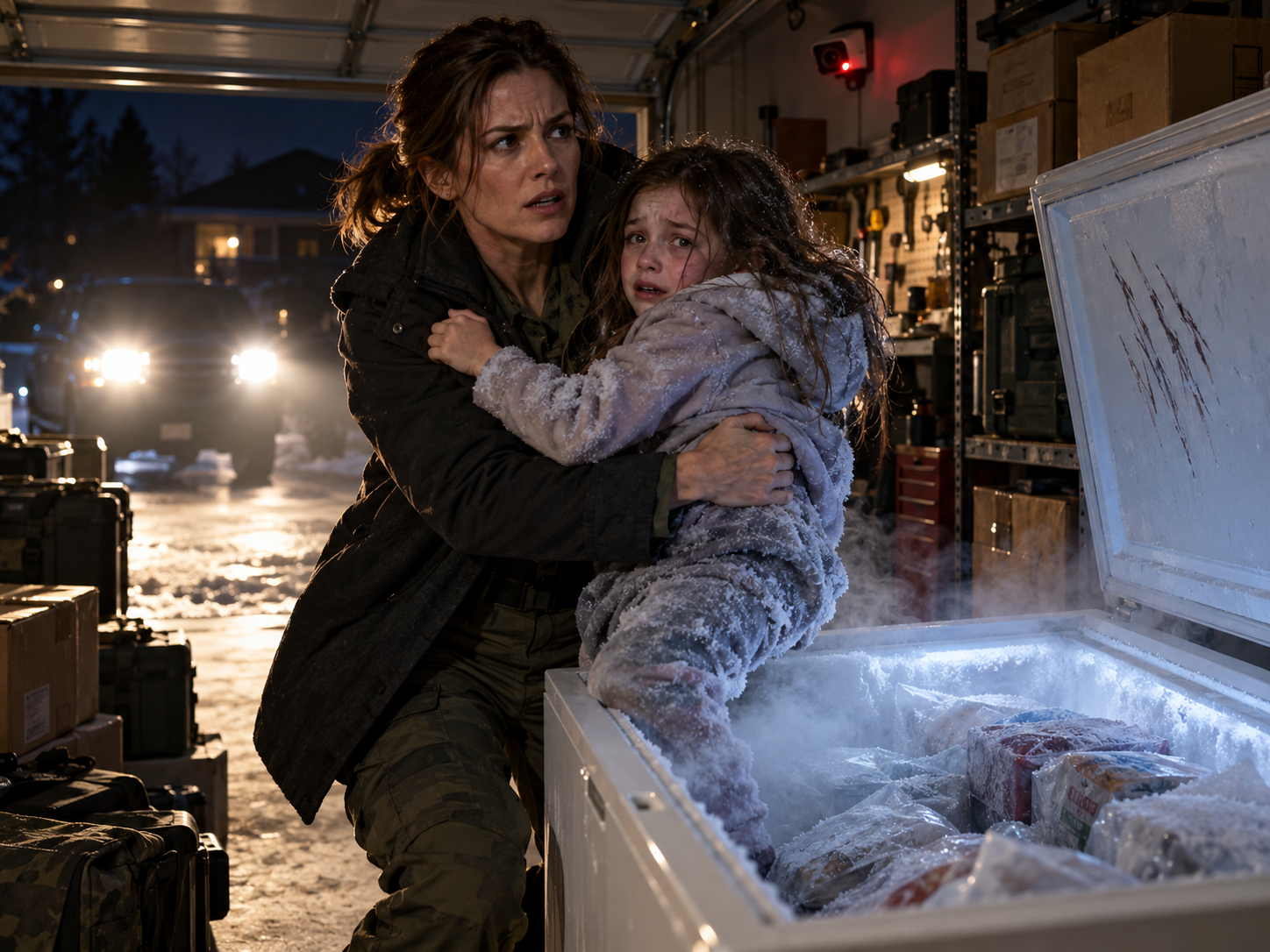
Three weeks after my divorce, I returned to my ex-husband’s house to collect my belongings—and heard my seven-year-old daughter screaming from inside a chest freezer in the garage.
I ripped open the lid.
My little girl was curled between frozen packages, her lips blue, her tiny body trembling violently.
But what she whispered after I pulled her into my arms was even more horrifying.
“Mommy… Grandma put me in.”
Then she grabbed my wrist and begged me not to tell anyone.
Because apparently, this wasn’t the first time.
My name is Colonel Sarah Bennett, United States Army.
For nearly twenty years, I’d commanded soldiers, served overseas, and learned to remain calm when everything around me was falling apart.
But that Thursday night in Colorado, none of my training could prepare me for what I found.
I wasn’t a colonel standing in that garage.
I was a mother terrified that she might lose her little girl.
My ex-husband, Taylor, had sent me a message earlier that week.
Pick up your stuff by Friday.
No greeting.
No explanation.
Just another cold reminder that our marriage was finished.
I planned to collect my remaining belongings the following day.
But something made me change my mind.
By nearly ten that night, I was driving along Aspen Ridge Lane near Fort Carson.
Taylor’s car wasn’t there.
His mother’s was.
And the garage door stood wide open.
Something felt wrong.
Inside, cardboard boxes were stacked against the wall.
Each was marked with my name.
SARAH.
Books.
Winter clothes.
Photographs.
Old military plaques.
Nearly twenty years of memories reduced to things someone wanted removed.
I stepped toward the nearest box.
Then I heard a faint sound.
“Mommy?”
I froze.
“Lily?”
For one second, there was silence.
Then—
“MOMMY! PLEASE! HELP ME!”
My heart slammed against my ribs.
The voice was coming from the far corner of the garage.
From a chest freezer beside the workbench.
I ran.
Grabbed the handle.
Pulled.
The lid resisted.
I pulled harder.
And when it finally opened, cold air rushed into my face.
What I saw nearly brought me to my knees.
Lily.
My beautiful seven-year-old daughter.
Curled between frozen packages.
Her hoodie was stiff with frost.
Her skin was ghost-pale.
Her little lips had turned blue.
“OH MY GOD! LILY!”
I reached inside and lifted her out.
She was painfully cold.
I wrapped my coat around her and held her close.
“I’ve got you, baby. Mommy’s here.”
Her teeth chattered so violently she struggled to speak.
“I… screamed…”
“I know, sweetheart.”
“I tried… to get out.”
My throat tightened.
“I know. I’ve got you now.”
I had seen dangerous situations during military deployments.
But nothing compared to holding my freezing daughter and wondering how long she’d been trapped.
Then I asked the question that changed everything.
“Lily, where’s Grandma?”
Her trembling suddenly changed.
She became rigid against me.
Not because she was warming up.
Because she was frightened.
Her little fingers gripped my wrist.
“Mommy… don’t let Grandma know I told you.”
I stared down at her.
“Told me what, sweetheart?”
She looked toward the open freezer.
Then back at me.
“Grandma put me in.”
For a moment, I couldn’t speak.
Evelyn.
Taylor’s mother.
The woman who had spent years telling everyone how much she loved her granddaughter.
The woman who always insisted she knew better than I did how to raise a child.
I looked at Lily.
“What do you mean Grandma put you in?”
Tears filled her eyes.
“She said I was bad.”
My stomach twisted.
“Because of what?”
Lily couldn’t explain.
She just buried her face against my uniform.
I held her tighter.
Then, fighting to keep my voice steady, I asked something I desperately didn’t want answered.
“Has Grandma ever done this before?”
Lily nodded faintly.
And whispered—
“She puts me in there when I’m bad.”
My entire body went cold.
Not once.
Not an accident.
My daughter was telling me this had happened before.
I looked back toward the freezer.
And noticed something I’d missed in my panic.
Along the inside edge of the lid were small scratches.
Repeated marks.
Close together.
I stared at them.
Then looked at Lily’s tiny hands.
My stomach turned.
“How many times, baby?”
She shrugged weakly.
“Grandma says the cold helps me think.”
I struggled to breathe.
The cold helps me think.
I couldn’t imagine anyone saying those words to a child.
Especially a seven-year-old.
Especially my daughter.
Then another question formed.
One I was almost afraid to ask.
“Sweetheart… does Daddy know?”
Lily went silent.
She stopped looking at me.
Her little fingers tightened around my uniform.
And that silence frightened me more than any answer she could have given.
I immediately called 911.
I gave the dispatcher our address and explained that my daughter had been found inside a freezer and was dangerously cold.
I kept Lily wrapped against me while following the dispatcher’s instructions.
But as I spoke, something above the garage shelves caught my attention.
A tiny red light.
I looked up.
A security camera.
Taylor had installed cameras around the property two years earlier.
I remembered him proudly explaining how they monitored the house and garage.
If the cameras were still recording, tonight might have been captured.
And suddenly another possibility struck me.
What if the camera had recorded the other times too?
I looked toward the scratches inside the freezer.
Then toward the camera.
I needed those recordings preserved.
I needed to know what had happened to my child when I wasn’t there.
But before I could think any further—
Headlights swept across the driveway.
Lily stiffened instantly.
“No.”
Her voice was barely audible.
Then she clutched my coat with both hands.
“Mommy, don’t let her take me!”
I looked toward the garage entrance.
A car door slammed.
Footsteps sounded outside.
I rose carefully, keeping Lily wrapped in my arms.
Then I positioned myself between my daughter and the open garage.
“It’s okay, sweetheart,” I whispered.
“I’m right here.”
But Lily wasn’t listening.
She was staring toward the approaching footsteps.
Her breathing quickened.
And then she whispered something that made every thought in my head stop.
“Mommy… Grandma said Daddy told her it was okay.”
I couldn’t move.
Taylor?
My ex-husband?
Lily’s own father?
I remembered all the arguments during our divorce.
All the times Taylor insisted I was overprotective.
All the occasions when Evelyn offered to watch Lily and became offended whenever I hesitated.
I’d believed the divorce was the worst thing that had happened to our family.
But what if something far worse had been happening to my daughter while I was away?
The footsteps came closer.
I held Lily against my chest.
She was still trembling.
The dispatcher remained on the phone.
The freezer stood open behind me.
And above the shelves, the tiny red camera light continued glowing.
Whoever was approaching would find all of us exactly where we stood.
But there was one thing I knew with absolute certainty.
I would never again dismiss my daughter’s fear to keep peace with Taylor’s family.
The footsteps reached the garage entrance.
Lily buried her face against my shoulder.
And as a shadow appeared across the concrete floor, I realized the question was no longer simply what Evelyn had done.
It was whether Taylor had known about it all along.
PART 2 — THE WOMAN WHO CALLED IT DISCIPLINE
The first thing Evelyn Bennett did when she stepped into the garage was smile.
It was a small, practiced smile, the kind she used at church fundraisers and neighborhood gatherings when she wanted everyone to believe she was the most generous woman in the room.
Then she saw Lily in my arms.
The smile vanished.
“Sarah?”
Her voice was sharp.
“What are you doing here?”
I tightened my hold on my daughter.
Behind Evelyn, the headlights of her silver sedan illuminated the driveway. She held a grocery bag in one hand and her purse in the other.
I had spent fourteen years learning to recognize that particular expression on her face.
It wasn’t concern.
It was irritation at having lost control of a situation.
“Lily needs an ambulance,” I said.
Evelyn glanced toward the open freezer.
For the briefest moment, her eyes widened.
Then she looked back at me.
“Oh, for heaven’s sake.”
I couldn’t believe what I’d heard.
“She probably climbed inside while I was bringing groceries in,” Evelyn continued. “You know how children are.”
Lily made a tiny sound against my neck.
Not a word.
Something closer to a whimper.
I felt her trying to make herself smaller.
“She says you put her in there,” I replied.
Evelyn’s expression hardened.
“Children say all sorts of things when they’re frightened.”
The dispatcher was still on my phone.
I heard her ask whether the person responsible was present.
“Yes,” I answered clearly. “The child’s grandmother has returned.”
Evelyn’s eyes moved to the phone.
“Who are you talking to?”
“Emergency services.”
Her grocery bag slipped slightly in her hand.
“You called the police?”
“I called an ambulance.”
“For a misunderstanding?”
That was the moment something inside me changed.
I had entered the garage panicked.
I had found my daughter terrified and dangerously cold.
Until then, everything inside me had been focused on keeping Lily alive.
But Evelyn’s complete absence of remorse brought a different kind of clarity.
“You will stay away from my daughter,” I said.
She stepped forward.
“Don’t be ridiculous. Give her to me. I’ll get her warmed up.”
Lily began crying.
Not loudly.
She was too exhausted for that.
But her fingers dug into my shoulder, and she shook her head against my chest.
“No, Mommy. Please.”
I moved backward.
“One more step, Evelyn, and I will tell the dispatcher you’re approaching a frightened child against her wishes.”
Evelyn stopped.
Her face flushed.
“You always have to make everything dramatic.”
I said nothing.
“You’ve been gone so much,” she continued. “Deployments. Training. Meetings. You don’t understand what it takes to raise a child every single day.”
I had heard that accusation throughout my marriage.
When Lily had been born, I’d taken every available opportunity to be home.
I’d rearranged assignments where possible, missed promotions I might otherwise have pursued, and spent countless nights reading bedtime stories through a screen when duty kept me away.
Yet to Evelyn, every hour I spent serving was evidence that I didn’t deserve to be a mother.
She had built an entire identity around being the person who stayed.
And somehow, she had convinced Taylor that staying automatically meant loving.
“She’s seven,” I said. “You locked a seven-year-old inside a freezer.”
Evelyn lifted her chin.
“She needed consequences.”
For a moment, even the dispatcher seemed to fall silent.
I stared at my former mother-in-law.
“Consequences?”
“She has become defiant since the divorce. She refuses to listen. She cries for you constantly. Taylor has enough to worry about without handling tantrums.”
I looked down at Lily.
Her eyes were closed, and her breathing sounded shallow.
I lowered my voice.
“Lily, sweetheart, keep talking to Mommy.”
Her eyelids fluttered.
“Cold.”
“I know, baby. Help is coming.”
Evelyn watched us impatiently.
Then she said something I would remember for the rest of my life.
“If you had taught her to respect adults, none of this would have happened.”
I looked straight at her.
“No. If you had respected the fact that she’s a human being, none of this would have happened.”
Distant sirens finally broke through the night.
Evelyn turned toward the driveway.
Her composure faltered.
“Sarah, listen to me. We don’t need to involve strangers in a family matter.”
“This stopped being a private family matter the moment you endangered my child.”
She lowered her voice.
“Think about Taylor.”
I almost laughed.
Not because anything was funny.
Because I’d spent fourteen years being asked to think about Taylor.
Think about his career.
Think about his embarrassment.
Think about his mother’s feelings.
Think about the neighbors.
Think about appearances.
Apparently, everyone deserved consideration except the little girl trembling in my arms.
“I’m thinking about Lily,” I answered.
Two police cruisers arrived moments before the ambulance.
A uniformed officer approached cautiously.
“Ma’am, are you the caller?”
“Yes. Colonel Sarah Bennett. That’s my daughter, Lily. She’s seven.”
I explained what I’d found.
I told him about the freezer, the scratches, Evelyn’s statements, and Lily’s condition.
I didn’t embellish.
I didn’t accuse Taylor of anything I couldn’t establish.
And I made certain the officer understood one detail.
“There’s a security camera above the garage shelves. It may contain evidence. Please preserve whatever recordings exist.”
He followed my gaze.
His expression changed.
“Understood.”
Evelyn immediately began speaking.
“Officer, this is being blown completely out of proportion. My former daughter-in-law has been trying to turn that child against us since the divorce.”
The officer raised a hand.
“Ma’am, I’ll speak with you separately.”
“You don’t understand. She’s military. She thinks she can command everybody.”
He didn’t respond.
Instead, he looked at Lily.
And whatever he saw on my daughter’s face was enough to end the conversation.
“Let’s get that little girl to the paramedics.”
The emergency medical team approached with a stretcher and warming equipment.
A female paramedic named Denise introduced herself gently.
“Hi, Lily. I’m Denise. I’m going to help you feel warmer and safer.”
Lily looked at me.
“Mommy coming?”
“Every step,” I promised.
They assessed her in the ambulance, began carefully warming her, and monitored her condition.
I remained beside her.
When a paramedic asked Lily whether she knew how she had ended up in the freezer, my daughter turned her face toward me.
I stroked her hair.
“You can tell the truth, baby. You aren’t in trouble.”
She swallowed.
“Grandma said I had to stop crying.”
Denise spoke quietly.
“Crying about what, sweetheart?”
Lily hesitated.
Then whispered, “My mommy.”
I closed my eyes.
The paramedic waited without pressing.
After a moment, Lily continued.
“I wanted to call Mommy. Grandma said good girls don’t ask for people who leave them.”
I felt something break inside my chest.
Lily had been missing me.
And someone had punished her for it.
Outside the ambulance, I could hear Evelyn arguing with an officer.
Then another vehicle pulled into the driveway.
A familiar dark blue SUV.
Taylor.
Even before I saw him, I knew the sound of the engine.
Fourteen years of marriage had taught me that.
He stepped out wearing his office clothes, his tie loosened, his phone pressed to his ear.
His eyes immediately found the police cars.
Then the ambulance.
He rushed forward.
“What happened?”
Evelyn hurried toward him.
“Sarah has completely lost her mind.”
I watched through the open ambulance doors.
Taylor looked at his mother.
Then at the officers.
“Where’s Lily?”
“She’s being treated,” one officer told him.
“For what?”
The officer hesitated.
“Your daughter was found inside the chest freezer in your garage.”
Taylor went very still.
His mouth opened.
Closed.
Then he looked at Evelyn.
And asked a question that made my stomach turn.
“Mom, how long was she in there this time?”
Not How did she get in there?
Not What are you talking about?
How long was she in there this time?
The officer heard it.
So did I.
And from the expression on Taylor’s face, he realized immediately what he’d revealed.
Evelyn spoke first.
“Taylor, don’t say another word.”
But it was too late.
One officer stepped closer.
“Sir, I need you to clarify that statement.”
Taylor looked toward the ambulance.
For one second, our eyes met.
I saw panic.
Guilt.
And something I had never expected to see from the man I’d once trusted with my entire life.
Fear of being discovered.
“It’s not what it sounds like,” he said.
The officer’s voice remained calm.
“Then explain what it means.”
Taylor rubbed a hand over his face.
“My mother sometimes puts Lily in the garage when she misbehaves.”
“The garage?” the officer asked.
Taylor swallowed.
“She has a… discipline method.”
I heard Denise draw a quiet breath beside me.
I leaned toward the open ambulance doors.
“Taylor.”
He looked at me.
“Did you know she was putting our daughter inside that freezer?”
His gaze dropped.
“Sarah, please.”
“Answer me.”
“Not here.”
I felt Lily’s hand searching for mine.
I took it immediately.
Taylor stepped forward.
“We can discuss this privately.”
“No,” I said. “We can’t.”
His face changed.
The familiar frustration appeared.
“Sarah, you’re making a terrible situation worse.”
A few weeks earlier, I might have argued with him.
I might have explained how frightened Lily was.
I might have tried to make him understand.
But I had spent too many years explaining basic decency to people determined not to practice it.
So I asked one final question.
“Did you know?”
Taylor looked at the ground.
Then he whispered, “I told Mom to stop.”
The world seemed to narrow around those five words.
Because telling someone to stop meant knowing they had started.
And knowing they had started meant my daughter had been unsafe while her father remained silent.
The officer instructed Taylor to remain nearby.
Evelyn began protesting again.
But I barely heard her.
Denise closed the ambulance doors.
And as we pulled away, Lily stared at me with enormous, exhausted eyes.
“Mommy?”
“Yes, sweetheart?”
“Is Daddy mad at me?”
The question hurt worse than anything Taylor had ever said to me.
I leaned close.
“No, baby. You haven’t done anything wrong.”
Her lip trembled.
“Grandma said if I told you, Daddy would have to choose.”
“Choose what?”
Lily looked down at our joined hands.
“Between me and Grandma.”
I kissed her forehead.
“Sweetheart, grown-ups are responsible for their own choices. You never have to earn the right to be safe.”
She considered that.
Then she whispered, “Can I stay with you?”
I brushed a strand of hair away from her cheek.
“Yes.”
For the first time that night, her fingers loosened slightly.
But just before she fell into an exhausted sleep, she opened her eyes again.
“Mommy?”
“I’m here.”
“Grandma said the camera doesn’t keep the bad days.”
I looked at her.
“What do you mean?”
Lily’s voice faded.
“She says Daddy makes them disappear.”
And suddenly, the security camera in that garage became more important than ever.
Because Evelyn might have been the person closing the freezer lid.
But Taylor, apparently, had been making sure nobody saw.
PART 3 — THE RECORDINGS THAT WERE NEVER SUPPOSED TO EXIST
At 2:17 the following morning, I sat beside my daughter’s hospital bed and watched a heart monitor blink green in the darkness.
Lily was asleep beneath warmed blankets.
Her color had improved.
The attending physician, Dr. Rebecca Morgan, had told me that Lily had arrived with significant hypothermia and required careful monitoring for complications.
She was responding to treatment.
Those words should have comforted me.
And they did.
For about thirty seconds.
Then I remembered that my daughter had been found inside a freezer, and I looked at the clock again.
I had become obsessed with clocks.
How long had Evelyn left her there?
How many times had it happened?
How many nights had I called to say goodnight while Lily was frightened of telling me what had happened earlier that day?
I had spent years believing distance was the greatest threat to our relationship.
Now I understood that silence could be far more dangerous.
At three in the morning, a woman knocked softly on the hospital-room door.
She introduced herself as Detective Maria Alvarez, a child-abuse investigator with the local police department.
She was in her early forties, with tired eyes and a manner that was reassuring without being falsely cheerful.
“Colonel Bennett?”
“Sarah,” I said.
She nodded.
“Sarah. I know this is difficult. I’d like to ask you a few questions while your daughter rests.”
We stepped into the hallway, where fluorescent lights buzzed above rows of empty chairs.
Detective Alvarez opened a notebook.
“First, I want you to understand that Lily will be interviewed by a trained child forensic interviewer. We don’t want her repeatedly questioned about traumatic experiences.”
“I understand.”
“Until then, avoid asking her for additional details about the freezer. If she says something spontaneously, listen without suggesting answers and let us know.”
I nodded again.
It was strange being on the receiving end of instructions.
In uniform, I was accustomed to being the person others looked toward when something went wrong.
But this wasn’t my operation.
And Lily didn’t need a colonel managing an investigation.
She needed a mother willing to accept help.
I told Alvarez everything I could remember, including Taylor’s statement and Lily’s remarks about the camera recordings.
The detective wrote carefully.
When I finished, she looked up.
“Were you aware of any previous concerns about Evelyn’s discipline?”
I hesitated.
There had been concerns.
Not proof.
Not anything that would have prepared me for what I’d found.
“She believed children should fear consequences,” I answered. “She was controlling. Critical. She occasionally made comments about children needing to be broken of bad habits.”
“Did you ever see her physically harm Lily?”
“No.”
“Did Lily ever tell you she was afraid of her grandmother?”
My throat tightened.
“Not directly.”
Alvarez waited.
I stared at the notebook in her hands.
“There was a weekend in March,” I said slowly. “Lily came home from Evelyn’s house and refused to sleep with her bedroom door closed. She said she didn’t like being somewhere she couldn’t get out.”
The memory returned with cruel precision.
Lily sitting cross-legged on her bed.
Her stuffed rabbit in her lap.
Asking me to leave the hallway light on.
I’d thought it was a normal childhood fear.
Then there had been the nightmares.
The sudden tears when visits with Taylor approached.
The way she sometimes asked if grown-ups were allowed to change rules without explaining them.
I had noticed.
Of course I had noticed.
But Taylor had explained everything away.
The divorce was upsetting her.
My schedule was inconsistent.
Lily was sensitive.
I was overreacting.
Every concern had been met with an explanation that sounded reasonable until I examined it beside a freezer full of scratch marks.
“I should have known,” I whispered.
Alvarez closed her notebook.
“Sarah, children often hide abuse because they’re frightened, ashamed, or trying to protect someone they love. The responsibility belongs to the adults who harmed her or failed to protect her.”
I knew she was right.
Knowing didn’t make the guilt disappear.
“What’s happening with Evelyn?”
“She’s been detained while officers establish the circumstances. We have secured the garage, photographed the freezer, and begun the process of obtaining the recordings.”
“And Taylor?”
“We’re investigating his knowledge and involvement.”
I studied her face.
“Do you think the footage still exists?”
“That depends on the system.”
I remembered something then.
“Taylor replaced our old camera system last year. He chose one with local storage because he didn’t trust cloud subscriptions.”
Alvarez looked interested.
“Do you know the model?”
I told her what I remembered.
She wrote it down.
“That’s helpful.”
Then she paused.
“There’s something else I want to ask. Who has legal custody of Lily?”
“We share legal custody under the divorce order. The parenting schedule rotates. This was Taylor’s week.”
“Was Evelyn authorized to supervise her?”
“Taylor arranged it while he worked late.”
“Did you object?”
“Several times.”
“Do you have those objections in writing?”
I thought of the long message threads on my phone.
The arguments.
Taylor accusing me of trying to control his household.
Evelyn insisting she was the only reason our daughter had any stability.
“Yes,” I said.
“Preserve them.”
After Alvarez left, I returned to Lily’s bedside.
I opened my phone.
There were forty-three missed calls from Taylor.
Twelve messages.
I read them in order.
Please call me.
Mom didn’t mean to hurt her.
We have to handle this carefully.
You know how she is.
Please don’t ruin her life over this.
Then, at 1:48 a.m.:
If you cooperate with the police, this could destroy everything.
I read that sentence three times.
Not Is Lily okay?
Not Does she need anything?
Everything.
His mother’s reputation.
His own reputation.
The house.
The comfortable version of reality he had worked so hard to preserve.
I took screenshots and forwarded them to Detective Alvarez using the contact information she’d provided.
Then I called my attorney.
Her name was Jennifer Walsh.
Jennifer had represented me during the divorce, and she’d spent enough time dealing with Taylor to recognize the pattern beneath his polite public manner.
She answered on the fourth ring.
“Sarah?”
“I’m sorry to call so early.”
“What’s wrong?”
“My daughter was locked inside a freezer.”
Silence.
Then her voice sharpened.
“Where is Lily?”
“In the hospital. She’s stable.”
“Who did this?”
“Evelyn.”
Jennifer inhaled slowly.
“Tell me everything.”
I did.
When I finished, she asked whether I was somewhere private.
I stepped into the family waiting room.
“Sarah, we’re going to seek emergency protection for Lily and an immediate modification of the parenting arrangement. The criminal investigation will proceed separately. I need you to let the authorities gather evidence and avoid confronting Taylor.”
“I understand.”
“Do you have reason to think he knew?”
“Yes.”
“Then let the evidence establish exactly what he knew and when.”
I sat beside a vending machine and pressed my fingers against my eyes.
“Jennifer, he asked how long she’d been inside this time.”
Her reply was quiet.
“Oh, Sarah.”
For several seconds, neither of us spoke.
Then she said, “We’re going to protect your daughter. But we have to do it properly.”
By sunrise, I had made three decisions.
I would cooperate fully with investigators.
I would seek emergency legal protection.
And I would stop allowing guilt about my military career to influence whether I trusted my own judgment as Lily’s mother.
The day passed in fragments.
Doctors.
Nurses.
A hospital social worker.
A child-protection specialist.
Messages from my commanding officer, who had arranged emergency leave and assured me that my responsibilities at home came first.
At eleven that morning, Taylor arrived at the hospital.
I saw him through the glass doors of the pediatric ward.
His hair was disheveled.
He looked as though he hadn’t slept.
For a brief, terrible moment, I remembered the man who had held my hand during Lily’s birth.
He had cried when he first saw her.
He had whispered, “She’s perfect.”
Somewhere between that hospital room seven years earlier and the garage the night before, he had become someone I barely recognized.
He approached me.
“Sarah.”
I stood.
“Don’t go into her room.”
His expression tightened.
“She’s my daughter.”
“She is. And right now she’s recovering from something you apparently knew was happening.”
He looked away.
“Mom made mistakes.”
“Putting a child into a freezer is not a mistake.”
“Sarah, please lower your voice.”
There it was again.
The same instinct.
Control the appearance of the problem.
Not the problem itself.
Taylor glanced toward the nurses’ station.
“People are staring.”
“Then stop giving them a reason.”
He took a step closer.
“I’ve been trying to reach you.”
“I’ve been taking care of Lily.”
“I need you to understand something.”
I crossed my arms.
He lowered his voice.
“Mom wasn’t trying to hurt her. She thought it would scare her into behaving.”
I stared at him.
“Do you hear yourself?”
“She grew up differently.”
“So did millions of people who never locked children in freezers.”
His jaw tightened.
“It’s easy for you to judge. You aren’t there when Lily refuses to listen.”
That sentence told me more than he intended.
I studied him.
“What was Lily refusing to do?”
He hesitated.
“Nothing specific.”
“Taylor.”
“She’s been difficult.”
“Difficult how?”
He rubbed his forehead.
“She asks for you constantly. She gets upset when you don’t answer immediately. She doesn’t want Mom putting her to bed. She cries over every little thing.”
I felt the anger rising.
“You’re describing a child who misses her mother.”
“She needs to learn that crying doesn’t solve everything.”
“She’s seven.”
He looked at the floor.
Then he said, “You always turn everything into an attack on me.”
I almost answered.
Instead, I remembered Jennifer’s warning.
Don’t confront him.
Let the investigation establish the truth.
I took a breath.
“Have you spoken with a lawyer?”
Taylor’s expression changed.
“Why?”
“Because you should.”
His eyes widened.
“Sarah, don’t do this.”
“I’m not doing anything to you. I’m protecting Lily.”
He looked beyond me toward her room.
“Can I see her?”
“That needs to be coordinated with the hospital staff and the people responsible for her safety.”
He stared at me for several seconds.
Then his voice dropped.
“You’re going to use this to take her away.”
“No, Taylor. Your decisions created this situation.”
For the first time, I saw tears in his eyes.
But even then, his next words weren’t about Lily.
“Mom could go to prison.”
I held his gaze.
“Yes.”
He stepped backward as though I’d struck him.
And I understood that he had never seriously considered that possibility.
Not because he believed Evelyn was innocent.
Because he’d assumed the family would protect her.
Just as it always had.
That afternoon, Detective Alvarez called.
“Sarah, we recovered the recording equipment.”
I stood beside Lily’s window.
“Was anything saved?”
“A substantial amount. The system kept more than the family apparently realized.”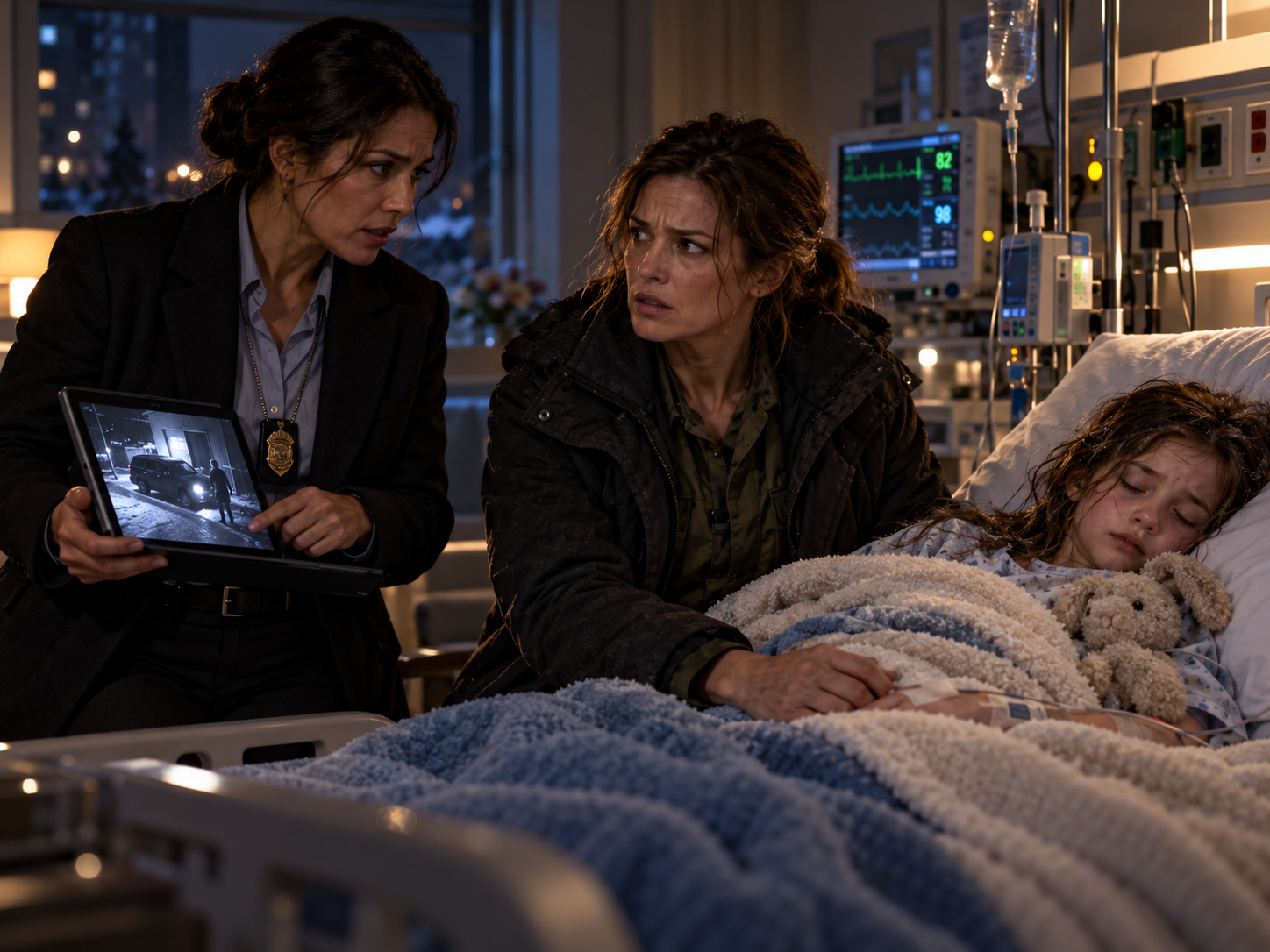
My heart began pounding.
“Have you watched it?”
“Some.”
I heard papers moving on her end of the line.
“There’s evidence your daughter was placed in the freezer on more than one occasion.”
I gripped the windowsill.
“How many?”
“We’re still reviewing the footage and corroborating dates. I don’t want to give you an incomplete number.”
“Does it show Taylor?”
A pause.
“Yes.”
I closed my eyes.
“Was he there?”
“On at least one recording, he appears before and after an incident. We need to review the full sequence.”
I couldn’t speak.
Alvarez continued.
“There’s another matter. Investigators found that portions of the recording history had been deliberately deleted.”
“By Taylor?”
“We can’t conclude that yet. But we recovered a separate storage device that may help us establish who accessed the system.”
I thought of Lily’s whispered warning.
Daddy makes them disappear.
“Was the device hidden?”
“Yes.”
“Where?”
“Inside a locked drawer in Taylor’s home office.”
I waited.
Alvarez’s voice changed.
“And Sarah, I need you to prepare yourself for something difficult.”
I pressed my palm against the cold glass.
“What?”
“Some of the files were labeled with your daughter’s name.”
A chill passed through me.
“What kind of files?”
The detective hesitated.
“Video clips. Written notes. Dates.”
“Why would Taylor keep those?”
“We’re investigating.”
I heard someone speaking to Alvarez in the background.
Then she returned.
“There’s one recording I need to discuss with you after it’s been fully reviewed.”
“Tell me.”
“Sarah—”
“Please.”
A long silence followed.
Finally, she said, “It appears your husband recorded conversations about your daughter’s behavior and your custody arrangement.”
I frowned.
“What does that have to do with the freezer?”
“Some of the conversations suggest that what happened to Lily was being discussed as part of a larger plan.”
The room seemed to tilt.
“A plan for what?”
Alvarez answered carefully.
“To affect your daughter’s relationship with you.”
I looked through the glass at Lily.
She was awake now, sitting against her pillows while a nurse helped her drink water.
My beautiful child.
The same girl who made paper medals for me when I returned from training.
Who called herself my little commander.
Who always asked whether soldiers got lonely without their families.
I had thought the divorce was a painful but ordinary ending to a marriage.
I had been wrong.
That evening, Jennifer came to the hospital carrying a folder and a cup of coffee.
She looked exhausted.
“I’ve filed the emergency paperwork,” she said.
I nodded.
Then she placed another document on the table.
“Sarah, there’s something from the divorce proceedings we need to revisit.”
I looked at her.
“What?”
“Remember when Taylor accused you of emotional instability because Lily had started having nightmares?”
“Yes.”
“He submitted a statement from Evelyn.”
I remembered.
Evelyn had described herself as Lily’s primary emotional support.
She’d claimed my daughter was becoming distressed because of my absences.
Taylor had used the statement to argue for more parenting time.
Jennifer opened the folder.
“There was also a statement describing Lily as increasingly fearful of being separated from Taylor’s household.”
“That wasn’t true.”
“I know.”
She turned the page.
Then she pointed toward a date.
The statement had been signed on April 9.
According to the recovered recordings, Lily had been locked inside the freezer three days earlier.
I looked at the document.
Then at Jennifer.
“Evelyn was helping create the very fear she blamed on me.”
Jennifer nodded slowly.
“And they used that fear against you in court.”
My hands began shaking.
For months, I’d been defending myself against the accusation that military service made me an inadequate mother.
All while Lily’s actual suffering was being concealed.
I thought about the missed birthdays I’d made up with elaborate celebrations.
The bedtime stories I’d recorded.
The long drives home after exhausting shifts because Lily had asked me to tuck her in.
I’d believed the divorce was about Taylor’s resentment of my career.
Now I wondered whether that resentment had become something more calculated.
Jennifer closed the folder.
“There’s another hearing coming. We’ll present the evidence through the proper channels.”
I nodded.
But then she looked at me with an expression I didn’t like.
“What else?”
“Taylor’s attorney contacted me.”
“Already?”
“He wants to negotiate.”
I stared at her.
“Negotiate what?”
Jennifer took a breath.
“He’s willing to agree to temporary sole physical custody for you.”
I waited.
“In exchange for what?”
She hesitated.
“He wants you to sign a statement saying you believe Evelyn never intended serious harm.”
I felt a cold, bitter clarity settle over me.
Even now, Taylor was bargaining.
Using custody of our daughter as leverage to protect his mother.
“What did you tell him?” I asked.
Jennifer’s expression hardened.
“I told him Lily’s safety isn’t something we trade for a statement.”
I nodded once.
Then my phone vibrated.
An unknown number.
A message appeared.
You think you know what happened in that garage.
I stared at it.
A second message followed.
Ask your husband why he kept the blue folder.
There was no name.
No explanation.
Only one final sentence.
Your daughter wasn’t the only person Evelyn tried to silence.
PART 4 — THE BLUE FOLDER
I didn’t sleep that night.
Not because I was afraid of the person who had sent the messages.
I was afraid of how much of my daughter’s life I still didn’t understand.
At seven the following morning, I forwarded the anonymous texts to Detective Alvarez.
She called within minutes.
“Don’t respond,” she instructed. “We’ll look into the sender.”
“Do you think it’s Evelyn?”
“I don’t want to speculate.”
“What about the blue folder?”
“We’ve already identified several documents in Taylor’s office. I’ll check whether anything matches that description.”
I glanced toward Lily.
She sat on her hospital bed wearing pink socks and holding a stuffed rabbit named Captain Flopsy.
Her cheeks finally had some color.
The medical team had told me that, barring unexpected complications, she might soon be discharged with a carefully coordinated safety plan.
She looked small.
But alive.
For the moment, that was enough to hold me together.
“Mommy?”
I ended the call and moved beside her.
“Yes, sweetheart?”
“Can I ask you something?”
“Always.”
She stroked the rabbit’s ears.
“Do bad people know they’re bad?”
I sat carefully on the edge of the bed.
“Sometimes people know they’re doing something wrong and make excuses. Sometimes they convince themselves that hurting someone is okay.”
Lily considered this.
“Grandma said she was helping me.”
My throat tightened.
“What do you think?”
She looked down.
“I didn’t feel helped.”
I touched her hand.
“Then that matters.”
She was quiet for a while.
Then she whispered, “Can somebody love you and still hurt you?”
It was the question I had been struggling with since Taylor’s arrival at the hospital.
I chose my words carefully.
“Someone can say they love you and still do something harmful. But love never makes hurting you acceptable. Grown-ups are responsible for keeping you safe.”
Lily leaned against me.
“Even Daddy?”
I closed my eyes briefly.
“Even Daddy.”
She nodded.
Then she asked for strawberry yogurt.
And I was grateful for the ordinary request.
I was grateful she could still be seven.
By noon, a child-protection worker named Hannah Brooks had joined Jennifer and me for a meeting.
Hannah explained the temporary protective arrangements being pursued and how Lily’s needs would be assessed in the coming weeks.
She spoke about trauma counseling, predictable routines, school support, and helping Lily understand that she wasn’t responsible for the adults’ behavior.
I listened carefully.
Then I asked the question that had been haunting me.
“Will she ever feel safe again?”
Hannah’s expression softened.
“Children can heal remarkably well when the danger stops and the adults around them respond consistently. But recovery isn’t linear. She may have difficult nights, fears, or questions for a long time.”
“I can handle that.”
“Sarah, you don’t have to handle it alone.”
Those words stayed with me.
I’d spent nearly twenty years learning how to carry responsibility.
I’d grown accustomed to believing strength meant absorbing pressure without showing the damage.
But Lily didn’t need a mother who never cried.
She needed a mother who was honest, dependable, and willing to ask for help.
That afternoon, Detective Alvarez arrived with new information.
She asked Jennifer and me to meet her privately.
We sat in a small conference room.
Alvarez placed several photographs on the table.
One showed Taylor’s office.
Another showed an open drawer.
Inside was a blue accordion folder.
My stomach tightened.
“You found it.”
“We did. It was among the items seized under the warrant.”
She slid another photograph toward me.
Across the folder’s tab, someone had written:
LILY — BEHAVIOR / CUSTODY
I stared at the words.
Inside were printed emails, handwritten notes, copies of school reports, and several pages documenting Lily’s behavior after visits with Evelyn.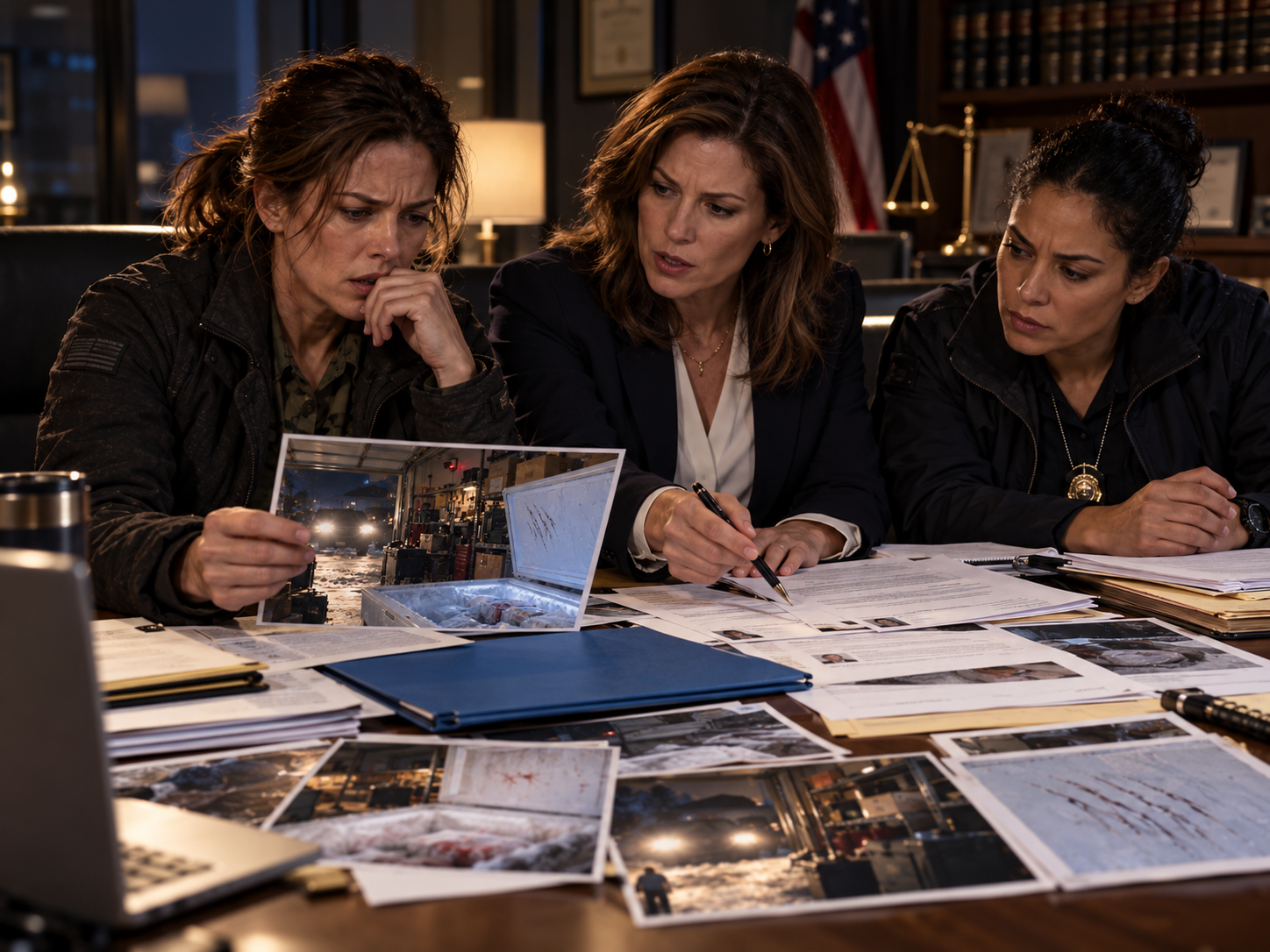
But it wasn’t the existence of the folder that horrified me.
It was the way those behaviors had been described.
Crying after visits was labeled maternal dependency.
Asking to call me was called attention-seeking.
Nightmares were attributed to Sarah’s military lifestyle.
Refusing to enter the garage was described as defiance.
I read through one page.
Then another.
At the bottom of a handwritten sheet was a sentence:
Continue firm consequences. Do not reward emotional outbursts by contacting mother.
I looked at Alvarez.
“Who wrote this?”
“The handwriting appears consistent with Evelyn’s. We’re seeking confirmation.”
Jennifer leaned forward.
“Was Taylor aware of these notes?”
Alvarez opened another document.
It was an email.
From Evelyn to Taylor.
Subject: Lily’s Progress.
The message described Lily as still crying for me and suggested that the consequences needed to be more consistent.
Taylor had replied.
Keep doing what you think works. Just don’t leave anything visible that Sarah can use.
For several seconds, I couldn’t see clearly.
I blinked.
Read it again.
My ex-husband hadn’t simply ignored warning signs.
He had instructed his mother to conceal them.
Jennifer spoke quietly.
“Sarah?”
I looked at her.
“I need a minute.”
Alvarez nodded.
We sat in silence.
Eventually, I asked, “Was there more?”
The detective’s expression grew serious.
“Yes.”
She turned to a second email chain.
Taylor and Evelyn had been discussing the divorce before I knew Taylor intended to file.
In one message, he complained that my military pension, career, and independence made me difficult to control financially.
In another, Evelyn wrote that Lily was too attached to me and that the attachment could influence custody.
Taylor’s response was short.
Then we need to show she’s unstable without Sarah.
My stomach twisted.
Jennifer slowly closed her eyes.
I stared at the sentence.
All the pieces began settling into place.
The accusations that I was too absent.
The claims that Lily struggled after being with me.
The pressure to let Evelyn handle more overnight visits.
The custody statements.
The warnings that Lily was becoming emotionally unstable.
They had turned my daughter’s natural distress into evidence against the parent she was crying for.
“Did they plan the freezer?” I asked.
Alvarez answered carefully.
“The evidence indicates Evelyn used confinement as punishment and Taylor was aware of that practice. We’re continuing to investigate the extent of his involvement and whether there was coordination intended to influence custody.”
I nodded.
I appreciated the precision.
Because unlike Taylor and Evelyn, I wanted the truth.
Not merely the version most convenient to me.
Alvarez continued.
“We also identified the anonymous sender.”
My head lifted.
“Who?”
“A woman named Margaret Ellis.”
The name meant nothing to me.
“She was a neighbor of Taylor’s family several years ago. She recognized Evelyn’s name in information circulating locally about the police response and contacted us after sending you those messages.”
“Why would she know about the folder?”
“Because she had seen something similar before.”
I waited.
Alvarez folded her hands.
“Margaret used to babysit children for several families in Evelyn’s neighborhood. She says she witnessed Evelyn use frightening confinement as discipline with another child years ago.”
I felt sick.
“Another child?”
“Yes. That allegation is being investigated separately. Margaret says she reported her concerns to the child’s parents but didn’t know whether anything followed.”
“Why didn’t she come forward earlier?”
“She says she didn’t know Lily was in Evelyn’s care. Once she heard what happened, she recognized the pattern.”
I stared at the photographs.
“How many children?”
“We don’t know yet.”
Something inside me wanted to demand names.
Dates.
Answers.
But I understood that investigations couldn’t be completed by anger alone.
“What about the recordings?” Jennifer asked.
Alvarez hesitated.
“We recovered several deleted files. Some were incomplete, but one is particularly significant.”
She explained that investigators had found a clip from roughly two months earlier.
Evelyn was visible in the garage with Lily.
Lily was crying.
Evelyn spoke to her.
Then she opened the freezer.
Alvarez didn’t show me the footage.
I was grateful.
There are images a mother doesn’t need burned into her memory to believe her child.
“The recording establishes that Evelyn confined Lily,” Alvarez said. “A later portion shows Taylor returning to the garage.”
I gripped the edge of the table.
“Did he let her out?”
“He opened the freezer.”
For one desperate second, I hoped.
Maybe he had stopped it.
Maybe there had been some moment when he realized the danger.
Then Alvarez continued.
“He spoke to Evelyn afterward. The audio was recovered.”
I swallowed.
“What did he say?”
Alvarez consulted her notes.
“He told her that if it happened again, she needed to make sure the cameras were off.”
My hope disappeared.
I sat very still.
It would have been easier if Taylor had been a stranger.
Easier if I could look at him and see nothing familiar.
But I remembered him building Lily’s first bicycle.
I remembered him carrying her through the airport when she fell asleep.
I remembered him crying at her kindergarten graduation because she looked so grown up in her tiny paper cap.
There had been good moments.
That was what made the truth difficult.
People capable of tenderness could also make terrible choices.
And remembering the tenderness didn’t erase the choices.
Jennifer reached for my hand.
I didn’t move.
Then I said something I hadn’t realized I believed until the words left my mouth.
“He knew she could die.”
Alvarez answered quietly.
“The medical risks of what happened were very serious.”
I looked at the blue folder again.
They had documented my daughter’s tears.
Studied her fear.
Turned her distress into a strategy.
And all the while, Lily had believed the punishments were her fault.
That evening, an emergency court hearing took place.
Jennifer presented the available evidence through the appropriate legal process.
The judge reviewed the medical information, the initial investigative findings, and the concerns surrounding Taylor’s knowledge.
Temporary orders were entered placing Lily in my care while the matter continued.
Contact with Evelyn was prohibited.
Taylor’s contact was restricted pending further assessment and court review.
It wasn’t the final resolution.
But it meant that when Lily left the hospital, she wouldn’t be sent back to the house with the freezer.
I returned to her room with tears in my eyes.
Lily was coloring a picture of a house beneath a yellow sun.
“Mommy?”
“Yes?”
“Are you crying?”
“A little.”
“Because you’re sad?”
“Because I’m relieved.”
She frowned.
“What’s relieved?”
I sat beside her.
“It’s when something frightening has been happening, and you finally know you’re getting help.”
She thought about that.
Then she reached for a green crayon.
“Can I be relieved too?”
I laughed through my tears.
“You absolutely can.”
She held up her drawing.
It showed a blue house with flowers, a tall woman in uniform, and a small girl holding her hand.
“That’s us,” she explained.
“I see.”
“There’s no garage.”
I looked at the drawing.
“No garage?”
She shook her head.
“Not in this house.”
I kissed the top of her head.
“Then there doesn’t have to be.”
For the first time since Thursday night, I allowed myself to imagine a future.
Not the life I’d planned.
Not the marriage I’d fought to preserve.
A different life.
One built around my daughter’s safety instead of everyone else’s expectations.
But just when I thought the worst revelations were behind us, Jennifer called.
“Sarah, we have a problem.”
I stepped into the hallway.
“What happened?”
“Taylor has changed attorneys.”
“Okay.”
“His new lawyer has filed an emergency motion.”
My stomach tightened.
“For what?”
Jennifer hesitated.
“He’s claiming you removed Lily from the house without consent, deliberately exaggerated the incident, and are using your military authority to influence the investigation.”
I stared at the wall.
After everything?
“There’s medical evidence,” I said.
“I know.”
“There’s video.”
“I know.”
“Then why?”
Jennifer’s voice was grim.
“Because he’s trying to change the narrative before the full evidence becomes public in court.”
I closed my eyes.
“What else?”
“His attorney attached a document.”
“What document?”
“A written statement supposedly signed by Lily.”
For a moment, I couldn’t understand the words.
“She’s seven.”
“Yes.”
“What does it say?”
Jennifer paused.
“It says she climbed into the freezer herself.”
I felt the blood drain from my face.
“That isn’t true.”
“I believe you.”
“Who wrote it?”
“We’re investigating.”
Then Jennifer delivered the final blow.
“The statement is dated two days before you found her.”
I stopped breathing for a second.
Two days before.
My daughter had supposedly confessed to an incident that hadn’t happened yet.
And for the first time, I understood that Taylor and Evelyn hadn’t merely been hiding the past.
They had been preparing an explanation for the future.
PART 5 — THE DAY MY DAUGHTER FOUND HER VOICE
The false statement changed the direction of the case.
Not because anyone believed it.
But because it revealed how far Taylor and Evelyn had been willing to go.
The document was typed.
At the bottom was a childish-looking signature spelling Lily’s first name.
Beneath it, someone had written:
I went inside by myself because I was playing. Grandma did not put me there.
The date was unmistakable.
Two days before the rescue.
Jennifer spread the paperwork across the conference table in her office.
“Sarah, we need to be precise. We don’t yet know who prepared this document or when the date was entered.”
I stared at the page.
“But somebody wanted an explanation ready.”
“That’s a reasonable concern. We’ll let the investigators establish the circumstances.”
I nodded.
In the weeks since I had found Lily, I had learned that the truth moved more slowly than fear.
Evidence had to be examined.
Witnesses interviewed.
Documents authenticated.
People were entitled to legal protections, even when their actions made me furious.
I respected that.
But respecting the process didn’t mean surrendering to manipulation.
A forensic document examiner later determined that the signature didn’t match Lily’s known writing samples.
Electronic records linked the draft document to a computer associated with Taylor’s household.
Additional evidence tied its preparation to communications between Taylor and Evelyn.
Their attempt to protect themselves had created another line of investigation.
Meanwhile, Lily began therapy with Dr. Amelia Carter, a child psychologist who specialized in trauma.
At first, Lily didn’t want to go.
She thought therapy meant someone believed she had been bad.
I sat beside her on the living-room floor while she arranged toy animals into careful rows.
“Dr. Carter is someone who helps children when scary things happen,” I explained.
“Will she ask why I was bad?”
“No.”
“Will she tell Grandma?”
“No, sweetheart. You can ask Dr. Carter how she keeps information private and when she has to tell grown-ups something to keep you safe.”
Lily looked at her toy rabbit.
“Can Captain Flopsy come?”
“Of course.”
She nodded once.
“Okay.”
Recovery didn’t look the way I had imagined.
There wasn’t one beautiful morning when Lily woke up and everything was suddenly fine.
There were nightmares.
There were afternoons when the sound of the refrigerator compressor made her freeze.
There were nights when she asked me to check the locks three times.
Once, at the grocery store, she saw a display freezer and began crying so hard that I abandoned our cart and carried her outside.
I sat with her on a bench until her breathing slowed.
No speeches.
No demands that she be brave.
Just my arms around her and the ordinary sound of traffic passing.
“Is it okay if I’m scared?” she asked.
“Yes.”
“Even if nothing bad is happening?”
“Yes, baby.”
She leaned against me.
“Sometimes my body thinks I’m still there.”
I held her closer.
“Then we’ll help your body learn that you’re safe now.”
At home, we made small changes.
We placed a night-light in the hallway.
We established bedtime routines that Lily could predict.
We practiced naming things she could see and hear when she felt frightened.
Dr. Carter helped her create a safety plan and identify adults she trusted.
I adjusted my military schedule where possible and accepted assistance from colleagues who offered to take responsibilities off my shoulders.
For the first time in years, I stopped apologizing for needing support.
My commanding officer, Brigadier General Thomas Reed, called one afternoon.
“Sarah, how’s your little girl?”
“Better,” I answered. “Some days.”
“That counts.”
I sat at the kitchen table, watching Lily paint a flowerpot in the backyard.
“Sir, I’m concerned about the impact of all this on my duties.”
“Colonel, you’ve served this country for almost twenty years. Right now your daughter needs you. We’ll handle the mission requirements through the proper channels.”
I swallowed.
“Thank you, sir.”
“And Sarah?”
“Yes?”
“You don’t have to prove you’re strong by doing everything alone.”
I looked out the window.
Lily was laughing because she’d accidentally painted her own nose purple.
It was the first full laugh I’d heard from her since the garage.
“I think I’m learning that,” I said.
The criminal case moved forward.
The charges against Evelyn reflected the serious nature of the allegations and the evidence investigators had gathered.
Taylor also faced criminal scrutiny related to his knowledge, his conduct, and the efforts to conceal what had happened.
Their attorneys contested aspects of the evidence.
Investigators continued reviewing recordings and communications.
I did not attend every hearing.
I didn’t want my life to become an endless cycle of watching two people defend the indefensible.
My priority was Lily.
Still, there were days when the legal process followed us home.
One afternoon, a courier delivered a letter from Taylor.
It was addressed to me.
Jennifer advised me to keep it and send her a copy.
I opened it while Lily was at school.
Sarah,
I know you hate me.
But I need you to understand that I never wanted Lily hurt.
My mother raised me with strict discipline. I believed she knew what she was doing.
When I realized things had gone too far, I didn’t know how to stop them without destroying our family.
I know I should have done more.
I miss my daughter.
I hope someday you can forgive me.
I read it twice.
Then I folded it.
What struck me most was what Taylor hadn’t said.
He hadn’t acknowledged how frightened Lily had been.
He hadn’t described the moments when she must have called for help.
He hadn’t acknowledged choosing silence after learning what his mother was doing.
And he hadn’t asked what Lily needed to recover.
He wanted forgiveness.
But forgiveness wasn’t something he could request on a schedule.
And it was not a substitute for accountability.
I placed the letter in the folder Jennifer had instructed me to maintain.
Then I returned to making Lily’s favorite dinner.
Macaroni and cheese.
Sliced apples.
And chocolate pudding in the little glass bowls she’d loved since preschool.
Because not every act of protection required a courtroom.
Sometimes it meant making dinner on time.
Sometimes it meant keeping a promise.
Sometimes it meant giving a child enough ordinary afternoons that the frightening ones slowly stopped occupying the entire world.
Three months after the rescue, Lily had a difficult setback.
She returned from school unusually quiet.
At dinner, she barely touched her food.
I waited until we were washing dishes together.
“Something bothering you, sweetheart?”
She shrugged.
I handed her a towel.
She dried a plate with enormous concentration.
Then she said, “A girl at school said her grandma makes cookies with her.”
I waited.
“She said grandmas are supposed to be nice.”
I put the plate down.
Lily looked at me.
“Why wasn’t mine?”
There was no answer that could make what Evelyn had done understandable to a seven-year-old.
So I told her the truth in words she could carry.
“Some adults make harmful choices. It isn’t because of anything the child did.”
Lily stared at the towel.
“Maybe if I hadn’t cried so much—”
I knelt immediately.
“No.”
Her eyes filled.
“Maybe if I listened better—”
“Lily, look at me.”
She did.
“Nothing you said, felt, or did made it okay for Grandma to hurt you. You were allowed to cry. You were allowed to miss me. You were allowed to say no when something frightened you.”
A tear rolled down her cheek.
“Even if she was mad?”
“Even then.”
She stepped into my arms.
I held her while she cried.
And something about that moment felt different.
For months, Lily had cried because she was afraid.
That night, she cried because she was beginning to believe she hadn’t deserved any of it.
The distinction mattered.
It was one of the first signs that shame was loosening its grip.
Six months after the rescue, the central criminal proceedings reached a resolution.
Evelyn accepted a plea agreement involving serious child-abuse charges, subject to the court’s approval.
The agreement required her to acknowledge that she had deliberately confined Lily in the freezer as punishment.
At sentencing, the judge considered the medical evidence, recovered recordings, documented pattern of conduct, and harm to my daughter.
Evelyn received a prison sentence.
When given the opportunity to speak, she insisted she had only wanted to teach discipline.
The judge addressed her directly.
“Discipline is not a license to terrorize a child. What occurred here was not a parenting disagreement. It was abuse.”
I sat beside Jennifer.
I didn’t feel triumphant.
I felt exhausted.
Evelyn had been an important person in Lily’s life.
The woman who bought her birthday cakes.
Who taught her to plant tulips.
Who once knitted her a yellow scarf for winter.
Those memories would always exist alongside what she’d done.
And nothing about the sentence could erase that complexity.
But the court had recognized the danger.
Lily would not have to return to her grandmother’s care.
For that, I was grateful.
Taylor’s case continued separately.
The recovered footage, written communications, and false statement formed part of the evidence under review.
After months of legal proceedings, he ultimately admitted to knowing about repeated confinement and failing to protect Lily. He also acknowledged participating in attempts to conceal evidence of what had occurred.
His criminal consequences were determined through the court process.
The custody case was resolved separately.
I was awarded sole legal and physical custody.
Taylor’s future contact with Lily would depend on professional assessment, her welfare, and further court orders.
He would not be allowed to dictate the pace of her healing.
Neither would I.
That was something Dr. Carter had helped me understand.
Lily’s feelings about her father were complicated.
Some days she missed him.
Other days she was angry.
Sometimes both feelings arrived within minutes.
I learned not to correct either one.
One evening, she sat beside me on the porch and asked, “Can I miss Daddy and still be mad?”
“Yes.”
“Can I love him and not want to see him?”
“Yes, sweetheart.”
She leaned her head against my shoulder.
“That’s confusing.”
“It is.”
“Does it get easier?”
“I think it can, with time and help.”
She sat quietly for a while.
Then she asked, “Are you mad at him?”
I looked toward the mountains.
The sky above Colorado was turning purple, and the first evening star had appeared above the rooftops.
“Yes,” I answered. “I’m angry about the choices he made.”
“Will you be mad forever?”
I thought carefully.
“I don’t know. But my feelings are mine to work through. You don’t have to take care of them.”
She nodded.
Then she asked whether we could have pancakes for dinner the next day.
We did.
A year passed.
Not quickly.
Not easily.
But it passed.
I eventually transferred to a position that allowed for a more predictable schedule while continuing my Army career.
Lily and I moved into a modest house with a sunny kitchen, a small garden, and a front porch wide enough for two rocking chairs.
There was a garage.
But no freezer.
For the first few weeks, Lily avoided the garage entirely.
I didn’t push her.
Then one Saturday afternoon, she asked if we could turn part of it into an art space.
I looked at her.
“An art space?”
“For painting and making things.”
“Absolutely.”
We spent the following weekend moving boxes, installing shelves, and arranging jars of brushes and colored pencils.
Lily chose a bright yellow table.
I bought a corkboard for her drawings.
We hung paper stars from the ceiling.
And above the door, Lily insisted we put a wooden sign.
She painted the letters herself.
LILY’S BRAVE PLACE
I watched her carefully.
“Why that name?”
She dipped her brush into blue paint.
“Because I was scared of garages.”
I nodded.
“And now?”
She looked around the room.
“Now I can make them different.”
I had to turn away for a moment.
Because that was what healing looked like.
Not forgetting what happened.
Not pretending she’d never been afraid.
But discovering that something once associated with terror could eventually become part of a life she controlled.
The following spring, Lily’s school announced a family appreciation ceremony.
Students could invite someone who made them feel safe, loved, or supported.
Lily brought the invitation home in her backpack.
She placed it on the kitchen counter.
Then she stood in front of me with her hands behind her back.
“Mommy?”
“Yes?”
“Will you come?”
I smiled.
“Of course.”
She looked serious.
“You won’t have to go somewhere for the Army?”
I knelt beside her.
“I’ve already checked. I’ll be there.”
“Promise?”
“Promise.”
She held out her pinkie.
We linked fingers.
On the morning of the ceremony, I wore my dress uniform.
Not because I wanted attention.
Because Lily had asked me to.
She stood in front of my bedroom mirror while I adjusted my jacket.
“Mommy, you look like a movie hero.”
I smiled.
“I look like a woman who needs help finding her other earring.”
Lily giggled.
Then she picked it up from the dresser.
“Found it.”
“Excellent work, soldier.”
She saluted dramatically.
I returned it.
And for a moment, everything felt wonderfully ordinary.
The school auditorium was filled with folding chairs, paper decorations, and parents holding phones.
Children shifted nervously in rows near the stage.
I found a seat near the front.
Lily spotted me immediately.
Her face lit up.
She waved so enthusiastically that her teacher gently reminded her to stay in line.
I laughed.
Then the principal welcomed everyone.
One by one, students stepped to the microphone to share a few sentences about someone important in their lives.
Some thanked parents.
Others thanked grandparents, siblings, teachers, or foster families.
There were jokes.
There were tears.
There were several stories about burned dinners and embarrassing school drop-offs.
Then Lily’s name was called.
My little girl walked onto the stage wearing a yellow dress.
Her hair was tied back with the same blue ribbon she’d worn on the first day of second grade.
She stood behind the microphone.
For a moment, she said nothing.
I felt my heart tighten.
Public speaking wasn’t easy for her.
Not after everything.
Then she found me in the audience.
I smiled.
She took a breath.
“My special person is my mommy.”
A few people turned toward me.
Lily unfolded her paper.
“My mommy is in the Army. She helps people and she has a lot of medals.”
I felt a smile pulling at my mouth.
“But that’s not why she’s my hero.”
My throat tightened.
She looked down at the paper again.
“One time, I was really scared. And I thought nobody would hear me.”
The auditorium grew quiet.
I stopped breathing.
Lily had worked on her speech with her teacher and therapist.
I had deliberately avoided asking what she planned to say.
Her story belonged to her.
She continued.
“But my mommy heard me.”
Her voice trembled slightly.
“And she came.”
I pressed a hand against my mouth.
Lily looked directly at me.
“She told me I wasn’t bad. She told me I deserved to be safe.”
A tear rolled down my cheek.
“And when I have bad dreams now, she stays until I feel better.”
Lily paused.
Then she smiled.
“My mommy says being brave doesn’t mean you’re never scared.”
She lifted her chin.
“It means you can ask for help.”
The room was silent.
Then she read her final sentence.
“So I want to say thank you to my mommy for hearing me, believing me, and helping me be brave again.”
Applause filled the auditorium.
I couldn’t move.
Not when people around me stood.
Not when the principal smiled toward our section.
Not even when Lily stepped away from the microphone.
I was still sitting there, crying, when she came running down the aisle.
“Mommy!”
I stood just in time to catch her.
She threw her arms around my neck.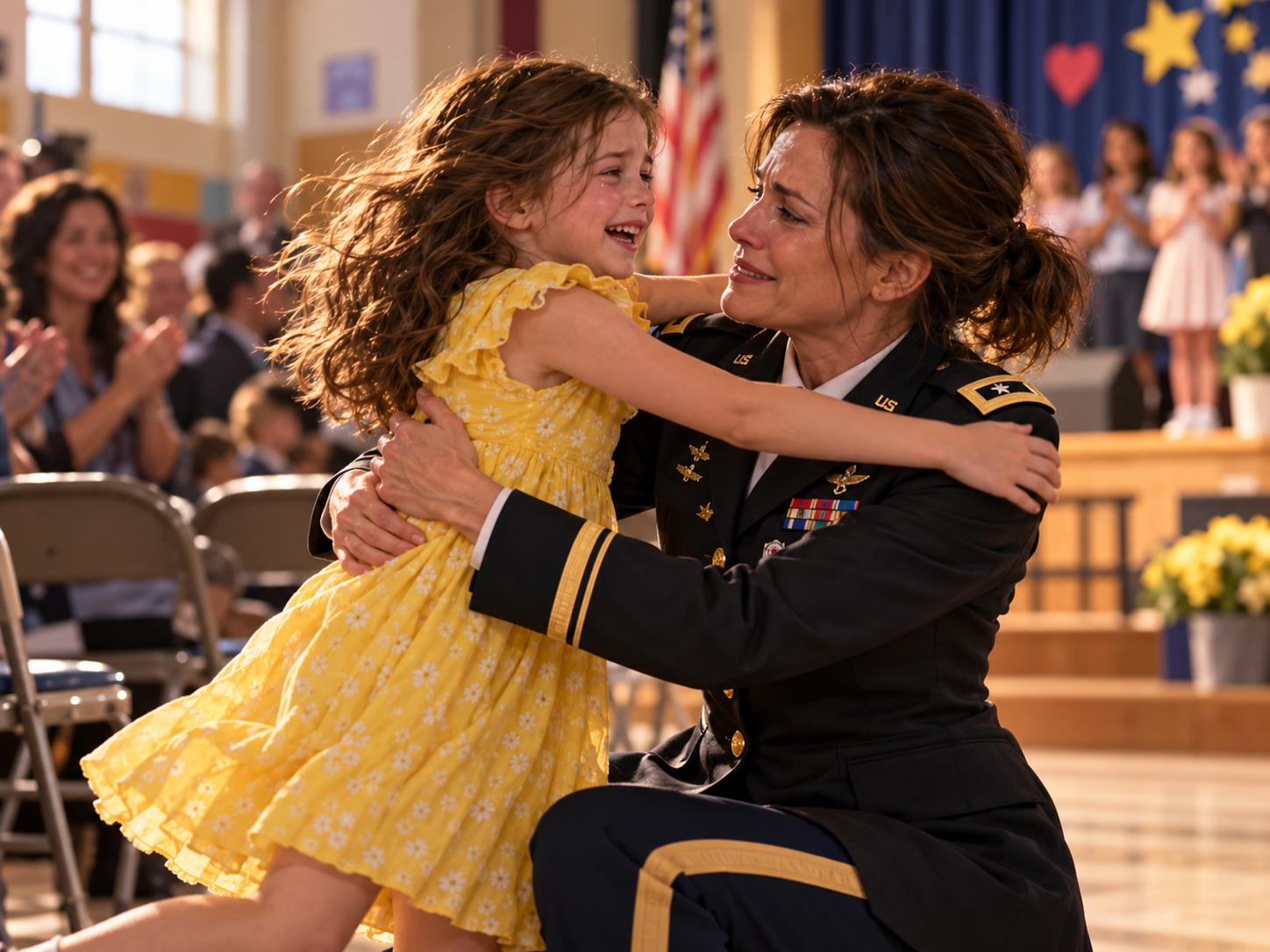
“Did I do okay?”
I laughed through my tears.
“Oh, sweetheart.”
I held her close.
“You did beautifully.”
She leaned back.
“Was it too long?”
“Not even a little.”
She smiled.
“Good. Because I practiced a lot.”
I kissed her forehead.
“I could tell.”
Later that afternoon, we stopped at a bakery and bought two enormous slices of chocolate cake.
We ate them on our front porch.
Lily swung her feet beneath the chair.
For a while, neither of us spoke.
Then she looked at me.
“Mommy?”
“Yes?”
“Do you remember the bad garage?”
I set down my fork.
“Yes.”
She studied the frosting on her plate.
“Sometimes I think about it.”
“I know.”
“But I don’t think about it every day anymore.”
I felt a quiet warmth spread through my chest.
“That’s good, baby.”
She looked toward our garden.
The tulips we’d planted together were beginning to bloom.
“I used to think nobody could hear me.”
I reached for her hand.
She took it.
“Now I know you can.”
I squeezed her fingers.
“And if I’m not right beside you, there are other safe grown-ups who will listen and help. You deserve to be heard.”
She nodded thoughtfully.
Then she grinned.
“Can we paint more stars for my brave place tomorrow?”
“Absolutely.”
“And maybe get a dog?”
I laughed.
“We’ll discuss the dog.”
She gave me a serious look.
“That’s what you said about the trampoline.”
“And what happened with the trampoline?”
“We got one.”
“Exactly. So apparently my negotiating skills need improvement.”
Lily burst out laughing.
The sound carried across the porch and into the quiet street.
I watched her.
Really watched her.
The sunlight in her hair.
The chocolate frosting at the corner of her mouth.
The way she laughed without looking over her shoulder.
A year earlier, I’d held this same child in a freezing garage, terrified that I was about to lose her.
I’d been a decorated Army officer.
A woman trained to make decisions under pressure.
But none of my medals mattered when I heard her screaming.
Only one thing mattered.
Getting her out.
And in the months that followed, I’d learned something I wished I’d understood long before.
Protecting someone doesn’t end when the immediate danger is over.
Sometimes protection means telling the truth when silence would be easier.
Sometimes it means allowing consequences to reach people you once loved.
Sometimes it means accepting that your own guilt cannot be allowed to overshadow a child’s needs.
And sometimes it means sitting on a porch, eating chocolate cake, and listening to your daughter laugh.
Taylor had once told me that my military career meant I didn’t understand what family required.
Evelyn had insisted that a good child learned obedience through fear.
They had both been wrong.
Family wasn’t about demanding loyalty while withholding safety.
It wasn’t about controlling someone small enough to be powerless.
And it certainly wasn’t about teaching a child to be silent when she was hurting.
Family was supposed to be the place where that child could speak.
Where she would be believed.
Where love meant showing up, even when doing so was difficult.
Lily climbed into my lap.
She was getting a little big for it.
I didn’t mind.
She rested her head against my shoulder and looked toward the mountains.
“Mommy?”
“Yes, sweetheart?”
“Are we happy now?”
I thought about the difficult nights.
The court hearings.
The therapy appointments.
The years of trust that couldn’t be restored by one beautiful afternoon.
Then I thought about the home we’d made.
Our yellow art table.
Our flower garden.
The bedtime stories.
The pancakes.
The laughter.
The future waiting beyond the mountains.
I kissed the top of her head.
“We’re learning how to be,” I answered.
She smiled.
“I think we’re doing pretty good.”
I held her a little closer.
“So do I.”
That evening, Lily fell asleep in her own bed with Captain Flopsy beside her.
The hallway light was on, just the way she liked it.
I checked on her once before going downstairs.
She was sleeping peacefully.
No trembling.
No frightened whispers.
Just the slow, gentle breathing of a child who finally believed she was safe.
I stood in the doorway for a long time.
Then I turned off the bedroom’s overhead light and left the smaller night-light glowing.
Outside, the Colorado sky was full of stars.
And somewhere in that quiet house, beneath the ordinary sounds of a refrigerator humming and the wind moving through the trees, I finally understood what victory meant.
It wasn’t the prison sentence.
It wasn’t the custody order.
It wasn’t the evidence that had exposed the lies.
Those things had mattered because they helped protect Lily.
But the greatest victory was simpler.
My daughter no longer believed she deserved to suffer.
She no longer believed that asking for her mother was a punishable offense.
She no longer believed that love was something she had to earn by remaining silent.
She knew she could be frightened.
She knew she could speak.
And most importantly, she knew someone would listen.
I had spent my adult life serving under the promise that no one would be left behind.
That night in the garage, when I heard my daughter’s voice calling from the darkness, that promise became more personal than ever before.
I couldn’t change the moments when Lily had been alone.
I couldn’t erase every memory of fear.
But I could make certain that the life ahead of her was filled with people who treated her with the dignity and tenderness she deserved.
And I could keep showing up.
Not as Colonel Bennett.
Not as the woman whose marriage had failed.
Not as the person Taylor and Evelyn had tried to portray in court.
But as Sarah.
Lily’s mother.
The woman who had heard her child calling.
And who would spend the rest of her life making sure that little girl knew she never had to face the darkness alone.
Because the most important words I ever taught my daughter weren’t “Be strong” or “Be brave.”
They were: “You can tell me the truth. I will believe you. And you deserve to be safe.”
THE END.