“I’M AT THE PRISON. I LOVE YOU SO MUCH!” — CHRISTA PIKE SENDS EMOTIONAL MESSAGE AFTER FAILED EXECUTION
“I’M AT THE PRISON. I LOVE YOU SO MUCH!” — CHRISTA PIKE SENDS EMOTIONAL MESSAGE AFTER FAILED EXECUTION
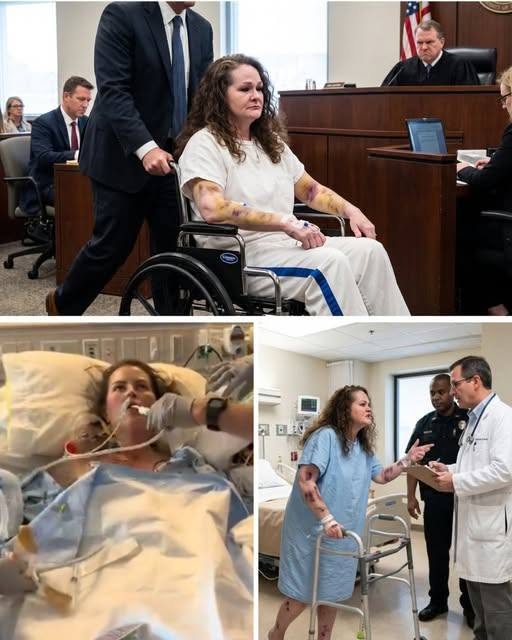
After surviving a failed execution attempt and spending days in hospital, Christa Pike has reportedly returned to prison and sent a message from her tablet. But questions remain about the long-term effects of the ordeal on her health.
Christa Pike has reportedly begun sending messages again after returning to prison following a medical emergency during Tennessee’s failed attempt to execute her.
Pike, 50, was discharged from hospital on October 10, 2026, and returned to the Debra K. Johnson Rehabilitation Center in Nashville, where she is expected to continue receiving medical care, according to reports citing her attorneys.
The news marks another chapter in a case that has drawn national attention after the state’s attempt to carry out her execution ended with serious questions about the procedure and its consequences.
 THE MESSAGE THAT ATTRACTED NATIONAL ATTENTION
According to NewsNation journalist Brian Entin, a message reportedly sent from Pike’s prison tablet at 12:14 a.m. on Saturday read:
“I’m at the prison. I love you so much!”
Entin obtained a photograph of the message through a source connected to the case. The identity of the person who received it has not been publicly disclosed.
The short message has prompted questions about Pike’s condition following her hospitalisation. However, although the wording appears coherent, a single text message cannot establish the full extent of someone’s cognitive recovery or rule out lasting neurological damage.
Pike’s attorneys have reportedly raised concerns about continuing memory and concentration difficulties following the failed execution attempt. The long-term effects, if any, remain uncertain.
 WHAT HAPPENED DURING THE FAILED EXECUTION?
Pike’s execution attempt took place in Tennessee on September 30, 2026. Reports said the procedure involved two doses of pentobarbital, but the execution was not completed.
She was subsequently taken for medical treatment and spent days in hospital. Her lawyers later described concerns about her physical recovery and possible lasting effects on her cognitive abilities.
The incident raised serious questions about the execution procedure and the medical care she received. Tennessee Governor Bill Lee subsequently paused the state’s remaining executions scheduled for 2026 while an independent review was pursued.
The full extent of Pike’s injuries and any lasting neurological consequences has not been conclusively established in the publicly available reports.
WHY HER COGNITIVE CONDITION MATTERS
Pike’s reported return to written communication has led to speculation about whether the failed execution caused permanent brain damage.
But medical recovery cannot be assessed from a brief message alone. A person may be able to communicate coherently while still experiencing problems with memory, attention or other cognitive functions.
Any determination about lasting impairment would require appropriate medical assessment and further information about her recovery.
Questions about Pike’s legal competency would also require a formal evaluation under the applicable legal standards; a text message is not enough to resolve them.
THE CASE THAT CONTINUES TO RAISE QUESTIONS
Pike was convicted for her role in the 1995 killing of 19-year-old Colleen Slemmer. Her case has remained in the public eye as attorneys challenge the consequences of the failed execution and seek clemency.
Her legal team has pursued a commutation to life imprisonment, while the state’s review of the execution attempt has raised broader questions about the procedure and accountability.
For now, Pike’s return to prison and reported message provide a limited update: she has reportedly resumed communicating, but her complete medical condition and long-term prognosis remain uncertain.
The message may offer a glimpse of her recovery, but it does not answer the biggest question: what lasting effects, if any, did the failed execution leave behind?
READ THE FULL STORY AND SHARE YOUR THOUGHTS IN THE COMMENTS.