HE SWAM 4KM THROUGH ROUGH OCEAN WATERS, THEN RAN ANOTHER 2KM — THE 13-YEAR-OLD BOY WHO SAVED HIS FAMILY FROM A TERRIFYING NIGHT AT SEA
HE SWAM 4KM THROUGH ROUGH OCEAN WATERS, THEN RAN ANOTHER 2KM — THE 13-YEAR-OLD BOY WHO SAVED HIS FAMILY FROM A TERRIFYING NIGHT AT SEA
Austin Appelbee was just 13 when he faced a desperate mission: swim through dangerous open water to get help for his mother, brother and sister, who were drifting far from shore. After four exhausting hours in the ocean and a further two-kilometre run, his determination helped save their lives. Now, his extraordinary bravery has been recognised with one of Australia’s notable civilian bravery awards.
A family holiday turned into a fight for survival when strong winds and rough seas swept a mother and her three children away from the coast of Western Australia.
But as the family drifted further into the ocean, one teenager made a decision that would change everything.
Austin Appelbee, then 13, would have to leave his family behind temporarily and attempt a dangerous swim to shore to raise the alarm.
His mother, Joanne Appelbee, and his younger siblings, Beau, 12, and Grace, eight, were left clinging to inflatable paddleboards as they struggled to stay together in the water.
What followed was an ordeal lasting hours — one that tested the family’s strength, courage and hope.
 A family outing takes a frightening turn
On January 30, 2026, the Appelbee family were holidaying near Quindalup, in Western Australia’s South West, around 250 kilometres south of Perth.
They had set out on a kayak and inflatable paddleboards, expecting a relatively short trip on the water.
Initially, conditions appeared manageable. But the weather and sea conditions deteriorated, and the family began getting pushed further offshore.
Their kayak took on water, making it increasingly difficult to return to land.
As the distance from the coast grew, it became clear that the family needed help.
Joanne faced an agonising decision. With her younger children still in the water, she asked Austin to attempt the journey back to shore and contact emergency services.
She later described sending her eldest son away as one of the hardest decisions she had ever made.
She believed he had the strength and ability to make it, but there was no guarantee he would reach land safely.
 Four gruelling hours in the open sea
Austin initially tried to paddle towards shore, but the kayak was taking on water and the rough conditions made progress difficult.
He eventually abandoned it and continued swimming.
He also removed his life jacket because he felt it was impeding his ability to swim in the conditions.
Alone in the open ocean, the teenager faced waves, exhaustion and the frightening knowledge that his family’s safety depended on him reaching help.
He later recalled trying to keep his mind focused on positive thoughts rather than allowing fear to overwhelm him.
He kept telling himself to continue swimming.
The journey was far beyond what he had previously managed in ordinary swimming conditions. Austin had taken swimming lessons from a young age, but the distance and conditions made this an entirely different challenge.
After approximately four hours, he finally reached the beach.
Exhausted, he collapsed on the sand.
But his mission was not over.
He ran another 2km to call for help
Despite the physical toll of the swim, Austin knew he needed to alert authorities immediately.
He ran approximately two kilometres to reach his family’s accommodation and obtain his mother’s phone.
He then contacted Australia’s emergency number, Triple Zero, and explained that his family had been swept out to sea.
Austin told the operator that his mother and siblings were still offshore and that he feared for their safety.
He asked for urgent assistance, including a helicopter.
Although he was exhausted and frightened, he managed to provide important information about the family’s situation and the equipment they had been using.
His call triggered a major search-and-rescue operation involving police, a rescue helicopter and marine rescue volunteers.
Without his determination to reach land and raise the alarm, rescuers might not have known where to begin searching.
A desperate race against darkness
Meanwhile, Joanne, Beau and Grace remained stranded in the ocean.
They had been out at sea for hours, with no easy way to return to shore.
Joanne later explained that they initially tried to remain positive, singing songs and joking together to keep the children calm.
But as daylight faded and the waves grew more threatening, the situation became increasingly frightening.
The family were cold and exhausted. Beau began losing feeling in his legs, while the children struggled with the prolonged exposure to the water.
Joanne feared that Austin might not have made it to shore — and that help might never reach the rest of the family.
As darkness approached, the family’s hope was severely tested.
Then, at approximately 8:30pm, rescuers located Joanne and her two younger children around 14 kilometres offshore.
After an ordeal lasting roughly 10 hours, all three were brought to safety.
Austin’s emergency call and his detailed account of the family’s circumstances had played a crucial role in getting rescuers to them.
The family were taken for medical assessment. Austin suffered severe exhaustion and needed assistance walking for several days because of the physical strain of the swim and run.
The emotional moment he learned his family had survived
After reaching shore and calling for help, Austin was so exhausted that he was taken to hospital.
For a time, he did not know whether his mother, brother and sister had survived.
He later described feeling overwhelmed by the thought that they might be dead and worrying that he had not reached shore quickly enough.
Then came the news he had been desperate to hear: his family had been found alive.
The relief was immense.
For Joanne, the survival of all three children was what mattered most.
The family had endured a terrifying experience, but they had been reunited after a rescue that might not have succeeded without Austin’s extraordinary effort.
A bravery medal — and a humble response
Eight months after the incident, Austin’s actions received formal recognition.
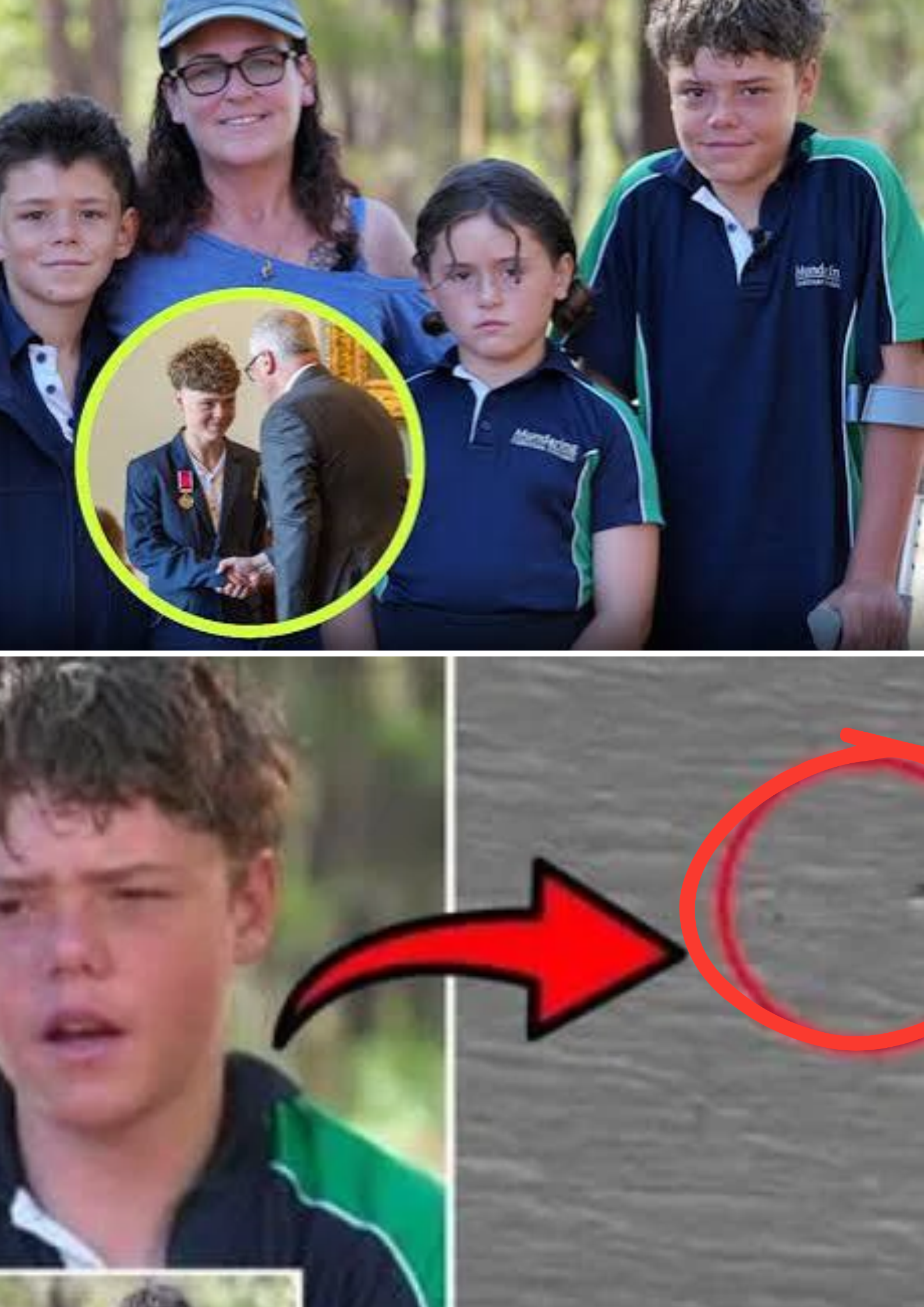
On October 6, 2026, he was awarded the Clarke Gold Medal by the Royal Humane Society of Australasia, recognising his exceptional bravery in helping save his family.
The ceremony took place at Government House in Perth.
His mother, Joanne, was also recognised with a Certificate of Merit for the difficult and courageous decision to send Austin to seek help while she stayed with her younger children.
Despite receiving the prestigious honour, Austin was quick to acknowledge that he was not the only person who had shown courage that day.
He said his younger siblings deserved recognition for what they endured while waiting in the ocean, and he also praised his mother and the rescue crews who brought them to safety.
His response revealed a teenager who saw the ordeal not simply as his own achievement, but as a family’s struggle to survive.
The lasting impact of an extraordinary ordeal
Although the rescue ended safely, the experience left physical and emotional effects on the family.
Austin spoke publicly about the difficulty of processing what had happened, while Joanne expressed concern about the possibility that the children might experience lasting emotional distress.
The family’s story also served as a reminder of how quickly conditions on the water can change, even when an outing begins close to shore.
Authorities have urged people to remain alert to weather and sea conditions and to take appropriate safety precautions when using kayaks and paddleboards.
A teenager whose courage brought his family home
Austin Appelbee did not set out that morning expecting to become a hero.
He was a young teenager enjoying a family holiday. But when the situation became life-threatening, he kept going through fear, exhaustion and dangerous conditions to get help for the people he loved.
Four kilometres of open-water swimming. Another two kilometres on foot. Hours of uncertainty for the family he had left behind.
His actions helped set in motion the rescue that brought his mother, brother and sister home alive.
And when he was honoured for his bravery, he made sure to remember the courage of those who had endured the ordeal alongside him.
For the Appelbee family, the most important outcome was not the medal or the worldwide attention. It was that, after a terrifying day at sea, all four of them survived.
Austin’s story stands as a powerful reminder of the extraordinary things ordinary people — even children — can do when someone they love is in danger. 🤍