‘I WON’T STOP LOOKING’: MADELEINE McCANN INVESTIGATOR MAKES EMOTIONAL APPEAL NEARLY 20 YEARS AFTER HER DISAPPEARANCE
‘I WON’T STOP LOOKING’: MADELEINE McCANN INVESTIGATOR MAKES EMOTIONAL APPEAL NEARLY 20 YEARS AFTER HER DISAPPEARANCE
Private investigator Julian Peribañez, who worked for Madeleine McCann’s family after she vanished in Portugal in 2007, says he is still pursuing leads. He believes an organised Eastern European trafficking network may have been involved — but his theory has not been confirmed by police.
Nearly two decades after Madeleine McCann disappeared during a family holiday in Portugal, a private investigator who once worked for her parents says he has no intention of giving up the search.
Julian Peribañez, a Spanish investigator who joined the private investigation team hired by Kate and Gerry McCann in 2008, has made a renewed appeal for information from people who may know something about Madeleine’s disappearance.
In a recent interview with The Olive Press, Peribañez spoke about the case that has shaped much of his professional life and explained why he continues to pursue his own lines of inquiry.
His comments have brought fresh attention to one of the world’s most widely followed missing-child cases. However, he has not announced a confirmed breakthrough, and Madeleine’s fate remains unknown. 
‘AS LONG AS I HAVE HOPE, I WON’T STOP LOOKING’
Peribañez said Madeleine’s disappearance had become more than just another investigation for him.
He explained that he had continued following leads and trying to establish what happened, even as the years passed and the case remained unresolved.
Speaking about the uncertainty surrounding Madeleine’s fate, he said:
“I don’t know if she’s alive or not, because hardly anyone on Earth does.”
He added: “But as long as I have hope, I won’t stop looking.”
His determination, he said, is rooted in the belief that someone may still hold information capable of helping investigators understand what happened.
HIS THEORY INVOLVES AN EASTERN EUROPEAN TRAFFICKING NETWORK
During the interview, Peribañez shared his personal theory that Madeleine may have been abducted by an organised Eastern European trafficking gang operating in Portugal’s Algarve region.
He said his own inquiries had led him to focus on people he believes may have been connected to such a network.
He is now appealing directly to anyone in the Algarve who may have encountered individuals fitting the profile he described.
“If you’ve had encounters with people who fit the profile, please reach out,” he said.
“All I need is a name. Give me a name, and I’ll chase it wherever I have to.”
These statements reflect Peribañez’s own investigative theory. They do not establish that a trafficking gang was responsible, and no such conclusion has been confirmed by the authorities.
 MADELEINE DISAPPEARED DURING A FAMILY HOLIDAY
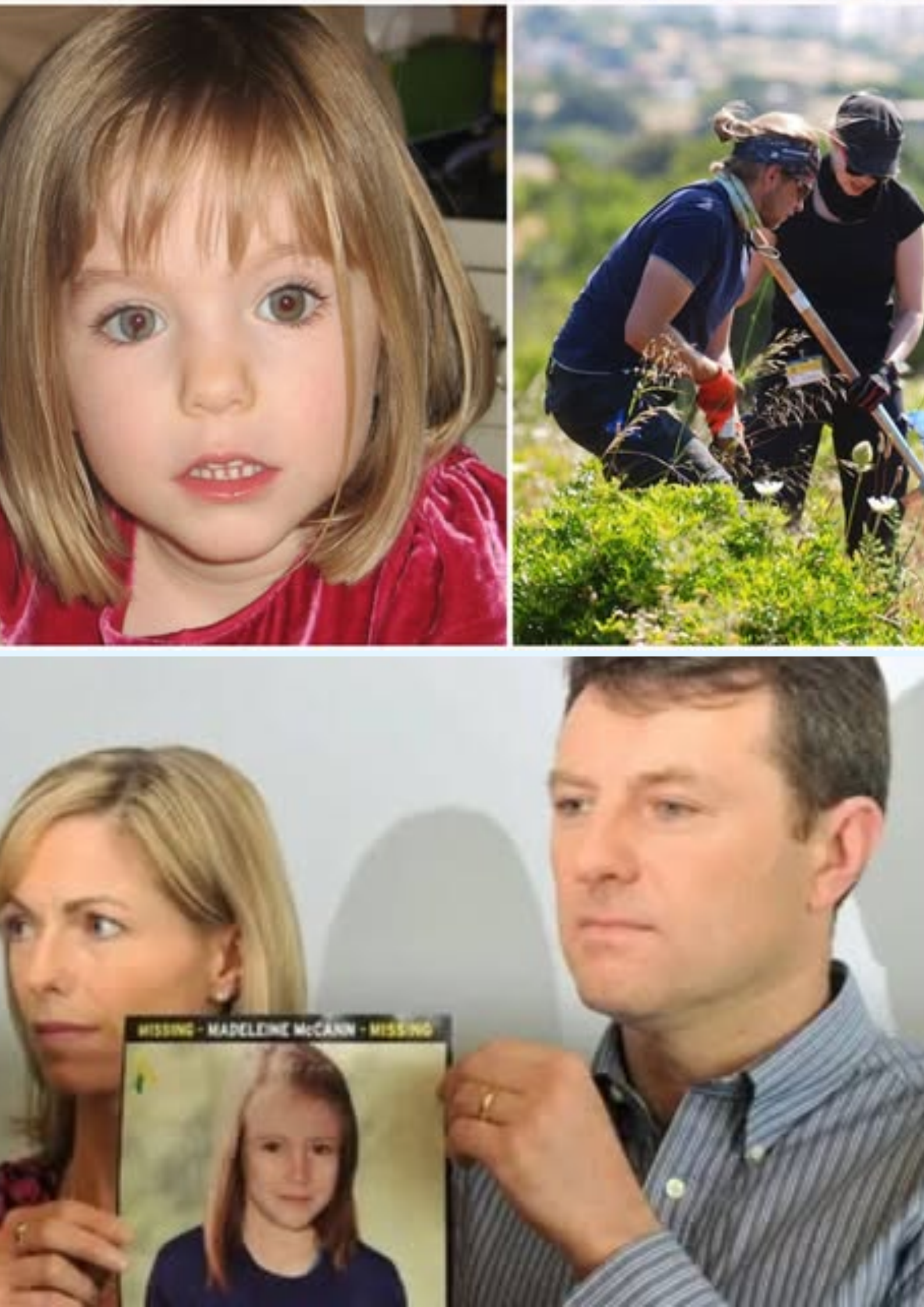
Madeleine was three years old when she vanished from her family’s holiday apartment in Praia da Luz, Portugal, on May 3, 2007.
Her parents had been dining with friends at a restaurant nearby while Madeleine and her younger twin siblings were asleep in the apartment. The adults took turns checking on the children during the evening.
When Kate and Gerry returned and discovered Madeleine was missing, an international search began.
The case attracted worldwide attention and prompted years of investigations involving Portuguese, British and German authorities.
Despite extensive inquiries, searches and appeals for information, Madeleine has never been found.
A DIFFERENT INVESTIGATOR’S THEORY — NOT AN OFFICIAL FINDING
Peribañez’s latest comments also come amid continuing public interest in the German suspect Christian Brückner, whom German authorities identified as a suspect in Madeleine’s disappearance in 2020.
However, Brückner has not been charged in connection with Madeleine’s disappearance and has denied involvement.
Peribañez has expressed scepticism about that line of investigation and continues to pursue his own theory.
It is important to distinguish his claims from established evidence: investigators have not publicly confirmed that an Eastern European trafficking network abducted Madeleine, nor have they announced that Peribañez’s latest leads have solved the case.
THE CASE THAT CHANGED HIS LIFE
Peribañez has said that his work on Madeleine’s disappearance influenced his later efforts to protect vulnerable children.
He subsequently became involved in investigations concerning child exploitation and founded Guardianes de la Inocencia, an organisation focused on protecting children.
He has also written about wider cases involving abuse and exploitation, explaining that his experience searching for Madeleine helped shape his commitment to those issues.
Although his work has expanded over the years, he says the search for Madeleine remains unfinished. <Cite refs={[“turn208230search0″,”turn208230search6”]}/>
ONE DETAIL COULD STILL MATTER
As the twentieth anniversary of Madeleine’s disappearance approaches in May 2027, the questions surrounding her fate remain unanswered.
Peribañez is urging people who lived or worked in the Algarve before 2007 to come forward if they remember anything that could be relevant.
For Madeleine’s family, the long wait for answers continues. For the investigator who once worked on their behalf, the passage of time has not brought the search to an end.
Nearly 20 years have passed. Madeleine has never been found, and no confirmed account of what happened to her has been established. Peribañez says he will keep searching — hoping that somewhere, someone still holds a detail that could finally help bring answers. 🤍