TIMMY BREAKS FREE — STRANDED HUMPBACK SWIMS AWAY ON HIS OWN
TIMMY BREAKS FREE — STRANDED HUMPBACK SWIMS AWAY ON HIS OWN
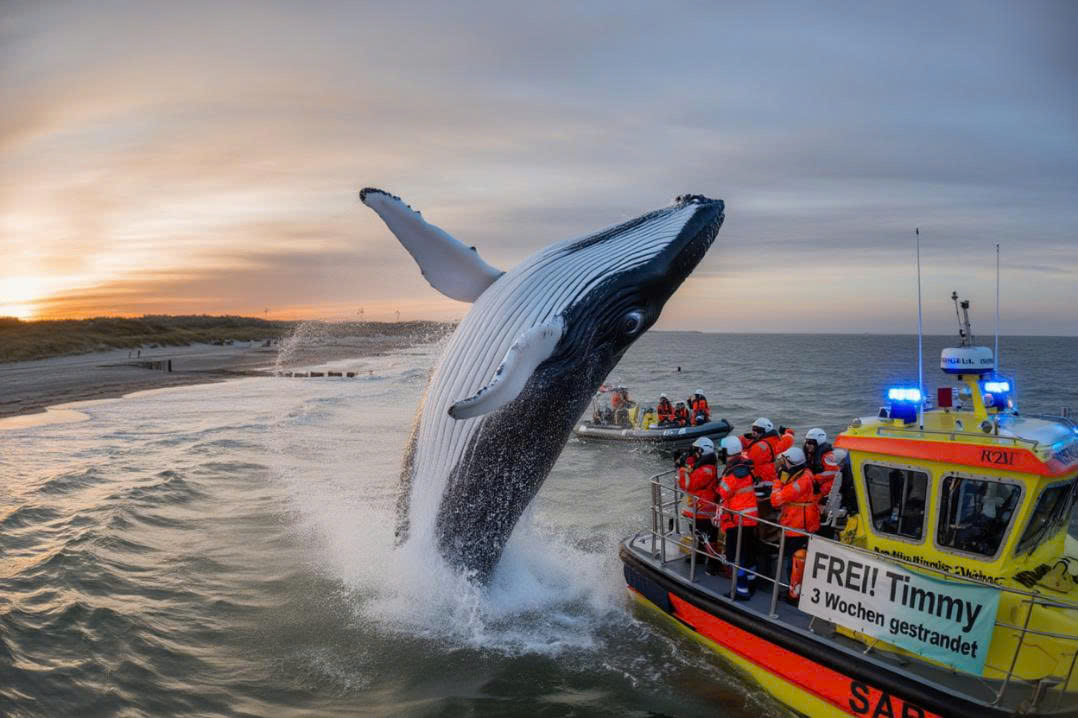
In a breathtaking moment of triumph, Timmy, the stranded humpback whale, has finally broken free after three long weeks trapped in the shallow waters of Germany’s Baltic Sea. The exhausted giant, who had been stuck near the coast since March 31, is now swimming under his own power, making slow but steady progress toward deeper waters. What was once a seemingly hopeless situation has turned into a powerful symbol of resilience and survival.
For nearly a month, rescue teams and marine biologists have worked tirelessly to save the 13.5-meter whale. Despite several failed attempts, including the dramatic, last-chance plan to lift Timmy using pontoons, the whale remained trapped, his strength dwindling by the day. But just when hopes seemed to be fading, nature intervened, giving Timmy the chance to escape on his own.
A Long, Struggling Journey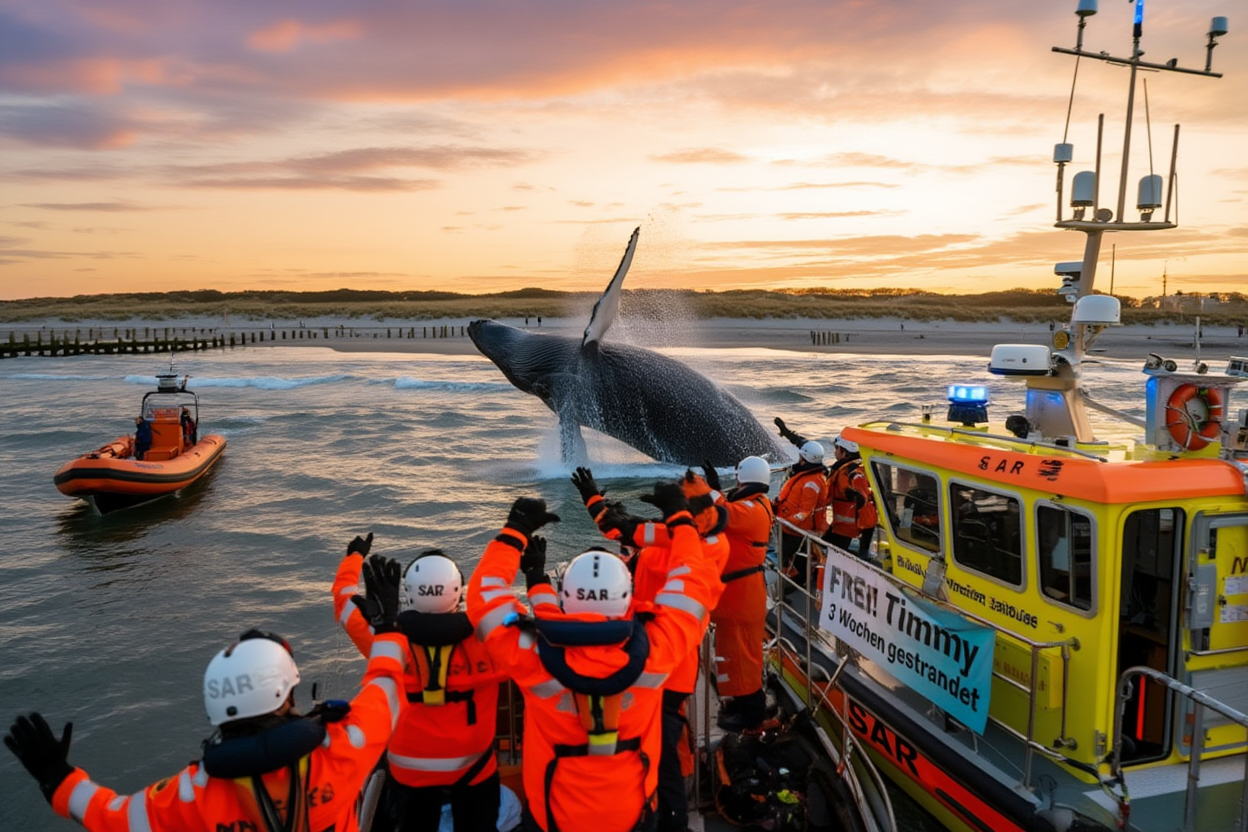
Timmy’s ordeal began on March 31, when he became stranded on the shallow sands of the Baltic Sea near Wismar, Germany. It is believed that the whale had become disoriented during his migration, getting caught in the coastal waters where he had no room to move. With little access to deeper, safer waters, Timmy’s survival became a race against time.
Rescue efforts were immediately launched. Teams used pontoons, air cushions, and other heavy machinery to try to lift the whale, but each attempt ended in failure. The challenges of dealing with a whale of Timmy’s size in such shallow, turbulent water were overwhelming. Rescue teams were forced to confront not only the logistical difficulties of the situation but also the emotional weight of watching the giant whale grow weaker by the day.
Nature Lends a Hand: The Breakthrough Moment
Just as the situation reached its most critical point, nature lent a hand. Rising water levels, driven by stronger winds and higher tides, provided the buoyancy Timmy so desperately needed. After weeks of struggle, the whale’s massive body was finally lifted from the shallow waters, giving him the strength to move on his own.
It began with a single, powerful flick of his tail. Then another. Slowly but surely, Timmy began to move forward, pushing himself toward deeper waters. The first tail stroke was a moment of pure triumph — a sign that the battle wasn’t over, that survival was still within reach.
For the first time in weeks, the whale was no longer trapped — he was free, using the rising tides to carry him away from the danger of the shallow shore.
The Role of Rescue Boats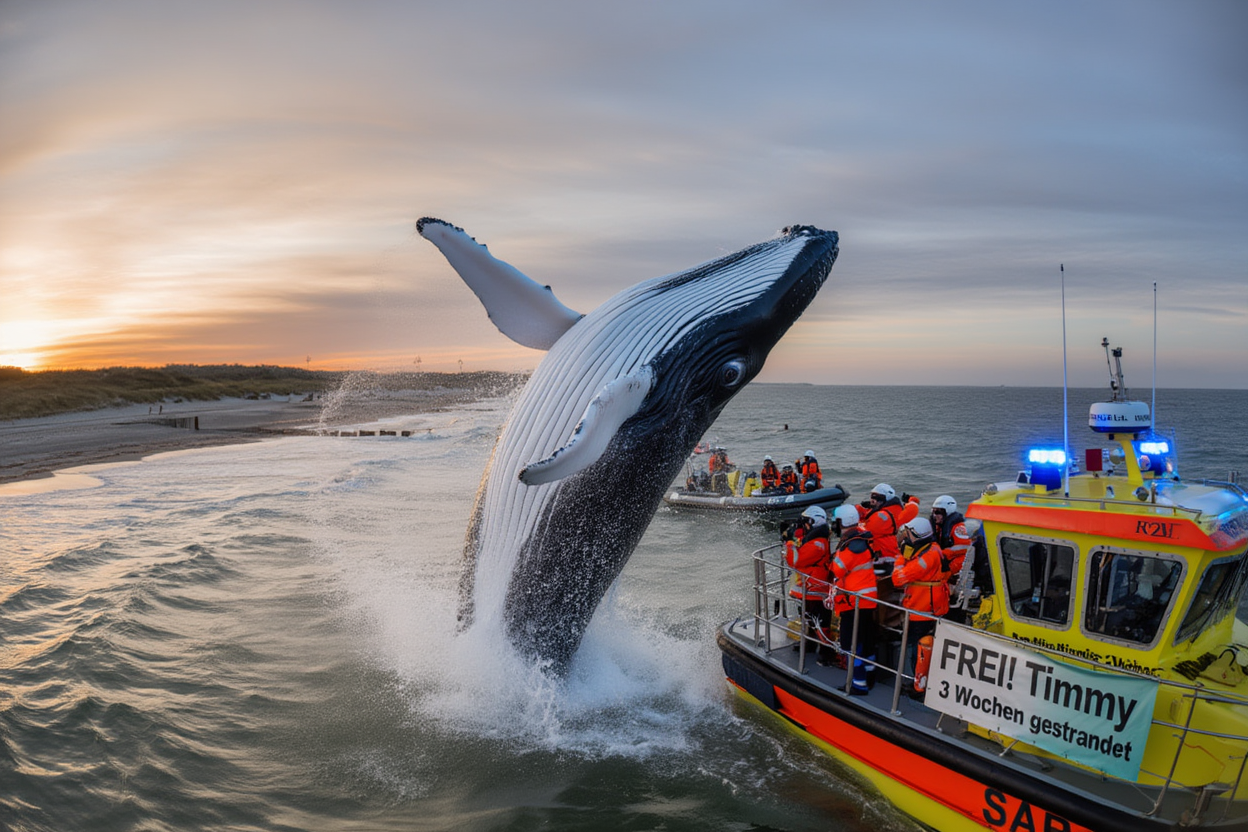
As Timmy regained his strength, rescue boats that had been standing by at a safe distance began to follow. While they were no longer involved in the direct rescue effort, the boats continued to provide careful monitoring, ensuring that Timmy would not encounter further obstacles as he swam toward open water.
These vessels, once active participants in the rescue operation, now acted as quiet guardians, maintaining a safe distance as the whale moved slowly but steadily toward the deeper waters of the Baltic Sea.
Rescuers watched anxiously from their boats, aware that Timmy’s journey was far from over. Though the whale was free, he still had a long way to go before reaching the safety of the open ocean, where he could fully recover.
A Symbol of Resilience and Hope
Timmy’s escape is not just the story of a whale freed from a difficult situation. It is a profound symbol of resilience — a reminder that even in the face of overwhelming odds, survival is possible. The strength that Timmy displayed in using nature’s forces to his advantage is a testament to the power of life to push forward, even in the harshest of circumstances.
The story of Timmy is also one of hope. It underscores the importance of continued efforts to protect marine life, ensuring that the forces of nature and the efforts of humans can work together to save the creatures who share our oceans. Despite the technological advances and rescue operations, it was nature — the rising tides and stronger winds — that ultimately gave Timmy the chance to move again, offering a ray of hope in what had seemed like a dire situation.
Looking Ahead: A Long Journey to Recovery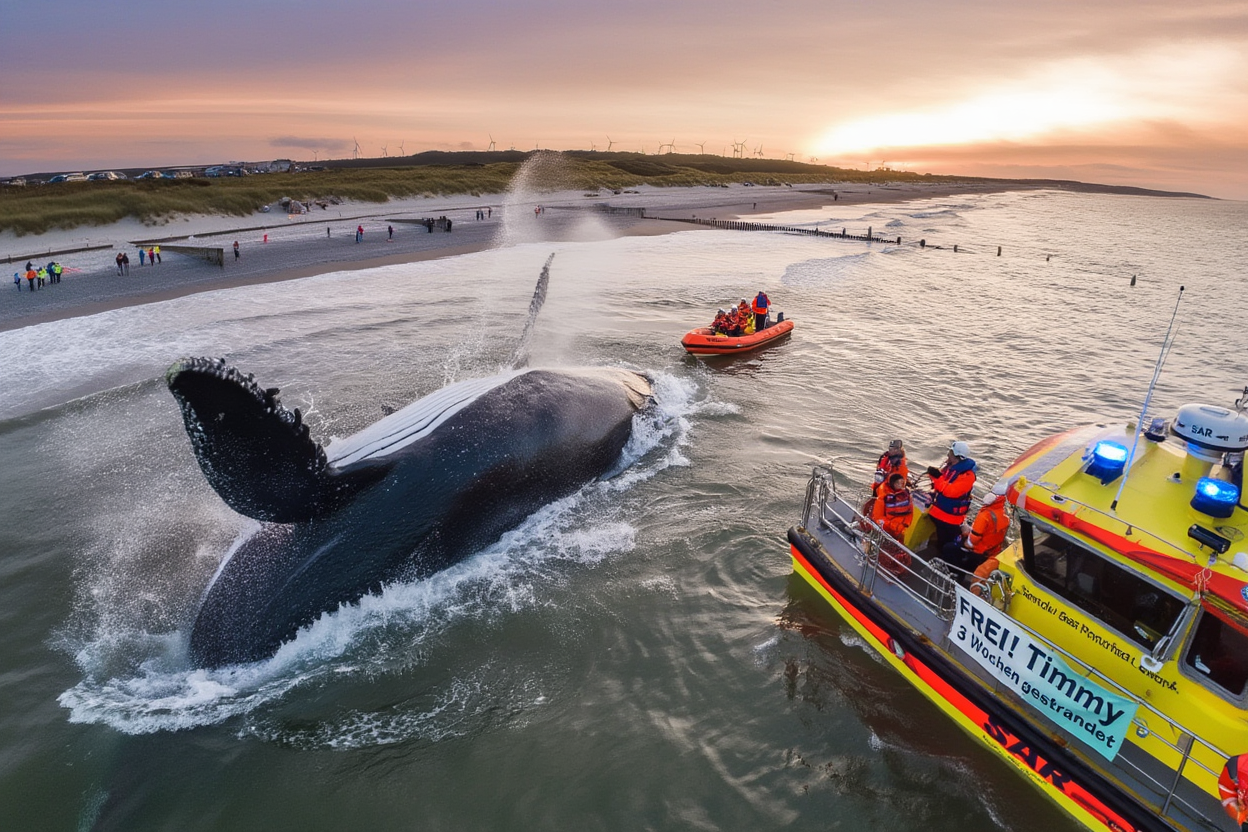
While Timmy’s escape is a cause for celebration, his journey is far from complete. The open waters of the Baltic Sea stretch out before him, but he still faces numerous challenges. The journey ahead will not be easy, and his recovery will take time. Rescue teams are cautiously optimistic but remain aware that the whale may still need assistance before he can fully regain his strength.
The world is watching as Timmy moves further from the shore, each powerful tail stroke bringing him closer to the freedom of the deep ocean. If he can make it to deeper, safer waters, he will have a chance to recover and eventually resume his migration. For now, the rescue vessels remain nearby, offering silent support and hoping that this time, Timmy truly finds his way home.
A Powerful Reminder of the Fragility of Life
Timmy’s ordeal and subsequent escape serve as a poignant reminder of the fragility of life in the oceans. With climate change, pollution, and human activity threatening the natural habitats of marine creatures, incidents like this highlight the urgent need to protect and preserve our oceans. Timmy’s struggle — and his eventual escape — is a symbol of how vital it is to ensure the safety of these majestic creatures, whose survival depends on a delicate balance of natural forces.
As Timmy swims farther away from the shoreline, the world breathes a collective sigh of relief. He has faced the odds and won, proving that even in the most dire of circumstances, survival is possible. And with every stroke, he moves one step closer to the freedom of the vast ocean — his true home.