Crucial Rescue Moment — Will the Whale Enter the Floating Shell Today?
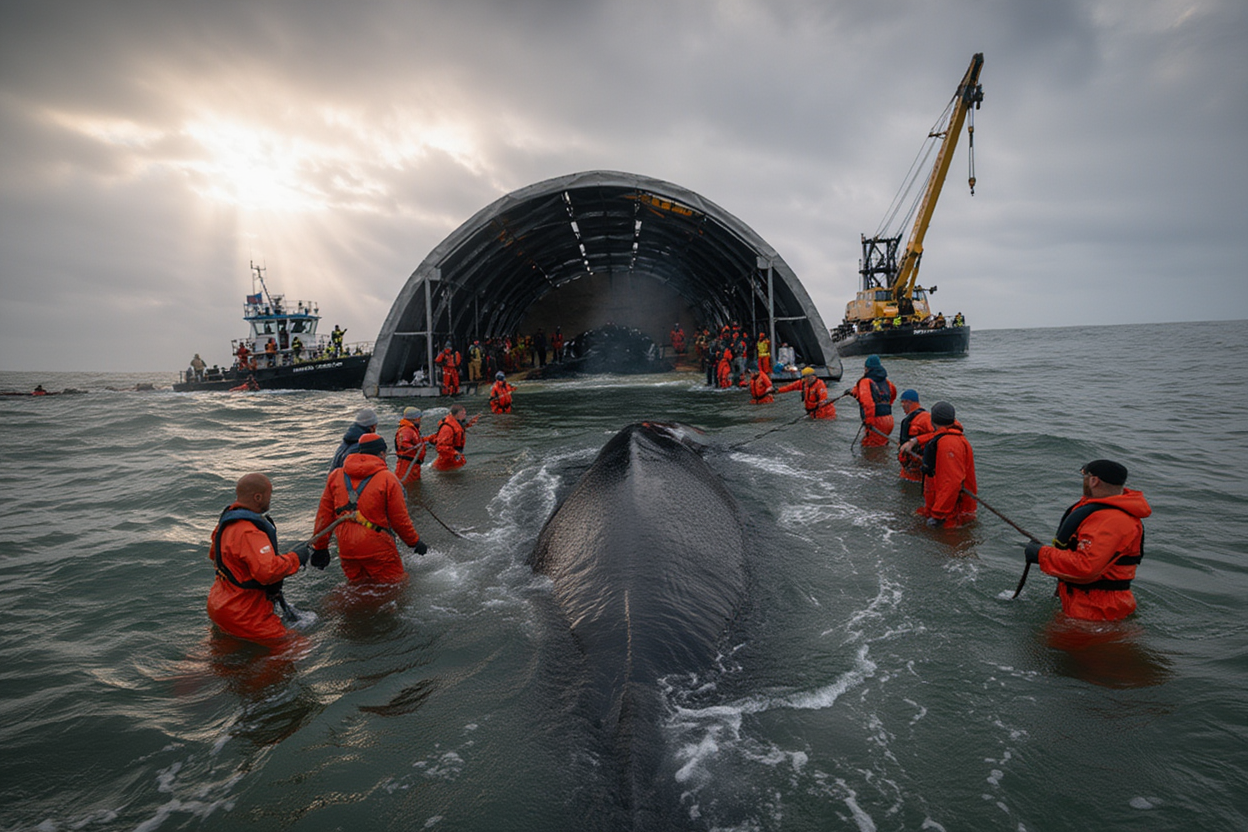
Crucial Rescue Moment — Will the Whale Enter the Floating Shell Today?
A moment of truth has arrived. This morning, under the careful watch of a specialized rescue team, the most critical phase of the operation to save the stranded humpback whale begins. The challenge now is to guide the immense creature into a specially designed floating shell, a risky maneuver that has never been attempted before. Rescue teams are poised and ready, but the fate of the whale is uncertain.
The stakes couldn’t be higher: Will the whale cooperate and follow the path set out for him, or will he panic, breaking free from the grasp of human intervention and drifting back into the treacherous waters of the Baltic Sea? The whale’s reaction to this carefully orchestrated operation could either signal his escape to freedom or, tragically, a catastrophic setback for both the animal and the team that has worked tirelessly to get to this point.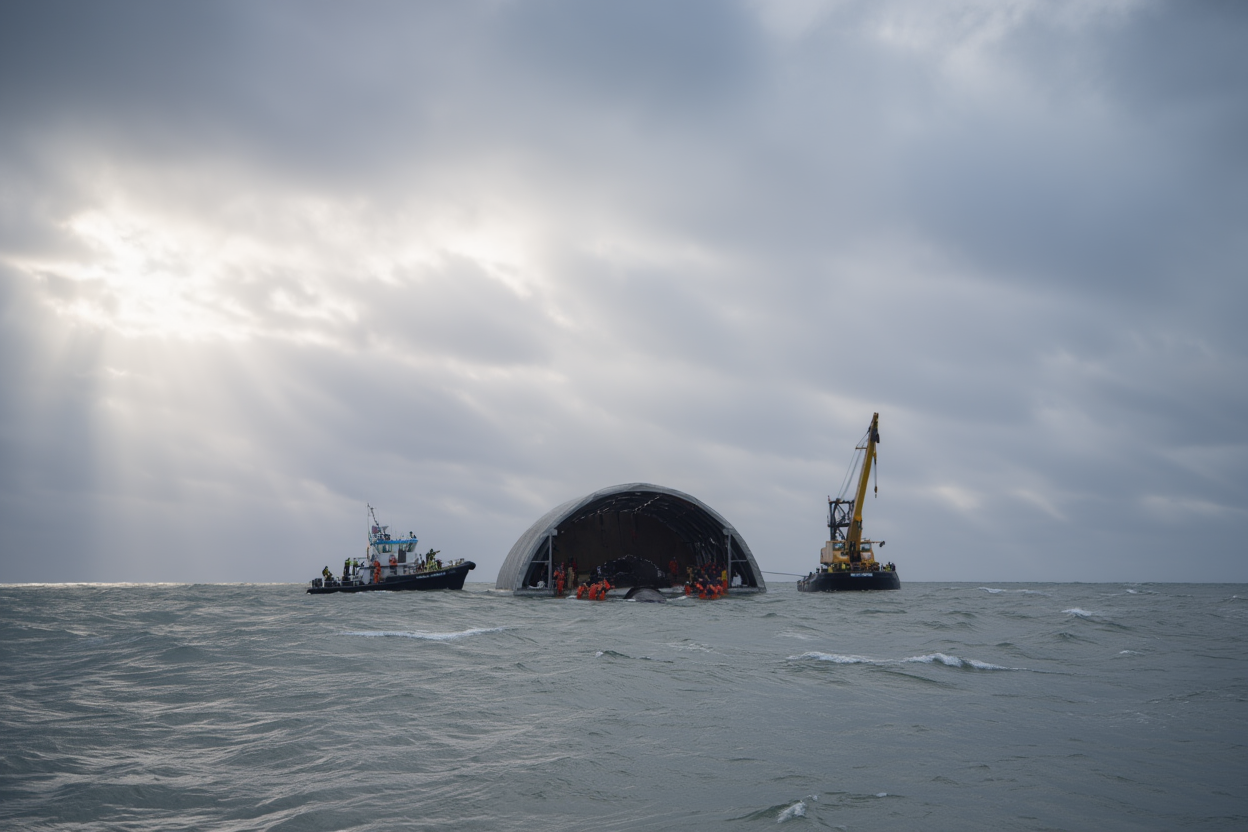
For days, experts and veterinarians have been preparing for this exact moment. The whale, which had been stranded along the coastline for weeks, is now strong enough for the move, according to the veterinarians who have been monitoring his health. His vital signs are stable, and his strength has returned. However, the rescue operation’s success hinges on how the whale reacts to being guided into the floating shell — an unprecedented maneuver for such a large animal.
The Floating Shell — A Lifeline or a Gamble?
The floating shell, a large, custom-built structure designed to keep the whale safe and secure during the move, is the focal point of the rescue. Its purpose is to transport the whale to deeper waters, where the currents are strong enough to carry him back to his natural habitat. The shell must be carefully positioned, and the whale must willingly enter it without showing signs of distress. If the animal becomes anxious or disoriented, the situation could quickly spiral out of control.
The team’s strategy is simple yet incredibly difficult: gently coax the whale into the shell without causing any distress, and then carefully tow it toward deeper water. The structure has been designed to keep the whale buoyant and comfortable, but the complexity of the operation means that every moment is critical.
The weather is unpredictable, with rising tides expected to change the dynamics of the operation. Rescue teams are keeping a close eye on the weather, which could either aid or hinder their efforts. Rising water levels have previously been a blessing, giving the whale the chance to move under his own power. However, in this delicate phase of the rescue, the weather may turn from a helpful factor to a major obstacle.
A First-of-Its-Kind Rescue — The Skeptics and the Hopeful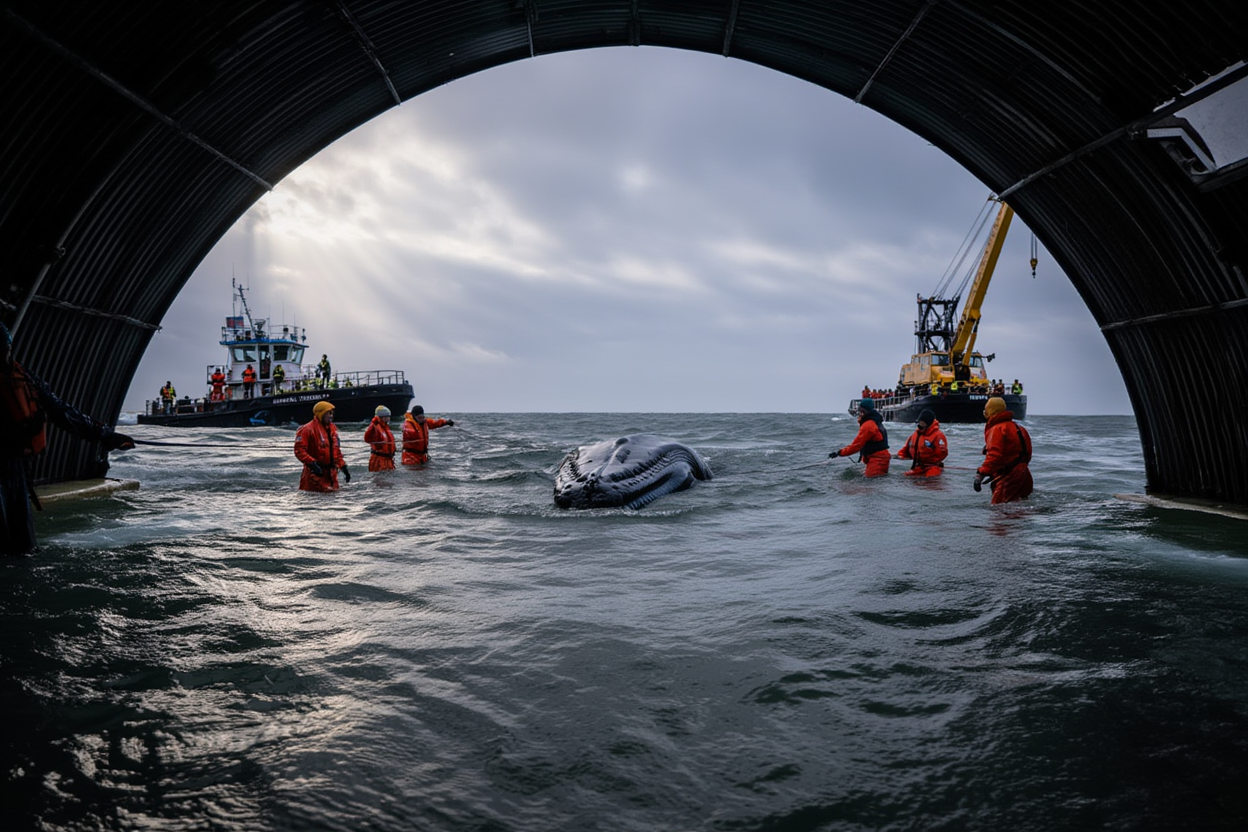
While the team is confident, the operation’s unprecedented nature has raised doubts among some independent marine rescue experts. Rescue efforts of this scale and complexity have never been attempted before, especially with such a large animal in such a confined space. Experts agree that this rescue is a bold move, but whether it will succeed remains a matter of great debate.
Despite the skepticism, the team has pressed forward with meticulous planning and coordination. They are ready to act at a moment’s notice, with backup plans in place for every possible scenario. The whale’s health, the rescue team’s readiness, and the support from surrounding vessels are all aligned for this decisive moment — but, in the end, the success of the mission depends entirely on the whale’s response.
The Final Push — What Happens Next?
As the floating shell is positioned and the whale is approached, the tension is palpable. This may be the final chance for the rescue to succeed. The next few hours will determine the future of this brave animal, and whether he will finally be free to roam the open seas once again.
Rescue teams, environmentalists, and animal lovers around the world are holding their breath, hoping that this rescue attempt will prove to be the breakthrough they’ve all been waiting for. The fate of the whale now hangs in the balance — and all eyes are on the water.
Will the whale calmly accept the help offered, or will he break free, leaving the team to reconsider their next move? One thing is certain: The world is watching, and the hope for a successful rescue has never been more urgent.