The Unlikely Transformation: A Saudi Prince’s Descent from Arrogance to Grace
The Unlikely Transformation: A Saudi Prince’s Descent from Arrogance to Grace
For twenty-eight years, my life was defined by the intoxicating scent of oil and the absolute silence of subservience. My name is Abbid, and as a prince of the Saudi royal house, I existed within a reality that few can fathom. In my world, wealth was not just a resource; it was a divine endorsement of my superiority. My father’s oil fields stretched toward the horizon, and my mother’s diamonds could have funded nations. From my private jets to my fleet of German-engineered cars, I believed that my untouchable status was the ultimate proof of my righteousness.
My arrogance, however, was not merely material—it was deeply spiritual. Raised in the heart of Islamic tradition, I viewed all other faiths with a mixture of pity and utter contempt. Christianity, in particular, was the target of my sharpest ridicule. To my mind, the idea of a God who would allow Himself to be humiliated, beaten, and crucified like a common criminal was not just illogical—it was offensive. I equated strength with conquest and divinity with power. A God who preached “turning the other cheek” seemed like a weak fabrication for people who couldn’t handle the harshness of the real world.
I spent my time at elite universities sharpening my intellect, not to find truth, but to better dismantle the “fables” of others. I remember standing in the grand cathedrals of Europe, admiring the architecture while internally mocking the pilgrims who wept at the feet of statues. To me, they were children clinging to a fairy tale. I felt it was my birthright to judge the world, believing my royal blood made me immune to the common struggles of humanity and the reach of any God other than the one I claimed to serve.
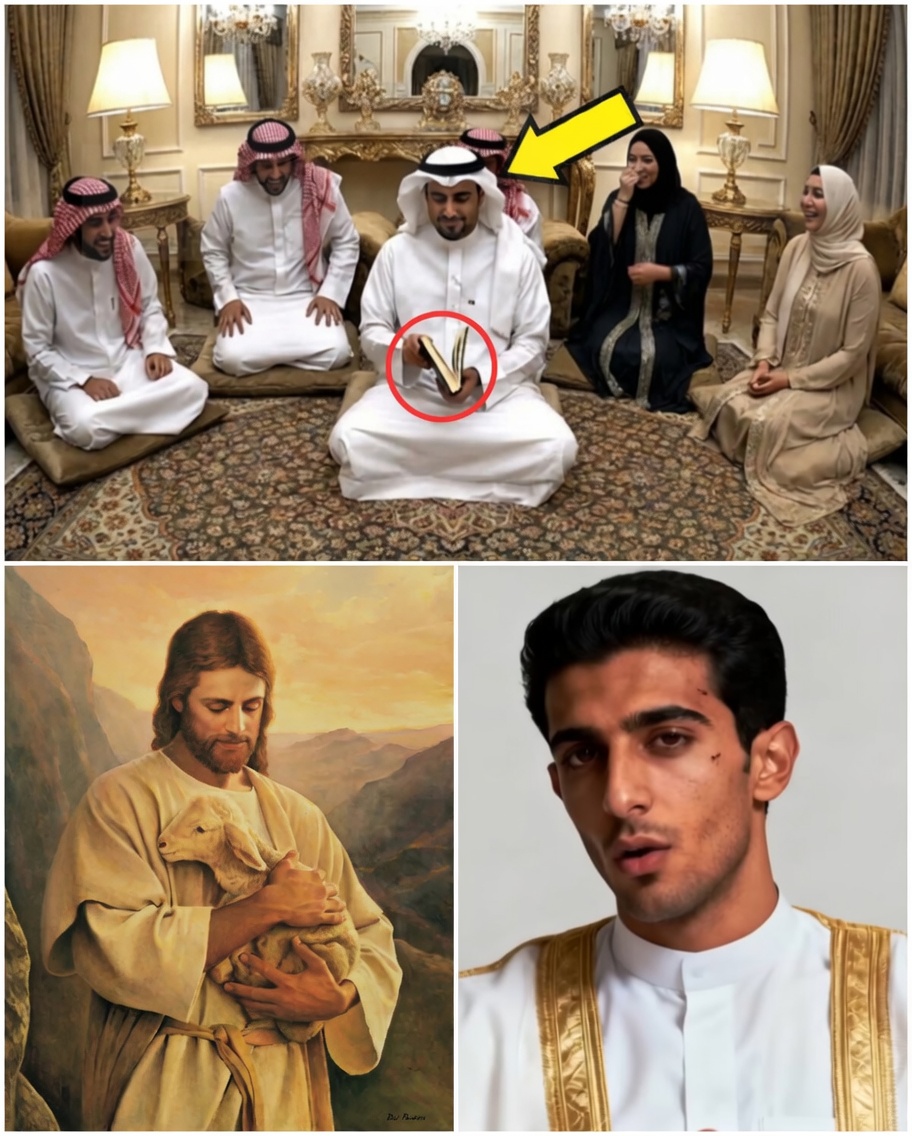
Everything changed on the night of May 1st, 2012. Driven by a spirit of mockery, I gathered my family with the intention of reading the Bible aloud—not to seek wisdom, but to highlight its perceived absurdities and strengthen our own sense of superiority. I wanted to laugh at the “weakness” of the Christian Gospel. But as I opened the pages to begin my performance of ridicule, something inexplicable happened.
The words did not feel like a weak man’s philosophy. They felt like a double-edged sword. As I read about the sacrifice of Jesus, the weight of the words began to crush my pride. The “humiliation” I had mocked suddenly revealed itself as the ultimate form of strength—a King who chose to suffer for his subjects. For the first time in my life, the room grew silent, not because of my title, but because of a presence that demanded my total surrender. That night, the prince who sought to mock God was brought to his knees by a love he could no longer deny. My world of gold and oil didn’t vanish, but its value did, as I realized that the greatest crown I could ever wear was the one I had spent my entire life despising.