BREAKING: MASSIVE 61-FOOT FIN WHALE FOUND DEAD AFTER STRANDING ON WASHINGTON SHORE
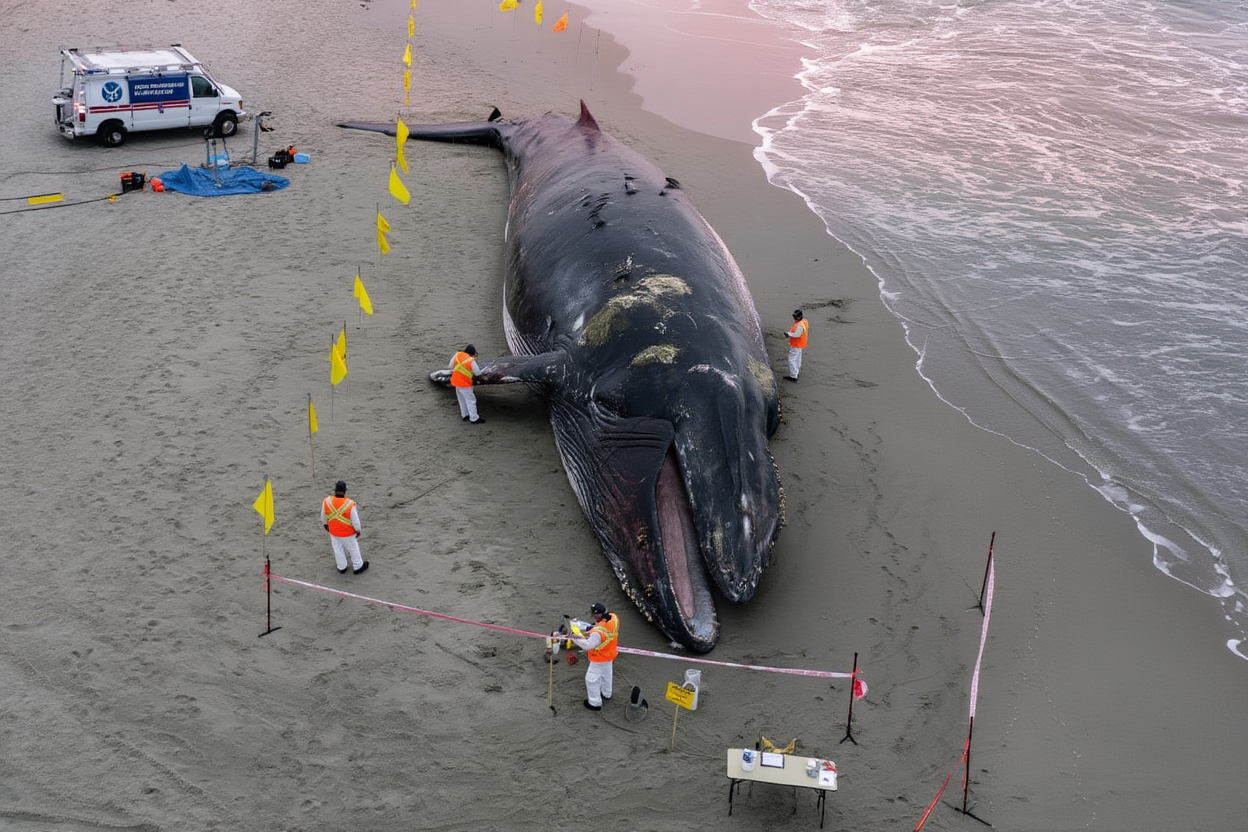
BREAKING: MASSIVE 61-FOOT FIN WHALE FOUND DEAD AFTER STRANDING ON WASHINGTON SHORE
A tragic and shocking sight greeted residents and marine experts on Samish Island, Washington, earlier this week. A colossal 61-foot fin whale — one of the ocean’s largest inhabitants — was discovered stranded in shallow waters, unable to free itself.
Witnesses first noticed the enormous creature struggling in the bay on Monday evening. As the tide fell rapidly, the whale became trapped in mud near the shoreline, its massive body too heavy to move.
Rescue teams raced against time.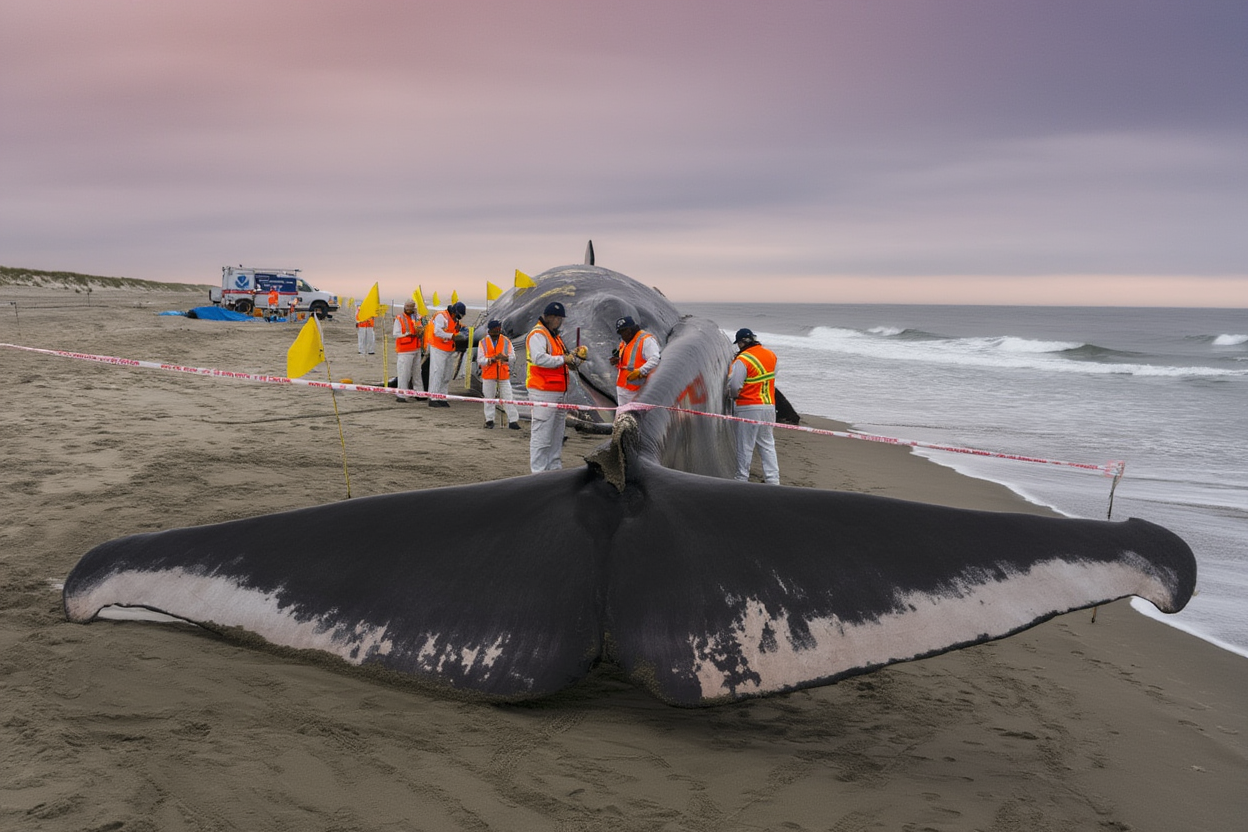
Experts from the Central Puget Sound Marine Mammal Stranding Network mobilized immediately. Boats, pumps, and ropes were deployed to try and save the whale, but despite tireless efforts, the animal’s sheer size and exhaustion made survival impossible.
By Tuesday morning, the fin whale had tragically passed away.
Why it happened
Marine biologists note that large whales cannot survive long when stranded outside deep ocean waters. Their own immense body weight presses on vital organs, causing severe stress, suffocation, and organ failure.
Fin whales are the second-largest animals on Earth, reaching lengths of 80 feet in some cases. Sightings in Puget Sound are extremely rare, making this event both extraordinary and deeply concerning.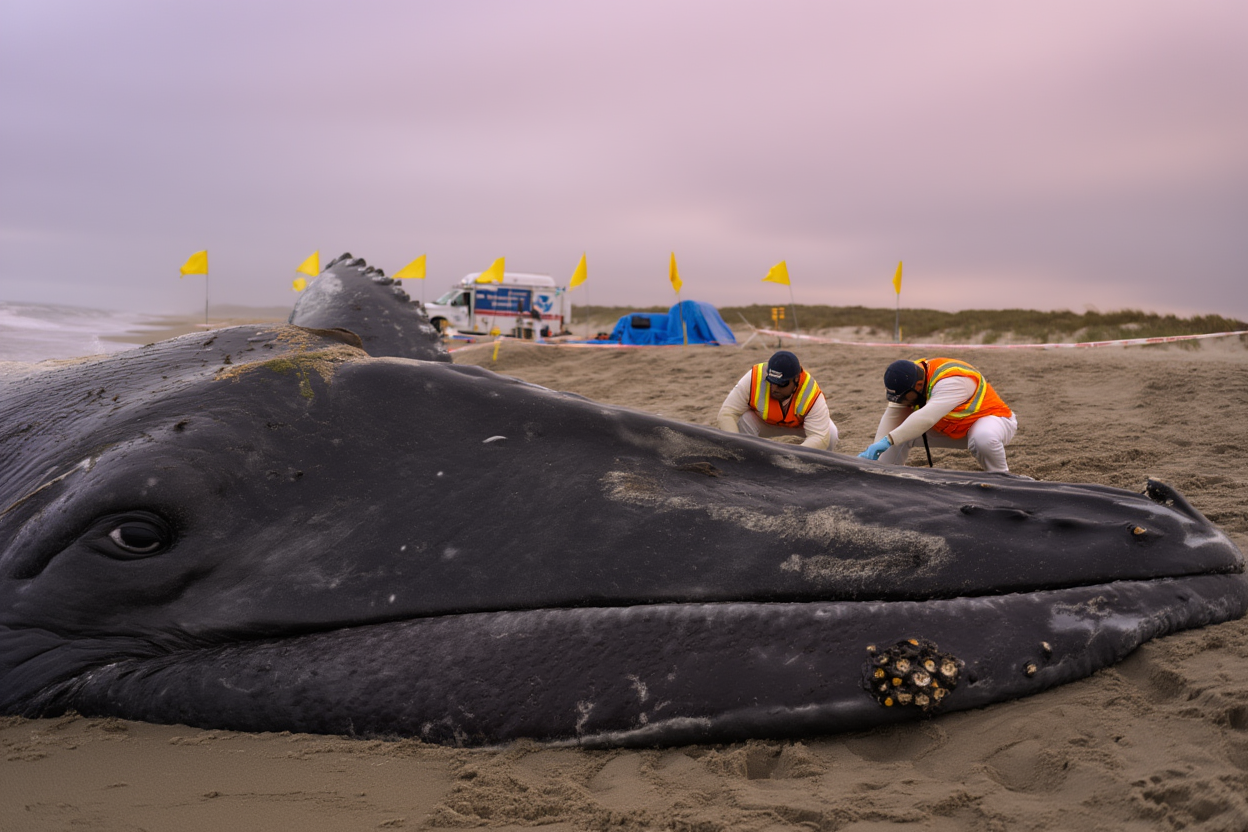
Early assessments indicate the whale was severely undernourished. Scientists warn that changes in ocean conditions, warming waters, and declining prey availability may be contributing to such events.
A necropsy is now underway to determine the precise cause of death, and local authorities along with indigenous tribes are managing the site with respect and care, allowing nature to reclaim the whale in the coastal ecosystem.
A sobering reminder
Even the largest ocean giants are not immune to environmental stressors. This tragic loss underscores the fragility of marine ecosystems and the urgent need for conservation efforts to protect whales and their habitats.