TIMMY THE HUMPBACK WHALE RETURNED TO THE SEA — AND THE DECISION IS SPARKING GLOBAL DEBATE
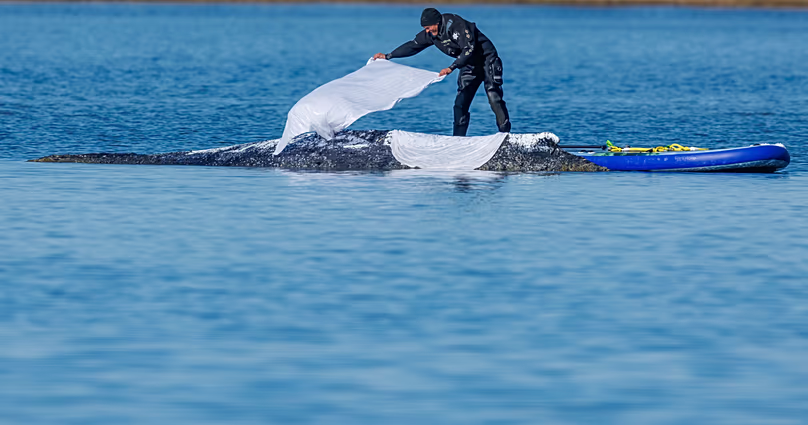
TIMMY THE HUMPBACK WHALE RETURNED TO THE SEA — AND THE DECISION IS SPARKING GLOBAL DEBATE
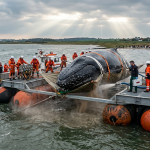
After weeks of capturing worldwide attention, Timmy, the famous humpback whale last seen near the coasts of Northern Europe, will not be preserved or displayed in a museum. Instead, authorities have decided to let Timmy’s body decompose naturally in the ocean.
The decision has immediately divided public opinion:
- Some ecologists and wildlife enthusiasts see it as a “return to nature,” a way to minimize human impact on marine ecosystems.
- Others express disappointment: “Was Timmy abandoned? The chance to study or honor him is gone”
Why authorities chose this path
Experts explain that preserving or displaying a massive whale like Timmy is not only extremely costly, often running into millions of dollars, but also poses serious biological risks if not handled properly. Moreover, a whale carcass in the wild provides vital nutrients for marine life, contributing to the natural ecological cycle.
Global reactions
Social media erupted with thousands of comments and debates:
- “Nature-first” advocates: “Letting Timmy return to the sea is the right choice. Nature will recycle his life and teach us about the circle of life.”
- Research and memorial advocates: “We lost a unique opportunity to learn from him or create a living museum for future generations.”
The burning question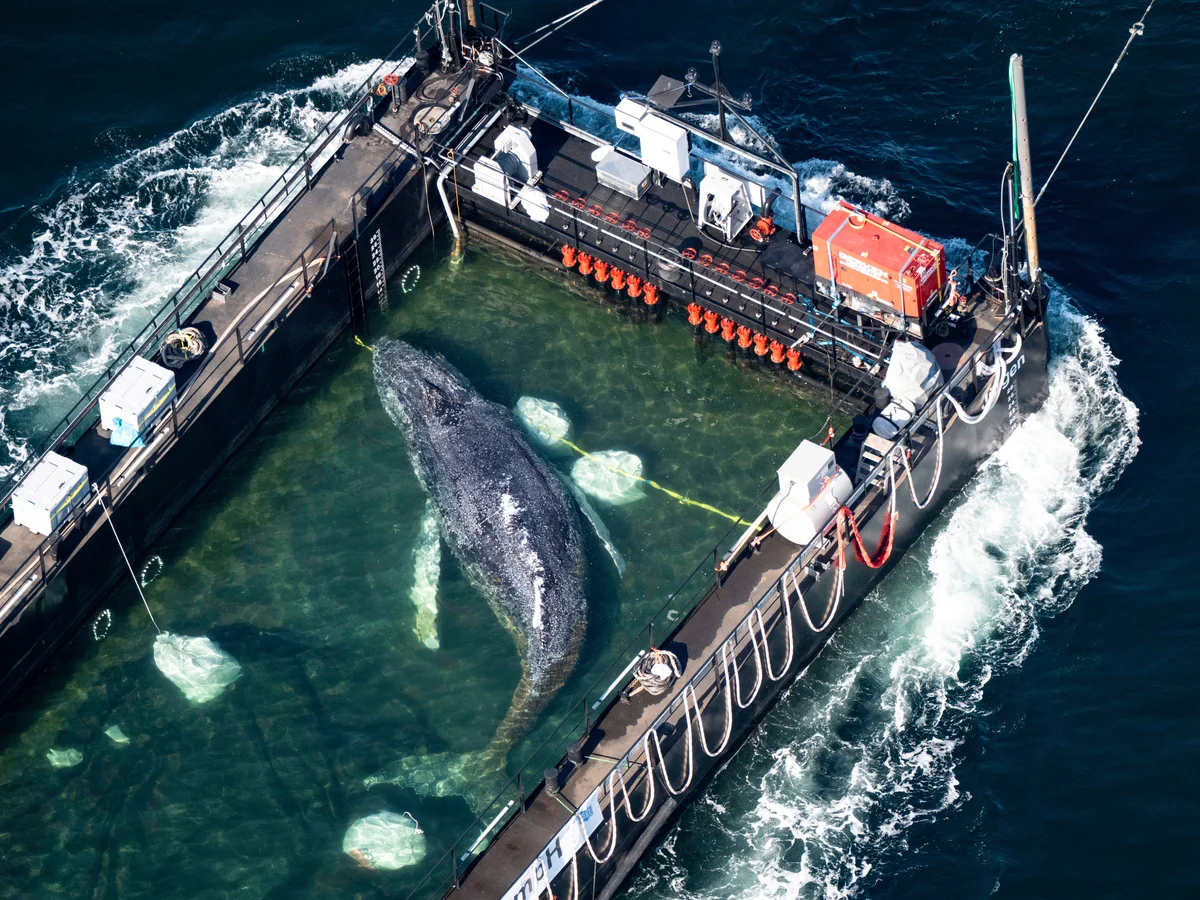
Which approach is truly right: intervene and preserve, or respect nature and let it take its course?
Marine biologists emphasize that Timmy’s story is more than just about one whale. It’s a reminder of the delicate balance between humans and the ocean, and of the choices we make between intervention and respect for the natural world.
Though Timmy is gone, his story lives on online, in the hearts of ocean lovers, and in every global debate about wildlife conservation.