One Wrong Turn: How a Navigation Error May Have Led to a Deadly Maldives Cave Diving Tragedy 🌊💔
One Wrong Turn: How a Navigation Error May Have Led to a Deadly Maldives Cave Diving Tragedy 🌊💔
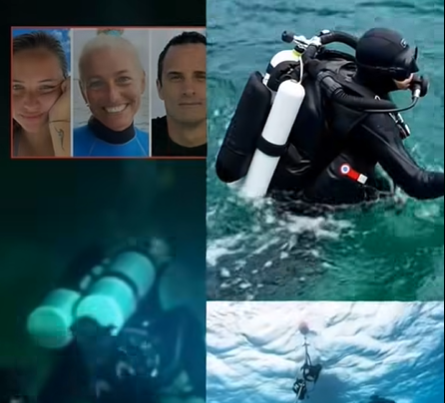
New details continue to emerge about the devastating cave-diving tragedy in the Maldives that claimed the lives of five Italian divers, leaving the international diving community searching for answers.
According to information being examined by investigators and recovery specialists, the group may have become disoriented deep inside an underwater cave system after visibility reportedly deteriorated to near-zero levels.
What began as an exploration dive may have transformed into a desperate struggle for survival in one of the most unforgiving environments on Earth.
Cave diving is widely considered among the most technically challenging forms of diving. Unlike open-water dives, there is no direct route to the surface in an emergency. Divers must navigate complex passageways and carefully follow predetermined routes back to an exit while managing limited air supplies.
When visibility disappears, even experienced divers can face extraordinary challenges.
Recovery experts believe that conditions inside the cave may have changed rapidly after sediment was disturbed, creating what divers refer to as a “silt-out.” In such situations, suspended particles can reduce visibility to almost nothing, making it extremely difficult to identify cave walls, guide lines, or exit passages.
Investigators now suspect that the divers may have unintentionally entered a narrow dead-end tunnel while attempting to locate the correct route back to safety.
At depths approaching 60 meters (nearly 200 feet), mistakes can become deadly within minutes.
The deeper a diver travels, the more limited their options become. Increased pressure, reduced visibility, complex navigation requirements, and finite breathing gas supplies combine to create an environment where even a small error can have catastrophic consequences.
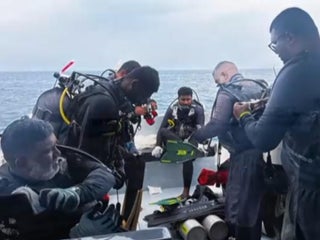
Recovery teams later located the victims inside the cave system, prompting an extensive investigation into what exactly occurred during the dive.
While authorities have not yet released a final report, experts studying the available evidence believe disorientation may have played a significant role in the tragedy. Investigators are continuing to analyze dive-computer data, environmental conditions, cave maps, and other evidence in an effort to reconstruct the group’s final movements.
The incident has sent shockwaves through diving communities around the world.
Many experienced cave divers have described the tragedy as a stark reminder of the risks associated with underwater cave exploration, where darkness, depth, and complex terrain can quickly transform a routine dive into an emergency.
For the families of those who lost their lives, the search for answers continues.
And for the global diving community, the tragedy serves as a sobering lesson about the unforgiving nature of underwater cave environments, where a single wrong turn may be all it takes to change everything.
🕊️ As investigators continue their work, divers around the world are honoring the memory of the five lives lost in one of the most heartbreaking underwater tragedies in recent years.
#Maldives #DivingTragedy #CaveDiving #OceanSafety #Investigation #RememberingTheVictims #UnderwaterExploration #BreakingNews #DivingCommunity #RestInPeace