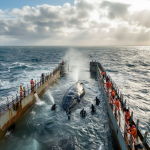
Against All Odds: Stranded Whale Rescued After Race Against Time on Australian Sandbar
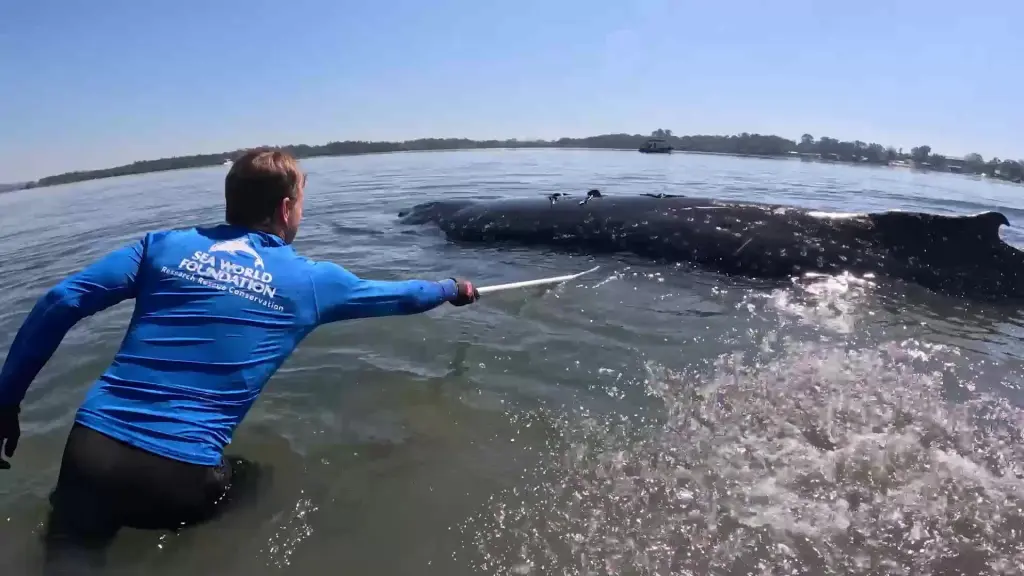
Against All Odds: Stranded Whale Rescued After Race Against Time on Australian Sandbar
What began as an ordinary day on Australia’s coastline quickly turned into a dramatic rescue mission when a whale was discovered stranded on a remote sandbar, fighting for its life as the tide slipped away.
The enormous marine mammal, separated from deeper waters, lay trapped under the sun while concerned beachgoers watched helplessly. With every passing hour, the whale’s chances of survival diminished, triggering an urgent response from wildlife rescuers, marine experts, and local volunteers.
A Giant in Trouble
Witnesses first spotted the whale resting awkwardly on the exposed sandbar during low tide. At first, some believed it was simply resting. But as time passed and the animal remained stuck, it became clear that the whale was in serious danger.
For whales, becoming stranded can be a life-threatening emergency. Unlike humans, their massive bodies are designed to be supported by water. When trapped on land, their own weight can compress vital organs, restrict blood circulation, and cause extreme stress.
“The clock immediately starts ticking when a whale is stranded,” explained one marine rescue volunteer. “Every minute matters.”
Rescue Teams Rush Into Action
Emergency responders quickly arrived at the scene, assessing the whale’s condition and developing a plan to return it safely to the ocean.
Volunteers formed teams around the animal, continuously pouring buckets of seawater over its skin to prevent dehydration and overheating. Others used tarps to create shade from the intense Australian sun.
The rescue operation was complicated by shifting sands, changing tides, and the sheer size of the whale. Moving an animal that can weigh several tons is never simple, and rescuers had to be extremely careful to avoid causing additional stress or injury.
Despite the challenges, nobody was willing to give up.
Hope Arrives With the Tide
As rescuers worked tirelessly, all eyes turned toward the ocean.
The incoming tide offered the best chance to free the stranded whale. Teams positioned themselves strategically, waiting for the water level to rise high enough to help support the animal’s weight.
Then came the breakthrough.
As waves gradually surrounded the whale, rescuers gently guided it toward deeper water. The giant creature began responding, moving its tail and adjusting its position.
Cheers erupted along the shoreline.
Slowly but surely, the whale regained its buoyancy and started swimming under its own power.
An Emotional Goodbye
For those who spent hours fighting to save the animal, watching it disappear into the open sea was an unforgettable moment.
Some rescuers hugged each other. Others wiped away tears.
“It was incredible,” one volunteer said afterward. “You spend hours wondering if it’s going to survive, and then suddenly you see it swimming free again. That’s why we do this.”
Videos of the rescue quickly spread online, drawing praise from people around the world who celebrated the successful outcome.
Why Strandings Happen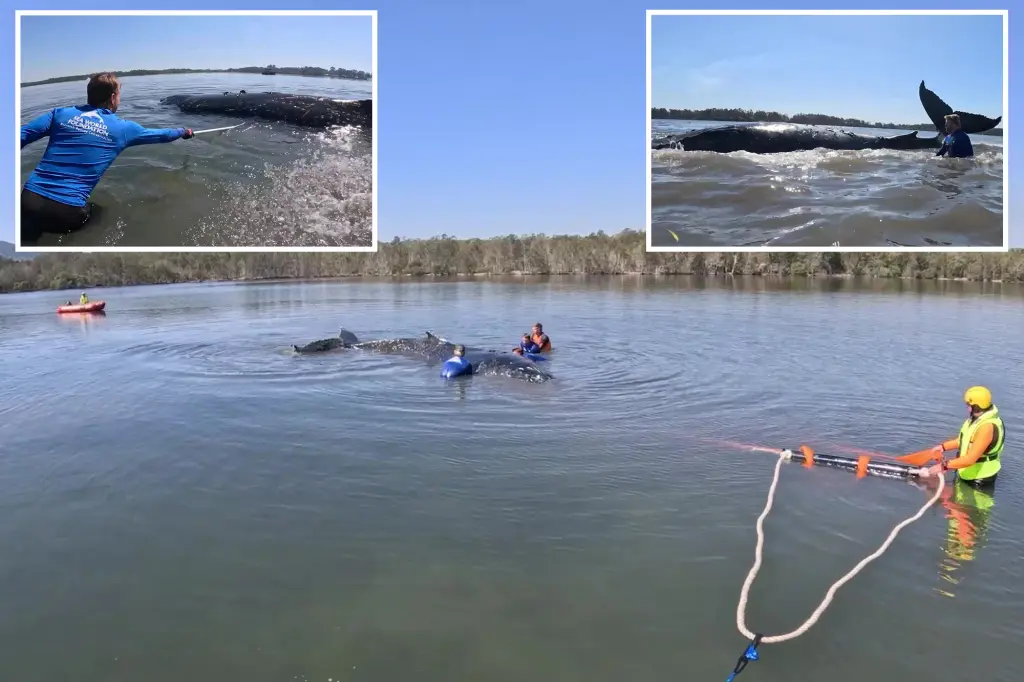
Scientists say whale strandings can occur for many reasons, including illness, injury, navigation errors, extreme weather, changing ocean conditions, or disturbances caused by underwater noise.
While some stranded whales can be saved, others are not as fortunate, making every successful rescue especially meaningful.
A Victory for Wildlife
The rescue serves as a powerful reminder of how much can be achieved when communities come together to protect vulnerable wildlife.
For one whale, what could have ended in tragedy became a story of survival, determination, and compassion.
As the sun set over the Australian coast and the ocean reclaimed its wandering visitor, the people who helped save its life were left with a memory they will never forget—a moment when humanity and nature worked together, and a giant of the sea was given a second chance.