Against the Tide: Stranded Whale in Australia Saved in Daring Rescue
Against the Tide: Stranded Whale in Australia Saved in Daring Rescue
ale stranded on a remote sandbar along the New South Wales coast has become the center of a remarkable rescue effort, highlighting both the fragility of marine life and the dedication of human rescuers.
A Race Against Time
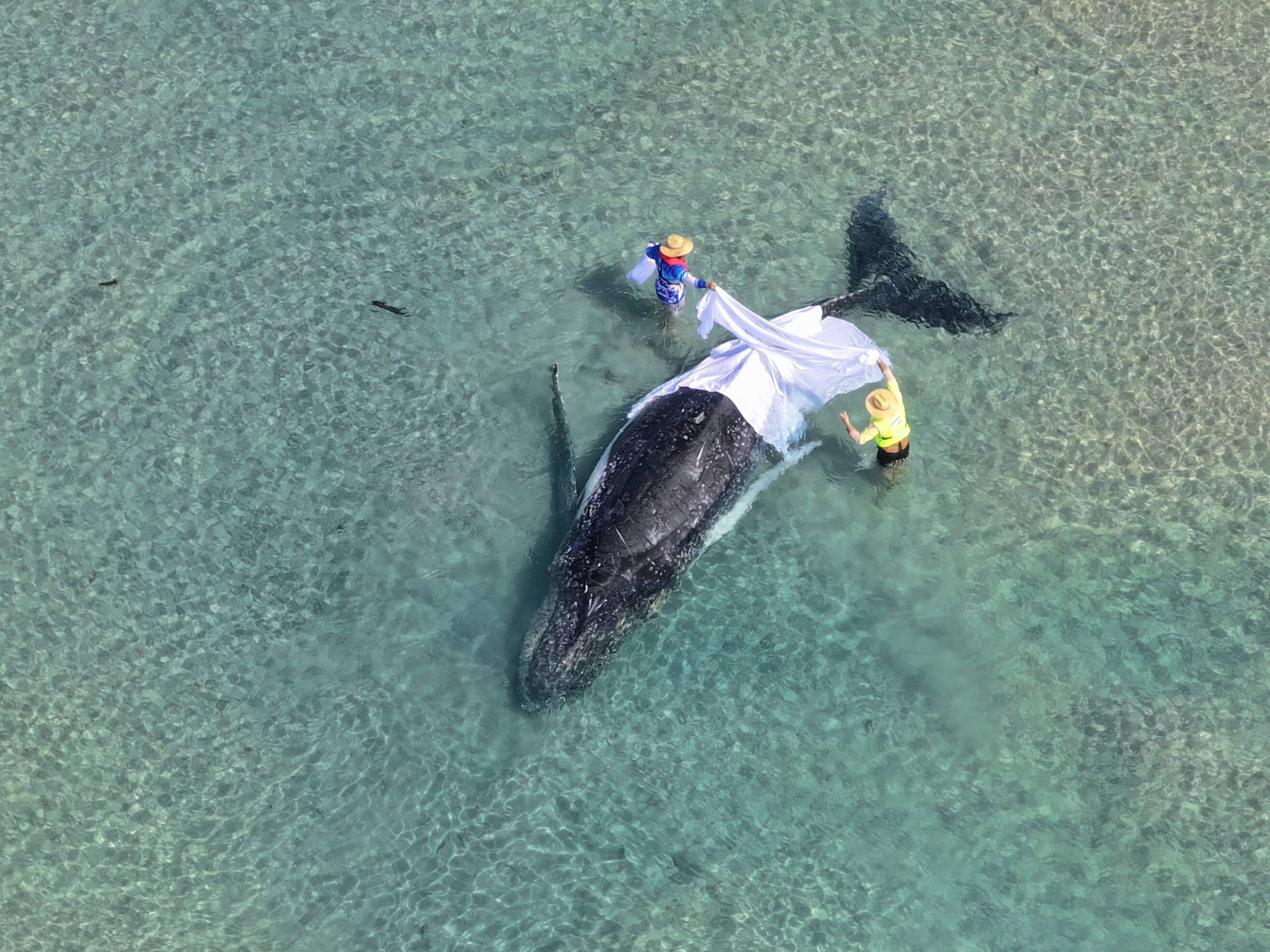
The massive whale, estimated at over 12 meters in length, was discovered lying helplessly on the sand as the tide receded. “It was terrifying and heartbreaking,” recalled a local resident. “It kept moving its head and thrashing slightly, but it couldn’t get back to the water on its own.”
Experts warn that when whales are stranded, their own immense weight can crush organs and lead to rapid deterioration. Exposure to the sun can further harm their delicate skin, making swift intervention essential.
Mobilizing a Rescue
Upon receiving reports, local wildlife rescue teams, volunteers, and marine biologists quickly converged at the site. Buckets of seawater were continuously poured over the whale’s skin to keep it moist, while makeshift shades were erected to shield it from the hot sun.
Using cranes, pontoons, and specially designed slings, rescuers carefully prepared to move the whale back into the water. Timing was critical: the tide had to be just right to lift and guide the whale safely without causing injury.
The Dramatic Moment
After hours of tense effort, the tide finally rose high enough. The rescue team worked in unison, gently nudging the whale toward deeper water. Slowly, the creature began responding, moving its tail and gliding as the current carried it away from the sandbar.
Witnesses erupted in cheers, some crying openly at the sight of the whale returning to the ocean. “It was incredible,” said Emily Thompson, one of the rescuers. “You spend hours feeling anxious, wondering if you’ll succeed. And then, suddenly, it’s back in the water—alive, free, and powerful.”
A Triumph for Wildlife and Community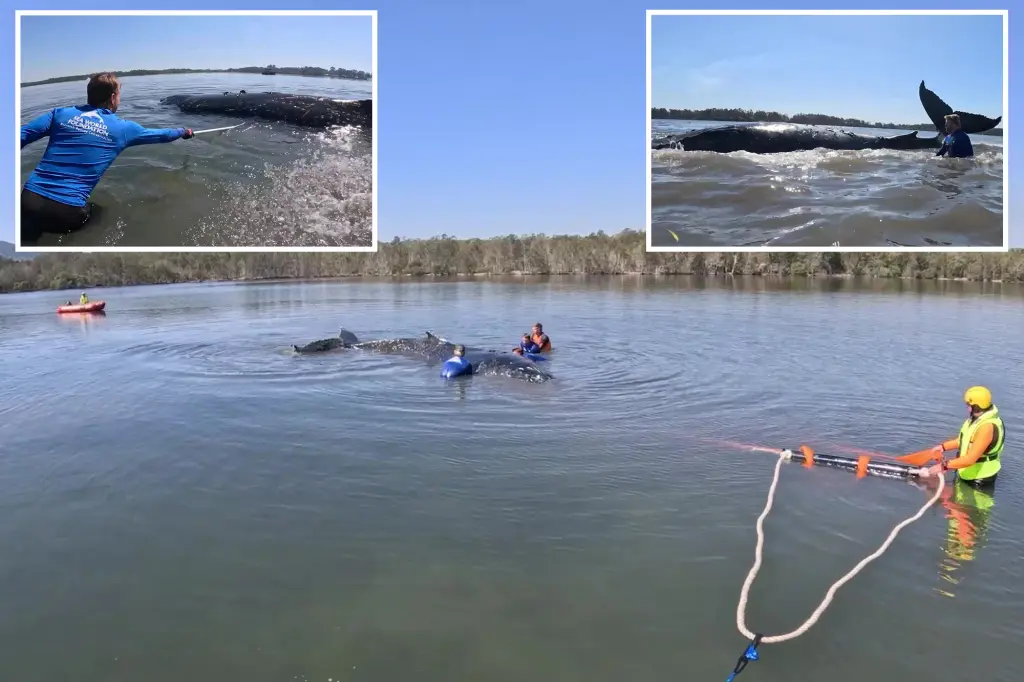
The successful rescue demonstrates the power of human compassion and teamwork. Residents, volunteers, and experts worked together seamlessly, showcasing how communities can make a real difference for vulnerable wildlife.
“This whale is more than an individual animal,” said marine biologist Mark Reynolds. “It represents the health of our oceans and the responsibility we all share to protect it.”
The whale has now returned to deeper waters and continues to be monitored for its health. The rescue has inspired people worldwide, reminding everyone that even in the face of nature’s challenges, determination, expertise, and compassion can save lives.