50 Meters Below the Surface… The Exit Simply Vanished: Inside the Vaavu Atoll Cave Diving Tragedy
50 Meters Below the Surface… The Exit Simply Vanished: Inside the Vaavu Atoll Cave Diving Tragedy
What began as an ambitious underwater exploration in the Maldives has become one of the most chilling diving disasters in recent memory.
As investigators continue reviewing evidence from the tragedy at Vaavu Atoll, emerging details are shedding light on the extraordinary dangers faced by cave divers operating far beneath the ocean’s surface.
The deeper authorities look into the incident, the more one haunting possibility continues to stand out:
What if the divers simply could no longer find their way back?
A Descent Into the Unknown
Cave diving is widely regarded as one of the most technically demanding and dangerous activities in the world.
Unlike open-water diving, a cave environment offers no direct route to the surface. Divers must navigate narrow passages, complex tunnel systems, and unfamiliar terrain while carefully managing air supplies and maintaining orientation.
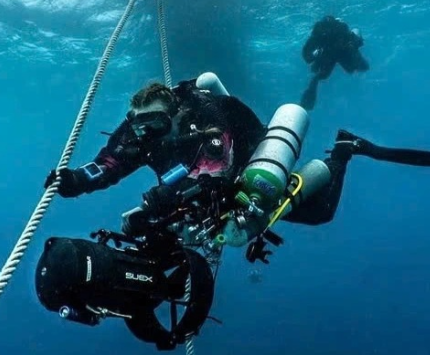
Reports indicate that the team involved in the Vaavu Atoll expedition descended to depths exceeding 50 meters (164 feet), placing them in an environment where even small mistakes can rapidly become life-threatening.
At such depths, pressure increases dramatically, and conditions can change with little warning.
When Visibility Disappears
Experienced cave divers often describe visibility as one of their most important survival tools.
Yet in underwater cave systems, visibility can vanish almost instantly.
A single misplaced fin kick can disturb layers of fine sediment resting on the cave floor. Once suspended in the water, those particles can create what divers call a “silt-out”—a condition in which visibility drops to near zero.
In complete darkness and without visual references, even experienced divers can become disoriented.
Investigators reviewing the conditions inside the cave have reportedly considered whether sediment disturbance may have played a role in the tragedy.
If visibility deteriorated suddenly, identifying the correct exit route could have become extraordinarily difficult.
A Maze Beneath the Ocean
Underwater cave systems are often compared to labyrinths.
Passages may split into multiple directions, narrow unexpectedly, or loop through chambers that appear nearly identical to one another.
In many cases, divers rely on guide lines, training, and constant situational awareness to safely return to the entrance.
Experts note that when confusion occurs at significant depths, every minute becomes critical.
Air reserves diminish. Stress levels rise. Decision-making can become increasingly difficult.
In such conditions, losing sight of an exit route—even briefly—can quickly escalate into an emergency.
Recovery Efforts Reveal a Tragic Reality
Recovery operations have helped investigators better understand the environment in which the divers were operating during their final moments.
While officials continue examining evidence, the findings underscore just how unforgiving underwater cave systems can be.
The tragedy has sparked renewed discussion throughout the diving community regarding risk management, navigation procedures, and the unique hazards associated with deep cave exploration.
Many experts emphasize that even highly trained divers remain vulnerable when conditions deteriorate unexpectedly.
The Question That Still Haunts Investigators
As more information becomes available, one question continues to linger.
At what point did the situation become irreversible?
Did the divers recognize that they had lost visual contact with their route to safety?
Were they searching for an exit that was only meters away but impossible to see?
Or did rapidly changing conditions leave them with no opportunity to recover their bearings?
Investigators may never know every detail of what occurred during those final minutes beneath the surface.
What is clear, however, is that a routine expedition transformed into a devastating tragedy deep within one of the ocean’s most unforgiving environments.
And for many who have followed the story, the most unsettling thought remains the simplest one:
The way out may have been there all along—hidden somewhere in the darkness, just beyond sight.