The Bus Driver Who Refused to Let One Boy Ride Alone
The Bus Driver Who Refused to Let One Boy Ride Alone
Mr. Elias Thompson had been driving the same school bus route for eighteen years. Route 7 wound through the quiet streets of Willow Creek, picking up kids from kindergarten through high school. At fifty-eight, Eli knew every pothole, every turn, and almost every child’s name.
He also carried a grief that most people on his route never knew about.
Twenty-two years earlier, his seven-year-old daughter Lily had died after a long battle with a rare illness. Toward the end, other children had stopped playing with her. Some parents kept their kids away, afraid of something they didn’t understand. Eli had watched his little girl sit alone on the playground more times than he could count.
He never talked about it. Not until the day he saw Noah.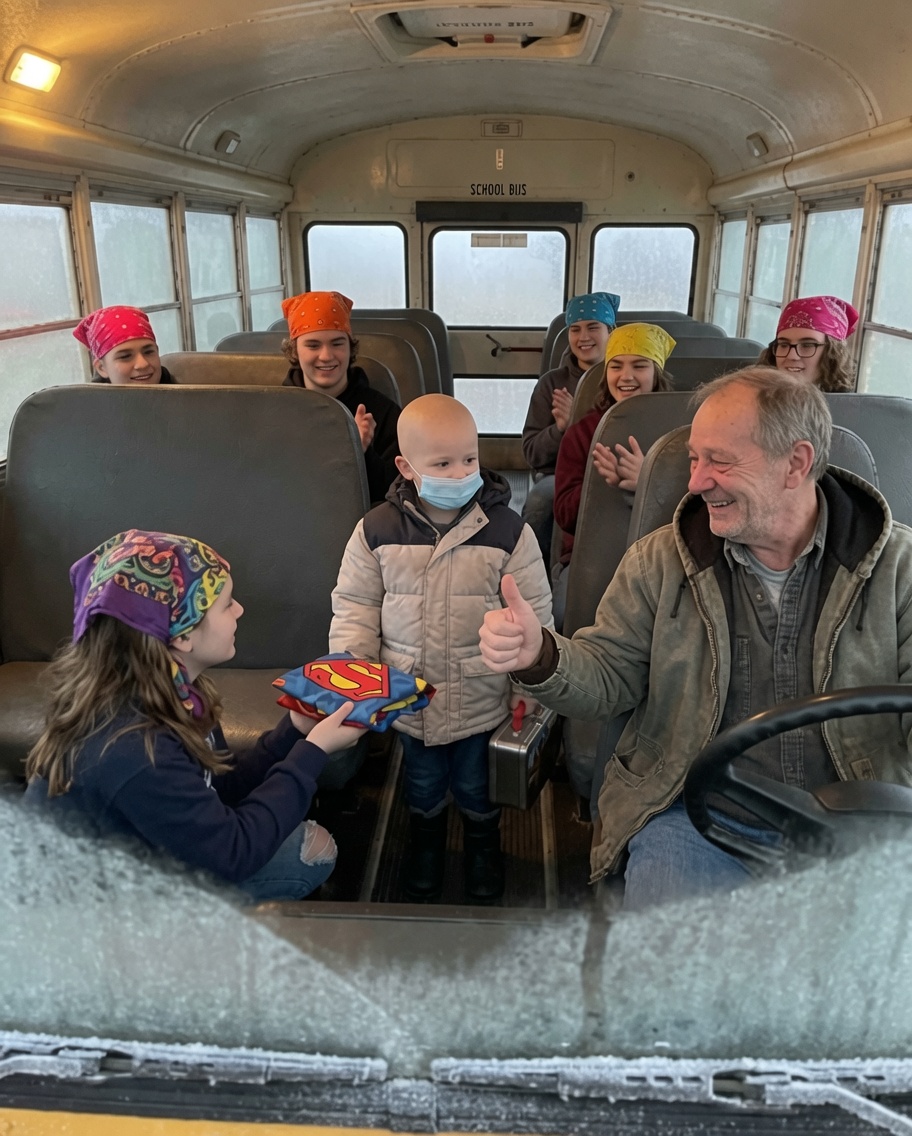
Noah was eight years old and in second grade. He had returned to school three weeks earlier after months of treatment for a serious heart condition. He was small for his age, moved slowly, and sometimes needed to rest during recess. On the bus, the older kids had started avoiding the seat next to him. They would slide over, put their backpacks down, or suddenly “need” to sit with someone else. By the second week, Noah was sitting by himself every single morning and afternoon, staring out the window with his small hands gripping the straps of his backpack.
Eli saw it all in his rearview mirror.
For three days he said nothing. On the fourth day, when he watched a group of fifth graders physically shift away as Noah tried to find a seat, something inside him broke.
He pulled the big yellow bus onto the gravel shoulder, turned on the hazard lights, and stood up.
The bus went quiet.
Eli walked down the aisle until he reached Noah’s seat. He knelt down so he was at the boy’s eye level.
“Would you like to sit up front with me today, Noah?” he asked gently.
Noah nodded without speaking.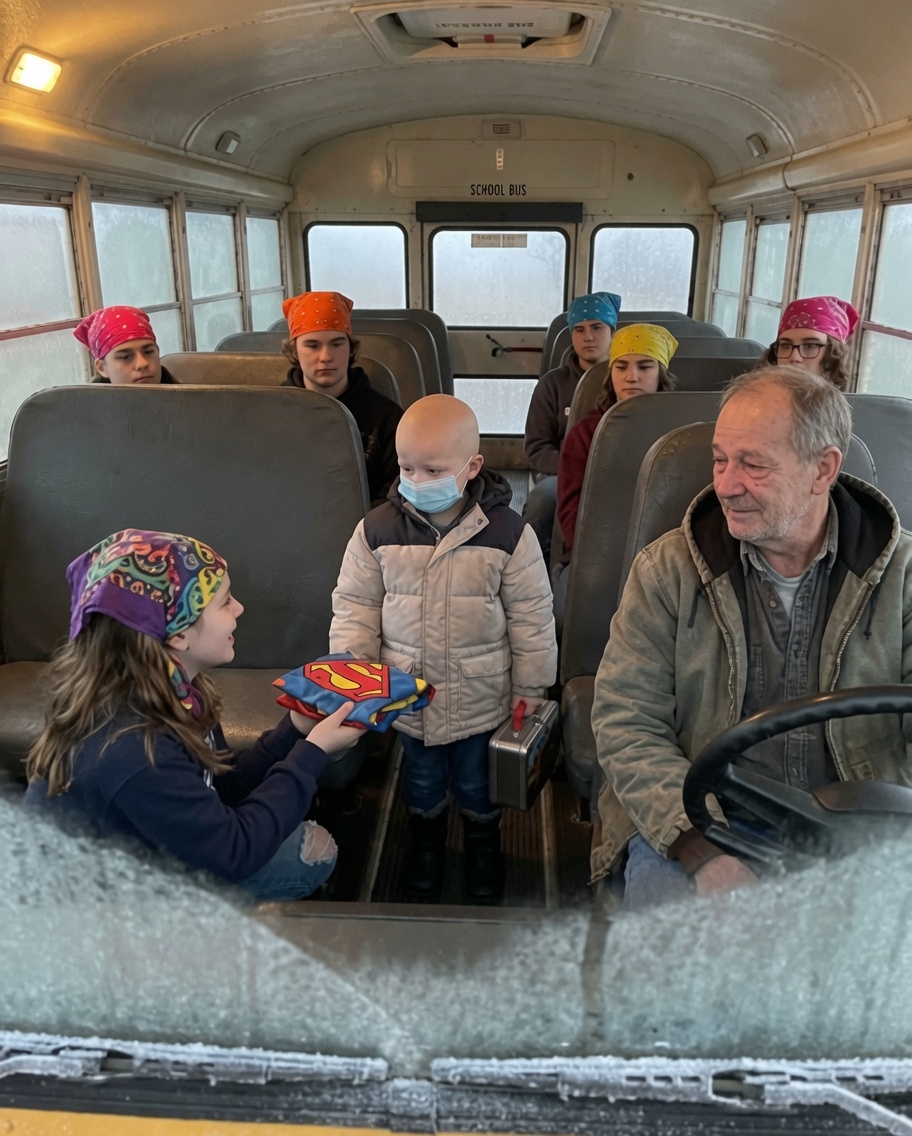
Eli guided him to the seat right behind the driver’s seat and made sure he was buckled in safely. Then he turned to face the rest of the bus.
“I need to tell you all something,” he said, his voice steady but thick. “When my daughter Lily was seven, she got very sick. A lot of kids stopped sitting with her. They didn’t mean to be cruel. They were scared. But she still had to ride the bus, and she still had to sit alone.”
He paused, looking at each of the older students.
“Noah isn’t contagious. He’s not dangerous. He’s just a little boy who’s been through a lot and is trying to come back to school like everyone else. From now on, nobody on this bus rides alone unless they choose to.”
He didn’t raise his voice. He didn’t need to.
The next morning, something changed.
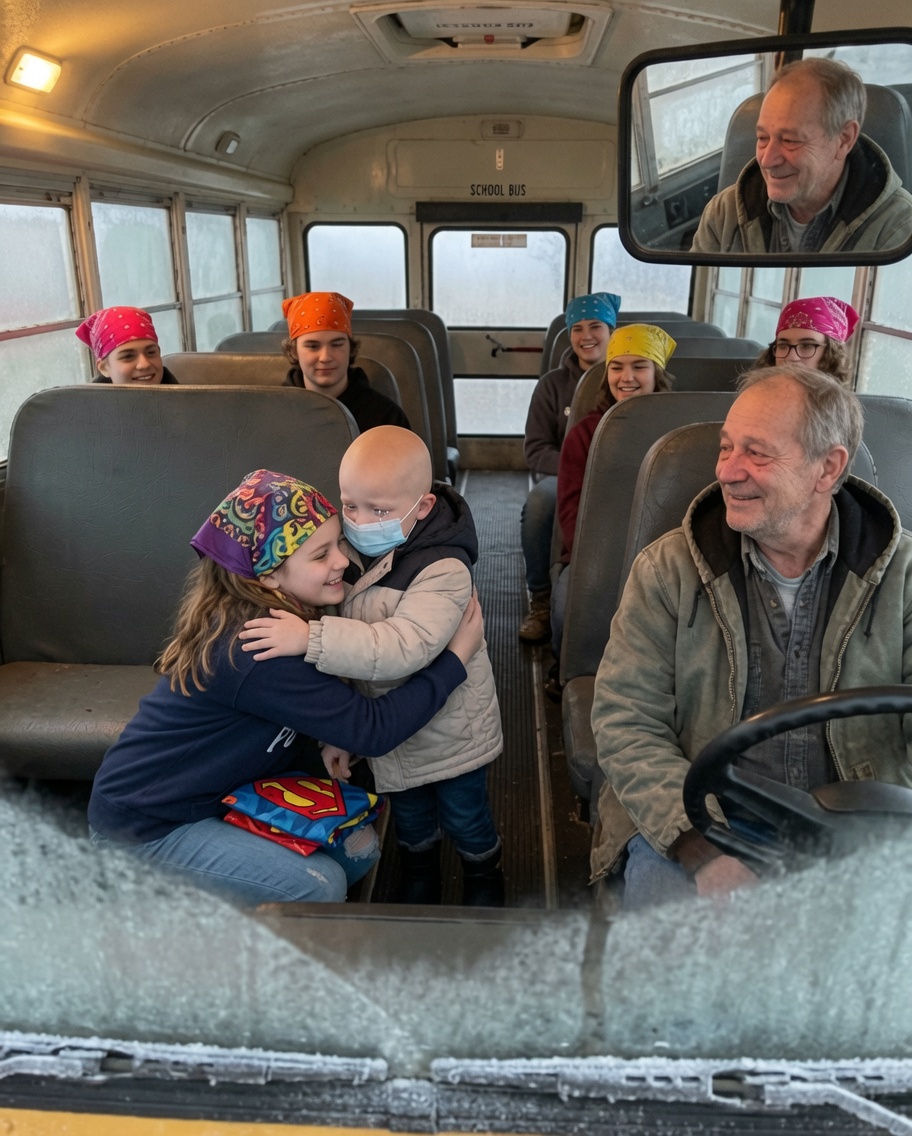
When the bus stopped at the middle school, three older girls got on wearing bright blue ribbons pinned to their jackets. By the time they reached the elementary school, half the bus was wearing them. One of the fifth-grade boys — the same one who had moved away the day before — quietly asked Noah if he could sit next to him.
Noah looked up, surprised, then nodded.
By the end of the week, the seat next to Noah was almost never empty.
A photo of the bus full of students wearing blue ribbons was shared in a local parents’ group. Within two days it had spread across town. People started calling Eli a hero. Others said he had gone too far by bringing up his dead daughter in front of children.
The transportation supervisor, Mrs. Langford, called him into her office.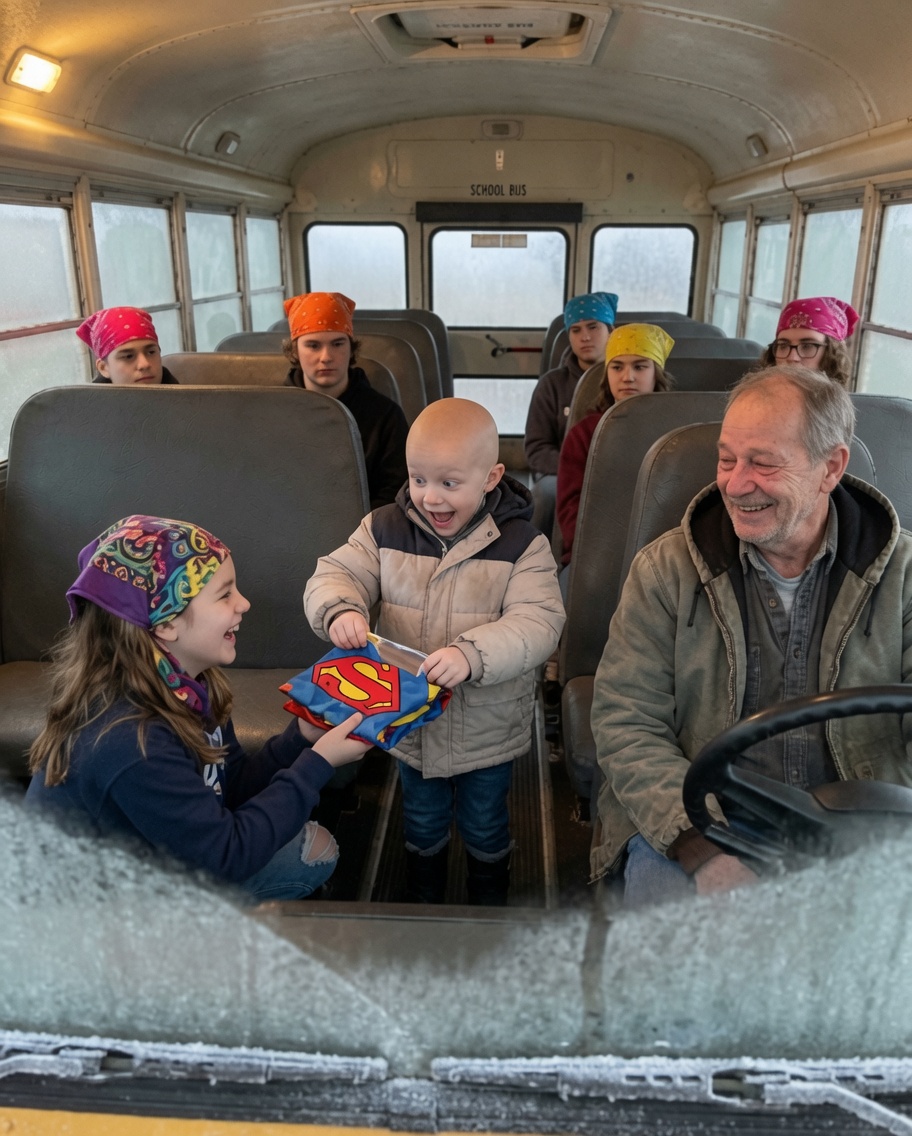
“You shared personal medical information about a student,” she said. “And you shared your own grief. There are procedures for these situations.”
Eli nodded. “I know the procedures. I also know what it feels like to watch a child sit alone because everyone is afraid of what they don’t understand.”
He was given a formal warning and told to stick to driving. No more speeches.
But something had already shifted.
At the next school board meeting, parents and students showed up. Some defended Eli. Some said he had overstepped. A quiet sophomore girl stood up and admitted she had been one of the kids who moved away from Noah on the first day.
“I was scared,” she said simply. “I didn’t know what to do. Mr. Thompson made it simple. He showed us what to do.”
The school eventually started something small but lasting. Every Monday, they called it “Middle Seat Monday.” Any child who wanted company could sit in the middle section of the bus, and older students were encouraged to join them. It wasn’t a rule. It was just an invitation.
Noah still sometimes needed space. On those days he sat behind Eli, and no one bothered him. On other days he chose to sit with friends.
One Friday afternoon, as the last of the elementary kids were getting off, Noah handed Eli a folded piece of paper before stepping down.
It was a drawing of the yellow bus. In the front seat sat a man with gray hair. In the seat behind him was a small boy. And in the very back row, almost hidden, was another small figure wearing a blue cap.
At the bottom, in careful second-grade handwriting, Noah had written:
“Nobody rides alone. Not even Lily.”
Eli sat in the parked bus long after everyone had gone home, holding the drawing with both hands.
He had spent twenty-two years carrying his grief quietly.
It turned out the best way to honor his daughter was to make sure no other child had to carry theirs alone.