I’m Tamsin Vale, 31, and I let a muddy farmer drive away with my twins because his old dog knew we were drowning.
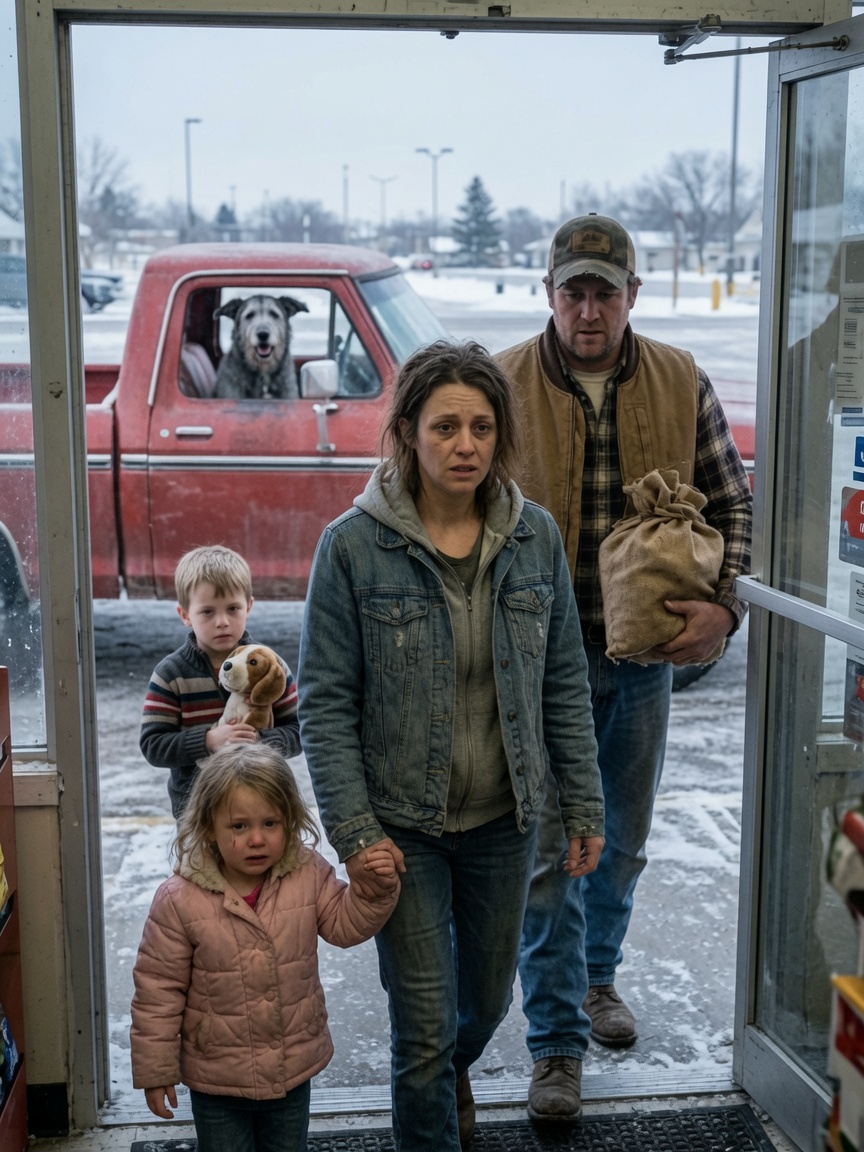
I turned around—and the stranger standing there was the kind of man every mother is told not to trust: tall as a barn door, shoulders broad from years of hauling hay bales and fence posts, his flannel shirt faded and streaked with red clay, boots caked so thick with mud they looked like they’d been dipped in the earth itself. A week-old beard shadowed his jaw, and there was a scar across one eyebrow that pulled when he frowned. But his eyes—steady hazel, the color of wet river stones—didn’t flinch. They looked straight at me, then at Roan’s trembling lip, then at Blythe’s tired whine, like he’d seen this exact kind of heartbreak before and refused to walk past it again.
“Leave the dog food,” he repeated, voice low and rough like gravel under truck tires. “And the milk. And those little crackers the girl keeps eyeing.” He stepped forward, pulled a worn leather wallet from his back pocket, and handed the cashier a fifty without waiting for my protest. “Put it on my tab, Marlene. Whole order.”
I opened my mouth—pride, shame, and that bone-deep exhaustion all crashing together—but he just shook his head once, gentle. “Name’s Elias Crowe. Got a place up on Ridge Road, past the old mill. My old dog Scout out there in the truck? He’s been watching you three since you pulled in. He don’t bark at much anymore, but he barked at your boy’s stuffed pup like they were old friends. Figured that meant something.”
Roan’s eyes went wide. He clutched his one-eared dog tighter, but a tiny smile broke through. Blythe, who never met a stranger she didn’t want to hug, reached her chubby arms toward the window where an old golden retriever mix sat patiently in the passenger seat of a battered blue Ford, tail thumping slow and wise against the seat.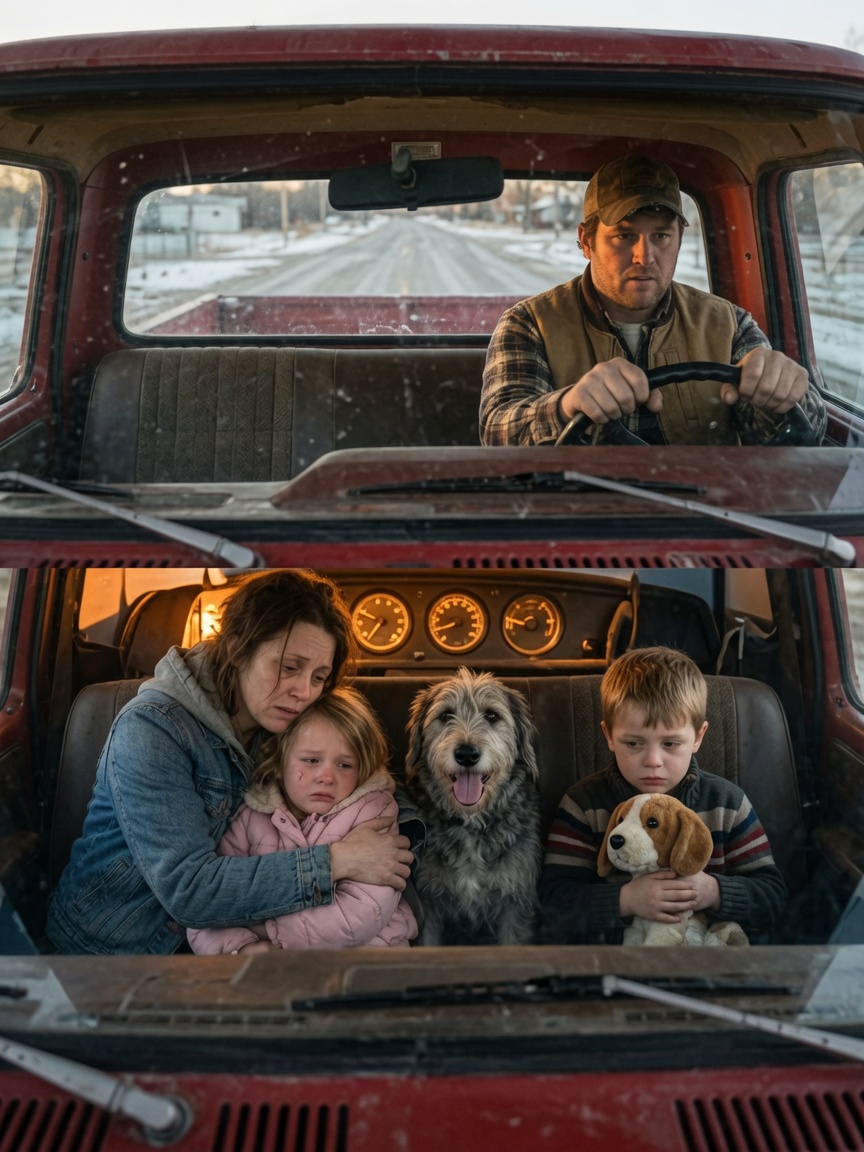
The cashier scanned everything faster than I’d ever seen. Elias even added two chocolate milks and a bag of dog treats “for Button and Scout to share.” When I tried to thank him, he just loaded the bags into my arms like it was the most natural thing in the world. Outside, the wind had picked up, carrying the smell of coming rain. He walked us to my rusty Civic, Scout hopping down to greet the twins with a soft, rumbling woof that made Blythe giggle like bells and Roan finally let go of my leg.
That was the first crack in the wall I’d built so high around us.
The next days blurred, but Elias kept showing up in the smallest, kindest ways. A dozen fresh eggs on my porch with a note in blocky handwriting: “Kids need protein. Scout says hi.” Then a sack of potatoes and carrots, enough for three meals. One afternoon he appeared at the pharmacy counter during my shift, buying cough syrup for “the barn cats” (we both knew there weren’t any sick cats), and quietly paid the difference on my own tab when the register dinged short again. He never pushed. Never asked for anything. Just talked low to the twins about how Scout could smell rain three days early, how he once dug a lost lamb out of a collapsed culvert when everyone else had given up.
I told myself I was careful. I kept my distance. But Roan started sleeping with the new dog treats under his pillow like treasure. Blythe drew crayon pictures of “Farmer Eee-yass and Big Scout” that she insisted we tape to the fridge. And Button—the stray—finally let us pet him after Scout trotted over one evening and nudged him like, It’s safe now.
Then the sky broke.
It was a Thursday night, the kind where the air feels too heavy to breathe. I was stripping beds at the inn, radio crackling flood warnings for the low river valley where our apartment sat like a sitting duck. Mrs. Valez called at 9:17, voice shaking: water seeping under the door, twins scared, power flickering. I ran out into sheets of rain, my little car hydroplaning before I even reached the end of the motel lot. By the time I turned onto our street, the road was a river. Headlights cut through the downpour, and there was Elias’s old blue truck, high and steady, Scout standing in the bed barking like the world was ending—deep, urgent, the kind of bark that says danger, now, move.
Water lapped at my ankles as I sprinted to the apartment steps. Inside, Roan was clutching his stuffed dog, Blythe sobbing into Mrs. Valez’s arms. The carpet squelched. The smell of wet concrete and fear filled the air. I could hear the river roaring behind the building, closer than it had any right to be.
Elias appeared in the doorway like some muddy guardian angel, rain streaming off his hat. “Scout wouldn’t stop,” he said, voice cutting through the thunder. “Howled till I got in the truck. Knew it was you. Knew it was bad.” The old dog pushed past him, nosing the twins, then me, then back to the door—urgent, circling, eyes locked on the rising water outside like he could see tomorrow’s headlines.
I looked at my babies—so small, so trusting—and at this stranger I barely knew, yet who had already fed us when no one else would. The water was at the second step now. My car was half-submerged. I couldn’t carry both kids and make it to higher ground before the current got worse. But Scout was calm beside Elias, leaning protectively against Roan’s legs, and Elias’s hand was steady when he offered it.
“Give them to me,” he said simply. “Truck’s high. Scout’ll watch them like they’re his own pups. I’ll get them to the ridge—dry, safe, warm. You follow in my wake or stay with the rescue crews if you have to. But they can’t wait, Tamsin.”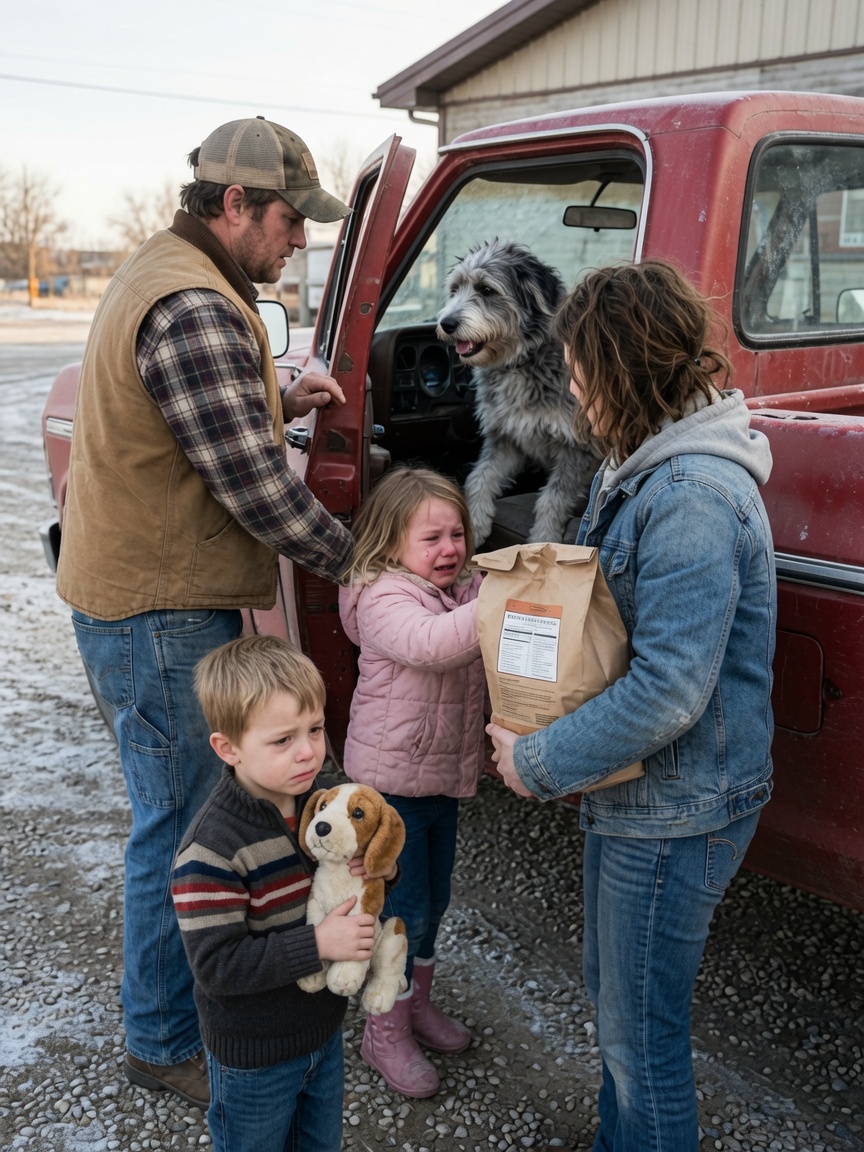
Every instinct screamed no. Every exhausted, terrified cell in me whispered yes.
I kissed their wet cheeks, tasted rain and baby shampoo and the life I’d fought so hard to keep together. “Go with Mr. Elias,” I whispered, voice cracking. “Scout knows the way. Mommy’s right behind.”
Blythe reached for Elias without hesitation, burying her face in his muddy shoulder like she’d been waiting for strong arms that wouldn’t let go. Roan looked back at me once, eyes huge, but he let Scout nudge him up into the truck cab. Elias buckled them in with careful, fatherly hands, then met my gaze through the storm.
“I won’t lose them,” he said. “Scout won’t let me.”
The truck’s taillights cut through the flood like a promise as he drove away—my whole heart in that old cab, protected by a muddy farmer and an old dog who had somehow known, long before any of us, that we were all about to drown.
I stood in the rising water, rain mixing with tears, and for the first time in years, I wasn’t choosing between milk and eggs or gas and fruit.
I was choosing trust.
And somehow, in the middle of the worst night of my life, it felt like the first right choice I’d made in a long, long time.