The security guard hesitated.
- LongVo
- June 29, 2026
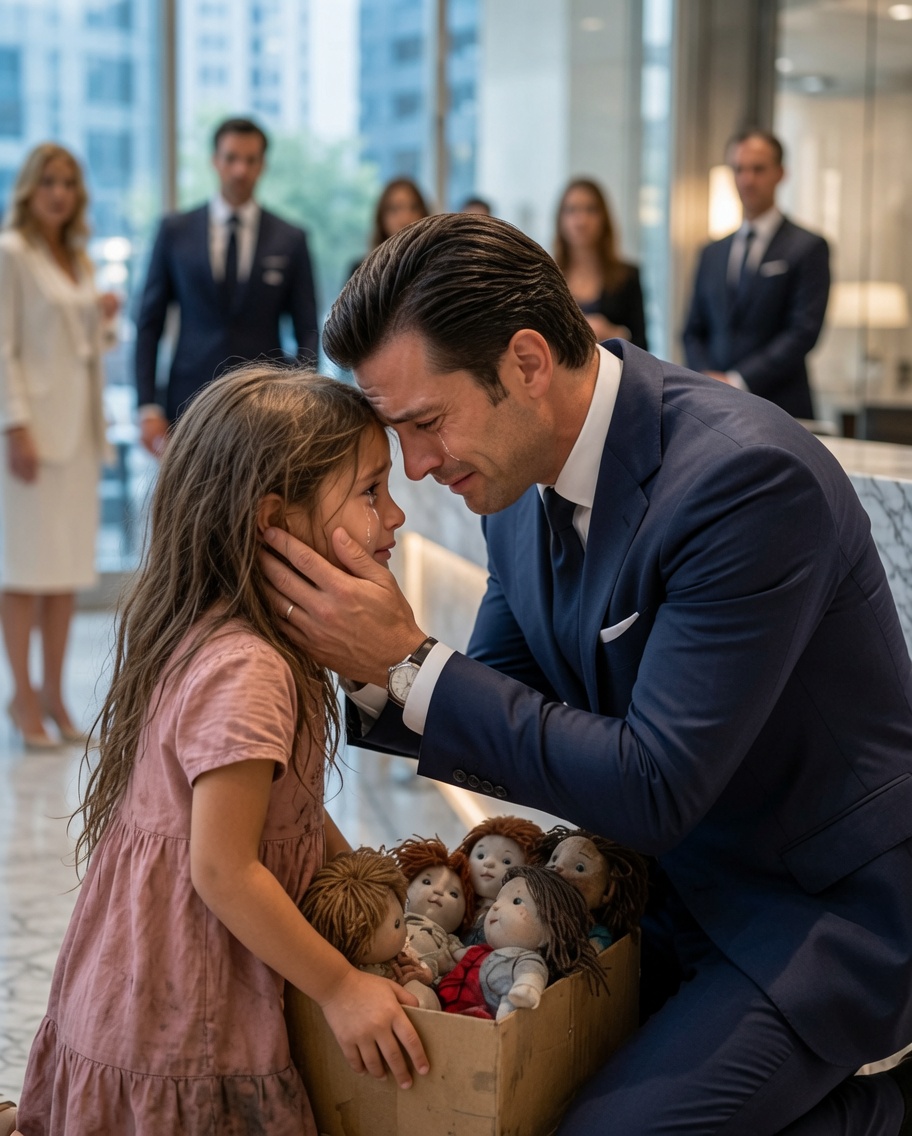
The security guard hesitated.
Not because he didn’t understand his job—but because the man who had just spoken wasn’t someone you ignored.
Ethan Carter.
Everyone in the bank knew the name, even if they had never met him. One of those people who didn’t just sit in buildings like this—he quietly owned stakes in half the companies that made them possible. The kind of billionaire who didn’t need attention, because attention naturally bent toward him.
The guard slowly lowered his hand.
The teller straightened immediately. “Sir, this is just a misunderstanding—”
Ethan didn’t look at him. His eyes stayed on the girl.
“Did anyone ask her why she’s here?” he said.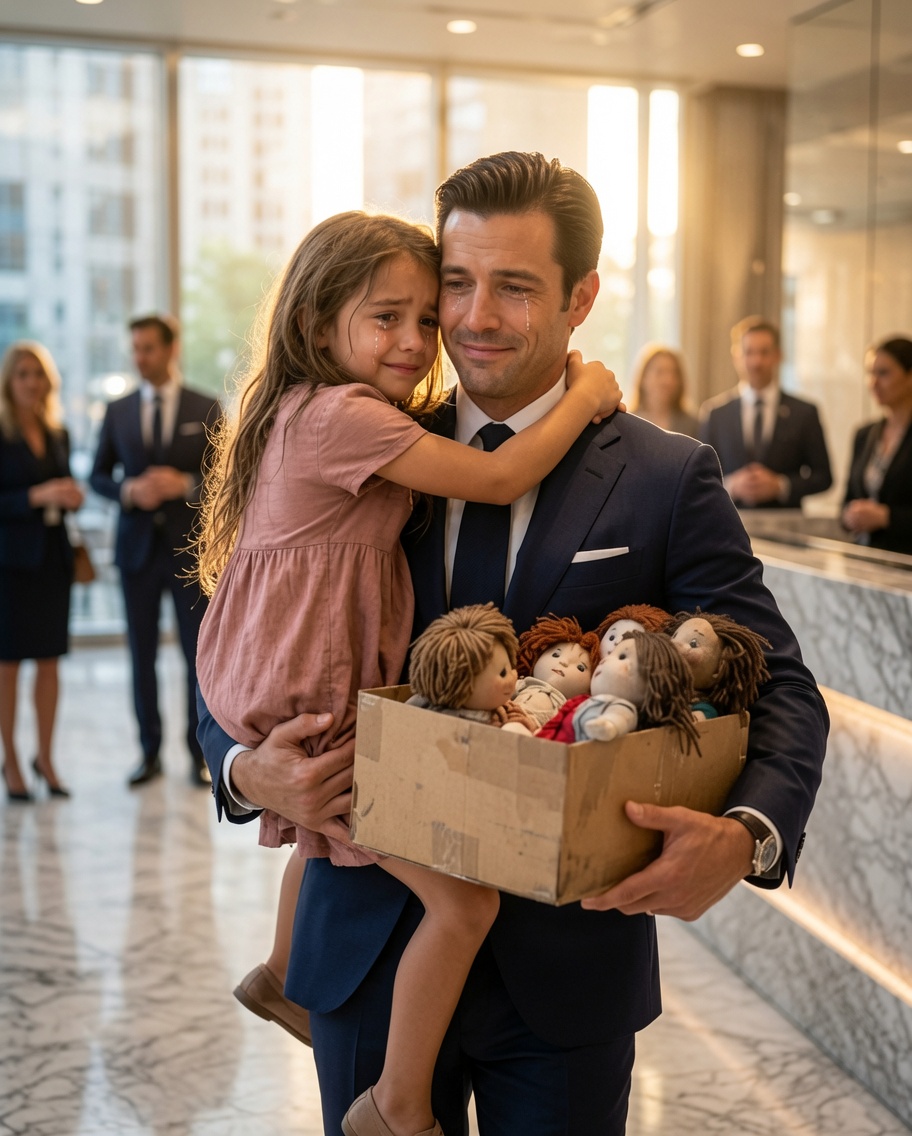
Silence.
The girl clutched her box tighter, as if it might be taken too.
“I already told him,” she said softly. “My sister is sick. I need money for medicine.”
Ethan stepped closer. His voice softened, but it carried more weight than the teller’s authority ever had.
“What medicine?”
The girl blinked, surprised someone was still listening.
“I don’t know the name,” she admitted. “The clinic wrote it on a paper. Mom cried when she saw the price.”
From inside her pocket, she pulled out a crumpled prescription slip. It was folded so many times the ink had started to fade.
Ethan took it carefully—like it mattered more than anything in the room.
He read it once.
Then again.
Something in his expression changed, but only slightly. The kind of change most people would miss unless they knew what grief looked like behind expensive suits.
He exhaled.
“Do you know what these dolls are worth?” he asked gently.
The girl shook her head. “They’re good dolls.”
“I can see that,” he said.
Behind him, someone whispered, “This is ridiculous… he’s really entertaining this?”
Ethan turned slightly without looking at them.
“No one asked you to speak,” he said calmly.
The room went quiet again.
He knelt down so he was eye-level with the girl. That alone made several people uncomfortable—like wealth wasn’t supposed to bow like that.
“What’s your sister’s name?” he asked.
“Linh,” she said. “She’s six.”
“And your name?”
“Mai.”
He repeated it once, as if locking it in place.
“Mai,” he said, “if I give you the money for the medicine… what happens to the dolls?”
She looked down at the box.
Then at Liza, the stitched arm doll.
“They stay with me,” she said quickly. “I can’t lose them. They take care of me when Mom is sad.”
Ethan nodded slowly, like that answer made perfect sense in a way the adults in the room had forgotten.
Then he stood up.
“Cancel my appointments,” he said without turning.
His assistant—who had appeared from nowhere—froze. “Sir… all of them?”
“All of them.”
The bank manager finally rushed over, sweating. “Mr. Carter, if there’s a donation situation, we can handle it through proper channels—”
Ethan finally looked at him.
“This isn’t a donation situation.”
A pause.
“This is a child trying to sell her childhood to save her sister.”
The manager went silent.
Ethan turned back to Mai.
“I’m going to help your sister,” he said simply. “Right now.”
Her eyes widened. “You will… buy the dolls?”
A faint, almost sad smile crossed his face.
“No,” he said. “You’re not selling them.”
He reached into his wallet, pulled out a black card, and placed it on the counter.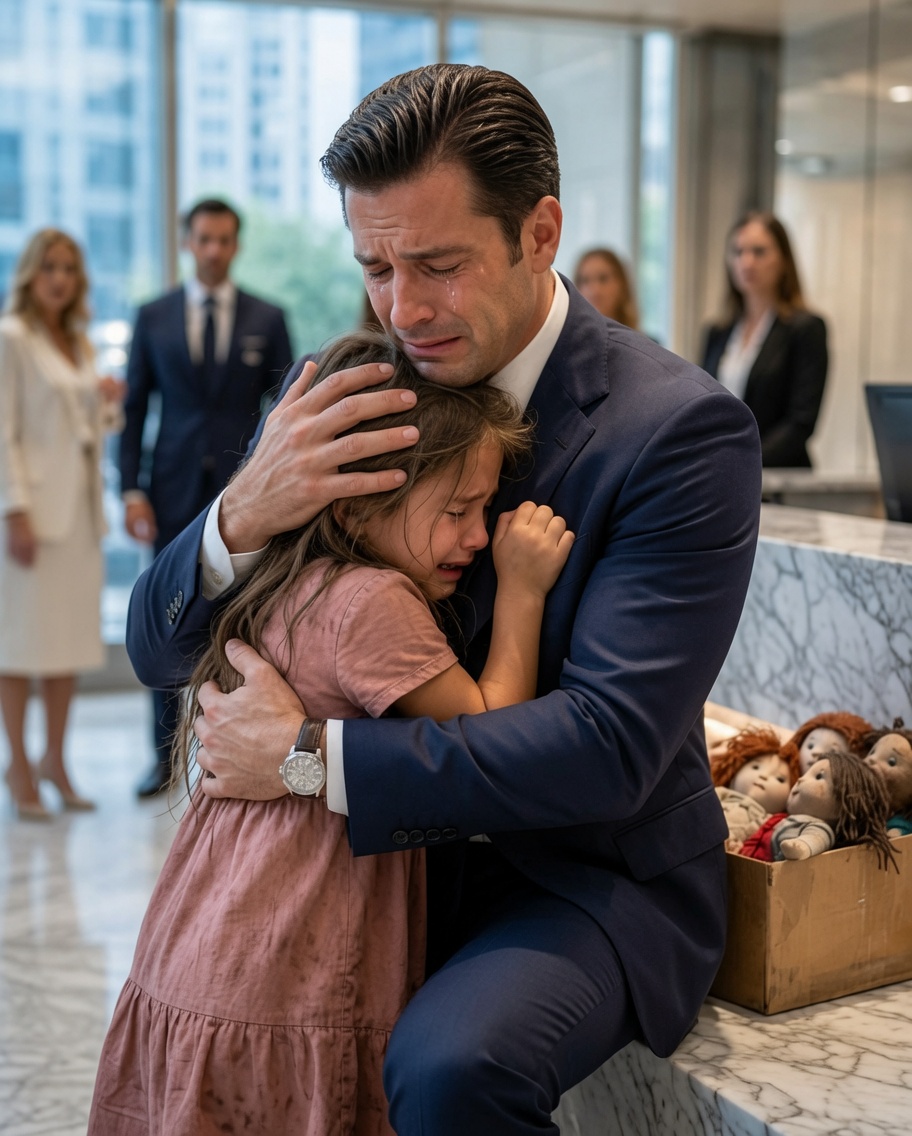
“I’m buying time.”
The teller stared. “Sir, there are procedures—”
Ethan didn’t even glance at him.
“Then break them.”
The words weren’t loud.
But they ended the argument.
He nodded to his assistant. “Get the best pediatric specialist in the city. I don’t care where they are or what they’re doing.”
“Yes, sir.”
“Arrange transport. Private if needed.”
“Yes, sir.”
He looked back at Mai.
“And find out everything about her mother. Job, situation, debts. All of it.”
The room shifted. People who had been pretending not to listen were now fully watching.
Mai tugged lightly on his sleeve.
“Are you a doctor?” she asked.
Ethan paused.
“No,” he said.
“Then why are you helping?”
That question hung in the air longer than anything else in the bank that day.
Ethan crouched again.
“Because someone should have done it before you had to walk in here barefoot and ask for help with dolls.”
For the first time, Mai’s expression cracked slightly. Not fear.
Relief she didn’t understand yet.
Outside, sirens began to fade in the distance—someone had already made calls.
Inside, the bank that protected money suddenly looked very small.
And for the first time that afternoon, no one was watching the screens, the watches, or the contracts.
They were watching a barefoot girl holding a box of dolls… and a man who had just decided the rules didn’t apply anymore.