PART 2 For a moment, the room did not react.
PART 2
For a moment, the room did not react.
Not because they didn’t hear him.
Because they didn’t understand him.
“Who?” one of the council members repeated under his breath, as if the word itself was a mistake.
Oscar Jun didn’t move.
He stood at the edge of the conference table, rainwater still sliding off his sleeves, eyes fixed on Min-Jae Kang like he was waiting for permission to breathe again.
“The maid,” Oscar said finally. “Kesha Williams.”
Silence changed shape.
It wasn’t just quiet anymore.
It became pressure.
One of the older men scoffed softly. “We’re discussing an attempted assassination on the boss and you’re talking about staff injuries?”
Another nodded quickly, trying to steer the room back to control. “Send her to a private clinic. Compensate her. We have bigger issues—”
Min-Jae stood up.
The chair behind him didn’t scrape.
It simply stopped existing as a concern.
Every voice in the room died at once.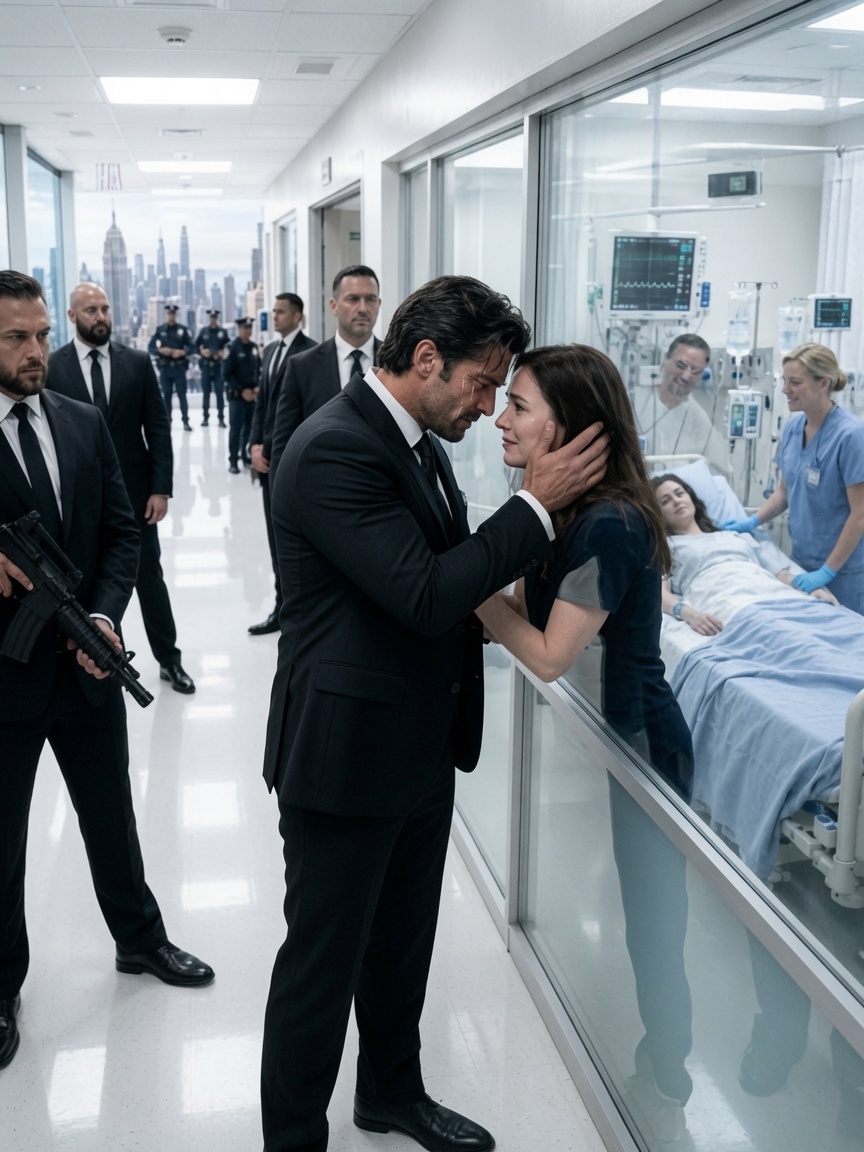
“Where is she?” he asked.
Oscar hesitated.
That hesitation was enough.
Min-Jae’s gaze sharpened.
“Don’t tell me she’s dead.”
“No,” Oscar said quickly. “ICU. Mercy General. Critical condition.”
Something in the room shifted again.
This time, it wasn’t silence.
It was confusion.
Because the name still didn’t belong in this space.
Not in boardrooms. Not in war meetings. Not in the world Min-Jae Kang occupied.
And yet…
Min-Jae was already walking.
No orders. No discussion. No explanation.
Just movement.
One of the council members stepped forward. “Boss, you can’t just leave—there’s a second hit expected, we need—”
Min-Jae didn’t even look at him.
“If she dies,” he said quietly, “nothing else matters tonight.”
And that was the first time anyone in that room understood something terrifying:
The maid was not an employee.
She was not collateral.
She was a trigger.
—
Mercy General Hospital had never seen anything like it.
By 3:41 a.m., the emergency bay was no longer accessible.
Not locked.
Occupied.
Six SUVs formed a silent perimeter around the ambulance entrance. Men in dark coats stood at every door, every stairwell, every corridor leading into ICU. Cameras that weren’t hospital property blinked red from corners that had never been monitored before.
Inside, nurses moved faster than they were trained to, but not from panic.
From awareness.
Because word had spread in whispers:
The Kang man is here.
And worse—
He’s waiting.
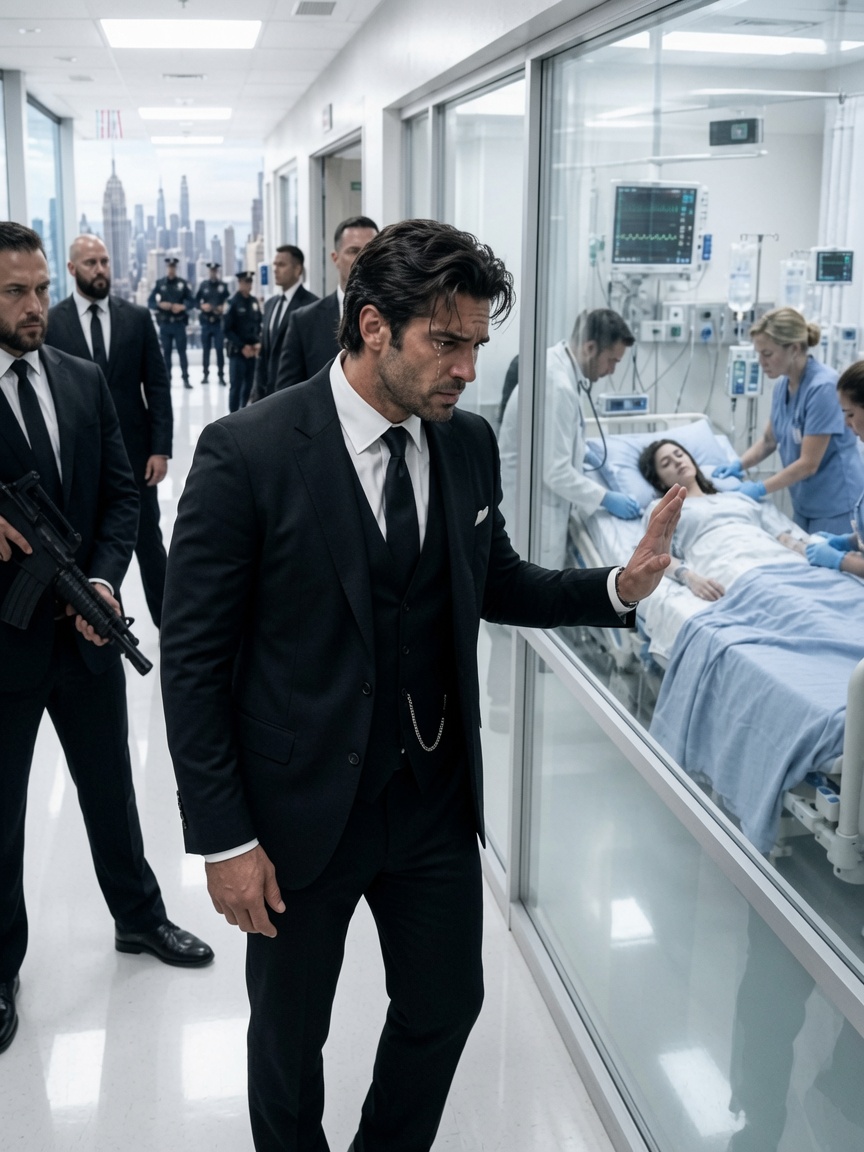
At 4:02 a.m., Min-Jae stood outside ICU Room 7.
Through the glass, he could see her.
Kesha Williams.
Smaller than he had expected.
Too still.
Machines surrounded her like metal vines, breathing for her, counting for her, holding her in a world she was no longer fully part of. One arm was wrapped in medical support. Bruises marked her collarbone. Her face was turned slightly toward the side, as if even unconscious she was trying to avoid something.
Min-Jae didn’t move.
He just looked.
A doctor approached carefully, clipboard in hand. “Mr. Kang… we’re doing everything we can. She sustained internal injuries, two broken ribs, a fractured arm, and trauma consistent with—”
“Will she wake up?” Min-Jae interrupted.
The doctor paused.
“That depends on how her body responds in the next few hours.”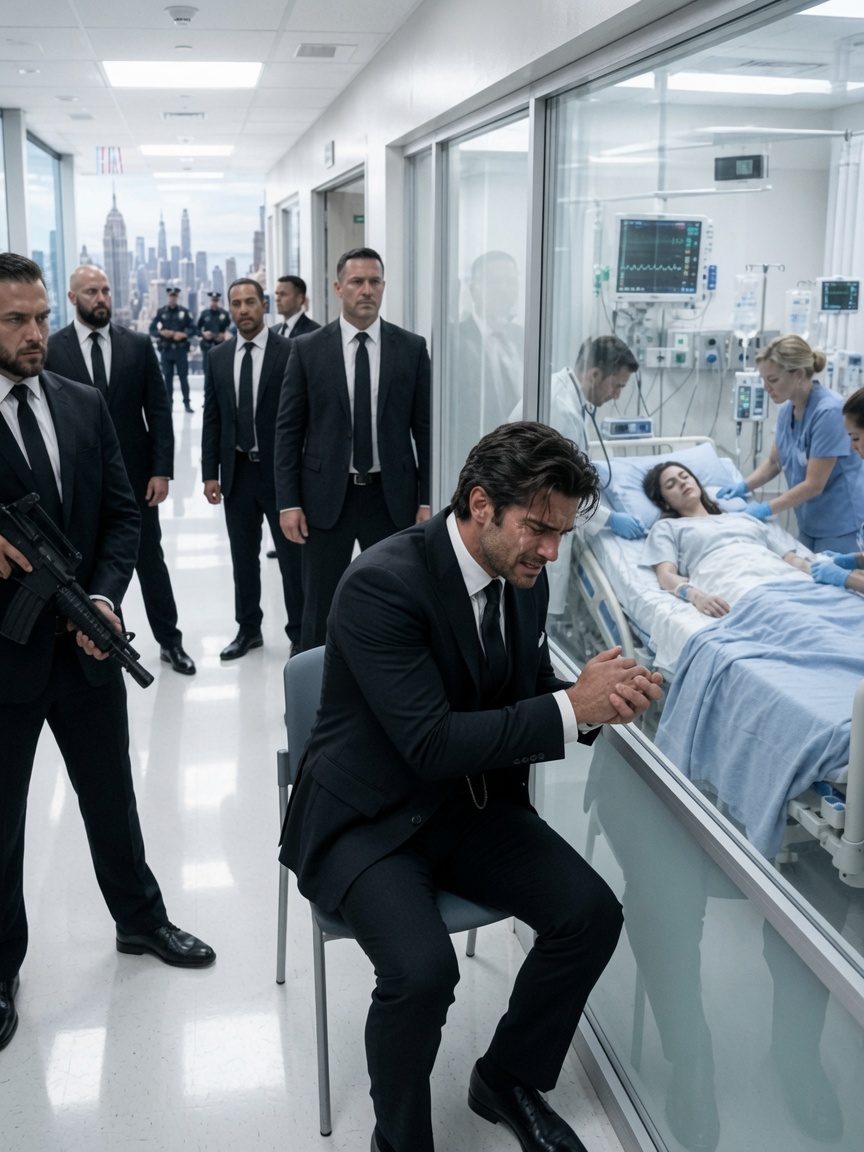
A long silence followed.
Then Min-Jae spoke again, softer this time.
“What did she come in with?”
The doctor blinked. “Sir?”
“She wasn’t supposed to be here,” Min-Jae said. “So why is she here instead of my convoy?”
The doctor looked uncomfortable. “We were told she was a service worker caught in an incident during a security breach—”
Min-Jae turned his head slightly.
The doctor stopped talking immediately.
Because he realized something:
He wasn’t being questioned.
He was being corrected.
Min-Jae raised a hand slightly.
One of his men stepped forward, handing him a sealed evidence bag.
Inside: a water-damaged envelope.
Bent edges.
Emergency alarm residue.
And a single piece of paper still legible beneath the damage.
Min-Jae read it.
Once.
Then again.
His expression didn’t change.
But the temperature in the hallway did.
Because what Kesha Williams had risked her life for wasn’t just a warning.
It was proof.
Someone inside his organization had been rerouting convoy data.
Not to rivals.
Not to outsiders.
But to a second internal system.
A parallel chain.
A ghost layer of command that even his own council hadn’t seen.
And she had found it.
Alone.
In a hallway no one was supposed to question.
Min-Jae lowered the paper slowly.
Then he did something no one had ever seen him do in a hospital.
He removed his gloves.
And placed his hand against the glass of ICU Room 7.
Not like a boss.
Not like a king.
Like someone making a silent promise to a person who could no longer hear him.
Behind him, one of his men spoke carefully.
“Boss… what do we do now?”
Min-Jae didn’t look away from her.
“Now,” he said quietly, “we find out who decided she was expendable.”
A pause.
Then:
“And we make them wish they had never learned her name.”
Inside the room, Kesha’s monitor flickered once.
A weak, unstable heartbeat.
But it was there.
And Min-Jae Kang, the man who had locked down half of New York without hesitation, leaned closer to the glass—
as if distance itself had become an insult he could no longer tolerate.