The Illusion of the Wall-Crawler: How Cinema Uses Simple Physics to Make Spider-Man Fly
The Illusion of the Wall-Crawler: How Cinema Uses Simple Physics to Make Spider-Man Fly
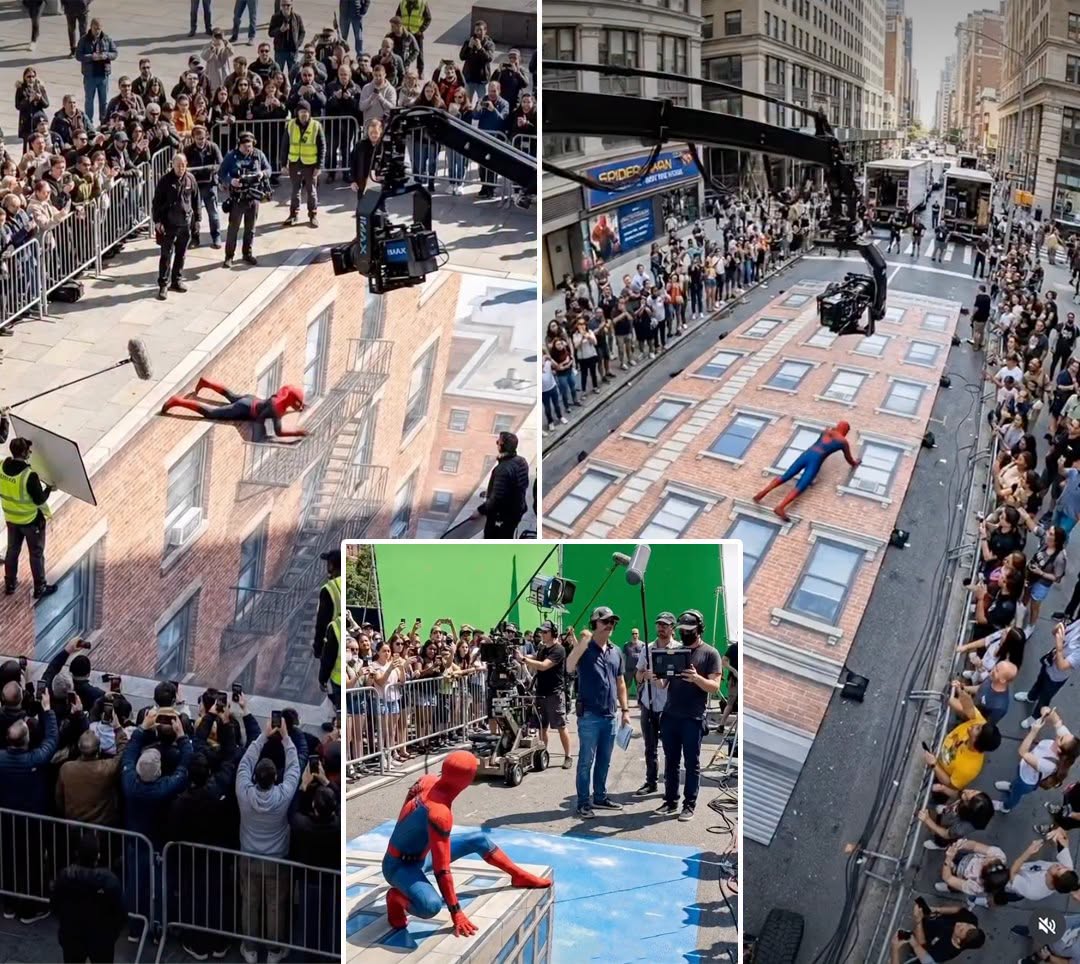
When audiences watch Spider-Man effortlessly scale a soaring skyscraper, the immediate assumption is that modern Hollywood magic relies entirely on multimillion-dollar computer-generated imagery. However, the astonishing truth behind some of the most iconic wall-crawling scenes in cinematic history is far more grounded. Spider-Man does not actually climb vertical walls in many of these sequences; instead, it is the camera itself that does the heavy lifting, executing a brilliant visual trick designed to completely deceive the human brain.
Rather than forcing a stunt performer or actor to climb a vertical surface, creative filmmakers often construct the facade of the building completely flat on the studio floor. The actor then crawls or scrambles across this horizontal surface. By mounting a camera directly overhead and filming from a precisely calculated angle, the crew captures the movement from a top-down perspective. During the post-production editing process, the captured footage is simply rotated ninety degrees. Because the human brain naturally relies on the background and perspective clues provided by the camera frame, it immediately fills in the blanks, creating the perfect illusion that the hero is defying gravity and climbing straight up a vertical wall.
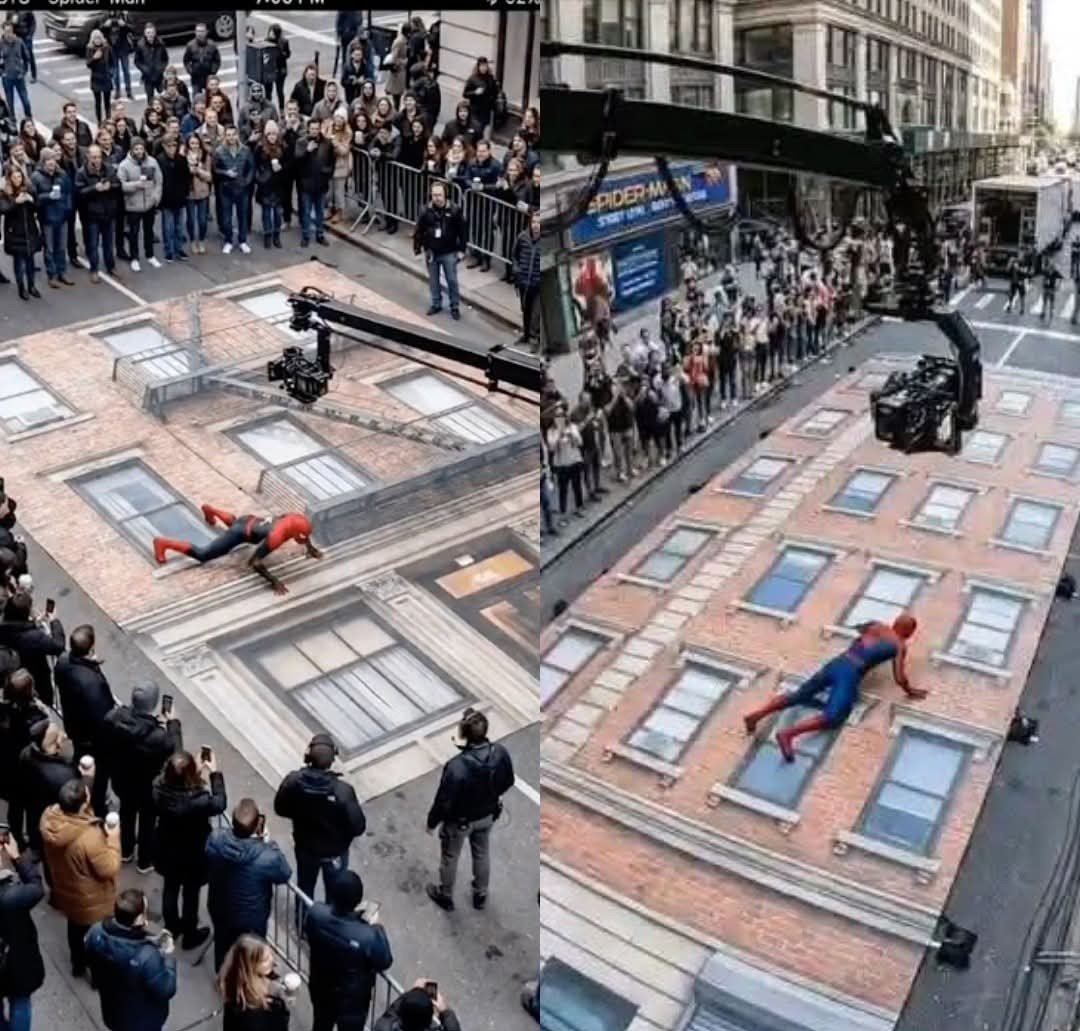
This philosophy of practical filmmaking has a rich history across different eras of the franchise. Director Sam Raimi heavily utilized specially designed rotating sets, intricate stunt rigs, and forced perspective camera angles to ground his original trilogy. Years later, even with massive advancements in digital technology, directors working with Tom Holland continued to seamlessly blend practical harnesses, overhead wire rigs, and physical sets with modern visual effects to maintain a sense of realism. It serves as a classic reminder that the most convincing movie magic does not always happen inside a computer server. Instead, it is born from clever engineering, meticulous camera placement, and a crew that understands how to use basic physics to make the absolutely impossible look completely real.