NEARLY 30 BOTTLENOSE DOLPHINS STRAND ALONG CAPE COD IN RARE MASS RESCUE
NEARLY 30 BOTTLENOSE DOLPHINS STRAND ALONG CAPE COD IN RARE MASS RESCUE
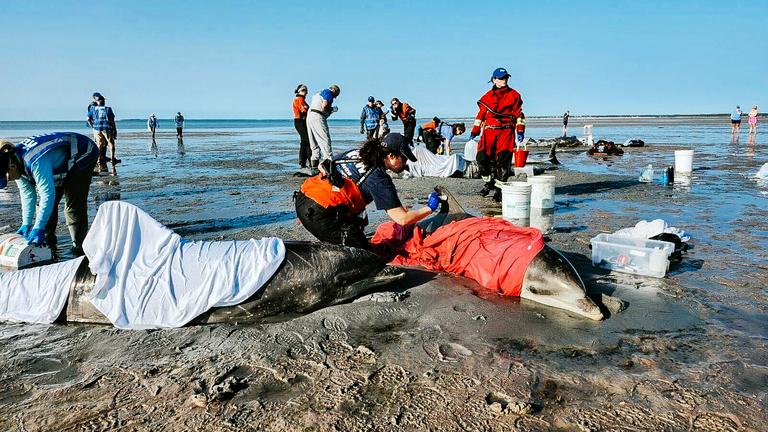
CAPE COD, MASSACHUSETTS — Marine wildlife rescuers carried out a large-scale emergency response after nearly 30 bottlenose dolphins became stranded along the Cape Cod coastline in what experts say is the largest recorded bottlenose dolphin stranding in Massachusetts history.
The rescue operation involved dozens of trained responders working against the clock to return the animals to deeper water before the tide and heat placed them at greater risk.
 Race Against Time
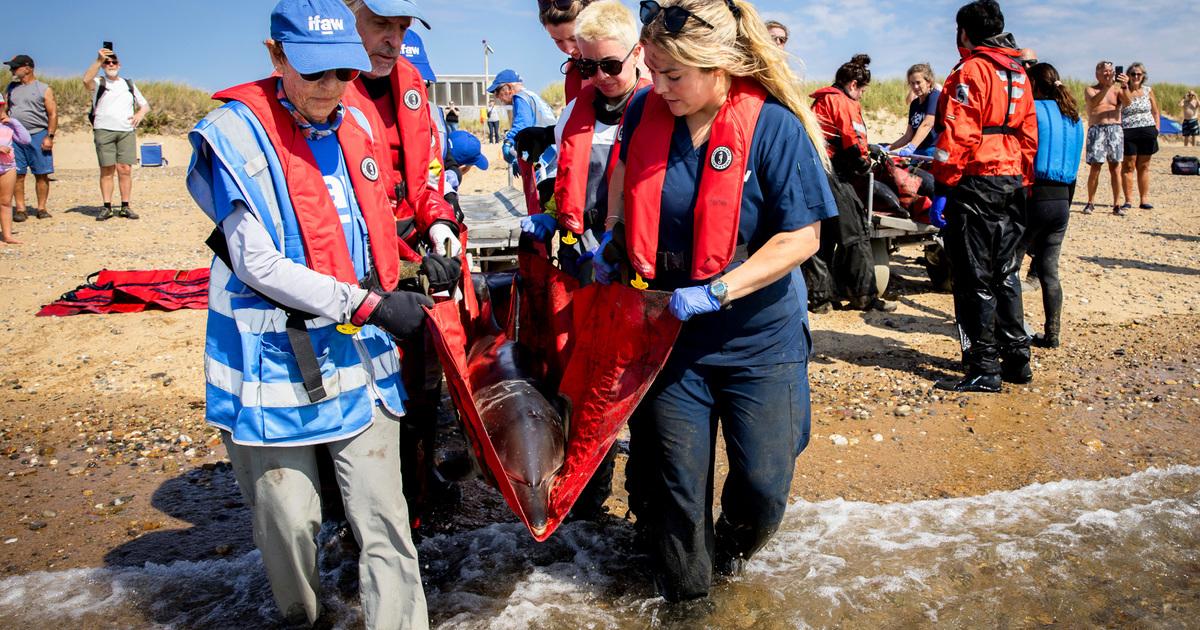
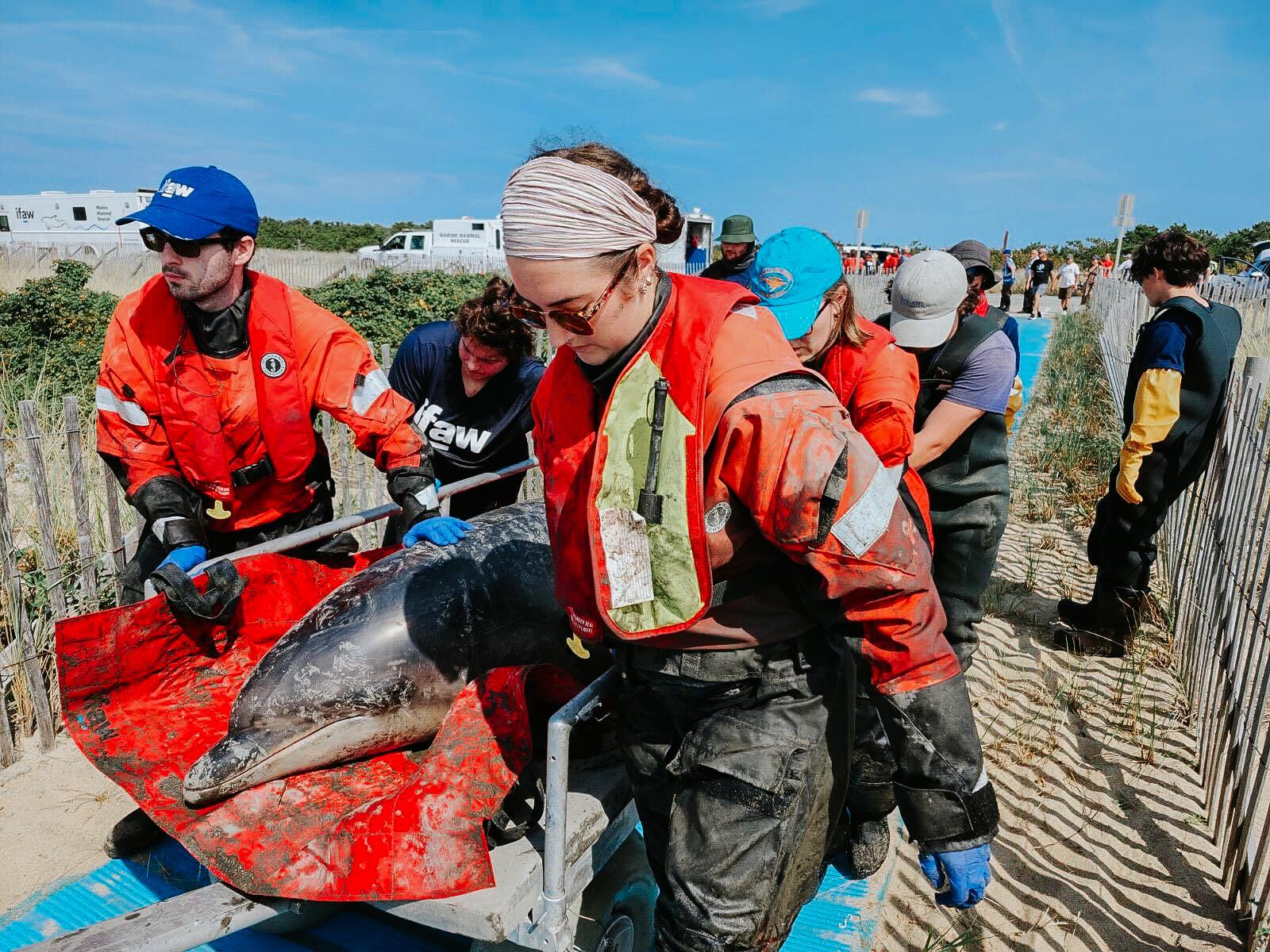
Teams from the International Fund for Animal Welfare (IFAW) and partner organizations responded after reports of multiple dolphins stranded on tidal flats.
Rescuers assessed each dolphin’s condition, keeping the animals cool and hydrated while veterinarians performed health checks before attempting to refloat them.
As the tide returned, many dolphins were successfully guided back into deeper water.
Unfortunately, several dolphins did not survive, despite rescue efforts.
Additional Strandings Reported
The rescue operation continued after responders discovered more stranded dolphins along a roughly 9-mile stretch of coastline.
Experts say Cape Cod’s distinctive geography—particularly the broad tidal flats of Wellfleet Bay—creates conditions that can confuse dolphins, especially when pursuing schools of fish into shallow water.
Once the tide recedes, the animals can become trapped far from deeper channels.
 Why Cape Cod Is a Stranding Hotspot
Marine scientists have long identified Cape Cod as one of the world’s most common locations for mass dolphin strandings.
Its hook-shaped coastline, extreme tidal changes, and gently sloping mudflats can make it difficult for dolphins to navigate back to open water after entering the bay.
Rescue teams regularly monitor the region during periods when strandings are more likely to occur.
Continuing Conservation Efforts
Wildlife organizations say every successful rescue provides valuable information that helps improve future responses to marine mammal emergencies.
They also remind the public that stranded dolphins should never be pushed back into the water without guidance from trained responders, as injured or disoriented animals require professional assessment before release.
Nearly 30 bottlenose dolphins stranded along Cape Cod.
Many were successfully rescued, while several sadly did not survive.
Marine rescue teams continue monitoring the coastline for additional strandings.
Sources:
- International Fund for Animal Welfare (IFAW) – https://www.ifaw.org/
- NOAA Fisheries – https://www.fisheries.noaa.gov/