MOTHER LEFT 𝖲𝖧𝖮𝖢𝖪𝖤𝖣 AFTER HER SON IS BORN WITH RARE BIRTH DIFFERENCES AFFECTING HIS LIMBS AND SKIN DESPITE ATTENDING ROUTINE PRENATAL CHECKUPS THROUGHOUT HER PREGNANCY
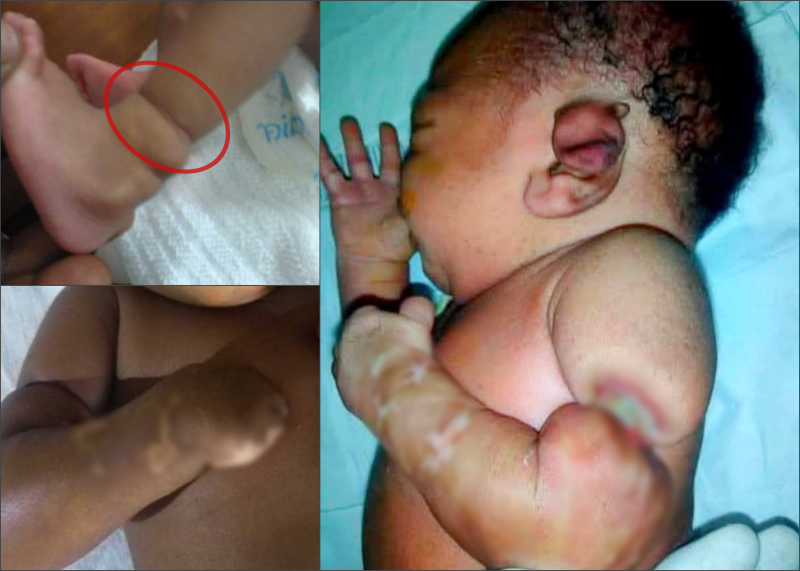
A baby boy surprised doctors at birth after arriving with an exceptionally rare combination of congenital differences affecting his left arm, hand, ear, skin, and soft tissues.
The little boy was born to a 34-year-old mother in Sokodé after what had appeared to be a healthy pregnancy. Routine prenatal care was carried out throughout the pregnancy, and an ultrasound performed at 20 weeks did not reveal any significant abnormalities.
His parents, who were both in good health and had no known family history of congenital conditions, were eagerly preparing to welcome their second child. His older sister, just two years old, was also healthy and developing normally.

The pregnancy continued without complications, and the baby was delivered at full term by vaginal birth. He weighed 2.7 kilograms, measured 48 centimeters in length, and showed reassuring signs immediately after birth.
But within days, doctors noticed that the newborn had several rare physical differences that required specialist evaluation. Doctors later determined that the newborn was living with Congenital Constriction Band Syndrome (CCBS), also known as Amniotic Band Syndrome—an exceptionally rare congenital condition that develops during pregnancy.
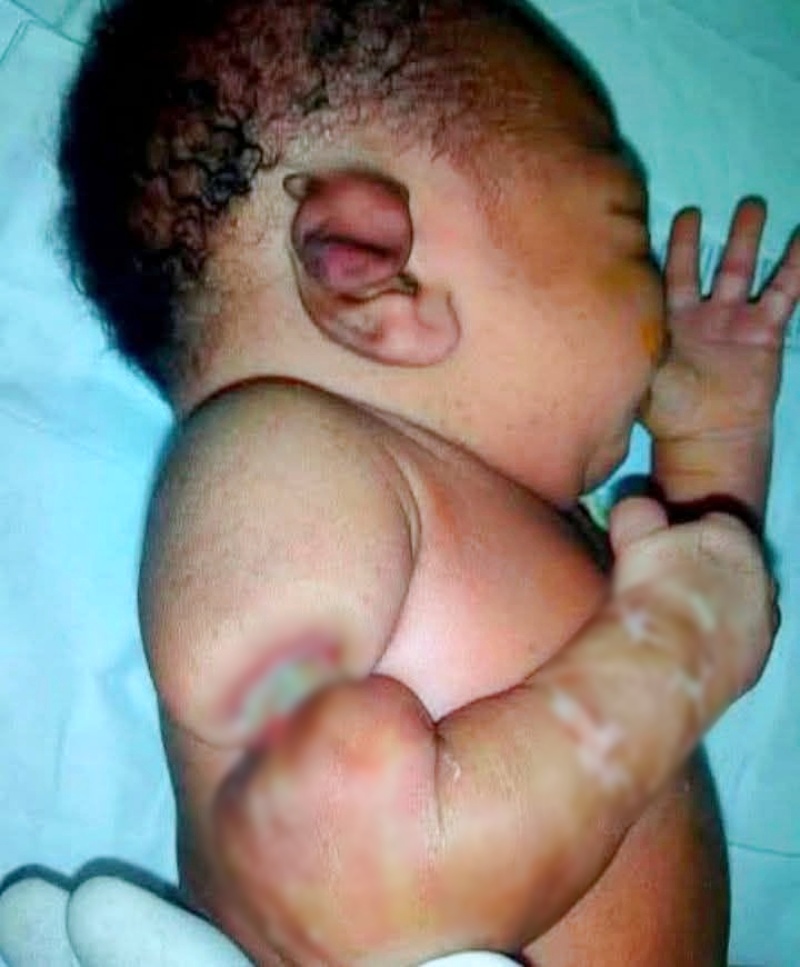
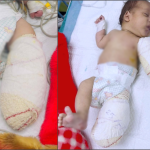
On his left arm, he had a deep circular constriction around the upper limb that extended down to the bone. His left hand was missing the second through fifth fingers, giving the appearance of naturally absent digits.
Doctors also observed lighter patches of skin on his forearm, while his left ear had an unusual multi-lobed shape.
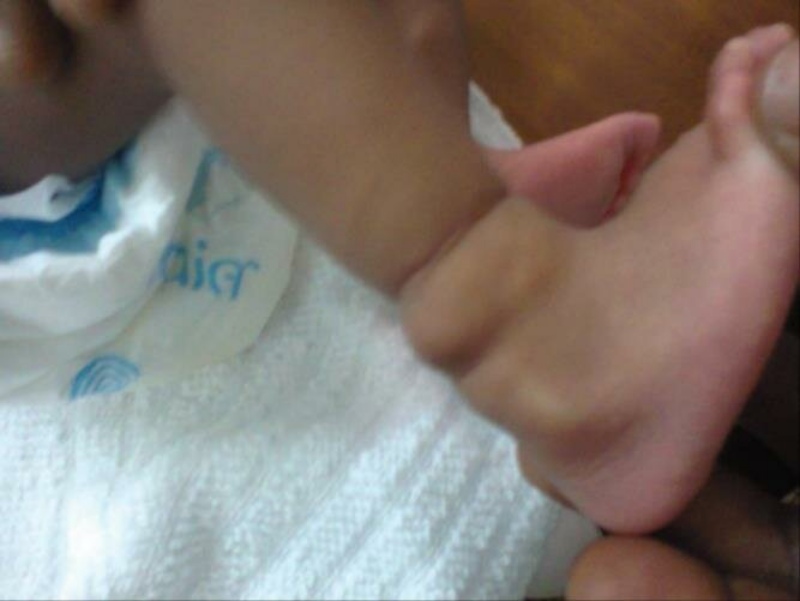
In addition, the baby was born with several soft-tissue growths—one measuring about 5 centimeters on his head and two larger growths, each around 7 centimeters, on his back.
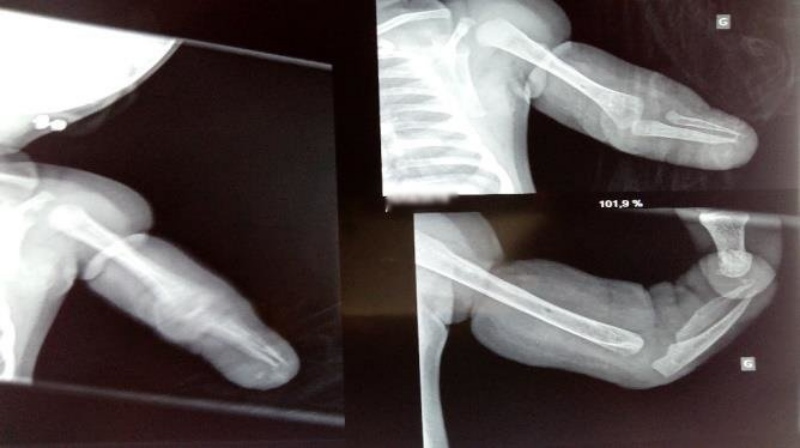
At just two days old, he was transferred to the pediatric department of Sokodé Regional Hospital, where specialists began investigating the complex combination of congenital differences.
Although the pregnancy had appeared normal on routine examinations, doctors believe the baby’s condition developed very early during fetal development. Because cases involving multiple congenital differences like these are exceptionally uncommon, careful medical assessment is needed to better understand the condition and determine the most appropriate care.
For his family, what matters most is giving their little boy every opportunity to grow, receive the support he needs, and face the future surrounded by love and hope.
Source: ResearchGate