Before They Became Hollywood Icons: The Untold Origins of The Little Rascals and the Child Stars Who Changed Entertainment Forever
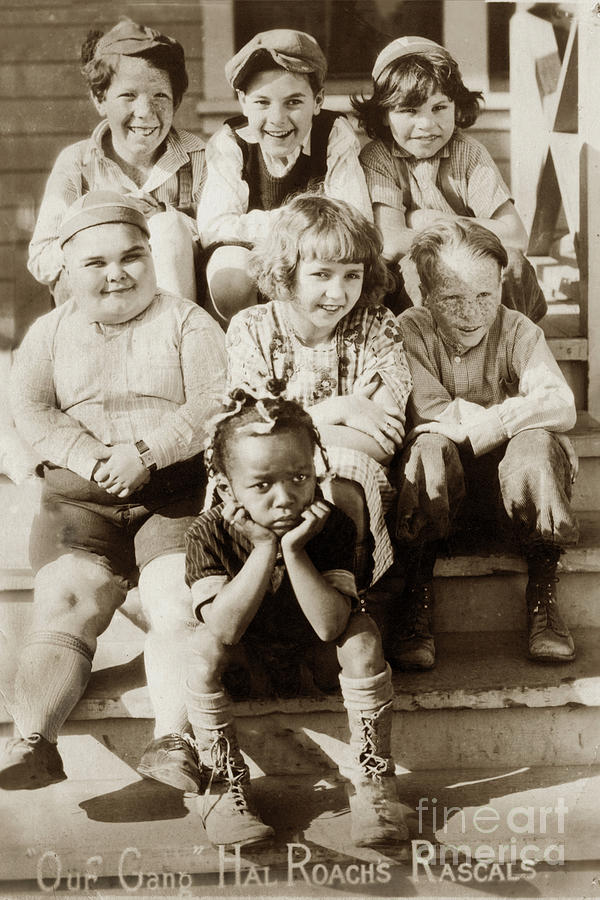
Long before their faces became part of American pop culture, they were simply a group of energetic children running through dusty sets, laughing between takes, and creating something no one realized would become timeless.
Generations have grown up recognizing names like Spanky, Alfalfa, Darla, Buckwheat, Stymie, and Petey the dog. Yet the remarkable story of how these young performers first came together—and why their adventures still resonate decades later—is often overshadowed by the fame that followed.
What began as an experimental series about ordinary children behaving like real kids would ultimately transform Hollywood and leave a lasting mark on television history.
The journey started in the early 1920s when producer Hal Roach wanted to create something audiences had rarely seen. Instead of polished child actors delivering stiff performances, he imagined films centered on genuine childhood—complete with messy friendships, imaginative games, harmless trouble, and unpredictable humor.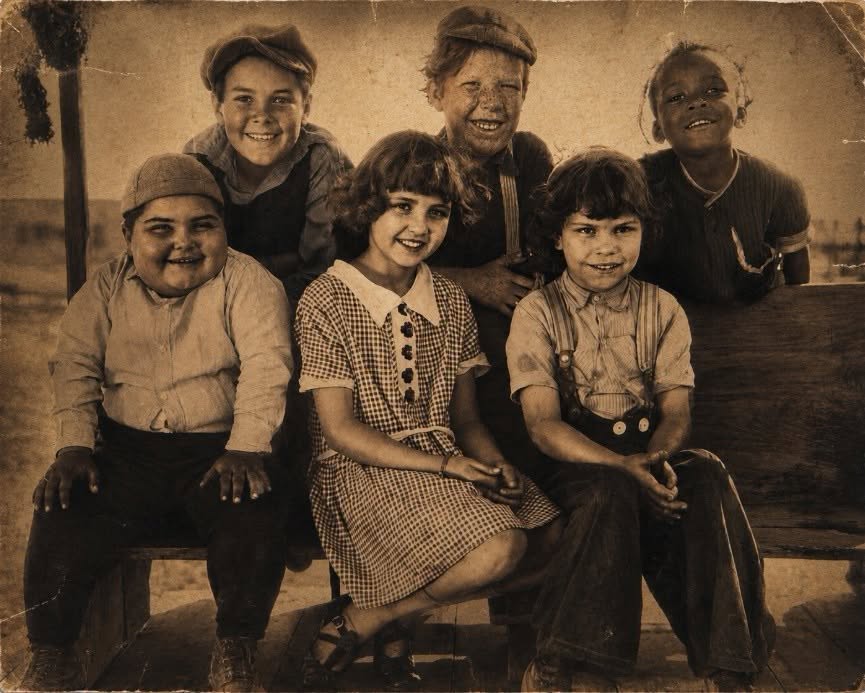
The result was Our Gang, a collection of comedy shorts that debuted in 1922. Years later, television audiences would come to know the series under a different name: The Little Rascals.
Unlike many productions of the era, the children weren’t expected to behave like miniature adults. Director Robert McGowan encouraged spontaneity, often explaining scenes moments before filming instead of demanding perfectly rehearsed dialogue. That natural approach gave the series an authenticity that audiences immediately embraced.
The children argued, made mistakes, invented wild schemes, and solved problems with the kind of logic only kids could imagine. Rather than pretending to be perfect, they felt real.
That realism became the show’s greatest strength.
As the years passed, the cast evolved. Older children eventually moved on, making room for new faces who brought fresh personalities to the group. Each generation introduced memorable characters that became household names.
George “Spanky” McFarland emerged as one of the series’ most recognizable leaders, balancing confidence with comic timing.
Carl “Alfalfa” Switzer won audiences over with his unforgettable cowlick, off-key singing, and hopeless devotion to Darla.
Darla Hood became the charming center of many childhood romances and misunderstandings that delighted viewers.
Matthew “Stymie” Beard added wit and unforgettable expressions, while Billie “Buckwheat” Thomas became one of the most recognizable children ever to appear on screen.
Together, they formed a cast whose chemistry seemed effortless, even though it was created across different eras of the series as children naturally grew older and were replaced.
One of the most groundbreaking aspects of Our Gang wasn’t simply its humor.
At a time when racial segregation shaped much of American life, the series regularly showed Black and white children playing together as equals. They attended school together, shared adventures, argued, laughed, and made peace without the racial barriers that existed outside the fictional neighborhood.
While some elements reflected stereotypes common during the period, the simple act of portraying interracial childhood friendships on screen was remarkably unusual for its time and helped distinguish the series from nearly everything else being produced in Hollywood.
That progressive spirit became one reason the films remained culturally significant long after production ended.
The production itself also evolved with the movie industry.
The series successfully transitioned from silent films into the era of sound, something many productions struggled to accomplish during Hollywood’s technological revolution. As audiences embraced talking pictures, Our Gang adapted without losing the playful spirit that had made it successful.
Between 1922 and 1944, an astonishing 220 comedy shorts were produced, making it one of the longest-running children’s film series in history.
In 1938, production shifted from Hal Roach Studios to Metro-Goldwyn-Mayer, bringing changes in style and presentation. Although many fans continued to enjoy the later entries, countless admirers believe the earlier Roach productions captured the purest version of children simply being themselves.
When the shorts found new life on television during the 1950s, they reached an entirely different generation.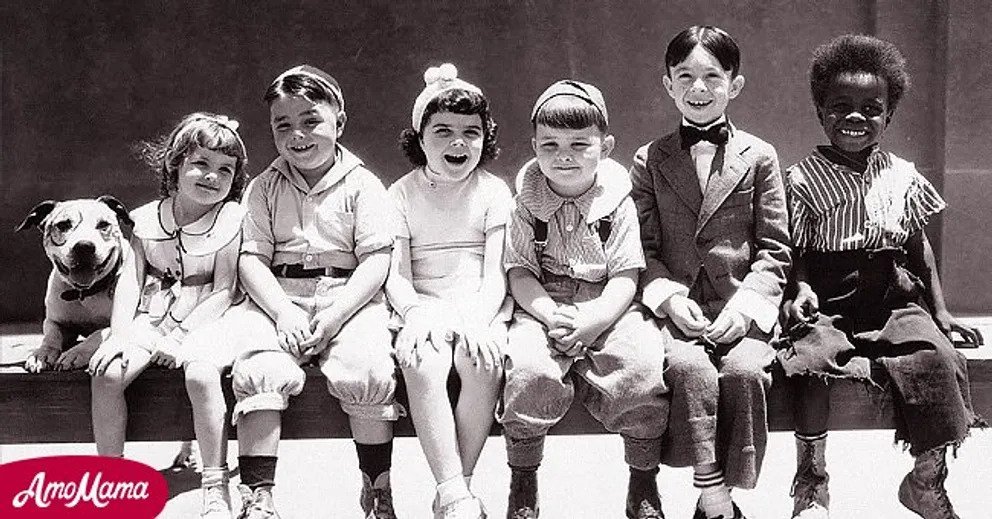
Renamed The Little Rascals, the series quickly became a staple of after-school programming and weekend mornings. Children who had never experienced the Great Depression or early Hollywood suddenly felt connected to youngsters who had appeared on screen decades earlier.
The stories proved surprisingly timeless.
Whether building homemade race cars, trying to earn a few dollars, forming clubs with elaborate rules, or navigating innocent childhood crushes, the characters experienced situations that remained familiar regardless of changing times.
For many viewers, The Little Rascals became more than classic entertainment—it became part of childhood itself.
Behind the scenes, however, the young performers experienced lives that were often very different from the carefree characters audiences adored.
Some continued acting as adults.
Others chose completely different careers after leaving Hollywood.
Several struggled with the challenges that frequently accompany childhood fame, while others found success far away from movie studios.
Their individual journeys varied enormously, reminding fans that life after early stardom rarely follows a single path.
Despite those differences, their work together left an extraordinary legacy.
The influence of The Little Rascals can still be seen in family comedies, children’s television, and ensemble casts built around authentic friendships rather than polished performances. Its emphasis on natural behavior inspired filmmakers to trust young actors with greater freedom instead of forcing them into overly scripted roles.
The series also demonstrated that children’s stories could appeal just as strongly to adults.
Parents laughed alongside their children because the humor grew from universal experiences—friendship, imagination, jealousy, curiosity, and the endless confidence that tomorrow always offers another adventure.
Even decades after the final short was produced, the familiar faces remain instantly recognizable.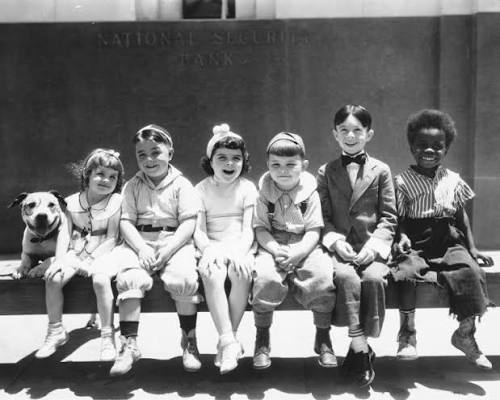
Spanky’s leadership.
Alfalfa’s unforgettable hairstyle.
Darla’s smile.
Buckwheat’s charm.
Stymie’s clever wit.
Together, they became symbols of an era when childhood itself was the star.
Their films continue to introduce new audiences to a simpler world filled with treehouse meetings, homemade inventions, neighborhood adventures, and friendships that seemed capable of surviving any misunderstanding.
Perhaps that’s why The Little Rascals has endured for more than a century.
The children who first appeared before Hollywood cameras were never trying to become legends.
They were simply being kids.
In doing so, they created one of the most beloved chapters in entertainment history—one that continues to remind viewers that laughter, innocence, and friendship never truly go out of style.