The Fire That Destroyed The Exorcist Set—and Helped Create Hollywood’s Most Notorious “Cursed” Production
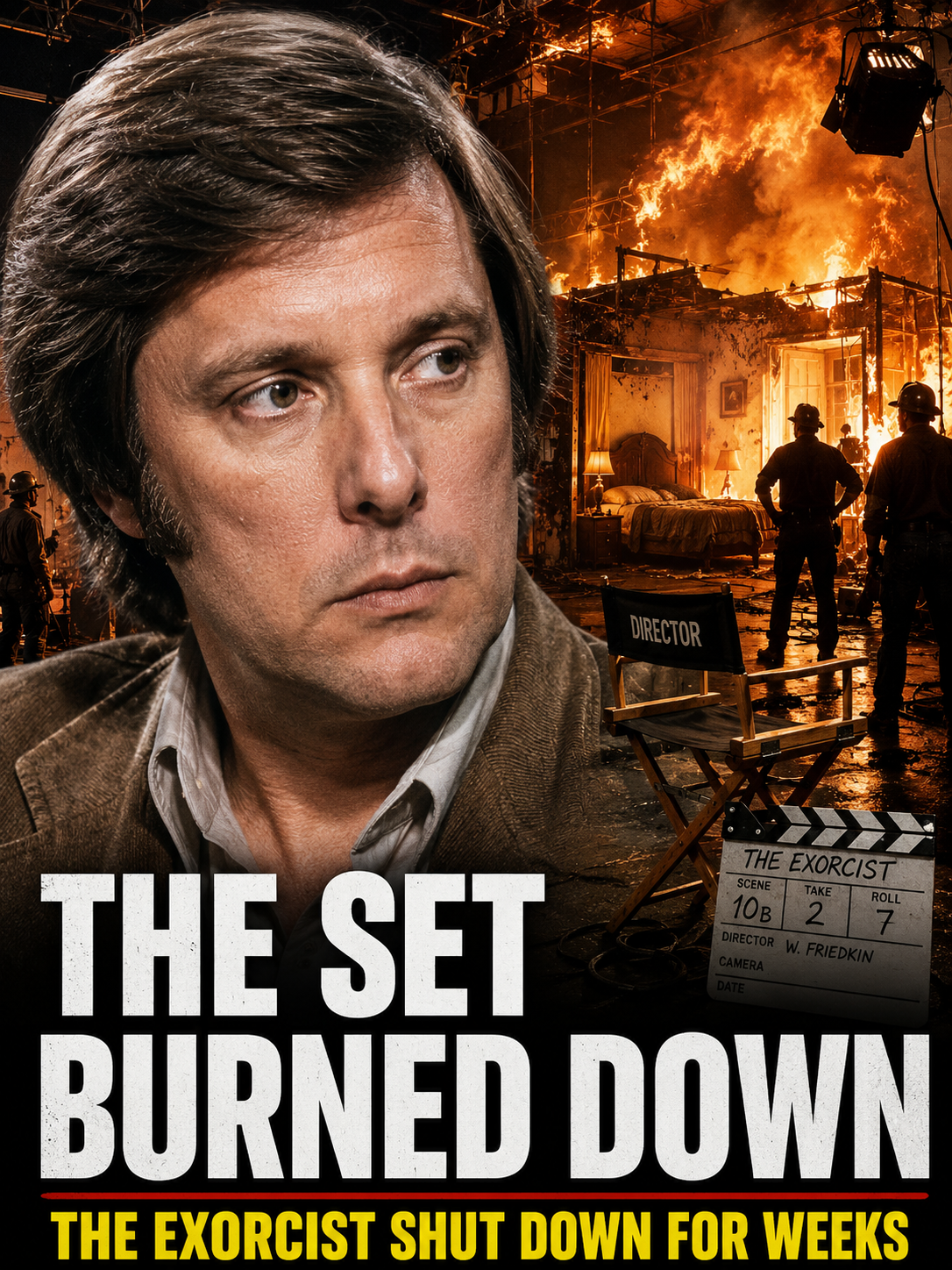
The phone rang at approximately four in the morning.
William Friedkin, the director of The Exorcist, was told not to come to work. His first thought was that Warner Bros. had finally fired him from the troubled, expensive production.
The truth was more alarming.
The interior set representing the MacNeil family’s Georgetown home had burned through the night. Much of the three-story structure—one of the movie’s most important and costly sets—had been destroyed.
Production could not simply continue elsewhere. The house was central to the story, and numerous scenes still had to be completed inside it. Rebuilding would take weeks, adding another major delay to a movie already struggling with technical problems, injuries, deaths, and a rapidly expanding budget.
Then the crew noticed an unsettling detail.
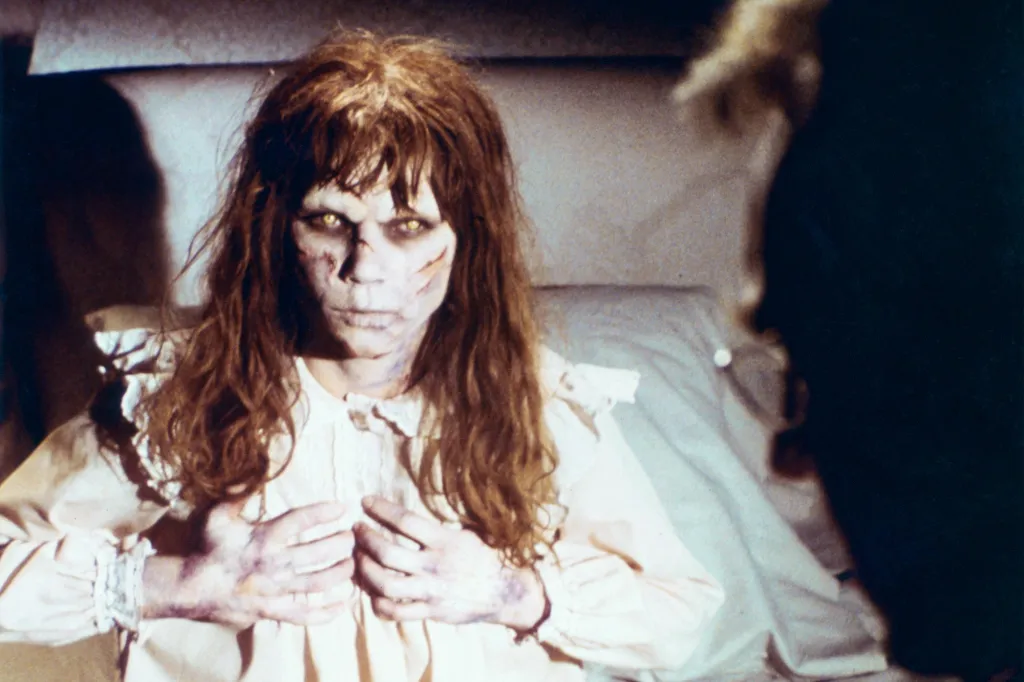
The fire had devastated most of the house set, but Regan MacNeil’s bedroom—the room where the film’s demonic possession and exorcism unfolded—was largely spared.
It was most likely a coincidence created by practical construction choices. To the exhausted people making The Exorcist, however, it felt like something far more disturbing.
A Horror Film Built Around Realism
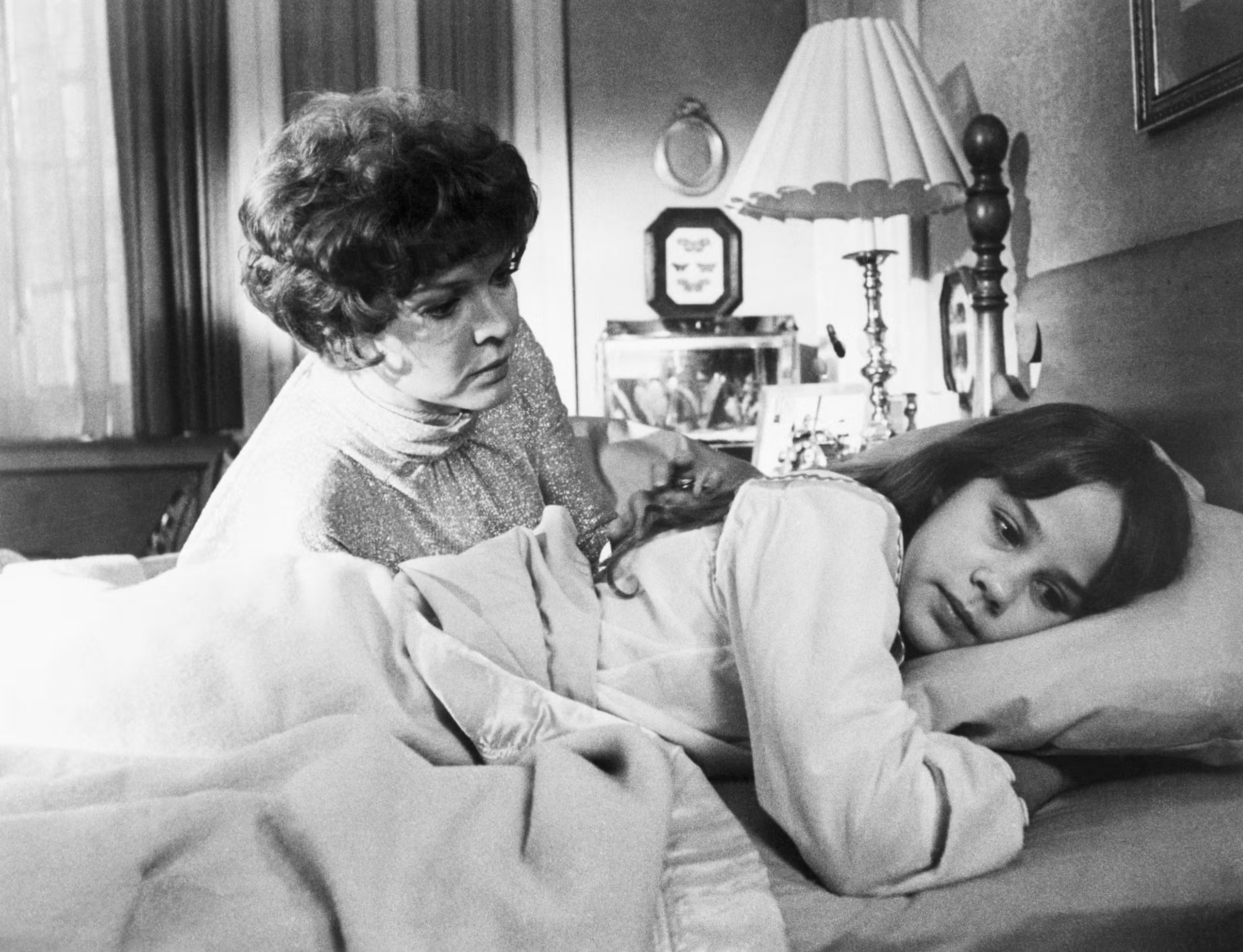
William Peter Blatty’s 1971 novel The Exorcist told the story of Chris MacNeil, an actress whose 12-year-old daughter, Regan, begins displaying violent and inexplicable behavior.
After doctors fail to identify a medical cause, Chris turns to Father Damien Karras, a Jesuit priest and psychiatrist struggling with guilt and a crisis of faith. He eventually joins the experienced Father Merrin in an attempt to free Regan from what they believe is demonic possession.
Blatty had drawn inspiration from reports of a 1949 exorcism involving a boy in Maryland, though the novel substantially fictionalized the case.
The book became a bestseller, and Warner Bros. acquired the film rights. Blatty wanted Friedkin to direct after being impressed by the raw realism of The French Connection, which had won the Academy Award for Best Picture.
Friedkin did not want the adaptation to look like a conventional Gothic horror film. The MacNeil home needed to feel normal, warm, and recognizable before terror invaded it.
That approach made the house set essential.
Most of the interior was constructed on a soundstage in New York. It included the kitchen, hallways, staircase, living areas, and Regan’s bedroom. The rooms were designed with reflective surfaces, practical lighting, and ordinary domestic details that made filming difficult but strengthened the illusion of reality.
The production’s supernatural events would be more disturbing, Friedkin believed, if they occurred inside a home that looked completely believable.
Then that home vanished in flames.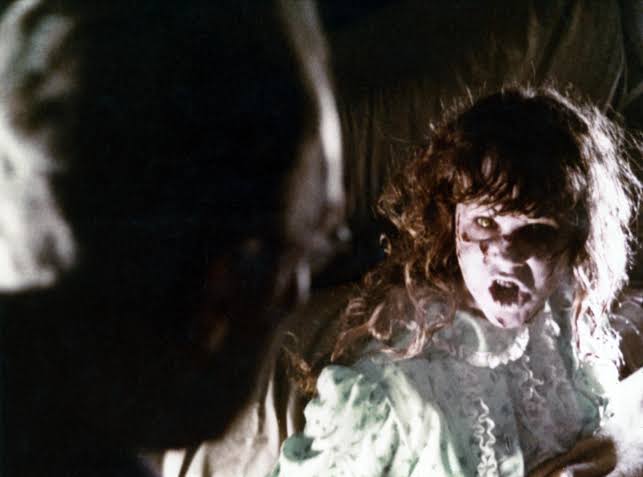
The Night the Set Burned
The fire reportedly began when a bird flew into electrical equipment or a light box, causing a short circuit.
Flames spread through the structure before firefighters could prevent extensive damage. The MacNeil house set, which Friedkin later said had cost hundreds of thousands of dollars, had to be reconstructed.
Accounts of the interruption vary. Some later reports described a three-week or month-long shutdown, while production histories and Friedkin’s recollections commonly place the delay closer to six weeks. He also recalled rebuilding and related disruption stretching even longer before normal filming fully resumed.
Whatever the exact count, the consequences were severe.
A production originally expected to last approximately 85 days ultimately required more than 200 days of principal photography. Costs rose far beyond the initial estimate, placing additional pressure on Friedkin, Blatty, and the studio.
The most famous detail remained Regan’s bedroom.
Unlike the other rooms, it had been specially insulated and equipped for the exorcism scenes. Friedkin wanted the actors’ breath to be visible, so refrigeration machinery was used to lower the temperature dramatically.
The room’s unusual construction may have helped protect it from the fire.
But logic did little to weaken the story spreading around the production: the room where the demon appeared was the only one the flames had not consumed.
The “Curse” Begins to Grow
The fire was not the only misfortune connected to The Exorcist.
Several people associated with the production or close to its cast died during the extended filming period. Jack MacGowran, who played director Burke Dennings, died shortly after completing his scenes. Vasiliki Maliaros, cast as Father Karras’ mother, also died before the movie opened.
Other deaths affected crew members and relatives of the cast. Max von Sydow returned to Sweden after learning that his brother had died. Linda Blair’s grandfather died during the production.
Not all of these events occurred on set, and there was no evidence connecting them beyond timing. On a production employing hundreds of people over many months, illness and tragedy were possible without a supernatural explanation.
Yet the combination of death, fire, and the movie’s subject created an irresistible narrative.
Crew members reportedly became uneasy. Father Thomas Bermingham, a Jesuit priest serving as a technical adviser, was asked to visit and offer a blessing.
Friedkin later spoke openly about the strange atmosphere surrounding the project. Although he did not claim that a literal curse had been proved, he sometimes encouraged discussion of the production’s eerie coincidences—especially when promoting the movie.
The legend began growing before audiences had seen a single frame.
Injuries Made the Fear Physical
The production’s difficulties were not confined to coincidence.
Some of its most painful incidents resulted from Friedkin’s pursuit of realistic reactions and the hazardous mechanical effects required by the story.
During a scene in which Regan throws her mother across the room, Ellen Burstyn wore a harness attached to a wire. The mechanism pulled her backward with considerable force.
Burstyn later said she warned Friedkin that the movement was hurting her. During another take, the pull sent her crashing down and injured her back. Her cry of pain in the finished film was genuine.
The injury reportedly left her unable to work for a period and caused long-term discomfort.
Linda Blair was also secured to mechanical equipment for scenes in which Regan’s bed shook violently. She later described suffering a spinal injury during filming, with lasting consequences.
The exorcism sequence presented further difficulties.
Friedkin insisted that Regan’s bedroom remain cold enough for visible breath. Industrial refrigeration equipment lowered the temperature below freezing, but the lights quickly warmed the room. The crew could film for only a few minutes before stopping to cool it again.
Moisture formed on equipment. The actors endured repeated exposure to extreme cold. Mechanical systems controlling the bed, furniture, walls, and levitation effects frequently required adjustment.
The scenes that appeared suffocating and hostile on screen were physically miserable to create.
A Production That Refused to End
Other problems continued accumulating.
The opening sequence was filmed in Iraq, where temperatures could reach extreme levels. A large statue of the demon Pazuzu was shipped to the wrong location, delaying the international shoot while the crew attempted to find it.
Friedkin’s working methods also slowed the production.
He demanded repeated takes, rebuilt or altered sets, replaced crew members, and sometimes used startling tactics to produce authentic reactions. He fired blanks without warning on set and, in one controversial moment, slapped actor and real-life priest William O’Malley before filming an emotionally intense scene.
The director’s perfectionism created performances of remarkable immediacy, but it also contributed to exhaustion and tension.
The planned budget of approximately $4 million eventually expanded to around $12 million. The schedule more than doubled.
By the end, The Exorcist seemed less like an ordinary film production than an endurance test.
The fire was its most visually dramatic setback, but it belonged to a larger pattern of constant disruption.
The Film That Terrified Audiences
Warner Bros. released The Exorcist on December 26, 1973.
Long lines formed outside theaters, despite the film initially opening in a limited number of locations. Reports soon circulated of audience members fainting, vomiting, fleeing screenings, or requiring medical attention.
Some theaters reportedly provided sickness bags.
The film’s power came partly from Friedkin’s realism. The medical procedures are presented with almost documentary-like precision. The MacNeil home looks ordinary. Regan’s transformation occurs gradually, following repeated attempts to explain her condition through medicine and psychiatry.
By the time the priests enter her bedroom, the audience has been given few comforting places to hide.
The fire and other production disasters were not visible in the finished movie, but the difficult conditions had shaped it. The freezing room produced real breath. The mechanical effects had physical weight. The actors’ exhaustion and pain contributed to an atmosphere that did not feel polished or safe.
The movie became an enormous commercial success and received 10 Academy Award nominations, including Best Picture. It won for Blatty’s adapted screenplay and for sound.
It was the first horror film nominated for Best Picture.
How an Accident Became a Legend
There is no credible evidence that The Exorcist was supernaturally cursed.
The set fire had a likely electrical cause. The preserved bedroom had a practical explanation in its fire-resistant construction and insulation. The deaths connected to the production were tragic, but they did not establish a paranormal pattern.
Still, facts alone could not erase the power of the story.
A film about demonic possession had been followed by fire, injury, death, and months of disorder. The one room associated most directly with the demon appeared to survive while the home around it burned.
That image was too perfect to remain only a production report.
It became part of how audiences understood the movie. The Exorcist was no longer merely a horror film made by actors and technicians. It was presented as a project that might have disturbed something dangerous simply by attempting to depict it.
Friedkin and the studio understood the promotional value of that reputation, but the mythology endured because it matched the experience of watching the film.
Even viewers who rejected the idea of possession could feel that something about The Exorcist was unusually severe.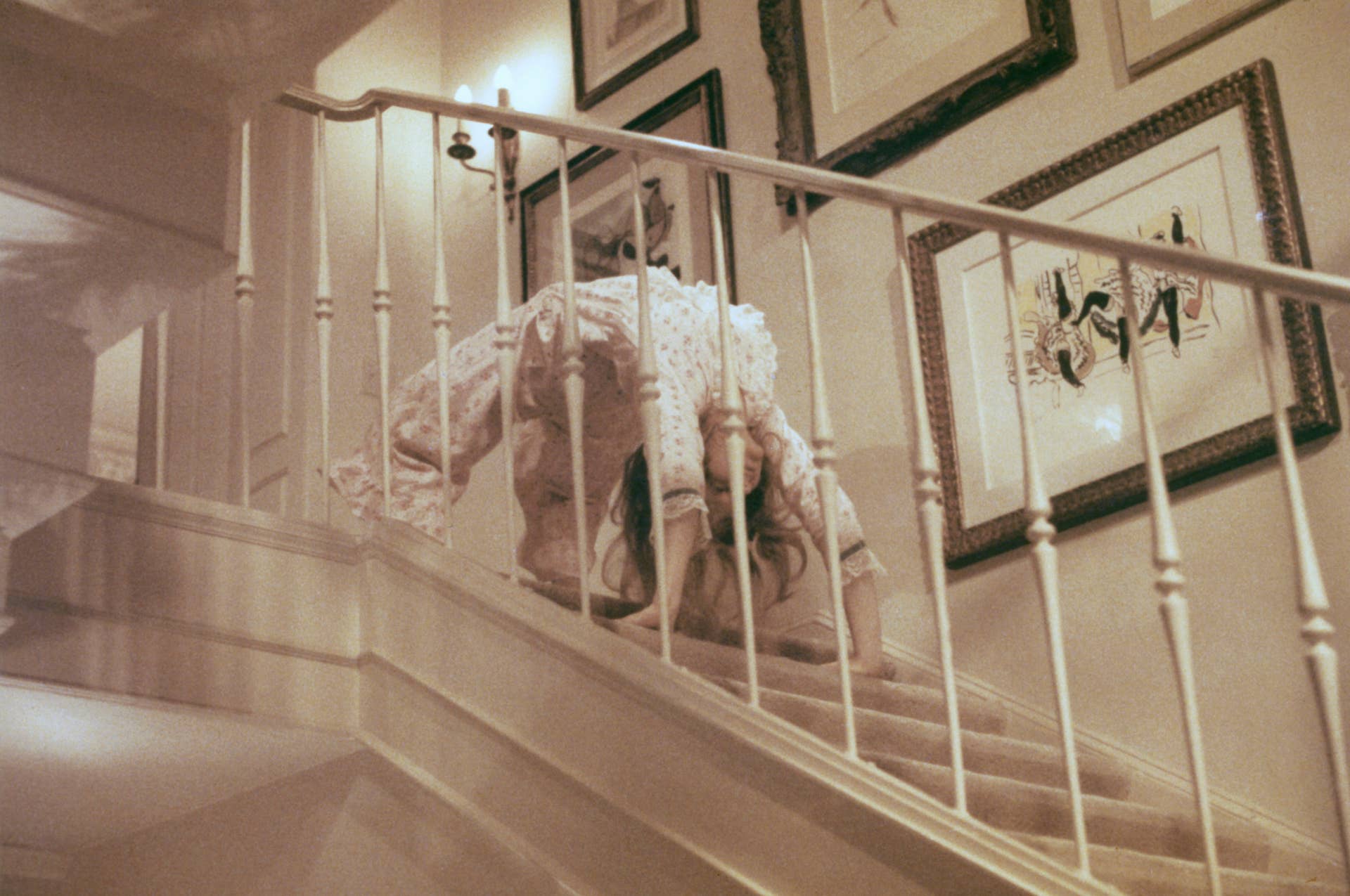
What the Fire Could Not Destroy
The blaze could have ended the production.
It destroyed an expensive set, interrupted the schedule for weeks, expanded the budget, and intensified studio concerns about a movie already considered difficult and risky.
Instead, the filmmakers rebuilt the house and continued.
That response became symbolic of the entire project. Every setback—technical, financial, physical, or personal—was absorbed into the production until the movie finally reached theaters.
The fire did not prove that The Exorcist was cursed.
What it proved was how close the film came to collapsing under the weight of its own ambition.
The MacNeil house burned.
Regan’s bedroom remained.
And when filming resumed, the crew returned to that freezing room to complete the scenes that would terrify audiences for generations.