A Helicopter Crashed Into Three Actors—The Twilight Zone Tragedy That Changed Hollywood Forever
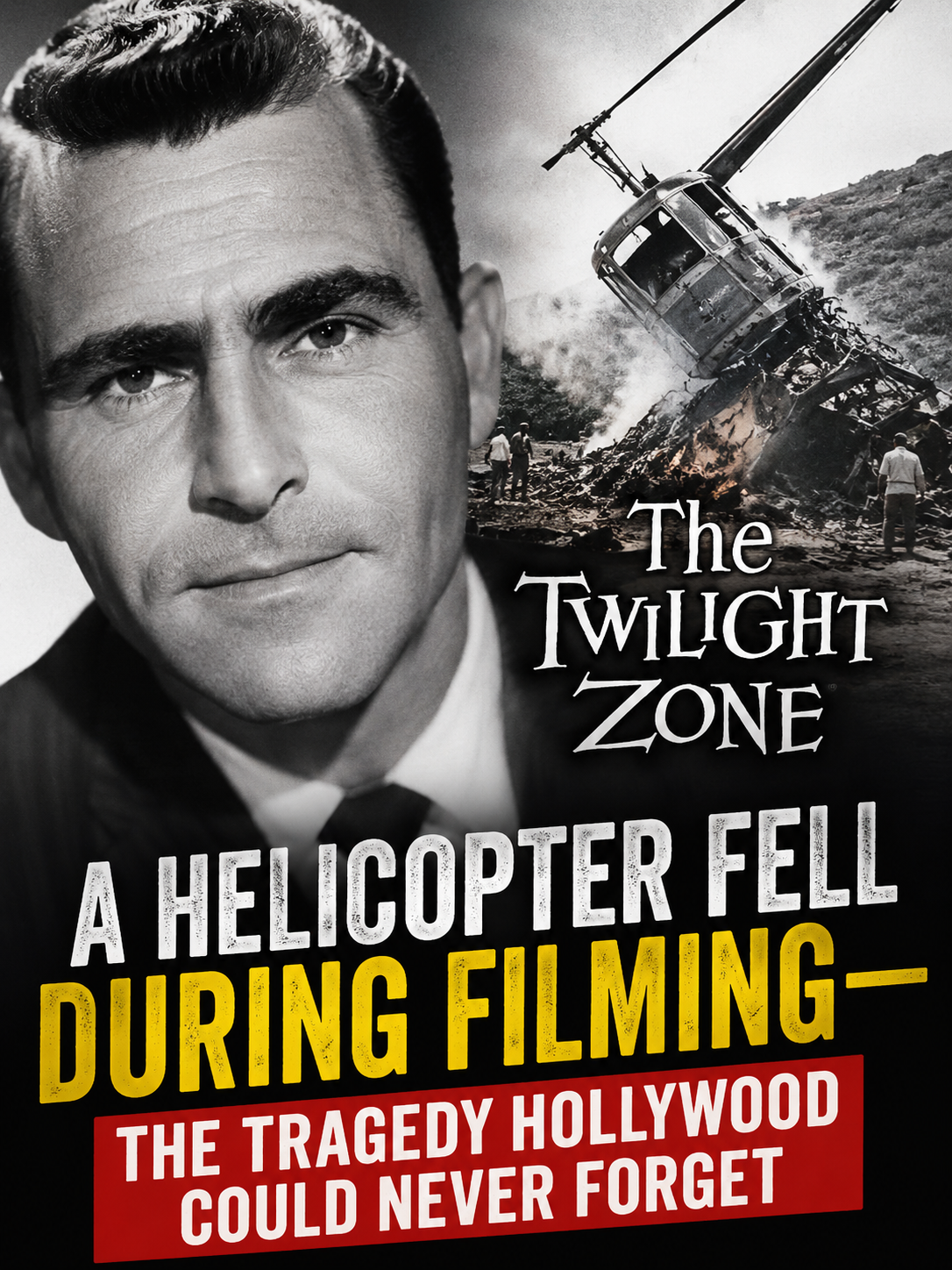
In the early hours of July 23, 1982, actor Vic Morrow stood in a shallow California river carrying two terrified children through smoke, explosions, and artificial gunfire.
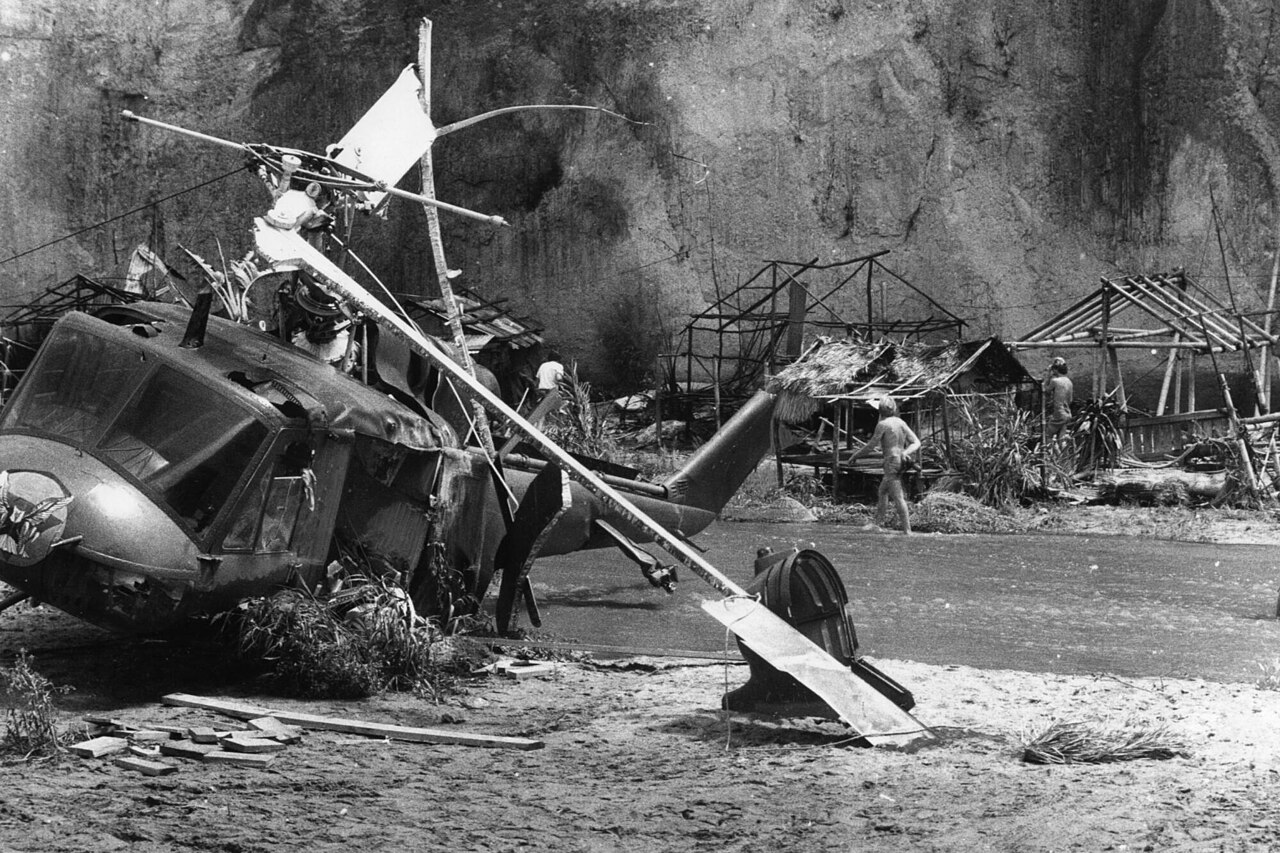
Above them, a military-style helicopter hovered dangerously low.
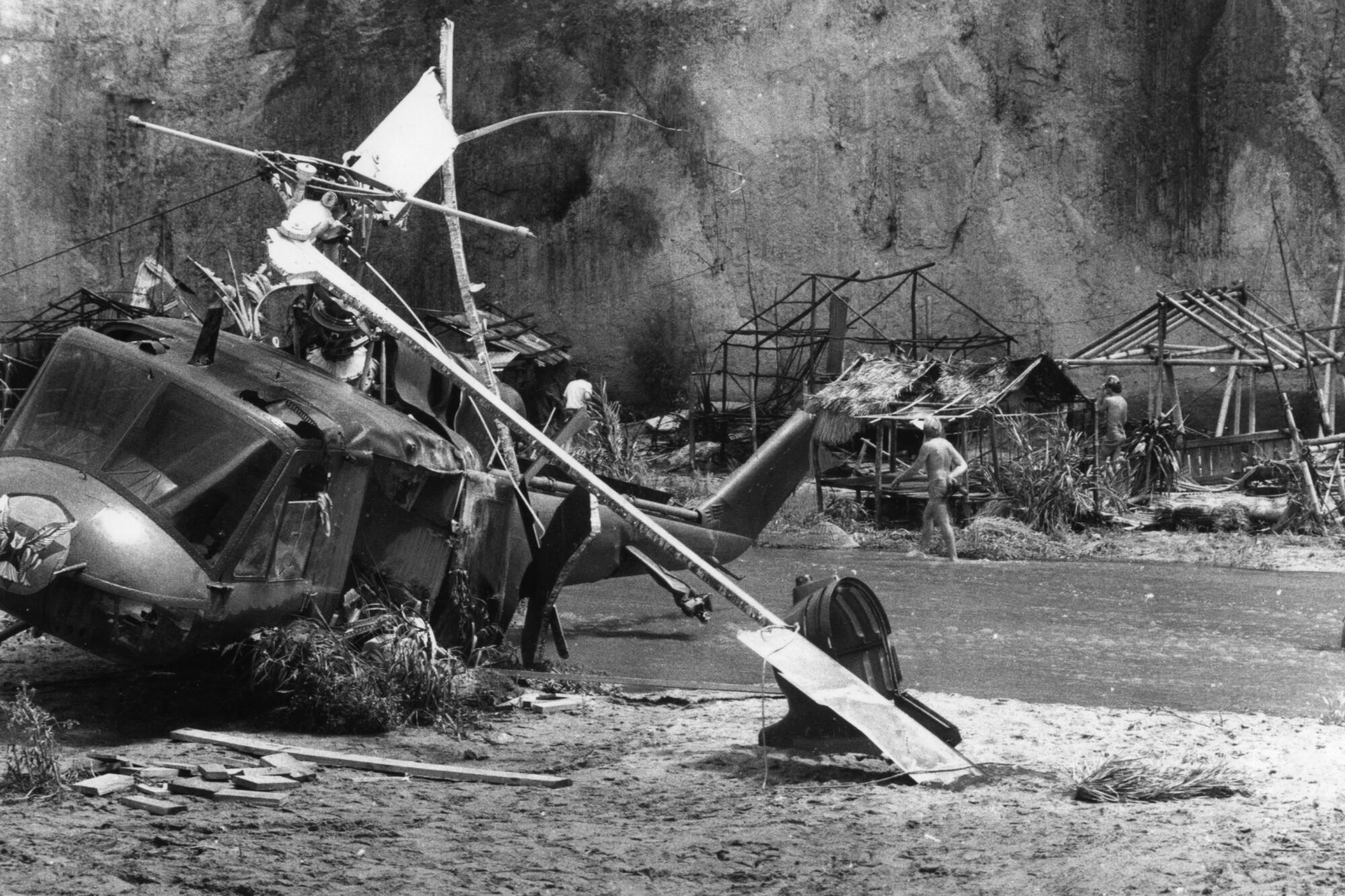
The scene was meant to depict a desperate escape from a Vietnamese village under attack. Cameras rolled as special-effects charges exploded near the aircraft. Then flying debris struck and damaged the helicopter’s tail rotor.
The pilot lost control.
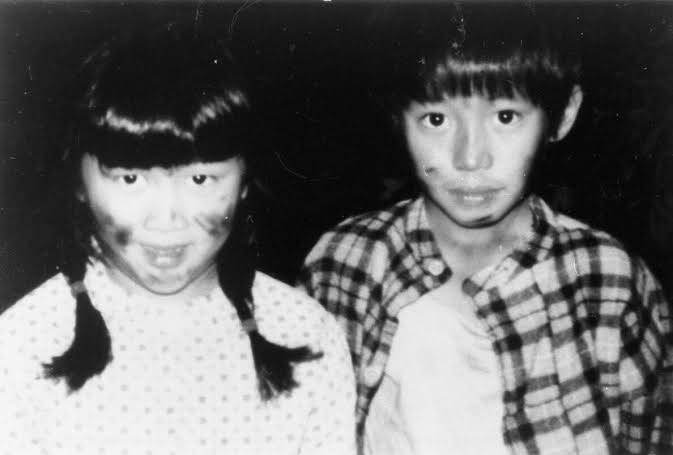
Within seconds, the aircraft spun downward and crashed onto the set, killing Morrow and child performers Myca Dinh Le and Renee Shin-Yi Chen.
The accident became one of the darkest events in Hollywood history. It exposed violations involving child labor, raised disturbing questions about authority and risk on film sets, and led to a lengthy criminal trial watched across the entertainment industry.
Although all five defendants were acquitted of involuntary manslaughter, the tragedy permanently altered the conversation around production safety.
A movie intended to revive a classic television series instead became inseparable from the three lives lost while making it.
Four Directors Enter the Twilight Zone
Twilight Zone: The Movie was conceived as an anthology inspired by Rod Serling’s influential television series.
The production brought together four prominent directors. John Landis, Steven Spielberg, Joe Dante, and George Miller each directed a separate segment, combining new stories with updated versions of memorable television episodes.
Landis directed the opening segment, “Time Out.”
Its central character, Bill Connor, played by Morrow, is an angry and openly prejudiced man. After leaving a bar, he finds himself transported into different historical periods, repeatedly experiencing persecution from the position of its victims.
He is mistaken for a Jewish man in Nazi-occupied Europe, a Black man facing members of the Ku Klux Klan, and eventually a Vietnamese civilian during the Vietnam War.
The original planned ending was intended to show a degree of redemption. Morrow’s character would rescue two Vietnamese children during an attack, carrying them across a river while pursued by American soldiers.
That final scene was being filmed at Indian Dunes, a movie ranch near Santa Clarita, California.
It would never be completed.
Two Children Working in Secret
Myca Dinh Le was seven years old. Renee Shin-Yi Chen was six.
Their participation presented an immediate legal problem.
California regulations restricted the hours young children could work and required permits, supervision, and the presence of a studio teacher or welfare worker. The sequence was scheduled late at night and involved a helicopter, water, fire, and large pyrotechnic effects.
Rather than redesign the scene or obtain proper authorization, members of the production hired the children outside normal procedures.
They were paid in cash, and their employment was concealed from officials responsible for enforcing child-labor protections. John Landis later acknowledged during his criminal trial that the children had been hired illegally.
Their parents testified that they were not fully informed about the dangers involved. They had not understood that the children would be placed beneath a low-flying helicopter while major explosions were detonated nearby.
The children were brought to the location after other young performers had left.
Filming continued into the early morning.
A Dangerous Combination
The sequence required Morrow to carry both children through knee-deep water while a Bell UH-1B helicopter passed overhead.
The aircraft was piloted by Dorcey Wingo, an experienced pilot and Vietnam War veteran. Camera operators were aboard the helicopter, while special-effects crews prepared multiple explosive charges around the village set.
The combination created several layers of risk.
The helicopter had to remain low enough to appear threatening on camera. The explosions needed to look large and violent. Morrow had to move through uneven water while supporting the weight of two children.
Each element reduced the margin for error.
Witnesses later offered conflicting accounts of warnings and communications before the crash. Some testified that concerns had been expressed about the aircraft’s proximity to the explosions and the presence of the children.
The defense later argued that the accident could not reasonably have been predicted and that the explosives had been improperly timed.
What is not disputed is that the helicopter was hovering near powerful pyrotechnic effects when the fatal blast occurred.
At approximately 2:20 a.m., explosions erupted beneath or close to the aircraft.
Debris struck the tail-rotor assembly. The damaged helicopter began spinning out of control as the pilot attempted to recover.
Below, Morrow was carrying Myca and Renee through the water.
The aircraft descended directly toward them.
All three were killed.
Morrow was 53.
Investigators Examine the Film
Because several cameras were recording, investigators possessed unusually detailed visual evidence.
The National Transportation Safety Board examined the helicopter, the production setup, witness testimony, and frame-by-frame footage of the accident.
Its final report attributed the crash to damage caused when debris from the special-effects explosions struck the aircraft’s tail rotor. The loss of tail-rotor control caused the helicopter to spin and descend.
The report also identified failures in the planning and coordination of the stunt.
Cal/OSHA issued citations against companies involved in the production for multiple safety violations. The child-labor violations became especially damaging because they showed that safeguards had not merely failed by accident.
Some had been deliberately bypassed.
The tragedy raised a question larger than the technical cause of the crash: how had a film production placed two illegally hired children underneath a helicopter during a nighttime sequence filled with explosions?
Hollywood Goes on Trial
Director John Landis, associate producer George Folsey Jr., production manager Dan Allingham, pilot Dorcey Wingo, and special-effects coordinator Paul Stewart were charged with involuntary manslaughter.
The criminal case became a landmark.
It was rare for a major Hollywood director and production personnel to face criminal prosecution over deaths on a film set. The trial began in 1986 and continued for approximately 10 months.
Prosecutors argued that the defendants had created an unjustifiable danger through careless planning, illegal employment practices, and the combination of children, explosives, and a low-flying helicopter.
Witnesses described concerns raised before filming. The prosecution portrayed the accident not as an unknowable mechanical failure, but as the result of risks that should have been recognized and prevented.
The defense challenged those claims.
Lawyers argued that the fatal sequence resulted from an unexpected chain of events, particularly the timing and placement of the special-effects explosions. They maintained that the filmmakers did not foresee that debris would disable the helicopter.
Landis defended his decisions and said he believed the scene could be performed safely.
On May 29, 1987, the jury acquitted all five defendants.
The verdict ended the criminal case, but it did not end the controversy.
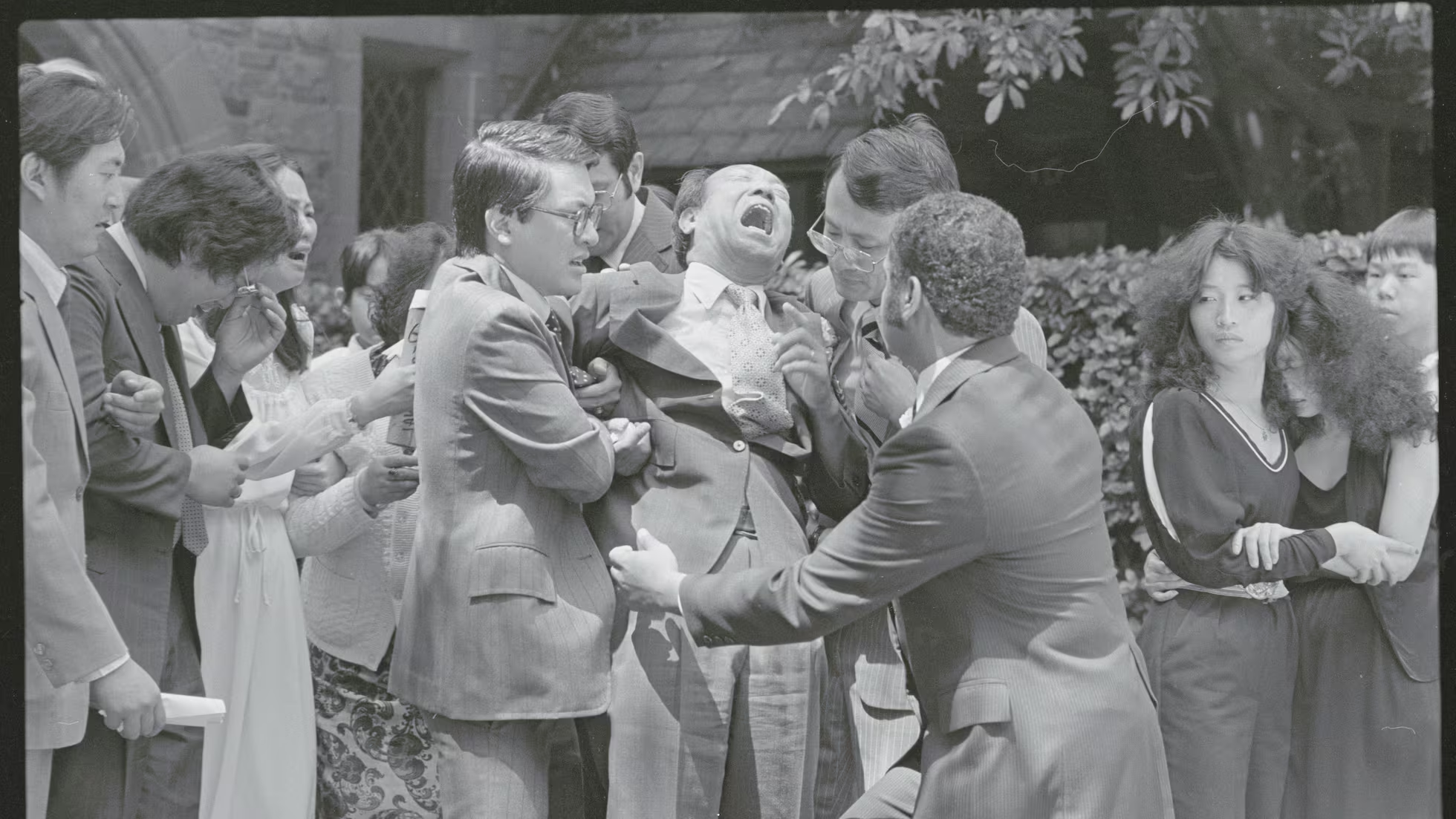
Families of the victims pursued civil claims, which were resolved separately. No verdict or settlement could restore the people who had died.
The Film Was Released Without Them
Production continued after the accident.
The footage involving the crash was not used, and the intended redemptive conclusion to Morrow’s segment was abandoned. In the completed film, Bill Connor does not rescue the children.
Instead, he is taken away by Nazi soldiers, trapped in the same kind of persecution he had previously dismissed.
Twilight Zone: The Movie opened on June 24, 1983.
It received mixed reviews and performed modestly at the box office. Whatever artistic identity it might have developed was overshadowed by the deaths.
Audiences knew that Morrow had been killed during production. Reports about the children, the helicopter, and the illegal working conditions followed the film into theaters.
The title no longer evoked only Rod Serling’s tales of irony and supernatural justice.
It evoked a real disaster.
The Safety Reckoning
The crash did not produce one simple law that suddenly made film sets safe. Its influence developed through heightened scrutiny, new safety guidance, stronger communication, and a cultural change in how dangerous scenes were discussed.
The Directors Guild of America established a safety hotline and began distributing safety bulletins addressing hazards such as helicopters, firearms, pyrotechnics, water, and vehicle stunts.
Industry organizations expanded written guidelines for coordinating dangerous work. The role of assistant directors in enforcing safety procedures received greater attention. Productions became more conscious of separating authority over the creative image from authority over whether a stunt could be performed safely.
The treatment of child performers also faced renewed examination.
Young actors were not simply miniature adults who could be placed into dangerous environments with parental approval. Their working hours, supervision, education, and physical safety required independent enforcement.
Most importantly, the accident challenged a destructive tradition within filmmaking: the belief that pushing through fear or ignoring objections proved professional commitment.
A dramatic image was not worth any foreseeable risk to human life.
Three People, Not a Hollywood Legend
The accident is frequently described as the “Twilight Zone tragedy,” a phrase that can make it sound like another piece of dark film history.
But its victims were not symbols.
Vic Morrow was an established actor and father whose career had included Blackboard Jungle, the television series Combat!, and decades of film and television work.
Myca Dinh Le and Renee Shin-Yi Chen were children. Their families had brought them to a movie set believing responsible adults would protect them.
They were not stunt performers, and they had no meaningful ability to judge the danger for themselves.
The lasting importance of the tragedy lies not in the horrifying footage or the spectacle of Hollywood figures facing trial.
It lies in the responsibility the accident exposed.
A film set is a workplace. Directors, producers, pilots, effects specialists, and supervisors may all contribute to a scene, but responsibility cannot disappear between departments when something goes wrong.
The helicopter crash lasted only seconds.
Its warning has endured for decades.
No shot, no schedule, and no director’s vision can justify placing human beings—especially children—inside a danger that should never have been accepted.