Brendan Fraser’s Body Broke Down and Hollywood Moved On—Then He Returned to Win an Oscar
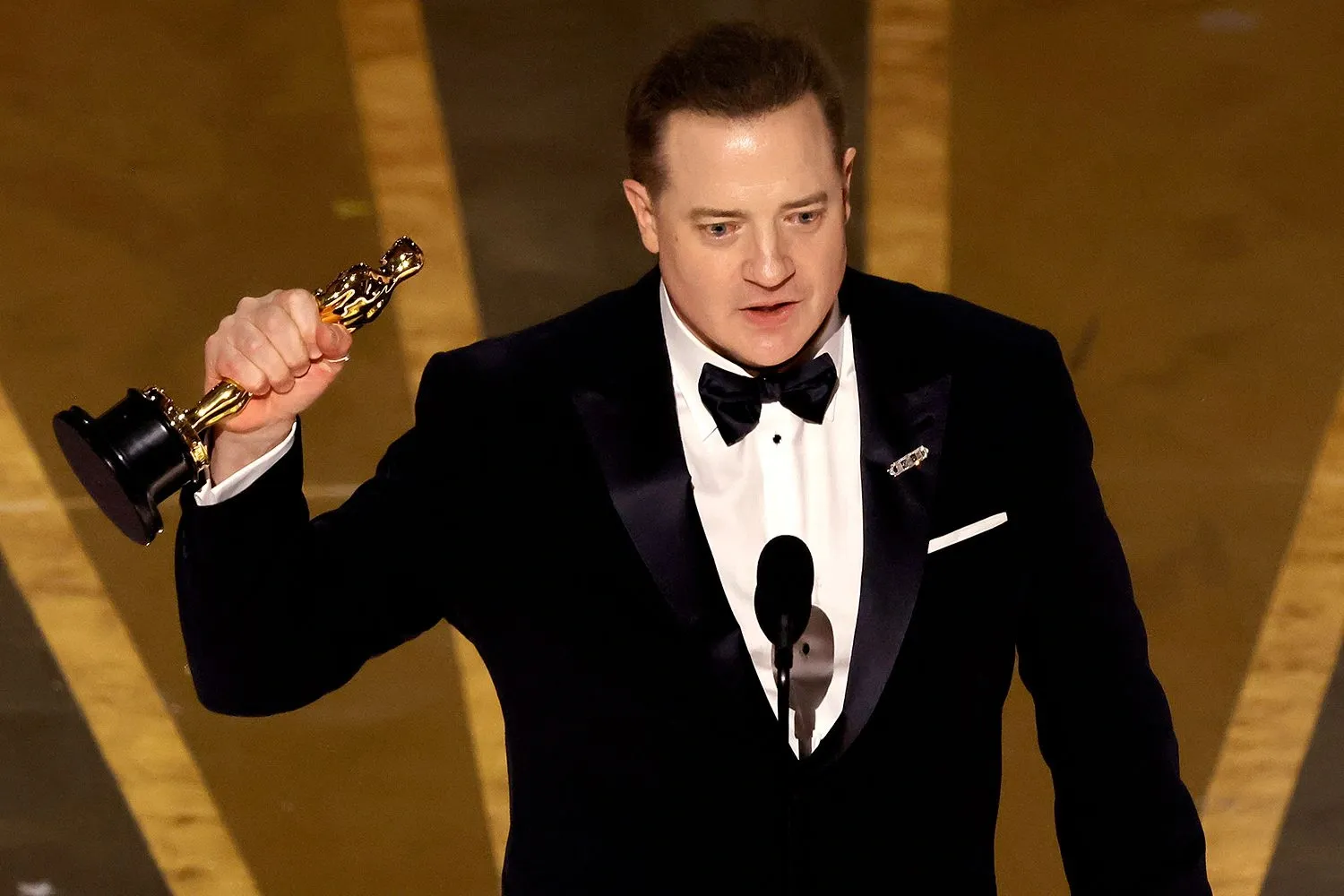
When Brendan Fraser stepped onto the Academy Awards stage in March 2023, he appeared almost overwhelmed by the distance he had traveled to get there.
The actor who once raced through collapsing tombs, battled supernatural armies and swung through the jungle had just won the Oscar for Best Actor for The Whale. His voice shook as he thanked the people who had helped him reach a moment that, during the quietest years of his career, had seemed nearly impossible.
It was more than an awards-season victory. For many viewers, it felt like Hollywood was finally welcoming back someone it had allowed to disappear.
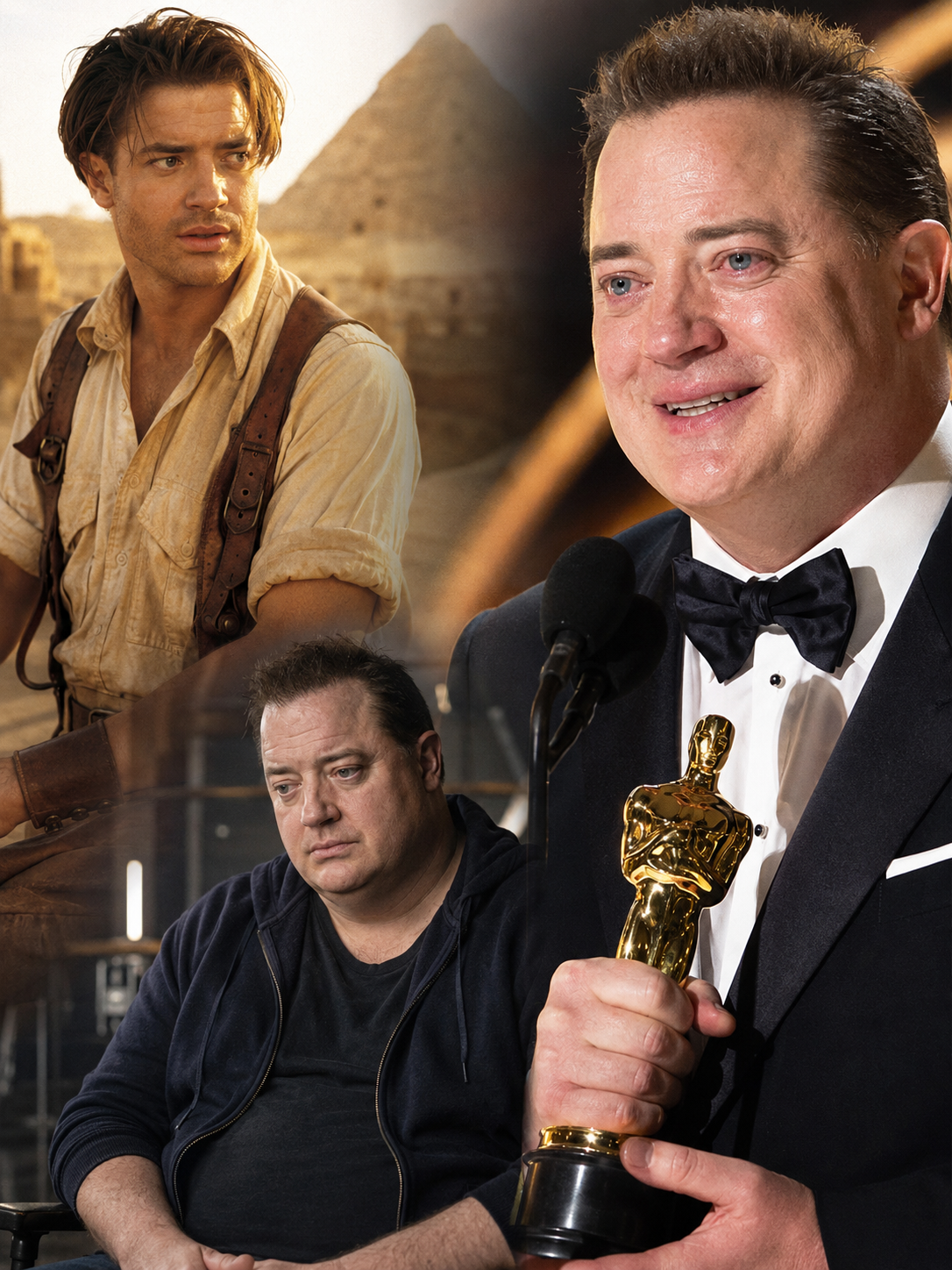
Fraser had been one of the most recognizable stars of the late 1990s and early 2000s. With his broad frame, expressive face and willingness to look ridiculous, he could play an action hero without losing his warmth. He was physically imposing but emotionally accessible—a combination that made him seem unlike the more invulnerable leading men around him.
Then the roles became smaller. The major releases stopped arriving. His name gradually slipped away from the center of popular culture.
Behind that absence was not one simple explanation but an accumulation of physical damage, private upheaval, professional disappointment and depression.
The Star Who Made Adventure Feel Fun Again
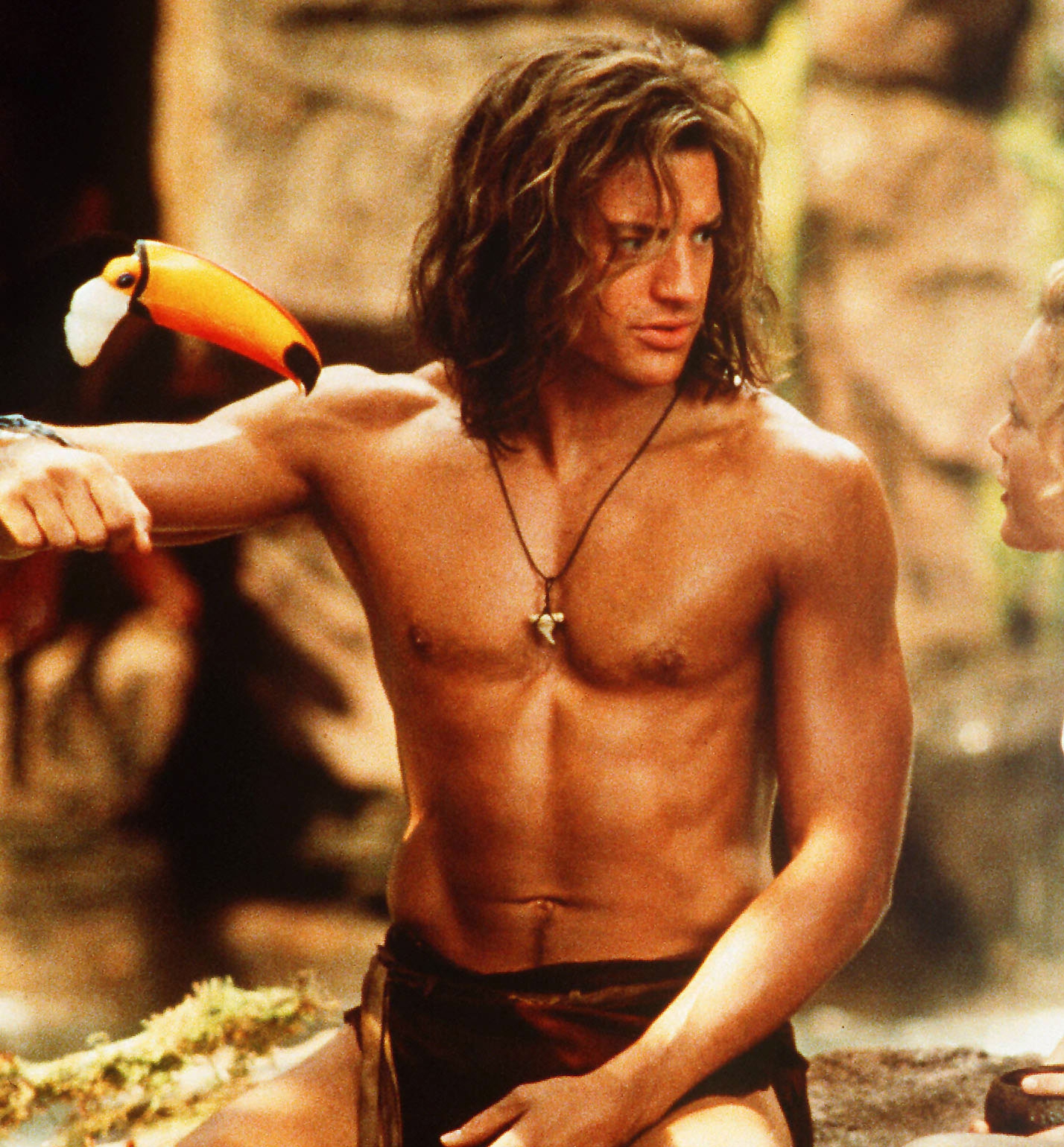
Fraser had already demonstrated his dramatic ability in movies such as School Ties and his gift for physical comedy in George of the Jungle before The Mummy transformed him into an international star in 1999.
As adventurer Rick O’Connell, Fraser combined the confidence of an old-fashioned matinee hero with the vulnerability of a man who could be frightened, injured or embarrassed. The movie became a major commercial success, and its 2001 sequel, The Mummy Returns, expanded the franchise into an even larger spectacle.
Fraser’s career was not limited to blockbusters. He moved between comedy, fantasy, drama and family entertainment, appearing in projects including Bedazzled, Blast from the Past, Gods and Monsters, The Quiet American and, later, the Oscar-winning ensemble drama Crash.
But his most popular movies demanded a great deal from his body.
Fraser frequently performed physically punishing scenes, and years of stunt work eventually caught up with him. He later described needing numerous medical procedures, including operations involving his back, knee and vocal cords. The repair process stretched across years.
The easy athleticism audiences saw on screen had come at a painful cost.
By the time he was making the third Mummy film, Fraser said he was using supports and ice to prepare his damaged body for work. The man marketed as an indestructible action star was struggling simply to keep functioning.
An Alleged Encounter That Left Lasting Damage
Fraser later revealed another experience that contributed to his retreat.
In a 2018 interview with GQ, he alleged that Philip Berk, a former president of the Hollywood Foreign Press Association, sexually assaulted him during an industry luncheon at the Beverly Hills Hotel in 2003.
Fraser said the encounter left him feeling frightened, humiliated and deeply isolated. He described becoming depressed and withdrawing from public life. Berk disputed Fraser’s account, calling it a fabrication, although he had previously acknowledged touching Fraser while characterizing the incident as a joke.
The HFPA investigated after Fraser spoke publicly. It later said Berk had touched him inappropriately but concluded that the act was intended as a joke rather than a sexual advance. Fraser rejected that characterization.
He also wondered whether speaking up privately had damaged his professional opportunities. However, he never claimed to possess definitive proof of an organized Hollywood blacklist, and Berk denied that the HFPA had harmed his career.
The uncertainty became part of the pain. Fraser knew that the phone had stopped ringing as often, but there was no single document or decision that could explain why.
At the same time, his marriage ended, his health required continued attention and his mother died. The pressures did not arrive separately. They overlapped, making it difficult to distinguish the professional crisis from the personal one.
The result was a long period in which Fraser continued acting but no longer occupied the place in Hollywood he once had.
The Return Began Quietly
Fraser’s reemergence did not begin with The Whale.
He gradually took on television work that allowed audiences to see different sides of him. His performances in The Affair, Trust and Doom Patrol reminded viewers that beneath the adventure-star image was an actor capable of sadness, eccentricity and emotional complexity.
Something else was changing as well. A generation that had grown up watching The Mummy began publicly expressing affection for him. The response was unusually personal. Fans were not merely asking for another franchise installment; many seemed to feel protective of a performer whose work had been part of their childhoods.
When footage emerged of Fraser becoming emotional after hearing how strongly audiences supported him, the moment spread widely online. The idea of the “Brenaissance” took hold, but its appeal went beyond nostalgia.
People were watching a man rebuild his confidence in public.
The Role That Changed Everything
Director Darren Aronofsky eventually cast Fraser as Charlie in The Whale, adapted by Samuel D. Hunter from his stage play.
Charlie is an isolated English teacher living with severe obesity and attempting to reconnect with his estranged daughter. The role required Fraser to carry nearly the entire film through grief, shame, hope and physical limitation.
The movie itself divided critics, particularly over its portrayal of obesity and its use of prosthetic makeup. Fraser’s performance, however, received widespread praise for its emotional openness.
It was not the kind of role typically associated with the star of The Mummy. That contrast gave the performance additional force, but Fraser did not rely on his personal history to create an easy comeback narrative. He played Charlie without trying to protect himself from ugliness, embarrassment or despair.
When The Whale premiered at the Venice Film Festival in September 2022, the audience gave Fraser a prolonged standing ovation. Videos showed him visibly moved as he attempted to leave the theater and was encouraged to remain.
More ovations followed. So did major awards.
Fraser won at the Critics Choice Awards and the Screen Actors Guild Awards before reaching the Oscars on March 12, 2023. There, he defeated a field that included Austin Butler, Colin Farrell, Paul Mescal and Bill Nighy.
Accepting the award, Fraser reflected on beginning his career three decades earlier and admitted that he had once failed to appreciate the opportunities he possessed until they disappeared.
The speech did not sound like revenge. It sounded like recognition—from the industry, from the audience and perhaps from Fraser himself.
More Than a Hollywood Comeback
Fraser continued working after his Oscar victory, appearing in Martin Scorsese’s Killers of the Flower Moon and later leading Rental Family. By 2026, he had pushed back against the idea that his recent success represented a simple comeback.
That distinction matters.
A comeback suggests a clean disappearance followed by a sudden return. Fraser’s life was more complicated. He never entirely stopped working, and no single event completely explains why his career slowed. His physical injuries, family responsibilities, changing industry tastes, personal losses and alleged assault all formed part of a longer struggle.
The Oscar did not erase those years. It could not restore the health he lost or answer every question about how Hollywood treated him.
What it offered was a different ending.
Fraser had once built a career by throwing his body into danger and making difficult work look effortless. When that body began to fail, the industry’s attention moved elsewhere. He returned not by pretending to be the same invincible hero, but by allowing audiences to see vulnerability that had always existed beneath the surface.
Hollywood may celebrate second acts, but it rarely acknowledges what people survive between them.
Brendan Fraser’s victory mattered because the man holding the Oscar was not the untouched adventurer audiences remembered. He was older, wounded and changed—and after years of uncertainty, he was finally standing at the center of the story again.